Last Updated: September 25, 2026
The choice is really about what you are optimizing, not which product is best. Deciding the best substrate for bare bottom vs planted tank setups means weighing easy cleaning and clear observation against root anchoring and nutrient supply, since a bare floor and a planted bed solve different problems in the same glass box.
As an Amazon Associate we earn from qualifying purchases.
By David Nguyen
How Bare Bottom and Planted Substrate Differ
Bare bottom and planted substrate sit at opposite ends of a trade-off between access and growth. A bare floor maximizes cleaning and observation, a planted bed anchors roots and can feed them, and neither is your biological filter, which is a common misunderstanding worth clearing up first.
Access and Cleaning
A bare-bottom tank makes waste highly visible and simple to remove, which is why it is favored for hospital and quarantine setups. With no substrate to trap detritus, you can siphon the floor directly, keeping water quality easy to manage during treatment or close observation.
That access is the whole point in a quarantine or grow-out tank, where you want to monitor food intake and waste precisely. The cost is aesthetic and behavioral, since some fish are calmer over a substrate, but for cleaning and observation bare bottom is hard to beat.
Root Anchoring and Nutrients
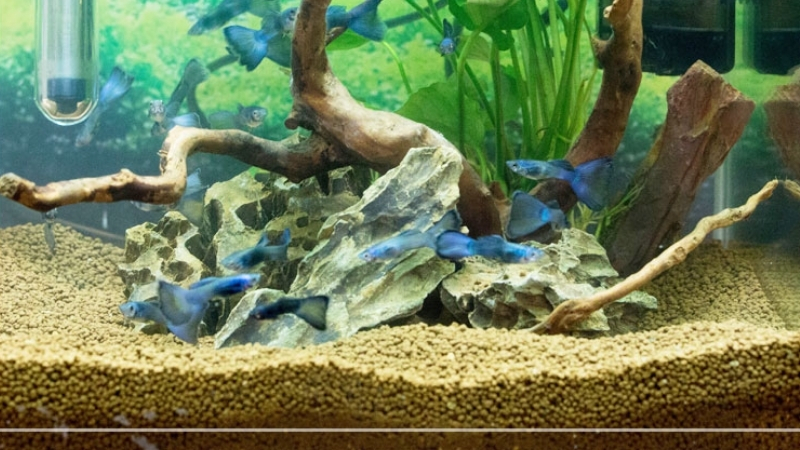
Planted substrate exists to hold roots and, in the case of active soils, to feed them. Tropica offers a complete Aquarium Soil at 2-3 mm, a finer Soil Powder at 1-2 mm for foregrounds, and a Plant Growth Substrate meant as a roughly 1 cm concentrated base layer under gravel.
Rooted plants need something to grip and, for demanding species, a nutrient source at the roots, which bare bottom cannot provide. Choose a complete aquasoil for a rooted display, a fine powder for small foreground plants, or an inert gravel with root tabs for a simpler planted community.
Substrate Is Not Filtration
A persistent myth is that the substrate is where your beneficial bacteria live, but biological filtration can thrive in dedicated filter media regardless of the floor. A bare-bottom tank is not sterile, because bacteria colonize surfaces throughout the system, including the filter.
So do not assume bare-bottom tanks have no beneficial bacteria, or that a substrate is required to cycle. Size and maintain your filter for the bioload, and treat the substrate decision as being about roots and aesthetics, not about whether the tank can process ammonia.
Chemistry and Volume Planning
If you do choose substrate, plan its chemistry and quantity deliberately rather than by guesswork. Complete aquasoils are active and shift water toward slightly acidic, while inert gravels hold parameters, so match the type to your plants and livestock rather than assuming every planted tank needs active soil.
For quantity, a simple formula helps: length times width times depth in centimeters, divided by 1000, gives liters, so a 90 by 60 cm base at 8 cm needs about 43.2 liters. Slope guidance of 3-4 cm front to 6-8 cm rear is an aquascaping aesthetic, not a biological minimum.
What It Looks Like in Practice
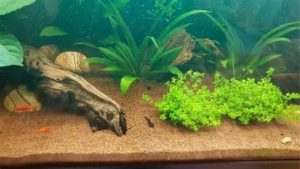
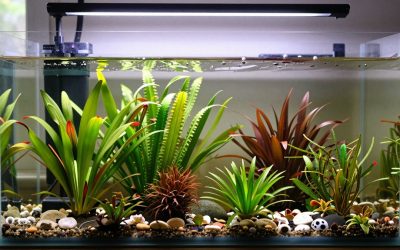
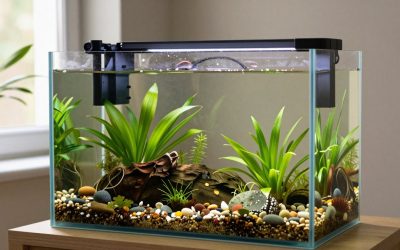
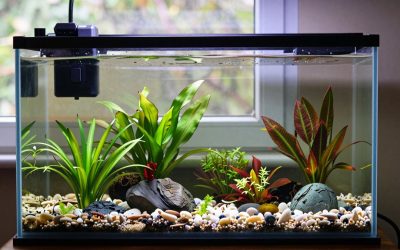
Four setups cover the realistic range, from a bare floor to a complete aquasoil and a fine foreground powder. Match the setup to your goal rather than a single winner, since the right answer changes entirely between a quarantine tank and a planted display.
| Setup | Best For | Key Trait | Watch Out For |
|---|---|---|---|
| Bare bottom | Hospital, quarantine, observation | No loose substrate; easy siphoning | No rooted plants; less natural look |
| Inert gravel + root tabs | Simple planted community | Anchors roots; feed via tabs | Tabs are a recurring cost |
| Complete aquasoil (2-3 mm) | Rooted display and aquascape | Active; feeds through the roots | Swings pH early; depletes over years |
| Fine soil or powder (1-2 mm) | Foreground and small plants | Fine surface for tiny roots | Shallow layer holds less nutrient |
When Bare Bottom Wins
Bare bottom wins whenever access and cleanliness outrank aesthetics, which describes hospital, quarantine, and treatment tanks. You can see and remove waste immediately, dose medications without a substrate absorbing them, and reset the tank quickly between uses.
It also suits fry grow-outs and temporary setups where you monitor feeding closely. The look is clinical and some fish prefer footing, so it is a functional choice rather than a display one, but for its intended jobs nothing is simpler to keep clean.
Inert Gravel Plus Root Tabs
An inert gravel with root tabs is the flexible middle ground for a planted community that does not need active soil. The gravel anchors roots and stays chemically stable, while tabs pushed into the bed feed heavy root-feeders like swords and crypts where they need it.
The trade-off is that tabs are a recurring cost, replaced every one to three months depending on plant load. This setup keeps chemistry predictable and avoids the early pH swing of active soil, which suits keepers who want plants without managing an active substrate.
Complete Aquasoil Display
A complete aquasoil such as Tropica Aquarium Soil at 2-3 mm is the choice for a rooted, planted display, since it feeds through the roots and supports demanding plants. It is an active substrate, so it shifts water toward slightly acidic and eventually depletes over one to two years.
Cycle it before adding sensitive livestock, because the early nutrient release and pH swing are strongest in the first weeks. It is the most growth-focused option here, best paired with adequate light and, for demanding scapes, CO2.
Fine Soil or Powder for Foregrounds
A fine soil or powder at 1-2 mm gives small foreground and carpeting plants the tight surface their roots grip, often used as a cap over a coarser base. Tropica Soil Powder is made for exactly this, providing a fine planting layer where a standard grain would be too coarse.
Because a shallow powder layer holds less nutrient volume, plan on supplementation as the scape matures, or use it as a cap over a deeper base soil. It is a specialist top layer rather than a whole-tank substrate, best combined with a base underneath.
Frequently Asked Questions
Bare-bottom versus planted questions focus on plants without substrate, biological filtration, gravel for plants, and substrate depth. Each answer leads with the direct call, then the exception that changes it for your particular tank and its goal.
Can I Keep Plants in a Bare-Bottom Tank?
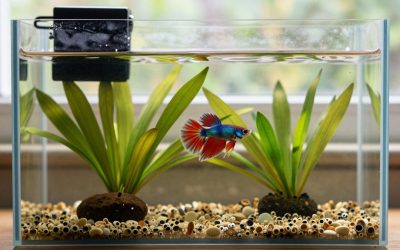
Yes, but only plants that do not root in substrate, such as Anubias and java fern tied to hardscape, or floating plants that draw nutrients from the water column. Rooted stems and carpets have nothing to grip in a bare-bottom tank, so they are not suited to it without at least a pocket of substrate.
If you want rooted plants, you need a substrate somewhere, which moves you off a true bare bottom setup by definition. For a quarantine or hospital tank, epiphytes tied to wood and floating plants give some greenery and cover while keeping the floor clear and easy to siphon during treatment.
Does a Bare-Bottom Tank Still Cycle?
Yes, because biological filtration lives on surfaces throughout the system, especially in dedicated filter media, not only in the substrate. A bare-bottom tank cycles normally as long as the filter is sized and maintained for the bioload, since that is where most of the beneficial bacteria establish and work.
So the myth that bare-bottom tanks have no beneficial bacteria is simply false and worth setting aside. Focus on your filtration for cycling stability and capacity, and treat the substrate decision as being about roots and aesthetics rather than about whether the tank can biologically process ammonia.
Can I Grow Plants in Plain Gravel?
Yes, plain inert gravel anchors plants well, but it does not feed them, so heavy root-feeders need root tabs pushed into the bed near their roots. Gravel plus tabs grows most community plants without the early pH swing or the eventual nutrient depletion that comes with an active aquasoil over time.
Not every planted tank requires active soil, despite the common claim that it does. Choose active soil for demanding, high-growth aquascapes, and inert gravel with tabs for a simpler planted community where stable, predictable chemistry matters more to you than squeezing out maximum plant growth.
How Deep Should Planted Substrate Be?
A workable planted depth is often around 2-3 inches, deep enough for roots to travel without creating large stagnant zones that can go anaerobic. For quantity, use length times width times depth in centimeters divided by 1000 for liters, so a 90 by 60 cm base at 8 cm deep needs about 43.2 liters of substrate.
Slope guidance of 3-4 cm at the front rising to 6-8 cm at the rear is an aquascaping aesthetic for depth, not a biological requirement you must hit. Adjust for heavy root-feeders, which prefer the deeper end, and keep fine deep beds gently stirred over time to avoid stagnant pockets forming, since a deep, undisturbed fine bed can trap waste and turn foul in the still corners of a planted tank.
Final Thoughts
The best substrate for bare bottom vs planted tank decisions comes down to what you optimize: choose bare bottom for cleaning, observation, and quarantine, and a planted substrate when rooted plants, aquascaping depth, or root-zone feeding matter. Remember that substrate is not your biological filter, match active soil, inert gravel with tabs, or fine powder to your plants, and size the bed with the volume formula, not guesswork.
As an Amazon Associate we earn from qualifying purchases at no extra cost to you. Prices and availability are accurate as of the date shown and are subject to change.

Prelineva Sand Aquarium Cave for Fish Tank, 3D Printed Fish Hideout Tunnel
Selected for "Best Substrate for Bare Bottom vs Planted Tank: Clear Guide": this listing is tanks (Prelineva Sand Aquarium Cave for Fish Tank, 3D Printed Fish Hideout Tu), matching the equipment this article covers.
View on Amazon
Prelineva Black Aquarium Cave for Fish Tank, 3D Printed Fish Hideout Tunnel
Selected for "Best Substrate for Bare Bottom vs Planted Tank: Clear Guide": this listing is tanks (Prelineva Black Aquarium Cave for Fish Tank, 3D Printed Fish Hideout T), matching the equipment this article covers.
View on Amazon
Aquatic Plant Soil, 1000g Aquasoil, Aqua Soil, Aquarium Plant Substrate Fish Bottom Plant Sand Mud for Root Growth of Most Types of Grass
Selected for "Best Substrate for Bare Bottom vs Planted Tank: Clear Guide": this listing is substrate and hardscape (Aquatic Plant Soil, 1000g Aquasoil, Aqua Soil, Aquarium Plant Substrat), matching the equipment this article covers.
View on Amazon
KRHQXW Aquarium Plant Anchor Clips, Substrate Stem Holders, 20 Pack
Selected for "Best Substrate for Bare Bottom vs Planted Tank: Clear Guide": this listing is substrate and hardscape (KRHQXW Aquarium Plant Anchor Clips, Substrate Stem Holders, 20 Pack), matching the equipment this article covers.
View on Amazon
What to Look for Aquarium Substrate Grain Size in 2026: What Actually Matters
Best Natural Driftwood Branches for Aquascaping: 4 Top Picks