Last Updated: October 4, 2026
Black substrate makes fish and plants pop, but retailer listings often disagree with the maker on grain size. The best black sand substrate for aquarium use is the one whose grain range you verify against the manufacturer, then match to whether you want true fine sand or a bold fine gravel.
As an Amazon Associate we earn from qualifying purchases.
By David Nguyen
Quick answer: For most people in 2026, the best black sand substrate for aquarium is the CaribSea Maui Moon — our #1 rated choice. See the full ranked comparison, alternatives and buying advice below.
How to Choose Black Sand Substrate
Black substrate is easy to buy on looks and hard to buy correctly, because listings blur grain sizes and chemistry. Verify the grain against the manufacturer, know whether you actually want sand or fine gravel, check the product’s own chemistry, and size the bag to your footprint.
Verify Grain Size at the Source
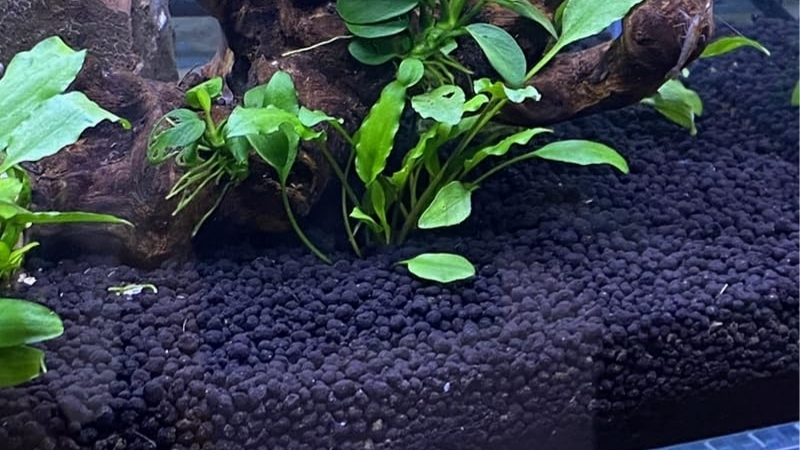
Retailer copy and manufacturer specs frequently disagree, so trust the maker. CaribSea lists Maui Moon at 1.25-1.75 mm even where a store shows 0.25-0.75 mm, and Midnight River at 1.0-4.0 mm even where a listing claims 3-5 mm, so a product marketed as sand can actually be a fine gravel.
Grain size drives handling more than color does: finer grain looks smoother but compacts, while coarser grain resists packing. Because a wrong number changes what you receive, confirm the maker’s range before ordering rather than trusting a retailer’s rounded or copied figure.
Fine Sand vs Fine Gravel
Not every black substrate is truly fine, and that distinction matters for the fish and plants you keep. Maui Moon at 1.25-1.75 mm behaves like a fine sand, whereas Midnight River at 1.0-4.0 mm spans into gravel territory, so it should not be called ultrafine even if a listing implies it.
Sand suits sifting fish and a smooth aquascape; fine gravel resists compaction and shows a bolder texture. Decide which behavior you want first, then pick the product whose verified range matches, rather than assuming a dark bag automatically means fine sand.
Product-Specific Chemistry
Black substrate is not automatically inert, so treat chemistry per product rather than as a category rule. Seachem states Flourite Black Sand is a stable porous clay planted substrate that will not alter pH, while the CaribSea black sands are natural substrates without an intentional buffering claim.
Because behavior varies by product, do not assume every black substrate is pH-neutral or that any of them buffers. If you keep pH-sensitive species, confirm the specific product’s chemistry and test your water for the first week after adding it.
Bag Size and Coverage
Black substrate ships in different masses, so compare coverage, not sticker alone. The CaribSea black sands come in 20 lb bags around $40 each as of 09/2026, while Flourite Black Sand is a 15.4 lb (7 kg) bag near under $40, which is not directly comparable to a 20 lb bag by price.
Estimate your footprint and a modest depth, then buy the mass that covers it rather than the cheapest package. The three CaribSea black sands sit within a few cents of one another, so choose them on grain and tone rather than on a price gap that barely exists.
Top Picks
Four black substrates cover the range from true fine sand to bold fine gravel, plus a planted-specific clay. Prices are relative and current as of 09/2026, and because bag masses differ, compare by the coverage you need rather than by package price.
| Product | Best For | Key Spec | Watch Out For |
|---|---|---|---|
| CaribSea Maui Moon | Best overall black sand | 1.25-1.75 mm; ~100 lb/ft3; 20 lb | Some listings misstate grain as 0.25-0.75 mm |
| Seachem Flourite Black Sand | Best for planted tanks | Porous clay; stated not to alter pH | Exact current grain mm not published; rinse dust |
| CaribSea Shadow Creek | Best coarser black texture | 1.0-3.0 mm; ~100 lb/ft3; 20 lb | Coarser grain; small plantlets can slip |
| CaribSea Midnight River | Best bold fine-gravel look | 1.0-4.0 mm; ~93 lb/ft3; 20 lb | Not ultrafine; listings may show 3-5 mm |
CaribSea Maui Moon – Best Overall
Maui Moon is the overall black pick because its verified 1.25-1.75 mm grain behaves like a true fine sand with a deep black tone, and it lists a bulk density near 100 lb/ft3 in a 20 lb bag around $40 as of 09/2026. It gives the smooth look most black-substrate buyers actually want.
The main trap is the listing, not the product: some stores show 0.25-0.75 mm, which contradicts the manufacturer, so buy on the maker’s number. As a natural substrate it carries no buffering claim, so verify chemistry separately if you keep pH-sensitive fish.
Seachem Flourite Black Sand – Best for Planted Tanks
Flourite Black Sand is the planted-focused choice, a stable porous clay planted substrate that Seachem states will not alter pH, sold as a 15.4 lb (7 kg) bag near under $40 as of 09/2026. For a planted black tank it combines the dark look with predictable chemistry in one bag.
Expect dust on setup, since clay gravels need a thorough rinse and can cloud the first fill. Seachem does not publish a clean current grain-diameter figure, so choose it for planted use and pH behavior rather than a stated millimeter, and do not price it directly against 20 lb bags.
CaribSea Shadow Creek – Best Coarser Black Texture
Shadow Creek runs a wider 1.0-3.0 mm range with density near 100 lb/ft3 in a 20 lb bag around $40 as of 09/2026, giving a coarser, more textured black bed. It resists compaction better than the finest sands, which suits keepers who dislike packed substrate.
The trade-off is at the small end of planting, where fine carpet stems and plantlets can slip in coarser grit before they root. It favors stems, rooted swords, and rhizome plants on hardscape over delicate groundcover.
CaribSea Midnight River – Best Bold Fine-Gravel Look
Midnight River is the boldest texture, spanning 1.0-4.0 mm with density near 93 lb/ft3 in a 20 lb bag around $40 as of 09/2026, reading as a black fine gravel rather than a sand. It is the pick when you want a strong, natural riverbed texture.
Because its verified range reaches gravel sizes, do not describe it as ultrafine even where a listing shows 3-5 mm; use the manufacturer’s 1.0-4.0 mm. Larger grit lets mulm settle deeper, which is easy to vacuum but worth watching in a lightly stocked tank.
Frequently Asked Questions
Black-substrate questions cluster around whether all black sands are equally fine, planted suitability, pH behavior, and how to describe the coarser products honestly. Each answer leads with the direct call, then the exception that changes it for your tank.
Are All Black Sands Equally Fine?
No. Verified grain ranges vary widely, from Maui Moon at 1.25-1.75 mm to Midnight River at 1.0-4.0 mm, so some black substrates are a true sand and others are a fine gravel. A dark color tells you nothing about grain size, which is the spec that actually governs handling and planting.
Because listings sometimes copy the wrong figure, check the manufacturer’s range before buying rather than the store’s rounded number. If you specifically want a smooth sand, choose a tight fine range; if you want texture, a wider range into gravel is fine as long as you know that is what you ordered rather than assuming any dark bag is automatically a fine sand.
Is Black Sand Good for Planted Tanks?
It can be, but planted suitability depends on the product, not the color of the substrate. Flourite Black Sand is made as a planted clay substrate and states it will not alter pH, while the natural black sands anchor roots well but feed plants only if you add root tabs to the bed near the hungry plants themselves.
For demanding plants, a planted-specific black substrate or added root tabs does the actual feeding through the roots. Grain still matters, since very coarse black gravel lets fine plantlets slip before they root, so match the verified range to the plants you intend to grow.
Does Black Sand Change pH?
It depends on the specific product, because black color is not a chemistry indicator. Flourite Black Sand is stated not to alter pH, and the CaribSea natural black sands make no buffering claim, so none of these is designed to raise pH the way carbonate substrates like aragonite do over time.
Do not assume any black substrate is guaranteed inert, because behavior varies by material and source. Test your parameters through the first week after adding a new substrate, especially if you keep pH-sensitive species that react to even small shifts, and re-check after your first water change to confirm the reading holds steady.
How Should I Describe Midnight River?
Describe it by the manufacturer’s 1.0-4.0 mm range, which makes it a bold black fine gravel rather than an ultrafine sand. Some listings show 3-5 mm, but the maker’s figure is the one to trust and quote, and it keeps your description accurate for buyers comparing textures.
If you want a smooth sand look, Midnight River is the wrong choice and Maui Moon fits far better. If you want a coarse, natural riverbed texture in black, Midnight River is exactly right, just labeled honestly as a fine gravel instead of a sand.
Final Thoughts
The best black sand substrate for aquarium use is the one whose grain you verify against the manufacturer and whose chemistry you confirm per product, which is why Maui Moon leads on a true fine 1.25-1.75 mm sand while Flourite suits planted tanks and Midnight River delivers a bold fine gravel. Trust the maker over the listing, match grain to your fish and plants, and let the black aesthetic be the second decision, not the first.
As an Amazon Associate we earn from qualifying purchases at no extra cost to you. Prices and availability are accurate as of the date shown and are subject to change.
Ready to decide? Our #1 pick for 2026 is the CaribSea Maui Moon.
Live price & availability on Amazon.
Related Reviews & Guides
Fish Tank Cycling Guide: Best Products to Cycle Fast
Best Pond Liner for a 1000 Gallon Pond: Top Expert Picks