Last Updated: October 4, 2026
In an outage the pump that fails over automatically matters more than the one with the biggest headline number. The best battery powered aquarium air pump for power outages is judged by automatic failover and runtime tied to the exact variant, airflow setting, and continuous or intermittent mode, since it provides aeration only, not heat or full filtration.
As an Amazon Associate we earn from qualifying purchases.
As an Amazon Associate we earn from qualifying purchases at no extra cost to you. Prices and availability are accurate as of the date shown and are subject to change.
By David Nguyen
Quick answer: For most people in 2026, the best battery powered aquarium air pump for power outages is the Aquarium Co-Op Dual — our #1 rated choice. See the full ranked comparison, alternatives and buying advice below.
How to Choose a Battery Backup Air Pump
Choosing well means prioritizing automatic failover, reading runtime against the exact mode, sizing by device and backpressure, and using a check valve. These four points matter because a runtime figure is meaningless without its variant and setting, and a battery pump aerates rather than running the whole tank.
Automatic Failover Comes First
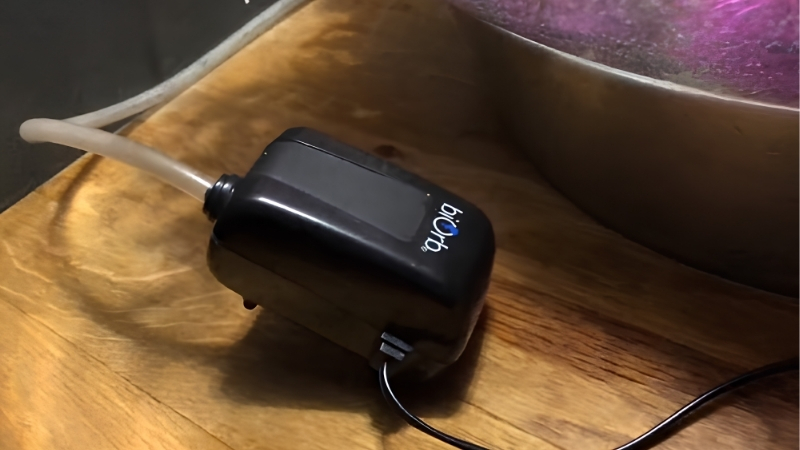
The single most important feature is automatic failover, so the pump switches to battery the instant mains power cuts, even while you are away or asleep. A pump you must turn on by hand is useless during an outage you do not witness, which is when fish are most at risk.
The Aquarium Co-Op and hygger HG199 units offer automatic failover on AC and DC, while the Penn-Plax is a manual on-off reserve. So prioritize automatic switching for unattended protection, and treat a manual pump as a backup you must remember to start, not a hands-off safeguard.
Read Runtime Against the Mode
Runtime figures only mean something tied to the exact variant, airflow setting, and whether the pump runs continuously or intermittently. The HG199 2-watt cites 16 to 48 hours continuous but 39 to 109 hours intermittent, and that 109-hour figure is minimum-flow intermittent only, not full continuous output.
So do not attach a best-case number to the wrong variant or setting, since 109 hours is not full-power runtime and the 2-watt figures do not apply to the 4-watt model. Read the runtime for the specific model, airflow level, and mode you will actually use, rather than the headline maximum.
Size by Device and Backpressure
As with any air pump, size it by the devices it drives and their backpressure, not by the tank’s gallons. A battery pump feeding one air stone lasts and performs differently from one driving a deeper diffuser, since backpressure reduces delivered airflow and can shorten effective runtime.
Note also that nominal airflow differences do not translate directly to emergency oxygen, so the HG199 4-watt’s higher rating is not simply more oxygen than the Co-Op Dual. Match the pump to your device and depth, and remember the goal is adequate aeration through the outage, not maximum bubbles.
It Is Aeration, Not the Whole Tank
A battery air pump keeps oxygen up, but it does not power a heater, run full canister filtration, or maintain return-pump circulation. So it provides aeration, not the whole aquarium, and in a long outage temperature and filtration are separate problems it cannot solve.
So plan the rest of your outage strategy around it, such as insulation for heat and a power station for larger loads. Use the battery pump for its real job, keeping the water oxygenated, and add other measures for heating and filtration rather than expecting one small pump to run everything.
Top Picks
Four options cover automatic rechargeable backups and a replaceable-battery reserve, with the overall pick going to the reliable auto-failover unit. Prices are relative and current as of 09/2026, and every runtime here is tied to a specific variant and mode, so treat the numbers as conditional rather than absolute maximums.
| Model | Best For | Runtime (mode) | Watch Out For |
|---|---|---|---|
| Aquarium Co-Op Dual | Best overall outage backup | ~20 h continuous / 40 h+ power-save | Older units were 8 h / 16 h |
| hygger HG199 4W | High-airflow rechargeable | 12-37 h cont. / 25-79 h intermittent | 4800 mAh; two outlets |
| hygger HG199 2W | Long rechargeable runtime | 16-48 h cont. / 39-109 h intermittent | 109 h is minimum-flow only |
| Penn-Plax Battery Backup | Replaceable-battery reserve | Up to 96 h on 2 D batteries | Manual on/off; airflow unverified |
Aquarium Co-Op Dual – Best Overall Power-Outage Backup
The Co-Op Dual is the best all-round outage backup, delivering 1.6 liters per minute with automatic failover and, on current units, about 20 hours continuous or 40 hours or more in power-save, for under $40 as of 09/2026. Reliable automatic switching is exactly what an unattended outage needs.
Be aware of the generation difference: current units run 20 and 40 hours, while pre-August 2024 units ran only 8 and 16 hours, so do not mix the specs. Its dependable auto-failover and dual outlets earn the overall label, since consistent switching matters more than a bigger headline runtime.
hygger HG199 4W – High-Airflow Rechargeable
The hygger HG199 4-watt is the high-airflow rechargeable option, with two outlets delivering a nominal 4 liters per minute total from a 4800 mAh battery, running 12 to 37 hours continuous or 25 to 79 hours intermittent, for under $40 as of 09/2026. It suits larger tanks or multiple devices.
Its higher nominal airflow is not simply more emergency oxygen than a lower-rated pump, since that depends on conditions and runtime. Match its two outlets to your devices, and read its runtime as the 4-watt, 4800 mAh figures rather than borrowing the 2-watt model’s longer numbers.
hygger HG199 2W – Long Rechargeable Runtime
The hygger HG199 2-watt is the long-runtime rechargeable pick, delivering 1.5 liters per minute from a 2600 mAh battery for 16 to 48 hours continuous or 39 to 109 hours intermittent, for under $30 as of 09/2026. It is the choice when maximum hours per charge matter most.
Read its runtime carefully: the 109-hour figure is minimum-flow intermittent only, not full continuous output, and it applies to this 2-watt, single-outlet variant. For a modest tank needing long aeration per charge with automatic failover, it stretches further than the higher-output models.
Penn-Plax Battery Backup – Replaceable-Battery Reserve
The Penn-Plax Battery Backup is the replaceable-battery reserve, running up to 96 hours on two D batteries for under $30 as of 09/2026. Swappable D cells mean you are not tied to a recharge, which suits very long outages where you can carry spare batteries.
Its airflow was not verified for this guide, and it is manual on-off rather than automatic, so it will not start itself during an unattended outage. It is also not rechargeable lithium, so treat the 96 hours as D-battery reserve, and pair it with attention or a timer since it lacks auto-failover.
Frequently Asked Questions
Battery-pump questions focus on runtime, whether it keeps the biofilter alive, intermittent aeration, and battery type. Each answer leads with the direct call, then the caveat that changes it for your particular model, airflow setting, and outage length.
How Long Will a Battery Pump Run?
It depends entirely on the variant, airflow setting, and mode, so read the runtime for exactly what you own. The HG199 2-watt runs 16 to 48 hours continuous but up to 109 hours only at minimum-flow intermittent, while current Co-Op units run about 20 hours continuous or 40 in power-save.
So do not take a best-case number and apply it to full output or a different model, since headline hours are conditional. Match the runtime to your actual airflow level and whether you run it continuously or intermittently, and keep spare charge or batteries for outages longer than a single cycle.
Does It Keep the Biofilter Alive?
Only indirectly, because a battery air pump provides aeration, not full filtration, so it does not run your canister or maintain return-pump flow. Aeration and circulation from an air stone or sponge filter it drives help keep water and beneficial bacteria oxygenated, but it is not a filtration substitute.
In a long outage, a sponge filter driven by the battery pump keeps some biological flow going, which helps. But the pump itself only moves air, so plan separately for heating and mechanical filtration, and treat oxygenation as its real contribution to keeping the tank stable through an outage.
Is Intermittent Aeration Enough?
Often yes for extending runtime, because intermittent operation can maintain adequate oxygen while using far less battery than continuous running. That is why intermittent figures are much longer, such as the HG199 2-watt’s 39 to 109 hours versus 16 to 48 hours continuous, letting a charge last longer.
Whether it suffices depends on your bioload and tank, so a heavily stocked tank may need continuous aeration while a lightly stocked one tolerates cycling. Use intermittent mode to stretch a long outage, but watch the fish, and switch to continuous if they show signs of oxygen stress.
D Batteries or Rechargeable Lithium?
Each has a trade-off, so choose by outage length and convenience. The Penn-Plax runs up to 96 hours on replaceable D batteries, which you can swap indefinitely with spares, but it is manual and not rechargeable lithium, so do not mistake its 96 hours for a rechargeable figure.
Rechargeable units like the Co-Op and hygger offer automatic failover and easy recharging, but are limited by battery capacity per charge. For very long or repeated outages, swappable D cells add flexibility, while for hands-off protection, an auto-failover rechargeable pump is the more convenient safeguard.
Final Thoughts
The best battery powered aquarium air pump for power outages is judged by automatic failover and mode-specific runtime, so the reliable Co-Op Dual leads while the hygger HG199 4-watt and 2-watt suit high airflow or long runtime and the Penn-Plax is a replaceable-battery reserve. Prioritize automatic switching, read runtime for your model and setting, remember it only aerates, not the whole tank, and add a power station for long outages.
Ready to decide? Our #1 pick for 2026 is the Aquarium Co-Op Dual.
Live price & availability on Amazon.
Related Reviews & Guides
10 Best Aquarium Chillers: Keeping Your Tank Cool for Cold Water Fish
Activated Carbon in Aquarium Filter: When It Actually Helps