Last Updated: October 4, 2026
Aquasoil is an active substrate, not just brown gravel, so it feeds roots and shifts your water chemistry at the same time. Picking the best aquasoil for planted aquarium setups means comparing verified root support and pH behavior across mismatched bag sizes, rather than trusting brand reputation or a single sale price.
As an Amazon Associate we earn from qualifying purchases.
By David Nguyen
How to Choose Aquasoil for a Planted Aquarium
Aquasoil earns its premium through root nutrition and active water chemistry, so judge it on those, plus grain size and honest per-volume cost. The four criteria below separate a soil that supports a planted tank from one you simply paid more for.
Root and Nutrient Support
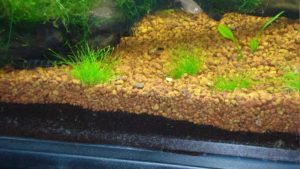
The core job of aquasoil is feeding plants through their roots, which is why active soils outperform inert sand for demanding species. ADA Amazonia Ver.2 is a black natural soil designed to be used with the Amazonia Supplement, while Fluval Plant & Shrimp Stratum carries nutrients and minerals in non-compacting granules.
Root feeding is a real advantage, but it is not infinite; active soils deplete over one to two years and eventually lean on root tabs or column dosing. Plan the substrate as a multi-year consumable rather than a permanent one, and budget a refresh or supplementation into the tank’s running cost.
Active pH Behavior
Active soils interact with your water, usually pulling it toward slightly acidic, which suits soft-water plants and many shrimp. UNS Controsoil Extra Fine is listed as buffering alkaline source water below pH 7 per retailer data, and ADA Amazonia leans acidic as well.
Do not assume every aquasoil drops pH to one fixed figure like 6.5, because the result depends on your tap water and the soil’s remaining buffering capacity. Cycle a new soil and monitor parameters for the first couple of weeks, holding sensitive livestock until the early swing settles.
Grain Size and Variant
Grain size changes planting feel and which SKU you actually need. UNS Controsoil runs about 1 mm in Extra Fine, roughly 3 mm in Fine, and near 5 mm in Normal, while ADA sells standard grain in 3 L and 9 L versus a separate 3 L Powder, so the same brand spans several textures.
Finer grain helps delicate roots anchor; coarser grain resists compaction and suits larger plants. Confirm the exact variant before ordering, since a wrong click can leave you with a 5 mm Normal bed when you wanted a fine 1 mm surface for a carpet.
Package Size and Real Cost
Aquasoil ships in liters and pounds, so compare by volume, not sticker. ADA Amazonia Ver.2 is around $60 for 9 L, Fluval Stratum about $30 regular for 8.8 lb, and UNS Controsoil Extra Fine near under $70 for 10 L, all as of 09/2026; a under-$20 Fluval figure floating around is a dated sale snapshot.
Because 9 L, 8.8 lb, and 10 L are different quantities, a raw price percentage between them is meaningless. Estimate the liters your footprint and depth need, then compare cost per liter, and treat any flash-sale number as temporary rather than the real price.
Top Picks
Three verified soils cover most planted builds, plus ADA’s newer PRO for those tracking the current lineup. Prices are relative and current as of 09/2026, and because bags use different units, compare by liters rather than by package price.
| Product | Best For | Key Spec | Watch Out For |
|---|---|---|---|
| ADA Amazonia Ver.2 | Best overall active soil | 9 L; supports slightly acidic conditions | Used with Amazonia Supplement; acidic swing |
| Fluval Plant & Shrimp Stratum | Best current value snapshot | 8.8 lb; non-compacting granules | under $20 is a dated sale; regular ~under $30 |
| UNS Controsoil Extra Fine | Best extra-fine premium soil | ~1 mm; buffers source water below pH 7 | Must pick Extra Fine, not Fine or Normal |
| ADA Amazonia PRO | Best newer-lineup option | 9 L; newer current ADA lineup member | Current US price not confirmed; verify first |
ADA Amazonia Ver.2 – Best Overall
Amazonia Ver.2 is the overall pick for a planted aquarium because it pairs strong root nutrition with a reliable, slightly acidic push that soft-water plants and shrimp favor. It comes as a 9 L bag around $60 as of 09/2026 and is designed to be used with the Amazonia Supplement rather than alone.
Its active nature means an early acidic swing and a multi-year lifespan before nutrients deplete, so cycle before stocking and plan eventual supplementation. Note that Ver.2 is not ADA’s newest soil, since the PRO line is more recent, so choose it for proven behavior rather than for being the latest release.
Fluval Plant & Shrimp Stratum – Best Current Value Snapshot
Fluval Stratum is the value choice, an 8.8 lb bag around $30 regular as of 09/2026, with non-compacting granules that carry nutrients and minerals. Its neutral to slightly acidic behavior is forgiving for a first planted tank where dosing is still a learning curve.
Watch the pricing: a under-$20 figure is a dated sale snapshot, not the standing price, so do not build a budget around it. The granules are coarser than a fine powder, so the tiniest carpets grip less securely until roots establish.
UNS Controsoil Extra Fine – Best Extra-Fine Premium Soil
Controsoil Extra Fine suits detailed, fine-planted scapes, offering a roughly 1 mm grain in a large 10 L bag near under $70 as of 09/2026. Retailer data lists it as buffering alkaline source water below pH 7, which helps soft-water setups fed by harder tap.
The critical step is variant selection, since only Extra Fine is around 1 mm while Fine is near 3 mm and Normal near 5 mm. Confirm the SKU before ordering, because the large bag is an expensive mistake if the grain is coarser than your scape needs.
ADA Amazonia PRO – Best Newer-Lineup Option
Amazonia PRO is ADA’s newer active soil, offered in a 9 L bag, and it belongs in the conversation precisely because Ver.2 is no longer the latest release. It carries the same active, root-feeding character buyers expect from the Amazonia family.
Be careful with cost, because a current US price is not cleanly confirmed at the time of writing, so verify the live listing before buying rather than assuming it matches Ver.2. Treat its exact current specs as something to check on the product page rather than as settled numbers.
Frequently Asked Questions
Aquasoil questions center on how it affects pH, whether to choose active soil or inert sand, how much to buy, and how PRO compares with Ver.2. Each answer opens with the direct call, then the exception that changes it for your water and your plants.
Does Aquasoil Lower Your pH?
Active aquasoils generally push water toward slightly acidic, but they do not all settle at one fixed number like 6.5. UNS Controsoil is listed buffering below pH 7 and ADA Amazonia leans acidic, yet the final reading depends on your source water and the soil’s remaining buffering capacity at the time.
Expect the strongest shift in the first couple of weeks of a new setup, then a gradual easing as the buffering depletes over the following months. Test before adding sensitive fish or shrimp, and match the soil’s acidic tendency to the plants and livestock you actually intend to keep long term.
Active Soil or Inert Sand?
Choose active soil when you want strong root feeding and a soft-water push for demanding plants; choose inert sand when you want stable chemistry and plan to feed with root tabs. Active soil does more work up front but depletes over one to two years and swings pH early in its life.
Inert sand lasts indefinitely but grows demanding plants only with added tabs and column dosing over time. If your tap is hard and you keep soft-water species, active soil helps; if you keep pH-sensitive or buffering-dependent fish, inert sand plus tabs is often the safer overall fit.
How Much Aquasoil Do I Need?
Buy by volume for your footprint and target depth, not by tank gallons alone, since a long shallow tank and a tall narrow one of equal volume need different amounts. Aim for a workable planted depth, roughly 2-3 inches, then translate that into liters for your base area before ordering.
Bags sold in 9 L, 8.8 lb, and 10 L are not interchangeable, so calculate liters and add a little extra for a rear slope and later touch-ups. It is better to have a small surplus than to run short mid-scape and mismatch a second batch bought weeks later at a different price.
Amazonia PRO or Ver.2?
Ver.2 is the proven, widely stocked option with a known 9 L price near under $70 as of 09/2026, while PRO is the newer lineup member whose current US price is less settled. If you want predictability and easy availability today, Ver.2 is the safer buy of the two options.
Choose PRO if you specifically want ADA’s latest formulation and are willing to confirm the live price and specs first on the product page. Either way, both are active soils, so the cycling, early acidic swing, and pH-monitoring steps are effectively the same for each.
Final Thoughts
The best aquasoil for planted aquarium builds is the active soil whose root support, pH tendency, and grain match your plants and water, which is why ADA Amazonia Ver.2 leads while Fluval Stratum wins on value and UNS Controsoil on fine detail. Compare by liters rather than sticker, verify the exact variant and any newer-lineup price, and treat the soil as a multi-year consumable you will eventually supplement.
As an Amazon Associate we earn from qualifying purchases at no extra cost to you. Prices and availability are accurate as of the date shown and are subject to change.

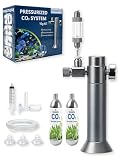
Aquarium Co2 Regulator Planted Kit
Best Natural Stone Decor for Aquascaping: Proven Top Picks