Last Updated: October 4, 2026
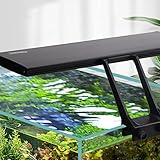
- Top Pick: AQUANEAT LED Aquarium Light Full Spectrum 12 Inch Fish Tank Light Fresh Water
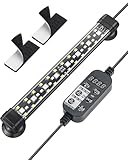
- Best Value: AQUANEAT LED Aquarium Light for 12 Inch Fish Tank, Auto On Off with Timer, Full Spectrum, Adjustable Brightness, Daylight Moonlight Mode, for Fresh Water Low-to-Mid Light Plants
- Premium Choice: Pawfly 11W Aquarium LED Light for 12 to 18 Inch Fish Tanks Extendable Fish Tank Light with Full Spectrum Brilliant White Blue Red Lights with Daytime & Night Modes and Adjustable Brightness
The right aquarium light does far more than let you see your fish. It sets the mood of the display, drives healthy plant growth, and shapes how vivid your fish colors appear. In this 2026 guide we compare the best aquarium lights for a fish tank, covering everything from low-cost clip lamps to programmable planted-tank fixtures.
As an Amazon Associate I earn from qualifying purchases.
As an Amazon Associate we earn from qualifying purchases at no extra cost to you.





Prime
Editor's Pick
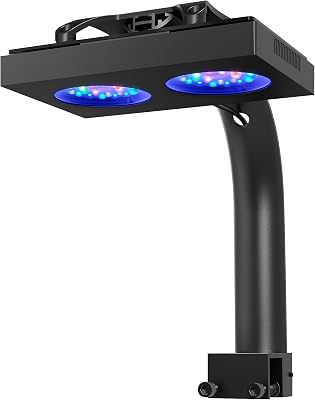
NICREW NavaReef 65 Reef LED Light, 65W Reef Aquarium Lighting for Soft/LPS Corals and Saltwater Fish Tanks, Built-in Timer, Blue Focused Spectrum


Prime
Top Rated
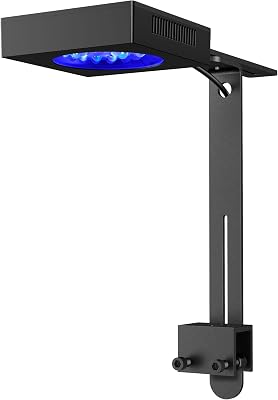
AQUANEAT LED Aquarium Light Full Spectrum 17 Inch Light Body with Extendable Brackets for 18 Inch to 24 Inch Fish Tank Light Fresh Water

🛒 Best Price Today on Amazon
Prime members get fast, free shipping on everything above, plus member-only deals. New members get a 30-day free trial — cancel anytime.
Why Your Aquarium Light Choice Matters
Too little light leaves plants leggy and colors flat; too much fuels stubborn algae. A good aquarium light strikes the balance and, ideally, lets you tune intensity and schedule to your tank’s needs. Livestock-only tanks can get away with simple fixtures, while planted aquascapes demand more spectrum and power. If algae is already creeping in, our guide to beating common aquarium algae works hand in hand with better lighting habits.
| Product | Best For | Standout Feature | Rating |
|---|---|---|---|
| Fluval Plant 3.0 LED | High-tech planted tanks | Full app-based control | 4.8/5 |
| NICREW ClassicLED Plus | Budget planted setups | Great value spectrum | 4.6/5 |
| Hygger Clip-On LED | Nano and desktop tanks | Adjustable gooseneck arm | 4.5/5 |
| Finnex Planted+ 24/7 | Set-and-forget aquascapes | Automated day cycle | 4.7/5 |
| Aqueon OptiBright LED | Fish-focused community tanks | Color-popping daylight | 4.4/5 |
Types of Aquarium Lights for a Fish Tank
Modern fish tank lights are almost all LED, but they range from simple single-channel strips to multi-color programmable fixtures. Livestock tanks need enough light to display fish and support the odd hardy plant. Planted tanks need higher output and a spectrum tuned for photosynthesis. Match the fixture to your goal, and check our planted tank lighting requirements if you are chasing lush growth.
Fluval Plant 3.0 Aquarium Light
This is the enthusiast’s benchmark. The Plant 3.0 offers full app control over intensity, spectrum, sunrise and sunset ramps, and even storm effects, making it superb for demanding high-tech scapes. The output is strong enough for carpeting plants when mounted at the right height. The trade-offs are the higher price and a companion app that occasionally needs re-pairing, but the results speak for themselves.
NICREW ClassicLED Plus Aquarium Light
For keepers who want strong planted-tank performance without a premium outlay, the ClassicLED Plus is the perennial value champion. Its balanced spectrum grows a wide range of easy to medium plants, and a separate timer inline gives you basic scheduling. It lacks onboard app control and per-channel tuning, so it is less flexible than flagship units, but for most low to medium-tech tanks it delivers excellent results per dollar.
Hygger Clip-On Aquarium Light
Nano and desktop tanks are awkward to light, and this clip-on fixture solves that neatly. The flexible gooseneck arm aims light exactly where you want it, and the compact head suits bowls, cubes, and small betta tanks. It will not push a heavily planted scape, but for a low-light nano with anubias or moss it is ideal. Betta keepers love how easily it clamps onto rimless glass, as noted in our nano tank setup guide.
Finnex Planted+ 24/7 Aquarium Light
If you want a hands-off display, the Planted+ 24/7 automates an entire day cycle, gradually shifting from dawn tones to full daylight to a moonlit blue. Plants grow well under it and the automation looks fantastic in a living room. Some keepers find the default schedule a touch bright for algae-prone tanks, so the custom mode is worth learning. It is a superb blend of aesthetics and function.
Aqueon OptiBright Aquarium Light
For fish-first community tanks where plants are an afterthought, the OptiBright makes livestock colors pop with crisp daylight LEDs and adjustable brightness. It is easy to fit with extendable docking arms and looks clean over a standard rimmed tank. It is not intended for demanding plants, so aquascapers should look elsewhere, but as a reliable everyday fish tank light it is hard to beat for the money.
Which Aquarium Light Should You Buy?
Go with the Fluval Plant 3.0 for a high-tech planted showcase, the NICREW for planted value, and the Finnex for effortless automation. Choose the Hygger clip-on for nano tanks and the Aqueon OptiBright when displaying fish is your main goal. Matching output to your plant ambitions is the single most important decision here.
Setting the Right Photoperiod for Your Aquarium Light
Most tanks thrive on a six to eight hour photoperiod, kept consistent with a timer. Longer schedules or excessive intensity invite algae faster than they help plants. If you run a high-output fixture, consider a midday siesta break to curb algae while still feeding plant growth. Our algae prevention checklist ties lighting duration to overall tank balance.
Mounting and Maintaining Your Aquarium Light
Keep the fixture height appropriate to your plant needs, since raising a light lowers its intensity at the substrate. Wipe the lens periodically, as hard-water spots and dust cut output over time, and keep splash guards clean to protect the LEDs. Route cables safely with a drip loop so water cannot travel down the cord to the outlet. A well-placed, well-maintained light is central to a thriving display and complements your overall equipment setup plan.
Frequently Asked Questions
How many hours should an aquarium light stay on?
Most fish tanks do best with a consistent six to eight hour photoperiod controlled by a timer. Longer durations rarely benefit plants and usually accelerate algae growth instead, so keep the schedule steady and reduce it if you notice green film building up on the glass or decorations.
Do I need a special aquarium light for live plants?
Live plants need a light with enough intensity and a spectrum suited to photosynthesis, so a dedicated planted-tank fixture outperforms a basic viewing light. Low-light species like anubias and java fern tolerate modest fixtures, but carpeting and stem plants require stronger, spectrum-tuned LEDs to grow compact and colorful.
Will a brighter aquarium light cause more algae?
Excess light is a leading algae trigger, but it is really the combination of too much light, long photoperiods, and surplus nutrients that fuels outbreaks. Balancing intensity with your plant demand, keeping the schedule short and consistent, and staying on top of nutrients together keep algae in check far better than dimming alone.
Can I leave my aquarium light on overnight?
No, fish and plants both need a dark rest period, and leaving the light on around the clock stresses livestock and promotes heavy algae growth. Use a timer to mimic a natural day-night cycle, and if you want an evening glow, choose a low-intensity moonlight setting rather than full daylight.
Related Reviews & Guides
What Size Filter for 40 Gallon Aquarium? Size Guide With Measurements (2026)
5 Gallon vs 10 Gallon Aquarium: Which Is Right for Your Home (2026)