Last Updated: October 21, 2026
- Top Pick: SunGrow 10 Indian Almond (Catappa) Leaves 4″-7″ for Betta Fish – Natural Aquarium Water Conditioner, Adds Tannins, Lowers pH, Fin Growth and Enhances Color, Stress Relief, Water Softening Treatment
- Best Value: Southside Plants Tap Water Conditioner for Houseplants & Hydroponics – Remove Chlorine, Chloramines & Heavy Metals, Buffers pH – 8 Oz
- Premium Choice: Fluval 12696 Volcanic Soil Bio Stratum for Planted Tanks, 4.4 lbs.
Aquarium water turning brown splits into two very different situations, and one question separates them: is the water tinted but clear, or is it cloudy? Tinted usually means harmless tannins leaching from wood. Cloudy brown means suspended organic matter, and that is the version that actually needs attention.
As an Amazon Associate we earn from qualifying purchases.
As an Amazon Associate we earn from qualifying purchases at no extra cost to you.




By David Nguyen
Tinted or Cloudy: One Check Settles It
Brown is the one aquarium colour that is frequently no cause for concern at all. Aquarium water turning brown has two distinct origins with opposite implications. Tannin staining is cosmetic and reversible, while suspended detritus signals an organic load the system is not clearing, and the two look alike from across a room.
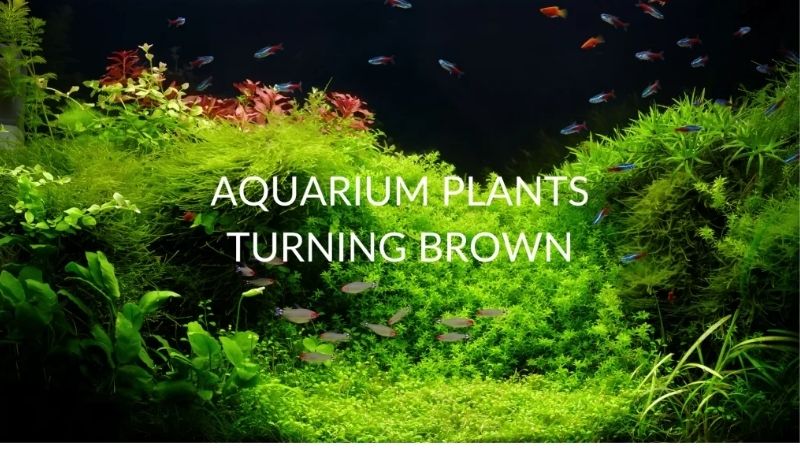
The Deciding Check: Tinted and Clear, or Cloudy?
Hold a white sheet of paper behind the tank and look through the full length. Tannin-stained water is transparent with an amber or tea-coloured cast, and you can read text through it. Detritus-laden water is hazy, and detail blurs across the same distance.
Then test ammonia, nitrite, nitrate and temperature with a liquid kit. Tannins do not move any of those numbers, so a brown tank with ammonia 0 ppm, nitrite 0 ppm and nitrate under 40 ppm is almost certainly a wood or leaf tank behaving normally.
Nitrate above 40 ppm alongside brown haze points to organic accumulation instead. Note also how long the tank has run and what went into it recently, since new driftwood, new botanicals and a new substrate all produce brown in the first weeks.
The Chemistry Behind Each Cause
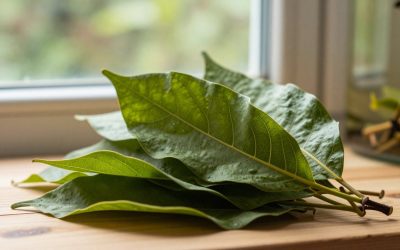
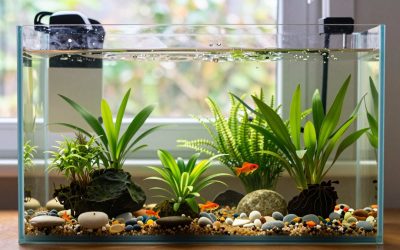
Tannins are humic and polyphenolic compounds leaching from wood, leaves and peat. They lower pH slightly, mildly reduce KH, and give the amber cast associated with blackwater habitats. Many soft-water species evolved in exactly that water, which is why the look has a following.
Suspended detritus is fine particulate organic matter: broken-down waste, decaying plant material and food fragments too small for mechanical media to catch. It appears alongside rising nitrate, and it usually means substrate has not been vacuumed or flow has dropped.
A third cause looks brown but sits on surfaces rather than in the water: diatoms, the brown film common in tanks under three months old. That is a coating on glass, substrate and leaves, not a colour in the water column, and it fades as the tank matures.
Tannins have measurable side effects worth tracking. They lower pH modestly and consume some KH as they acidify, so a tank running very low buffering already, under about 3 dKH (54 ppm), can drift further than intended when a large piece of wood goes in.
Normal Ranges Against Action Thresholds
The table separates the versions worth ignoring from the ones worth acting on. Read it with the paper test done and the four numbers written down, because appearance alone will mislead you here more than with any other colour.
| What you see | Readings | Most likely cause | What to do |
|---|---|---|---|
| Amber tint, water clear through | All four normal, wood present | Tannins leaching from driftwood | Nothing, or dilute with water changes |
| Deep tea colour, new botanicals added | pH slightly lower, KH slightly lower | Leaves or peat releasing humics | Monitor KH stays above 2-3 dKH |
| Brown haze, detail blurred | Nitrate above 40 ppm | Suspended detritus, organic load | Change 30%, vacuum substrate |
| Brown haze after a big substrate clean | All four normal | Disturbed fines, temporary | Add fine floss, wait 24-48 hours |
| Brown film on glass and leaves | Tank under 3 months old | Diatoms during maturation | Wipe glass, wait, it fades |
What This Means in a Real Tank
How much brown you get, and how long it lasts, depends on what is in the tank rather than on the water. Hardscape choice, substrate and flow explain almost all the variation between two tanks set up on the same day.
Tank Size, Placement and Fit
Volume decides how intense aquarium water turning brown looks in practice. The same piece of driftwood tints a 10 gallon (38 L) tank far more deeply than a 55 gallon (208 L) one, because the tannins released are diluted into four or five times the water in the larger tank.
Wood volume relative to water volume is the number to think about before buying. A large centrepiece branch in a nano tank will produce months of strong colour, while the same branch in a 40 gallon (151 L) tank reads as a light amber.
Measure before you order, because hardscape is the item people misjudge most. Check the piece against internal tank length and height with substrate in place, allow 4-6 in (10-15 cm) behind the tank for a hang-on-back filter, and check stand capacity against roughly 10 lb/gallon (about 1 kg/L) filled.
How This Differs Across 10, 20 and 55 Gallon Tanks
Small tanks show both versions faster. A 10 gallon (38 L) tank browns visibly within days of adding wood and accumulates detritus to a noticeable level within weeks of skipped maintenance, while a 55 gallon (208 L) tank absorbs both far longer.
Water change arithmetic follows. Removing 30% of a 10 gallon tank removes 30% of the standing tannins, and repeating that weekly clears a tank in about a month. On a 55 gallon tank the same percentage means moving around 16 gallons (61 L) each time.
Flow matters for the detritus version specifically. A baseline turnover of 4-6 times tank volume per hour suits community stocking, with 8-10 times for goldfish and cichlids, and printed GPH drops 30-50% once media and hoses load. Particles settle wherever that flow does not reach.
How Hardscape, Substrate and Stocking Change the Picture
Wood type sets the timeline. Dense hardwoods such as mopani release tannins strongly for months, while lighter spider wood and manzanita release less and fade sooner. Cholla and botanical pods release quickly and are usually exhausted within weeks.
Substrate contributes too. Soil-based planted substrates release organics and fines when disturbed, and fine sand holds detritus at the surface where it is visible. Gravel hides the same material lower down, which is not the same as not having it.
Heavy stocking drives the detritus version regardless of hardscape. Goldfish and large cichlids produce waste faster than most schedules remove it, so their tanks trend brown and hazy for reasons that have nothing to do with wood.
The blackwater and botanical style spreading through aquascaping social media has made the tinted version deliberate for a lot of people. Worth knowing before copying a photograph: those tanks are months old, the leaves are replaced continuously, and the colour is maintained rather than permanent.
Common Mistakes and Myths to Retire
Three beliefs push people into fighting aquarium water turning brown when the colour is either harmless or a symptom the colour itself cannot fix. Each has a specific replacement worth knowing.
Myth: Brown Water Means Dirty Water
Tannin-stained water can be chemically pristine. Ammonia and nitrite at 0 ppm with nitrate under 40 ppm describes clean water regardless of colour, and blackwater habitats in the wild carry far more tannin than most aquariums ever will.
The replacement test: judge by readings and clarity, not by hue. If the numbers are clean and you can read text through the tank, the only question left is whether you personally like the look, which is a preference rather than a problem.
Myth: Boiling Wood Removes Tannins for Good
Boiling and soaking accelerate the initial release and help wood sink, which is genuinely useful. What they do not do is empty the wood, and a piece boiled for hours will still tint water for weeks or months once it is in the tank.
The realistic expectation: dense wood releases tannins for two to six months, tapering gradually. Weekly water changes at 20-30% remove a proportion each time, and that steady dilution is what actually reduces the colour over that period.
Myth: Activated Carbon Is a Permanent Solution
Carbon adsorbs tannins effectively and clears the colour within days, which makes it the fastest tool available. It saturates though, typically within two to four weeks, and once saturated it does nothing while sitting in the filter looking exactly the same.
Carbon also removes other things indiscriminately, including some plant nutrients and any medication in the water. Treat it as a periodic tool with a replacement cost across twelve months, not as a permanent stage in the filter.
Managing the Colour Long Term
Whether you are clearing the colour or keeping it, the routine is the same. Aquarium water turning brown responds to the same two levers in both directions. Those levers are dilution and mechanical filtration, and both are schedule items rather than purchases.
What to Do on a Schedule
Change 20-30% weekly adjusted by measured nitrate, and vacuum a section of substrate each time so detritus leaves rather than breaking down further. Rotate sections so the whole bed is covered monthly without disturbing everything at once.
If you want the colour, do less and accept slower dilution. If you want it gone, keep changes at the upper end and run carbon in cycles of two to four weeks, replacing it rather than leaving exhausted media in the housing.
Test KH monthly in any tank with significant wood or botanicals. It is the parameter tannins actually move, and a slow decline in buffering is far more consequential than the colour that made you notice it in the first place.
Gear That Degrades and How It Shows Up
Filter flow falls 30-50% as media loads and impellers wear, and the detritus version of brown is often the first visible sign. A hang-on-back unit that lost prime after a power interruption may be moving very little water while sounding normal.
Test reagents expire and read low with age, which matters because the nitrate figure is what distinguishes harmless tint from organic accumulation. Strips drift quickly once opened in a humid room, so write the opening date on the box.
Heaters drift too, commonly ±2-4 °F (±1-2 °C) off the dial on budget units, and warmer water accelerates decomposition. Every powered device beside water belongs on a GFCI outlet with a drip loop and a UL or ETL mark.
The Twelve-Month Running Cost
The recurring items are dechlorinator, mechanical media, test reagents and continuous power for filter and heater. If you run carbon regularly, add it as a genuine consumable, since two to four week replacement across a year is a real ongoing figure.
Botanical setups add their own list. Leaves, pods and cones break down and need replacing every few weeks to hold the colour, which is a modest but continuous cost that people entering the style from social media images rarely see mentioned.
Filters using loose media let you add and remove carbon freely without discarding colonised biological media, which is both cheaper across the year and safer for the nitrogen cycle than swapping a proprietary cartridge that contains carbon and floss together.
Frequently Asked Questions
These five come up most often when a tank has gone the colour of weak tea and nobody is sure whether aquarium water turning brown counts as a problem.
Is brown water harmful to fish?
Tannin-stained water is not, and many soft-water species come from habitats far darker than any aquarium. Watch KH though: strong tannin release can lower buffering, so keep KH at or above roughly 2-3 dKH (36-54 ppm) in a stocked tank.
How long until new driftwood stops tinting the water?
Dense wood such as mopani commonly releases tannins for two to six months, tapering throughout. Lighter woods fade sooner. Weekly 20-30% changes shorten the visible period considerably without removing the wood from the tank.
Will water changes alone clear it?
Yes, gradually. Each 30% change removes roughly 30% of the standing tannins, so weekly changes produce steady improvement over a month or two while the wood continues releasing. Carbon does the same job in days rather than weeks.
Does brown water cause algae?
Not directly, and it can reduce algae by cutting light penetration. The detritus version is a different matter, because the same organic surplus that clouds the water also feeds algae, which is why both often appear in the same tank.
My tank browned suddenly with no new wood. Why?
Look at the previous fortnight: a heavy substrate clean, a filter left off, increased feeding, or plants that died back. Aquarium water turning brown without new hardscape almost always traces to organic matter that was already in the tank being released or accumulating.
The Bottom Line on Brown Aquarium Water
Aquarium water turning brown is harmless in the majority of cases. Run the paper test first: transparent amber means tannins from wood or leaves, and the only decision is whether you like the look. Hazy brown with nitrate above 40 ppm means organic accumulation, and that calls for a 30% change, substrate vacuuming and a check on filter flow. Carbon clears tannins in days but saturates within two to four weeks, and boiling wood shortens the release without ending it.
Aquarium Turnover Rate Calculator: Numbers by Tank Size
Aquarium Electrical Safety: GFCIs, Drip Loops and Load