Last Updated: September 25, 2026
Aquarium UV sterilizer guide numbers rest on dwell time rather than wattage. The same unit clears green water at high flow and does almost nothing to parasites at that speed, because the dose delivered depends entirely on how long the water stays inside the chamber rather than on the wattage printed on it.
As an Amazon Associate we earn from qualifying purchases.
As an Amazon Associate we earn from qualifying purchases at no extra cost to you. Prices and availability are accurate as of the date shown and are subject to change.

COODIA Internal Green Water Killer Aquarium Filter Tank U-V Pump
Selected for "Aquarium UV Sterilizer Guide: Watts, Flow and Dwell Time": this listing is filtration (COODIA Internal Green Water Killer Aquarium Filter Tank U-V Pump), matching the equipment this article covers.
View on Amazon
AquaMiracle Aquarium Filter with U - V Light & Filter Sponge, Fish Tank Filter with Timer for Green Water, Turtle Filter with Aeration & Rainfall Mode for Aquarium 10-30 Gallon
Selected for "Aquarium UV Sterilizer Guide: Watts, Flow and Dwell Time": this listing is filtration (AquaMiracle Aquarium Filter with U - V Light & Filter Sponge, Fish Tan), matching the equipment this article covers.
View on Amazon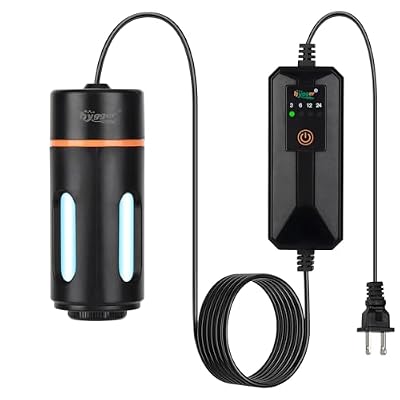
hygger Aquarium U-V Light with Timer, 360° Protective Shield Clean Light for Green Water and Algae Clean, Mini Algae Control Lamp for Freshwater and Saltwater Tank (3W for 5-25 Gallon)
Selected for "Aquarium UV Sterilizer Guide: Watts, Flow and Dwell Time": this listing is lighting (hygger Aquarium U-V Light with Timer, 360° Protective Shield Clean Lig), matching the equipment this article covers.
View on Amazon
25W UV Aquarium Filter, 200 GPH Pump with Timer for 20-75 Gal Tanks
Selected for "Aquarium UV Sterilizer Guide: Watts, Flow and Dwell Time": this listing is filtration (25W UV Aquarium Filter, 200 GPH Pump with Timer for 20-75 Gal Tanks), matching the equipment this article covers.
View on AmazonBy David Nguyen
How a UV Unit Actually Works
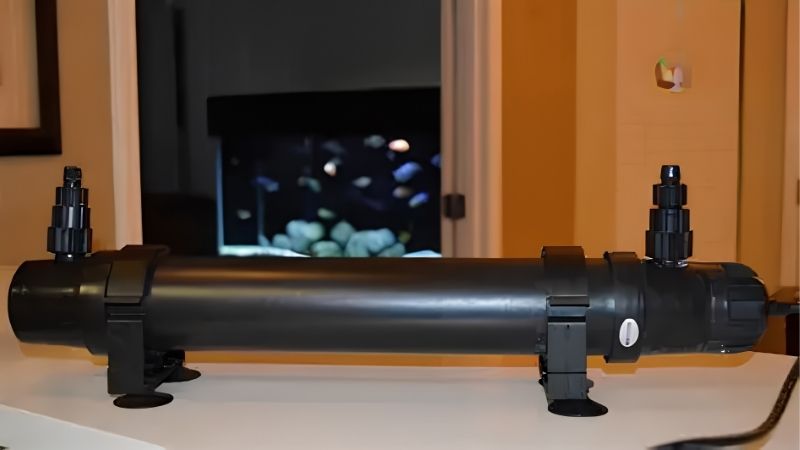
An aquarium UV sterilizer guide has to start with dose. Ultraviolet output multiplied by exposure time determines what is killed, so the same bulb at half the flow rate delivers twice the dose to whatever passes through it.
The Decision Numbers: Wattage, Flow Rate and Dose
Dose is measured in microwatt-seconds per square centimetre, and the thresholds differ enormously by target. Free-floating algae causing green water falls at roughly 15,000-30,000, bacteria at around 30,000, and many parasites need 90,000 or more.
That translates directly into flow. A unit clearing green water at 300 GPH (1136 LPH) may need to run at 75-100 GPH (284-379 LPH) to deliver a parasite-level dose, which is why manufacturers publish two very different flow ratings.
Match the pump to the target rather than to the tank. Running a UV unit at the maximum flow its plumbing allows is common and usually means it is delivering an algae-level dose while the owner expects something else entirely.
Why Placement Changes the Result
UV cannot penetrate cloudy water effectively, so the unit belongs after mechanical filtration rather than before it. Particulate shades organisms passing through, and a unit fed unfiltered water delivers far less dose than its rating suggests.
It also belongs on its own flow path wherever possible. Plumbing it in line with a return pump ties the delivered dose to whatever flow rate the display happens to need, which is rarely the flow rate the UV target requires.
Dose Targets and What Each Achieves
The table below sets out what dose each outcome needs and the practical consequence for flow. Treat the flow figures as indicative, since chamber geometry varies considerably between models at the same wattage.
| Target | Approximate dose needed | Flow relative to rating | Realistic outcome |
|---|---|---|---|
| Free-floating algae, green water | 15,000-30,000 µWs/cm² | High flow acceptable | Clears within 3-7 days |
| Waterborne bacteria | Around 30,000 µWs/cm² | Moderate flow | Reduces counts, does not sterilise |
| Free-swimming parasite stages | 90,000 µWs/cm² and above | Quarter to third of rated flow | Reduces transmission, no cure |
| Algae on glass and rock | Not applicable | Any | No effect at all |
| Ammonia, nitrate, phosphate | Not applicable | Any | No effect at all |
| Filter bacteria on media | Not applicable | Any | Unaffected, they are not free-floating |
| Bulb output | Falls with age | Not applicable | Replace every 6-12 months |
| Quartz sleeve | Blocks with film | Not applicable | Clean every 3-6 months |
The three rows showing no effect are the important ones. A UV unit acts only on organisms passing through the chamber, so anything attached to glass, rock or filter media is untouched regardless of wattage or run time.
Fitting One to a Real System
This aquarium UV sterilizer guide is only useful once the unit has somewhere to go. This section covers placement, sizing against tank volume, and how the answer differs between freshwater and marine systems.
Tank Size, Placement and Fit
Measure the mounting run and the clearance at one end before ordering, since the bulb has to slide out for replacement and a unit mounted hard against a cabinet wall cannot be serviced without unplumbing it.
Fit it after mechanical filtration and, where possible, on a dedicated small pump rather than in line with the return. That separates dose from display flow and lets you slow the unit down when the target changes.
How Tank Size Changes the Sizing
For green water in a 40-75 gallon (151-284 L) freshwater tank, a modest unit at 8-15 W running at its algae-rated flow usually clears the water within a week. Larger tanks scale by wattage rather than by run time.
For parasite-level dose the same tank needs either a much larger unit or the same one run at a quarter of its rated flow, which takes considerably longer to turn over the volume. Neither approach makes UV a treatment on its own.
Freshwater Versus Marine Use
Freshwater use in this aquarium UV sterilizer guide is dominated by green water, where UV is genuinely effective and often the quickest solution once light duration and feeding have already been corrected. It is a tool for a specific visible problem rather than routine equipment.
That ordering matters. Clearing a bloom with UV while the photoperiod stays at twelve hours simply means the bloom returns when the unit is switched off, so the underlying nutrient and light causes have to be corrected alongside it.
Marine use focuses on reducing waterborne transmission between fish and clearing occasional blooms. Salt is harder on fittings, so check that the housing and unions are rated for saltwater rather than assuming a freshwater unit will last.
Reef keepers also weigh the loss of free-floating plankton against the benefit. A tank running a refugium to produce copepods and a UV unit to kill what drifts through it is working against itself to some degree.
Myths About UV Sterilizers
Three claims cause most of the disappointment with UV, and each has a measurement or a limitation that replaces it. All three come from expecting the unit to act on things that never pass through the chamber.
Myth: UV Kills Algae in the Tank
UV kills only free-floating organisms drawn through the chamber. Green water clears because the algae is suspended; hair algae on rock and film on glass are attached and receive no exposure whatsoever, however long the unit runs.
Replace the expectation with the actual causes. Attached algae responds to photoperiod, nutrient level and flow, so cut light to six or seven hours and test nitrate and phosphate before attributing anything to the UV unit.
This aquarium UV sterilizer guide is deliberately blunt about that limit, because a unit bought to solve hair algae is money spent on entirely the wrong problem, and the algae carries on growing throughout at the same rate.
Myth: UV Destroys the Biological Filter
Nitrifying bacteria live attached to filter media and rock surfaces rather than drifting in the water column, so they are not exposed. A UV unit reduces free-floating bacterial counts without measurably affecting the colony doing the filtration.
What it can do is reduce beneficial plankton in a reef, including some of what a refugium produces. That is a genuine trade rather than a myth, and it is one reason many reef keepers run UV intermittently rather than continuously.
Myth: UV Replaces Quarantine
A UV unit reduces the free-swimming stage of some parasites in the water column, which lowers transmission. It does not treat a fish that is already infected, and organisms attached to a host never pass through the chamber.
Quarantine remains the reliable route for new arrivals. Treat UV as something that reduces the chance of spread within an already established display, rather than as a reason to skip a separate observation tank entirely.
Running It Past the First Year
UV units degrade invisibly, which is the recurring theme of this aquarium UV sterilizer guide. This section covers the maintenance that keeps output real, the failure points, and the running cost across twelve months.
The Maintenance That Keeps Output Real
Replace the bulb every 6-12 months regardless of whether it still lights. Output falls steadily across that period while the visible glow does not change, so a two-year-old bulb is producing a fraction of its rated dose.
Clean the quartz sleeve every three to six months. A film of biofilm or mineral deposit on the sleeve blocks ultraviolet before it reaches the water, and this is the single most common reason a working unit stops being effective.
Use a soft cloth and a dilute vinegar solution rather than anything abrasive, then rinse in RO/DI water. Scratches on quartz scatter light and reduce output permanently, so the cleaning method matters as much as the interval.
Failure Points and Safety
Quartz sleeves crack if handled roughly or if a hot bulb meets cold water, and o-rings at the end caps harden with age and weep. Both failures put water where the electrics are, which is why placement matters here.
Keep a spare sleeve and an o-ring set with the unit. They are inexpensive, they perish on a fairly predictable timescale, and a weeping end cap discovered on a Sunday is otherwise a week with the unit out of service.
Never operate the bulb outside its housing, since direct ultraviolet exposure harms eyes and skin. Every unit should carry a recognised certification such as UL or ETL, sit on a GFCI outlet and have a drip loop formed in its cable.
The 12-Month Running Cost
Recurring spend is a bulb once or twice a year, occasional o-rings, and electricity for a unit and its feed pump running whenever it is on. Bulbs are the dominant cost and are easy to forget until output has already fallen.
On timing, UV units and replacement bulbs see their deepest discounts in late June and again in late November, which suits stocking a spare bulb. A sale changes nothing about dose, and prices move constantly, so check at purchase.
Aquarium UV Sterilizer Guide Questions
These arrive when a tank has a visible problem and UV looks like the answer. Every response in this aquarium UV sterilizer guide points at dose or placement, since those two determine whether the unit does anything at all.
What size unit do I need?
Size by target rather than by tank. For green water, a modest unit run at its algae-rated flow suits most tanks up to 75 gallons (284 L). For parasite-level dose, run a larger unit at a quarter of its rated flow.
Should I run it continuously?
For green water, run it until the water clears and then decide. Many freshwater keepers switch it off afterwards, while reef keepers often run it intermittently to preserve plankton. Continuous running mainly shortens bulb life.
Will it clear my cloudy water?
Only if the cloudiness is a bacterial or algal bloom suspended in the water. Cloudiness from fine substrate dust or from a recent disturbance is mechanical, and a filter sock or fine floss clears that far faster.
Does UV affect medications?
It can degrade some treatments passing through the chamber, so turn the unit off during any course of treatment. The same applies to some supplements, which is a reason to switch it off before dosing rather than afterwards.
How do I know it is still working?
You largely cannot without a meter, which is why the calendar matters. Replace the bulb every 6-12 months and clean the sleeve quarterly, and treat a unit that has had neither as producing considerably less than its rating.
See More:
Conclusion
This aquarium UV sterilizer guide reduces to dose: roughly 15,000-30,000 microwatt-seconds per square centimetre for green water, around 30,000 for waterborne bacteria, and 90,000 or more for free-swimming parasite stages.
Set flow to match the target, fit the unit after mechanical filtration, replace the bulb every 6-12 months and clean the quartz sleeve quarterly. It clears suspended organisms only, so attached algae and an infected fish both remain untouched.

Aquarium Auto Top Off (ATO) System
How to Clean Fish Tank Gravel: Method, Depth and Mistakes