Last Updated: October 4, 2026
- Decide These 3 Things First
- Grain Size Is the First Decisive Factor
- Material Determines Chemistry and Maintenance
- Construction Means Shape, Surface, and Particle Consistency
- Comfort and Performance Depend on the Whole Bed
- Price Tiers Help You Compare Value
- Warranty and Product Information Still Matter
- Delivery and Assembly Are Simple, but Shipping Can Be Messy
- Spec Checklist
- Red Flags
- FAQ
Choosing aquarium substrate is not as simple as picking a color from a product photo. The most common mistake is buying by appearance alone, then discovering that the sand clouds the water, traps debris, damages bottom-dwelling fish, or makes rooted plants difficult to anchor. Another frequent error is using one grain size for every aquarium: a planted freshwater tank, shrimp setup, African cichlid aquarium, and community tank have different needs.
The useful question is not only “What color substrate looks best?” It is “What to look for aquarium substrate grain size based on livestock, plants, filtration, and maintenance?” Grain diameter affects water movement through the bed, how easily waste is removed, whether roots can spread, and how comfortable fish are when they sift or rest on the bottom.
As an Amazon Associate we earn from qualifying purchases at no extra cost to you.



This guide breaks down the measurements and product details that matter before you buy. Prices are typical retail ranges and can change by retailer, package size, and shipping. The goal is a substrate bed that performs reliably, not just one that photographs well.
Decide These 3 Things First
- Who will live on or in the substrate? Corydoras, loaches, shrimp, snails, and burrowing fish generally benefit from smooth, rounded particles. Fish that dig may need a deeper, fine-to-medium bed.
- Will you grow live plants? Plants need a substrate that allows roots to spread and provides enough stability. Root feeders often perform better with a specialized planted-tank substrate or a nutrient layer beneath inert gravel or sand.
- How much maintenance will you accept? Fine sand gives a clean, natural appearance but can compact and move easily during cleaning. Coarser gravel is usually easier to vacuum, but large gaps can collect uneaten food and waste.
Also measure the aquarium footprint before ordering. A useful estimate is that a 1-inch layer takes roughly 10 pounds in a 20-gallon long tank, while a 2- to 3-inch planted bed may require 20 to 35 pounds. Check the manufacturer’s coverage guidance because particle density varies substantially.
Grain Size Is the First Decisive Factor
For most aquariums, substrate particles fall into three practical groups:
- Fine sand: about 0.1 to 1 millimeter. This creates a smooth, beach-like surface and is comfortable for many bottom-dwelling fish. It can compact when laid too deeply, so keep the bed around 1 to 2 inches unless the product specifically supports deeper use.
- Fine gravel: about 1 to 3 millimeters. This is a versatile range for community tanks and many planted aquariums. It provides more pore space than sand while remaining small enough for a natural appearance.
- Medium gravel: about 3 to 6 millimeters. It is easier to siphon and less likely to shift, but the larger gaps can trap debris. Avoid sharp edges, especially with fish that forage along the bottom.
Very fine dust can enter filters and create persistent cloudiness if it is not rinsed carefully. At the other extreme, decorative gravel larger than 8 to 10 millimeters is generally better used sparingly, since it can leave large waste-catching gaps and make rooting difficult.
For a mixed community aquarium, a 1- to 3-millimeter smooth gravel is a dependable starting point. For a tank focused on sand-sifting fish, choose a smooth sand close to 0.5 to 1 millimeter. For shrimp and rooted plants, a fine planted substrate or 1- to 3-millimeter gravel often offers a useful balance.
Material Determines Chemistry and Maintenance
Substrate may be inert, mineral-based, or chemically active. Inert quartz, silica, and many coated gravels generally do not intentionally alter pH or hardness. They are a good choice when your tap water already suits the livestock and you want predictable chemistry.
Aragonite, crushed coral, and some limestone-based products can raise carbonate hardness and pH. That may be appropriate for certain hard-water species, but it can be unsuitable for soft-water fish, shrimp, or plants that prefer different conditions. Test a sample if the product description does not clearly state whether it is inert.
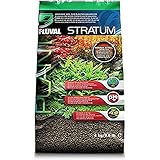
Active planted substrates are designed to influence water chemistry and provide a root-friendly medium. Fluval Plant and Shrimp Stratum, for example, is sold in an 8.8-pound package and commonly costs about $25 to $35. It is lightweight and intended for freshwater planted or shrimp aquariums, but it may break down over time and can require closer monitoring during setup.
Decorative products such as Aqua Natural Sugar White Sand, Galaxy Sand, and Diamond Black Fine Gravel are commonly priced around $12 to $18 for a 10-pound bag. Confirm whether the color is natural, coated, or dyed, and rinse according to the label. Avoid products with flaking color, an oily surface, or an unexplained chemical odor.
Construction Means Shape, Surface, and Particle Consistency
Two substrates can have the same stated diameter but perform differently because of their shape. Rounded or naturally tumbled particles are preferable for bottom-dwelling fish. Angular crushed rock may interlock well but can have points that irritate barbels, fins, or soft undersides.
Look for a narrow particle-size range rather than a bag containing mostly dust mixed with oversized chunks. Consistent grains create a more predictable bed and make it easier to calculate coverage. A product described only as “small gravel” is less useful than one listing a range such as 1 to 3 millimeters.
Surface texture matters, too. Highly porous particles can provide more area for beneficial bacteria, but they may also hold debris and require a gentler vacuuming technique. Smooth glass or polished gravel is easy to move and clean, while porous volcanic or clay-based material can be lighter and more prone to shifting when planted.
Wash loose substrate in a clean bucket until the rinse water is substantially clearer. Do not use soap or household cleaners. Some active planted substrates should not be aggressively rinsed, so follow the package directions rather than applying the same method to every product.
Comfort and Performance Depend on the Whole Bed
Grain size affects more than fish comfort. It also controls how water moves through the substrate. A compacted sand bed can develop low-oxygen areas, while very coarse gravel may allow waste to fall out of reach of a siphon. Neither outcome is automatically dangerous, but both increase the importance of appropriate depth and maintenance.
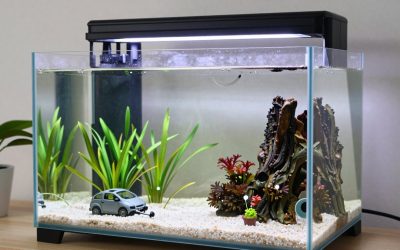
For a lightly planted community aquarium, a 1.5- to 2-inch bed is usually practical. A heavily planted aquarium may use 2 to 4 inches, often with a deeper layer toward the rear for tall plants. Avoid burying the entire tank in a deep, uniform layer of fine sand unless you understand how to maintain it.
Use a gravel vacuum sized for the tank and substrate. A narrow 1- to 1.5-inch tube offers more control over fine sand and small aquariums, while a 2- to 3-inch tube can remove waste faster from larger gravel. Keep filter flow strong enough to collect suspended debris but not so forceful that it creates bare spots or dunes.
For shrimp, small schooling fish, and bottom feeders, prioritize smoothness and stability over dramatic color. For plants, consider whether stems can be anchored without repeatedly floating loose. For burrowing species, choose a material that allows digging without sharp edges or excessively large gaps.
Price Tiers Help You Compare Value
Budget substrate generally costs $10 to $20 for 10 pounds. This tier includes many inert sands and decorative fine gravels. Aqua Natural’s 10-pound sand and fine-gravel examples, listed around $15, fit this category. Budget material can work very well when the particle size, chemistry, and shape match your aquarium.
Midrange substrate costs about $20 to $35 for 8 to 12 pounds. Products in this range may offer more consistent sizing, specialized colors, or planted-tank formulations. Compare price by weight, not just by bag, because lightweight volcanic and clay substrates can cover a different area than dense mineral gravel.
Premium substrate costs about $35 to $60 or more for 8 to 12 pounds. This tier may include active planted substrates, specialty shrimp media, or carefully graded natural materials. A higher price does not guarantee better performance. Pay for a feature you need, such as buffering or root support, rather than branding alone.
Warranty and Product Information Still Matter
Substrate rarely has a conventional performance warranty, but reputable sellers should provide a clear product description, package weight, intended aquarium type, grain size, and material information. Look for a return policy that covers an unopened or incorrectly described product. A 30-day return window is common, although used or wet substrate may not qualify.
Check the lot or batch information if you are buying several bags for one display aquarium. Color and particle distribution can vary between production runs. Buy enough at once to avoid visible differences, especially with black, white, or mixed-color products.
Delivery and Assembly Are Simple, but Shipping Can Be Messy
There is no assembly, but delivery deserves attention. A 10-pound bag can arrive torn if it is packed without an outer carton, and fine material may leak into the box. Inspect the package before opening it over a clean floor or aquarium stand.
Calculate shipping by total weight. Ordering four 10-pound bags may be cheaper per pound than buying smaller bags, but confirm that the aquarium stand and floor can support the completed setup. Water weighs about 8.3 pounds per gallon; substrate, glass, décor, and equipment add substantially more.
Never pour substrate directly into a filled aquarium from height. Place a plate, plastic bag, or shallow container on the bottom and add water slowly to reduce dust and disturbance.
Spec Checklist
| Spec | Budget | Mid | Premium |
|---|---|---|---|
| Typical price | $10–$20 per 10 lb | $20–$35 per 8–12 lb | $35–$60+ per 8–12 lb |
| Useful grain size | 0.5–3 mm | 1–4 mm | 0.1–3 mm, product-specific |
| Best use | Community tanks and décor | Planted or mixed aquariums | Specialized planted or shrimp setups |
| Typical package | 10 lb | 8–12 lb | 8–12 lb |
| Recommended bed depth | 1–2 in | 1.5–3 in | 2–4 in when directed |
| Key check | Rinseability and inertness | Shape and consistency | pH effects and replacement plan |
Red Flags
- No particle-size range, material description, or aquarium-specific instructions.
- Sharp shards, splinter-like edges, or visibly jagged pieces in a product marketed for bottom dwellers.
- Strong chemical, petroleum, or perfume odor.
- Color that rubs off heavily during rinsing or a coating that flakes.
- Excessive powder that remains cloudy after repeated rinsing, unless the product is an active substrate with special instructions.
- Claims that the substrate eliminates cycling, replaces filtration, or guarantees plant growth.
- Unclear package weight or coverage information.
FAQ
What grain size is best for most freshwater aquariums?
A smooth 1- to 3-millimeter gravel is the most adaptable choice for many community and planted tanks. It offers more water movement than fine sand and fewer debris-catching gaps than large gravel.
Is sand or gravel better for corydoras?
Fine, smooth sand around 0.5 to 1 millimeter is often the most comfortable option for corydoras because they sift it while feeding. If you choose gravel, select small rounded particles without sharp edges.
How deep should aquarium substrate be?
Use about 1 to 2 inches for a simple community aquarium and 2 to 4 inches for many planted layouts. Avoid making fine sand excessively deep unless you have a maintenance plan and the product supports that use.
Do I need to replace aquarium substrate?
Inert sand and gravel can last for many years if they remain intact and are cleaned appropriately. Active planted substrates may gradually soften or lose their original buffering behavior, so follow the manufacturer’s guidance and replace only when performance, structure, or water chemistry changes require it.
Ready to decide? Our #1 pick for 2026 is the Typical price.
Live price & availability on Amazon.
Related Reviews & Guides
How to Clean a Canister Aquarium Filter (2026): Step-by-Step
29 Gallon Aquarium Setup Ideas: Depth, Stocking and Cost