Last Updated: October 4, 2026
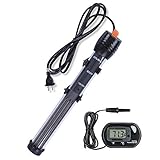
- Top Pick: hygger Small Aquarium Betta Heater, Submersible Fish Tank Heater 10W/25W/50W/100W with LED Digital Display, Suitable for Marine Saltwater and Freshwater up to 5/10/16/26 Gallon
- Best Value: Orlushy Submersible Aquarium Heater,500W Fish Tahk Heater with Adjust Knob Thermostat 2 Suction Cups and Free Thermometer Suitable for Marine Saltwater and Freshwater (500W)
- Premium Choice: hygger Small Aquarium Betta Heater, Submersible Fish Tank Heater 10W/25W/50W/100W with LED Digital Display, Suitable for Marine Saltwater and Freshwater up to 5/10/16/26 Gallon
Choosing aquarium heater wattage looks simple until a fish tank runs cold, overheats, or cycles constantly. The most common mistake is matching watts to tank gallons without considering room temperature, tank shape, a lid, water movement, or the species’ preferred range. Another is assuming a higher wattage heater is automatically better. An oversized heater can raise temperature too quickly if its thermostat sticks, while an undersized model may run continuously without maintaining a stable temperature.
The right buying decision is less about finding the biggest number and more about choosing controlled, appropriately distributed heat. Use the wattage chart as a starting point, then account for the room and aquarium setup. This guide explains what to look for in aquarium heater wattage in 2026, including construction, safety features, price, warranty, and practical installation details.
As an Amazon Associate we earn from qualifying purchases at no extra cost to you.


Decide These 3 Things First
- Tank volume: Use the actual water volume, not just the aquarium’s advertised size. Substrate, decorations, filters, and a partially filled tank reduce the amount of water being heated.
- Temperature difference: Estimate how many degrees the heater must raise the water above the room temperature. A tank in a 72°F room needing 78°F water has a 6°F difference; a tank in a 64°F room needs a much larger increase.
- Fish and invertebrate needs: Tropical freshwater fish commonly need water around 75°–80°F, while bettas are often kept near 78°–80°F. Marine tanks may have narrower temperature requirements. Always confirm the needs of the inhabitants rather than relying on a generic setting.
As a practical starting point, plan on roughly 2.5–5 watts per gallon. Use the lower end for a warm room and the upper end for a cool room or an aquarium with a larger temperature gap. Small tanks often need proportionally careful heating because a 10-watt heater can affect a 2-gallon aquarium much faster than a 100-watt heater affects a 20-gallon tank.
Size and Wattage
Match the heater to the aquarium’s water volume and room conditions. Common starting ranges are:
- 2–5 gallons: 10–25 watts, depending on room temperature and the manufacturer’s stated coverage.
- 5–10 gallons: 25–50 watts.
- 10–20 gallons: 50–100 watts.
- 20–40 gallons: 100–200 watts.
- 40–75 gallons: 200–300 watts, or multiple heaters for more even distribution.
These figures are guidelines, not guarantees. A 25-watt heater may work well for a covered 5-gallon tank in a warm room but struggle in an unheated garage. For larger aquariums, two moderate heaters can be preferable to one very large unit. For example, two 150-watt heaters in a 60-gallon tank can distribute heat more evenly and provide limited backup if one fails, though each heater still needs a reliable thermostat and proper placement.
Do not use wattage alone to compare products. Check the gallons listed by the manufacturer, the minimum water depth, and whether the heater is designed for freshwater, saltwater, or both.
Material and Water Compatibility
Heater materials affect durability and safety. Most aquarium heaters use glass, plastic, ceramic, or a combination of materials.
- Glass: Common and affordable, but it can crack from impact or thermal shock. Never remove a hot glass heater from the water and immediately place it on a cold surface.
- Shatter-resistant plastic: Useful in tanks with large fish, turtles, or active decorations that could strike the heater. Verify that the product is specifically rated for aquarium use.
- Titanium or metal-bodied designs: Often chosen for larger or marine aquariums. They may need an external controller or grounding arrangement, depending on the product.
- Ceramic heating elements: Can provide a compact heat source, but the surrounding housing and thermostat remain just as important as the element itself.
Look for corrosion-resistant materials and a clear freshwater or saltwater rating. Saltwater can be harder on exposed metal components. Avoid household heating devices, reptile heat products, or any heater without a fully sealed aquarium specification.
Construction and Safety
A good aquarium heater should be fully submersible if the instructions say it is, include a secure mounting system, and clearly identify the minimum and maximum waterline. Suction cups are common, but their quality varies. Two cups can be adequate for a short heater; longer or heavier models may benefit from a bracket or additional support.
Important construction details include:
- Waterproof housing: The heating element and electrical connections should be sealed for the intended depth.
- Temperature protection: Overheat protection, automatic shutoff, and a dependable thermostat reduce risk if water circulation changes.
- Visible controls: A dial, digital display, or external controller should be easy to read and adjust.
- Protective guard: A guard helps prevent fish, plants, nets, and decorations from contacting a hot surface.
- Appropriate cord length: About 4–6 feet is common and makes it easier to create a drip loop.
Place the heater near filter outflow or another area with steady circulation, but do not bury it in gravel or press it against the glass. Unplug it before draining the tank or removing it from the water. A separate aquarium thermometer is still essential because any thermostat can fail.
Comfort and Performance
Temperature stability matters more than fast heating. Fish can be stressed by repeated swings of several degrees, even when the average temperature appears acceptable. A heater with a narrow adjustment range or difficult-to-read markings may be frustrating in daily use.
Look for controls that adjust in approximately 1°F increments, a readable display, and an indicator light that shows when the heater is actively heating. Digital displays are convenient, but they are not a substitute for an independent thermometer. Check the water at the opposite end of the aquarium and allow several hours after an adjustment before making another change.
Water movement also affects performance. A heater placed in a stagnant corner may create a warm pocket while the rest of the tank remains cool. In a long aquarium, consider horizontal placement if the manual permits it, or use two heaters positioned at opposite ends. Always follow the product’s minimum submersion and placement instructions.
Price Tiers
Budget aquarium heaters generally cost about $12–$25. At this level, expect basic thermostatic control, suction cups, and a simple indicator light. A small hygger heater in 10-, 25-, 50-, or 100-watt versions is an example of the compact format commonly sold for small tanks; listed prices for similar versions range from about $15 to under $20.
Midrange models typically cost $25–$60. They may offer a more durable housing, better temperature controls, a guard, a clearer display, or stronger mounting hardware. This is often the best value for a regularly stocked community aquarium.
Premium systems usually cost $60–$150 or more, especially when they include an external controller, titanium construction, redundant temperature sensors, or high-wattage capacity. They make the most sense for large, expensive, or marine aquariums where temperature control is especially important.
Be cautious with unusually high wattage at a very low price. A 500-watt adjustable Orlushy heater, for example, may be inexpensive—listed around $20—but that wattage is intended for substantially larger water volumes than a typical betta or nano tank. A lower-priced adjustable model listed around $15 may be a better fit only if its wattage and coverage match the aquarium.
Warranty and Support
Look for at least a 12-month warranty, clear return instructions, and a manufacturer that publishes contact information and replacement procedures. Some premium aquarium heating systems offer two- or three-year coverage, but read the exclusions. Warranties may not cover damage caused by running the heater out of water, incorrect installation, power surges, or cracked glass.
Keep the receipt, packaging, model number, and a photograph of the installation. If the heater behaves erratically, unplug it and use a temporary safe heating plan rather than waiting for customer service while fish remain at risk.
Delivery and Assembly
Most submersible heaters require little assembly: attach the suction cups or bracket, set the temperature, and place the unit correctly. Allow a glass heater to sit submerged and unplugged for roughly 15–30 minutes before powering it on, unless the instructions specify another procedure. This lets the housing equalize with the water temperature.
Before buying, confirm the package includes the parts you need. A useful kit may include two suction cups, a thermometer, a protective guard, and a controller. Check the shipping box immediately for cracks, loose parts, or a damaged cord. Never install a heater that arrived visibly broken.
Spec Checklist
| Spec | Budget | Mid | Premium |
|---|---|---|---|
| Typical price | $12–$25 | $25–$60 | $60–$150+ |
| Best tank range | 2–20 gallons | 10–75 gallons | 40+ gallons or demanding setups |
| Common wattage | 10–100 watts | 50–300 watts | 150–500+ watts |
| Temperature control | Basic dial or preset | Adjustable dial or digital display | External controller or digital regulation |
| Safety features | Automatic shutoff | Overheat protection and indicator light | Controller alarms, guard, and redundant monitoring |
| Included accessories | Suction cups | Mounting hardware and sometimes thermometer | Controller, sensor, guard, or mounting bracket |
| Warranty target | At least 12 months | 12–24 months | 24–36 months |
Red Flags
- No stated gallon coverage, wattage range, or minimum water depth.
- A heater marketed for both nano tanks and very large aquariums without separate wattage guidance.
- No independent temperature control, unclear markings, or a display that cannot be read in normal room light.
- Exposed electrical connections, cracked housing, brittle suction cups, or a frayed cord.
- Instructions that do not explain whether the heater is fully submersible.
- Promises of instant heating or claims that a separate thermometer is unnecessary.
- Using one oversized heater in a small aquarium simply because it costs little more.
FAQ
How many watts do I need for a 10-gallon aquarium?
A 50-watt heater is a common starting point for a 10-gallon tank, while a 25-watt model may work in a warm room and a 75-watt model may be appropriate for a cold room if the manufacturer allows it. Monitor the water with a separate thermometer rather than relying only on the wattage label.
Is a higher-wattage aquarium heater better?
Not necessarily. Higher wattage can heat water faster, but excessive capacity increases the consequences of a thermostat failure and may cause rapid temperature changes in a small tank. Choose the lowest suitable wattage that can maintain the required temperature under the room’s actual conditions.
Should I use two aquarium heaters?
Two heaters can improve heat distribution and provide limited backup in larger tanks. They are often more practical in aquariums above about 40–50 gallons, especially when placed near opposite ends. Use properly sized units and monitor both the aquarium temperature and each heater’s operation.
Can I trust the heater’s digital display?
Treat the built-in display as a convenience, not the only measurement. Place a separate, reliable thermometer in the aquarium and compare readings after the heater has operated for several hours. If the readings differ significantly, follow the thermometer and investigate the heater before continuing to use it.
Ready to decide? Our #1 pick for 2026 is the Typical price.
Live price & availability on Amazon.
Related Reviews & Guides


How to Set Up an Aquarium Heater (2026): Step-by-Step
Best Low Iron Glass Aquarium: Best Proven Compared Buyer Guide