Last Updated: September 27, 2026

Reef Octopus Classic 150INT Protein Skimmer
Included for 'What Size Protein Skimmer Do You Need: Best Expert Picks' as a relevant option in this category; details come from the product listing.
View on Amazon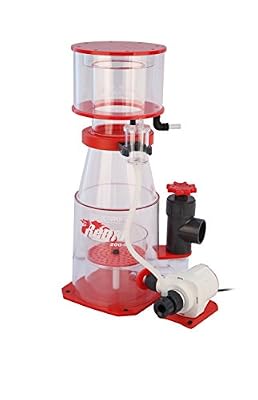
Reef Octopus Regal Internal Protein Skimmer REGAL-200INT
Included for 'What Size Protein Skimmer Do You Need: Best Expert Picks' as a relevant option in this category; details come from the product listing.
View on Amazon
Reef Octopus OCTO Regal 150 SSS Space Saver Protein Skimmer
Included for 'What Size Protein Skimmer Do You Need: Best Expert Picks' as a relevant option in this category; details come from the product listing.
View on Amazon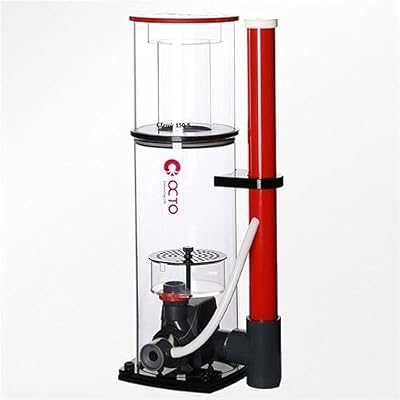
Reef Octopus Classic 150SSS Protein Skimmer
Included for 'What Size Protein Skimmer Do You Need: Best Expert Picks' as a relevant option in this category; details come from the product listing.
View on AmazonHeadline gallon figures answer a question nobody asked. Working out what size protein skimmer do you need means converting total connected water volume and genuine organic load into a usable rating, using whichever framework the manufacturer or retailer actually published. Table first.
As an Amazon Associate we earn from qualifying purchases.
By David Nguyen
How to Size a Protein Skimmer
Four inputs together produce the answer: total connected water volume, the bioload band that your feeding and stocking create, the rating framework the source uses, and the recognition that gross oversizing actually degrades performance rather than providing free insurance of any kind.
| Input | Result | Note | Exception |
|---|---|---|---|
| 50 gal total, heavy load | Quantum 120 rated 50 gal heavy | BRS load-specific metric | Curve 5 heavy is 75 gal |
| Curve 5 Elite | 75 heavy, 100 medium, 125 light | Retailer framework | Not a maker standard |
| TUNZE 9004, mixed reef | About 39 gal from 65 nominal | 40 percent reduction | TUNZE-specific rule |
| TUNZE 9004, SPS | About 26 gal, or 20 with heavy fish | 60 and 70 percent cuts | Applies to TUNZE only |
Start With Total Connected Water
The skimmer processes everything plumbed together, so display volume alone understates the job considerably. BRS frames sizing around total water volume combined with bioload, which means adding both the sump and the plumbing before checking any published rating against that figure.
Subtract displacement from rock and substrate for honesty, since a heavily aquascaped display holds noticeably less than its nominal rating. That resulting number is the one which every subsequent adjustment applies to, so it is worth calculating it carefully rather than merely estimating.
Place Yourself in a Load Band
Retailer ratings separate heavy, medium and light stocking, and BRS notes that medium to heavy loading is common in stocked reefs rather than unusual. The Curve 5 Elite carries 75, 100 and 125 gallon figures across those three bands, while the Quantum 120 lists 50, 75 and 125 gallons.
Assess your feeding frequency alongside the fish count as well, since nutrient input drives skimming more directly than livestock numbers alone. A modest tank fed several times daily behaves like a heavier system, which moves you one band down the table rather than one band up it.
Note Which Framework the Rating Uses
Manufacturer nominal ranges and retailer load bands are different systems that cannot be mixed. TUNZE publishes the 9004 with a nominal range of 15 to 65 US gallons depending on load, while BRS instead expresses comparable products through explicit heavy, medium and light figures.
Applying one framework’s reduction to another framework’s number produces a meaningless result. State the source when comparing, stay inside a single methodology for any given calculation, and compare across brands only where both figures come from exactly the same retailer metric.
Why Two Times Tank Size Is Not a Rule
The familiar advice to buy a skimmer rated for twice your tank fails because manufacturers already apply different rating conventions. A figure that is conservative under one convention can be optimistic under another, so doubling an already arbitrary number simply compounds the confusion.
Stable skimming requires enough foam-active organics for the body and the pump to process, which is why gross oversizing can produce unstable operation rather than safety. Use the published load-specific figure instead, since it already contains the margin that the doubling rule was groping toward.
Adjust for Bioload and Reef Type
Four further adjustments refine the figure taken from the table above: mixed reef sensitivity, SPS sensitivity, heavy fish stocking, and the practical ceiling beyond which additional capacity stops helping. Each one of them moves the usable rating downward rather than ever upward.
Adjust for a Mixed Reef
TUNZE publishes a 40 percent reduction for mixed reef conditions, which means working from roughly 60 percent of the nominal figure. Applied directly to the 9004’s 65 gallon nominal ceiling, that produces approximately 39 gallons of genuinely usable mixed reef capacity in practice.
That reduction belongs strictly to TUNZE’s own ratings rather than functioning as an industry rule, so do not apply that same percentage to any other brand’s published numbers. Where a manufacturer offers no equivalent guidance, use the retailer load bands instead of inventing a reduction yourself.
Adjust for an SPS System
SPS keeping targets tighter organic control, and TUNZE publishes a 60 percent reduction for those conditions, which leaves roughly 40 percent of nominal. The same 65 gallon figure on the 9004 therefore becomes approximately 26 gallons of genuinely usable capacity on an SPS system.
That is a considerably smaller number than the headline figure suggests, which is precisely why SPS keepers routinely buy larger bodies than their tank volume alone implies. Check the adjusted figure carefully before assuming a model suits your display, because that gap is genuinely easy to underestimate.
Adjust Again for Heavy Fish Stocking
A further reduction step exists where SPS systems also carry substantial fish, taking that reduction to 70 percent and leaving roughly 30 percent of the nominal figure. On the 9004 that produces approximately 20 gallons of genuinely usable capacity from that same 65 gallon nominal range.
Decide honestly which of those descriptions actually fits your system, because those two figures point toward different models. The larger 9004 DC, carrying a nominal range of 15 to 79 US gallons, shifts every adjusted figure upward proportionally under exactly the same published reduction framework.
Know Where Extra Capacity Stops Helping
Oversizing has a genuine practical ceiling, since stable skimming depends on enough foam-active organics reaching the body. A unit rated far beyond your own adjusted requirement may run erratically rather than gently, producing wet foam and microbubbles in place of concentrated skimmate.
One size step above the adjusted figure remains a sensible target, which leaves room for growing stocking without pushing the body outside the organic load it needs. Anything beyond that is capacity you pay for, power you consume and sump space that you surrender for no return at all.
Frequently Asked Questions
Four questions follow on from the calculation: whether the sump counts at all, how to compare across brands, whether undersizing or oversizing is worse, and how growth should influence the choice. Direct answers below, along with the exceptions that are genuinely worth knowing here.
Does the Sump Count Toward Total Volume?
Yes, and leaving it out entirely is the most common sizing error of all. Everything plumbed together passes through the skimmer, so the sump water and plumbing belong in that total alongside the display before any published rating is finally checked against that single combined figure.
Displacement works the other way round, since rock and substrate reduce actual water volume below the nominal tank rating. Calculate both adjustments, as they partly offset one another and so the honest total frequently lands close to the nominal display figure by sheer coincidence.
How Do You Compare Skimmers Across Brands?
Use figures drawn from one single framework. The Quantum 120 heavy-load rating of 50 gallons set against the Curve 5 Elite heavy-load rating of 75 gallons is a matched retailer comparison, even though body volume and pump selection still differ considerably between those two units.
Mixing a manufacturer nominal range with a retailer heavy-load figure tells you nothing useful at all. Where matched figures are simply unavailable, compare within each framework separately and treat those conclusions as parallel rather than combining them into any single ranking.
Is Undersizing or Oversizing Worse?
Both of them degrade performance in the end, although they fail in quite different ways. An undersized skimmer never quite keeps pace, leaving organics to break down and pushing you toward more frequent water changes, while a grossly oversized one may run unstably for lack of organics.
Moderate oversizing within one size step remains the safer error of the two, since a larger body running gently generally outperforms a smaller one working right at its limit. The problem arises only at the extremes rather than with sensible headroom above your adjusted requirement.
Should You Size for Future Growth?
Within reason, and one single size step usually covers most of it. Stocking and feeding both increase across the first two years of any reef, so a skimmer matched exactly to today’s light load frequently becomes marginal well before that system has even finished maturing properly.
Planning several steps ahead is the real trap, because the body has to work today as well as in three years. Size for the load that you will realistically reach within a year or two, then reassess later on rather than buying capacity that your current system simply cannot support.
Final Thoughts
Add every connected gallon, place yourself in a load band, then apply the published reduction from a single framework. What size protein skimmer do you need is answered by that adjusted figure plus one single size step, and never by doubling whatever number is printed on your tank.
How to Choose an All in One Saltwater Tank: Step by Step

6 Best Nano Reef Fish Tanks 2026