Last Updated: September 10, 2026
Saltwater aquarium setup for beginners rests on four numbers held steady: salinity at 1.024-1.026 SG (33-35 ppt), temperature at 76-78 °F (24-26 °C), turnover of 10-20 times per hour, and rock at roughly 1-1.5 lb per gallon (0.45-0.7 kg per 3.8 L). Get those four right and the rest of the build is ordinary aquarium keeping.
As an Amazon Associate we earn from qualifying purchases.
By David Nguyen
How a Marine System Actually Works
A saltwater aquarium setup for beginners differs from a freshwater build in three ways that matter: the water is mixed rather than treated, evaporation changes salinity rather than just the level, and the rock is part of the filtration rather than decoration.
The Decision Numbers: Salinity, Temperature, Rock and Turnover
Salinity is the parameter with no tolerance for drift. Target 1.024-1.026 specific gravity, equal to 33-35 ppt, measured with a refractometer calibrated against a known 35 ppt solution rather than with a floating hydrometer.
Temperature sits at 76-78 °F (24-26 °C) with the daily swing held under 2 °F (about 1 °C). Rock at 1-1.5 lb per gallon (0.45-0.7 kg per 3.8 L) provides the biological surface, and turnover of 10-20 times per hour keeps detritus in suspension for the filter to collect.
Those four figures interact rather than standing alone. Rock supplies the surface that converts ammonia, flow delivers water to it, and temperature sets how fast the bacteria on it work, so a shortfall in one shows up as a problem attributed to another.
Why Evaporation Behaves Differently Here
Salt does not evaporate; water does. That means a tank losing an inch of water in a week has the same salt in a smaller volume, so salinity rises rather than staying constant, and the fish experience a moving target rather than a dropping level.
Top-up therefore uses fresh RO/DI water, never saltwater, while water changes use mixed saltwater at tank salinity. Getting those two backwards is the most common beginner error and it moves salinity in the wrong direction on both occasions.
Target Ranges and Action Thresholds
The table below sets out the working ranges alongside the point where a reading demands a response. These figures apply to a fish-only system with live rock, which is where most people should start rather than with corals from day one.
| Measurement | Target | Action threshold | First action |
|---|---|---|---|
| Salinity | 1.024-1.026 SG (33-35 ppt) | Drift over 0.001 SG in a day | Check ATO, top up with RO/DI |
| Temperature | 76-78 °F (24-26 °C) | Daily swing over 2 °F (1 °C) | Verify heater against a second thermometer |
| Ammonia | 0 ppm | Any detectable reading | Water change, stop feeding 24 hours |
| Nitrite | 0 ppm | Any detectable reading | Water change, check flow through rock |
| Nitrate | Under 20 ppm | Above 40 ppm | Raise change volume, cut feeding |
| Alkalinity | 8-11 dKH | Swing over 1 dKH in a day | Check salt mix batch and top-up water |
| Turnover | 10-20x per hour | Under 8x loaded | Add a powerhead, clean the pump |
| Source water TDS | 0 ppm from RO/DI | Above 5 ppm | Replace the exhausted cartridge |
Source water is the row people skip. Tap water carries phosphate, nitrate, silicate and sometimes copper, all of which feed algae or harm invertebrates, which is why RO/DI is treated as equipment rather than as an optional upgrade in marine tanks.
Building It in a Real Room
A saltwater aquarium setup for beginners makes heavier demands on the room than freshwater does, mostly because of rock mass, salt storage and the need for a mixing station. This section covers placement, size and what changes across common tanks.
Tank Size, Placement and Fit
Measure the stand against the tank base and the floor position against the total load before ordering, since saltwater weighs about 8.5 lb per gallon (1 kg per litre) and rock adds another 1-1.5 lb per gallon on top of that figure.
Leave room for a mixing station within reach: a bucket or container for saltwater, a powerhead, a heater and somewhere to store salt dry. Marine keeping needs bench space as much as tank space, and retrofitting it later is genuinely awkward.
Salt creep is the other placement consideration. Fine salt spray travels further than expected and is conductive, so route every cable with a drip loop into a GFCI outlet and keep sockets off the floor beside the tank rather than under it.
How 20, 40 and 75 Gallon Builds Differ
Twenty gallons (76 L) is workable but unforgiving, since salinity and temperature both move quickly at that volume and an automatic top-off becomes close to essential rather than merely convenient. Expect to check readings more often than the tank size suggests.
Forty gallons (151 L) is the size most beginners are best served by, giving real margin against mistakes at a manageable equipment cost. At 75 gallons (284 L) the system is genuinely stable, though a sump and a larger skimmer usually come with it as part of the package.
Live Rock Versus Dry Rock
Live rock arrives carrying bacteria and speeds cycling considerably, often to three or four weeks rather than six to eight. It also arrives carrying whatever else was living on it, which can include organisms you would rather not introduce.
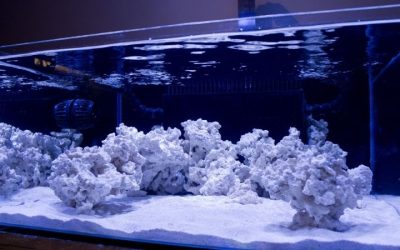
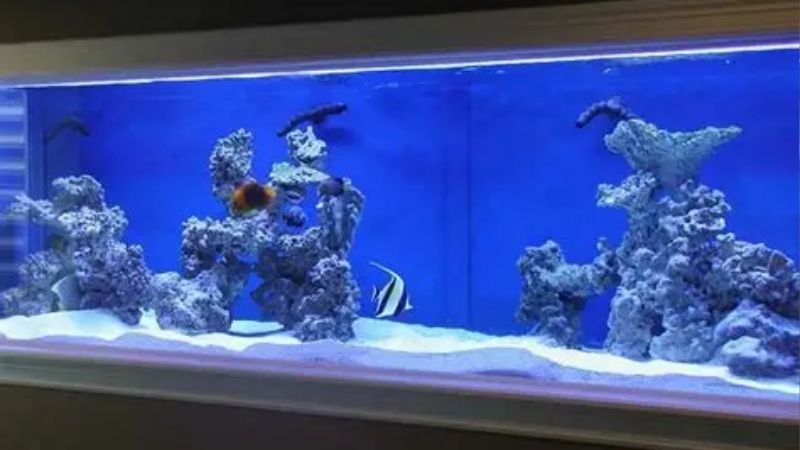
Dry rock is clean, cheaper by weight and cycles more slowly, which suits a first build where patience costs nothing. Either way, aim for 1-1.5 lb per gallon (0.45-0.7 kg per 3.8 L) and build the structure on the bottom glass rather than on sand.
Myths That Sink First Marine Tanks
Three claims cause most of the early failures in a saltwater aquarium setup for beginners. Each one is repeated widely enough to sound authoritative, and each has a measurement that replaces it once you know which instrument to look at.
Myth: Saltwater Is Too Hard for a First Tank
Marine tanks are not harder so much as less forgiving of skipped steps. The chemistry is more involved, but the actual daily work is comparable, and the failure modes are predictable rather than mysterious once salinity and source water are controlled.
The replacement is a sequence rather than a warning. Buy a refractometer and an RO/DI unit before livestock, cycle for three to eight weeks, add fish slowly across months, and the tank behaves like any other stocked aquarium.
Myth: Tap Water Is Acceptable With a Conditioner
Dechlorinator handles chlorine and chloramine, and does nothing about phosphate, silicate, nitrate or copper. Those pass straight into the tank, feed nuisance algae and, in the case of copper, harm any invertebrate present at concentrations far below drinking water limits.
Use RO/DI with an output TDS of 0 ppm, verified with a meter rather than assumed. Under the US EPA Lead and Copper Rule, first set in 1991, the drinking water action level for copper is 1.3 mg/L, which is far above what a marine tank tolerates.
Cartridges exhaust silently, which is why the meter matters as much as the unit. A reading above 5 ppm means the resin is spent and the tank has been receiving whatever the tap carried, usually for several weeks before anyone checks.
Myth: A Skimmer Replaces Water Changes
A protein skimmer removes dissolved organics before they break down, which reduces nitrate production rather than removing nitrate already present. It is a useful tool and not a substitute for the weekly or fortnightly change.
Size it by actual water volume rather than by tank label, and keep the change routine regardless. Salt mix also replenishes trace elements the tank consumes, which is a second reason changes cannot be skipped in a marine system.
Running the System Past the First Year
Marine tanks reward routine and punish gaps, so a saltwater aquarium setup for beginners needs its maintenance planned rather than improvised. This section covers the schedule, what degrades, and what the whole thing costs annually.
The Weekly and Monthly Routine
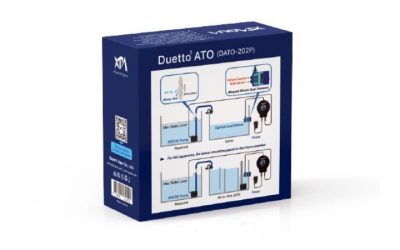
Weekly: a 10-20% water change with salt mixed to tank salinity and temperature, plus salinity and temperature checks. Top up evaporation daily with RO/DI, or fit an automatic top-off unit and check its float weekly for salt creep.
Monthly: clean the skimmer neck and cup, check powerhead impellers for calcium deposits, and test the full parameter set. Quarterly, check RO/DI output TDS with a meter, since cartridges exhaust silently and only a reading reveals it.
What Fails and What It Does
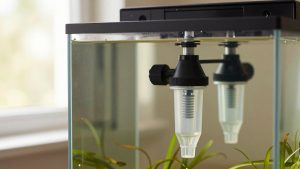
Automatic top-off floats stick with salt creep, which either overfills the tank with fresh water and drops salinity, or stops topping up so salinity climbs. Both are salinity events rather than water level events, which is what makes them serious.
Powerheads accumulate calcium deposits on the shaft and lose flow gradually. Heaters drift 2-4 °F (1-2 °C) across a year, and RO/DI cartridges exhaust without any visible change, which is why the TDS meter is not optional equipment.
The 12-Month Running Cost
Recurring spend is higher than freshwater and worth knowing in advance: salt mix, RO/DI cartridges, test reagents for a fuller parameter set, food, and electricity for a heater, return pump and powerheads running continuously.
Salt mix is the largest single line for most keepers, and it scales with change volume rather than tank size, so a 40 gallon (151 L) tank on 10% weekly changes uses roughly 4 gallons (15 L) of mixed saltwater a week across the year.
On timing, marine equipment sees its deepest discounts in late June and again in late November, which suits a planned saltwater aquarium setup for beginners. A sale changes nothing biological: the tank still needs three to eight weeks of cycling before fish go in, and prices move constantly.
Saltwater Aquarium Setup for Beginners: Questions
These come up while the tank is cycling but before livestock is ordered. Every answer points at a measurement, because in a marine system the readings move well before anything becomes visible in the tank itself.
How long does cycling take?
Three to eight weeks, faster with live rock and slower with dry. The finish line is the same as freshwater: ammonia and nitrite both clearing to 0 ppm within 24 hours of an ammonia dose, with nitrate present, repeated twice.
Do I need a sump?
Not for a first fish-only tank. A sump adds water volume, hides equipment and simplifies top-up, but it requires a drilled tank and plumbing. Many beginners are better served by an all-in-one tank with a rear chamber.
Is a refractometer necessary?
Yes. Swing-arm hydrometers drift with salt build-up and temperature, and errors of 0.002 SG are common, which is enough to matter. Calibrate the refractometer against a known 35 ppt solution rather than against pure water alone.
How many fish can I keep?
Far fewer than in freshwater of the same volume. Marine fish need more swimming room and the system tolerates less nitrate, so stock slowly across months and judge by nitrate before the water change rather than by a fish count.
Can I start with corals?
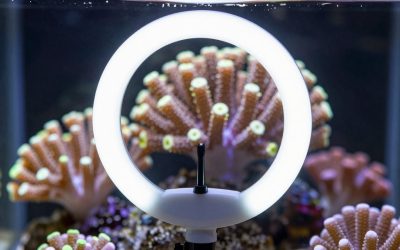
Better not to. Corals need tighter parameters, stronger lighting and a mature tank, so a fish-only system for the first six months teaches the routine at much lower cost and with far less at risk if something drifts.
See More:
Conclusion
A saltwater aquarium setup for beginners comes down to four numbers held steady: salinity 1.024-1.026 SG (33-35 ppt), temperature 76-78 °F (24-26 °C), turnover 10-20 times per hour, and rock at 1-1.5 lb per gallon (0.45-0.7 kg per 3.8 L).
Buy the refractometer and the RO/DI unit before the livestock, top up evaporation with fresh water and change with saltwater, and start fish-only at 40 gallons (151 L) rather than corals at 20. The routine is the skill; the equipment simply supports it.
Canister vs Sump for a Large Reef Tank: Best Expert Guide
Best Reef Octopus VarioS Pump for Return Flow: Top Picks