Last Updated: September 10, 2026
Reef tank setup for beginners adds four requirements a fish-only system does not have: alkalinity at 8-11 dKH, calcium at 400-450 ppm, magnesium at 1250-1350 ppm, and light delivering measurable PAR at the depth where corals actually sit. Stability across weeks matters more than hitting any one figure exactly.
As an Amazon Associate we earn from qualifying purchases.
By David Nguyen
What Changes When Corals Are Involved
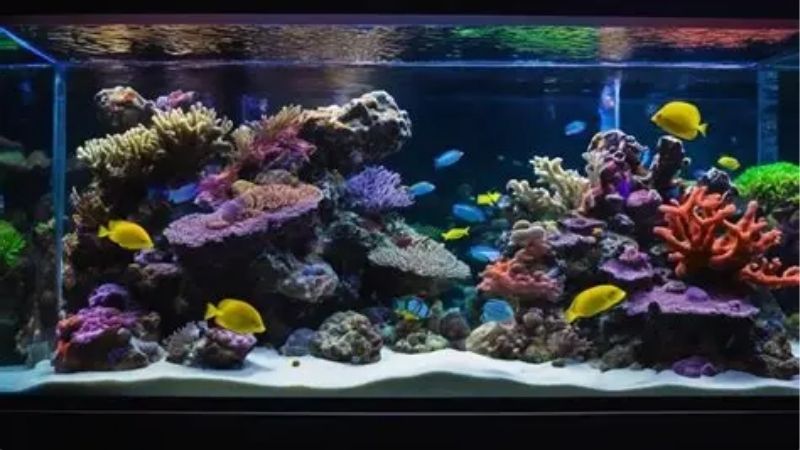
A reef tank setup for beginners is a saltwater system with three extra layers: a chemistry that corals consume from continuously, lighting measured in PAR rather than watts, and flow patterns that matter to sessile animals unable to move away from them.
The Decision Numbers: Alkalinity, Calcium, Magnesium and PAR
Alkalinity at 8-11 dKH is the parameter to hold steady first, because corals draw it down continuously and a swing of more than 1 dKH in a day causes visible tissue stress. Calcium sits at 400-450 ppm and magnesium at 1250-1350 ppm.
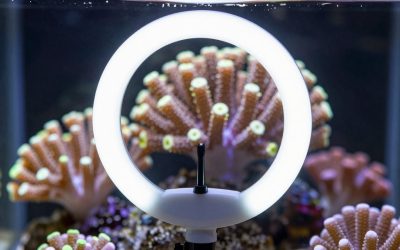
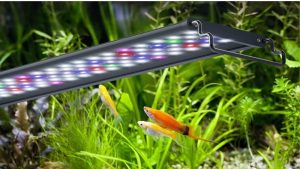
Light is measured as PAR at the coral rather than as wattage at the fixture. Soft corals sit comfortably at 50-100 µmol, LPS at 100-200, and SPS at 200-400, which is why fixture height and coral placement matter as much as the light itself.
Flow completes the set at 20-40 times total turnover per hour. Corals cannot move away from a dead spot or into a current, so the pattern matters as much as the volume, and detritus settling anywhere in the tank means the arrangement needs changing.
Why Stability Beats Perfect Numbers
Corals adapt to a value they experience consistently and react badly to movement between values. A tank held at 9 dKH for months does better than one oscillating between 8 and 11, even though both figures sit inside the accepted range.
That is why dosing and water changes matter more than reaching a textbook figure. Consumption rises as coral mass grows, so a tank that held alkalinity easily in month three may need topping up daily by month twelve without anything having gone wrong.
Target Ranges and Action Thresholds
The table below covers the reef parameter set alongside the point at which each demands a response. Nutrient targets are noticeably tighter than in a fish-only system, and the daily swing column matters more than the range itself.
| Measurement | Target | Action threshold | First action |
|---|---|---|---|
| Salinity | 1.025-1.026 SG (34-35 ppt) | Drift over 0.001 SG daily | Check the top-off, verify refractometer |
| Temperature | 76-78 °F (24-26 °C) | Daily swing over 2 °F (1 °C) | Verify heater against a second thermometer |
| Alkalinity | 8-11 dKH | Swing over 1 dKH daily | Test twice, then dose in small steps |
| Calcium | 400-450 ppm | Below 380 ppm | Check magnesium before dosing calcium |
| Magnesium | 1250-1350 ppm | Below 1200 ppm | Correct magnesium first, then the rest |
| Nitrate | 1-10 ppm | Above 20 ppm, or a flat 0 | Adjust feeding or export, not both at once |
| Phosphate | 0.03-0.10 ppm | Above 0.15 ppm | Increase export, check source water |
| Total flow | 20-40x per hour | Detritus settling in corners | Reposition powerheads before adding more |
Nitrate at a flat zero is on that list deliberately. Corals need some nutrient, and a reef stripped to undetectable nitrate and phosphate often pales and stops growing, which is a different problem from having too much of either.
Building It in a Real Room
A reef tank setup for beginners has to survive contact with a floor, a wall and a household. This section covers placement, how the answer changes with volume, and what to stock in the first year rather than the third.
Tank Size, Placement and Fit
Measure the cabinet height against your return pump and the tank depth against your light fixture before ordering, since PAR falls sharply with distance and a fixture rated for a 16 in (41 cm) tank delivers considerably less at 24 in (61 cm).
Weight is the other constraint. Saltwater runs about 8.5 lb per gallon (1 kg per litre) and rock adds 1-1.5 lb per gallon on top, so a 75 gallon (284 L) reef with rock and a sump passes 800 lb (363 kg) across the whole assembly.
Access matters as much as load. Corals need fragging, gluing and repositioning from above, so a tank on a tall stand under a low ceiling makes routine work awkward enough that it gets postponed, which is how small problems become large ones.
How 20, 40 and 75 Gallon Reefs Differ
At 20 gallons (76 L) alkalinity swings within hours of a coral growth spurt, so testing becomes a two or three times weekly job rather than a weekly one. It is entirely achievable, and it demands noticeably more attention than a larger tank does across the year.
Forty gallons (151 L) gives real margin and suits a first reef well. At 75 gallons (284 L) with a sump, the system absorbs mistakes and supports SPS corals if the lighting and flow are there, though the equipment cost rises accordingly.
What to Stock in the First Year
Start with soft corals at 50-100 µmol PAR, which tolerate wider parameter movement while you learn the routine. Mushrooms, zoanthids and leathers all establish readily and forgive an alkalinity swing that would damage a stony coral.
Move to LPS at 100-200 µmol after six months of stable readings, and treat SPS as a second-year project. Note also that stony corals are listed under CITES Appendix II, so check local rules before importing rather than after ordering.
Add corals in small numbers with weeks between them. Each addition raises alkalinity consumption, and spacing purchases lets you see the effect on the trend before the next one arrives rather than guessing which coral changed the demand.
Myths That Cost Corals
Three claims cause most of the early coral losses in a reef tank setup for beginners. Each one sounds entirely reasonable, and each has a measurement that replaces it as soon as the right instrument is in the drawer.
Myth: More Light Means Better Growth
Corals photosaturate, and light beyond their requirement causes bleaching rather than growth. A soft coral placed under 300 µmol intended for SPS will retract and pale within days, which is usually blamed on water chemistry instead.
Replace guesswork with a PAR reading taken at the coral itself, borrowed from a local club if buying a meter is not practical. Match placement to the species: 50-100 µmol for softies, 100-200 for LPS, and 200-400 for SPS.
Myth: Chase Every Parameter to the Textbook Figure
Correcting a reading in one large step causes more damage than the original deviation did. Alkalinity in particular should move by no more than about 1 dKH per day, and calcium and magnesium should be corrected gradually.
Test twice before dosing anything, since a single anomalous result is usually a test error rather than a tank event. Correct magnesium before calcium or alkalinity, because low magnesium prevents the other two from holding.
Myth: Zero Nutrients Is the Goal
Corals rely on nitrogen and phosphorus, and a reef driven to undetectable levels commonly loses colour and stops growing. Ultra-low nutrient systems exist, but they are a specialist approach rather than a target for a first reef.
Aim for nitrate at 1-10 ppm and phosphate at 0.03-0.10 ppm, and treat a flat zero on either as a reading to investigate rather than celebrate. Feeding the tank properly is part of reef keeping rather than a compromise against water quality.
The practical version is to change the export rather than the input. Reduce skimming or media rather than starving fish, since underfeeding shows up in fish condition long before the nutrient reading returns to a workable band.
Running a Reef Past the First Year
Reef systems consume chemistry continuously and drift in ways a fish-only tank does not. This section covers the testing schedule, what fails, and what the whole arrangement costs to keep running across twelve months.
The Testing and Maintenance Routine
Weekly: a 10-20% change with salt mixed to tank salinity and temperature, plus alkalinity, calcium, magnesium, nitrate and phosphate. As coral mass grows, alkalinity moves to twice weekly, then daily once dosing begins.
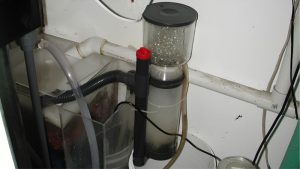
Monthly: clean the skimmer neck, check powerhead impellers for calcium deposits, and inspect the return pump. Quarterly, check RO/DI output TDS with a meter and replace reagents, since expired test kits produce confident and wrong numbers.
What Fails and What It Does
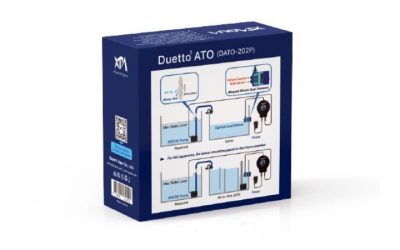
Automatic top-off floats stick with salt creep and either overfill with fresh water, dropping salinity, or stop entirely, letting it climb. In a reef, salinity movement shows in coral tissue before it shows anywhere else.
Powerheads lose flow as calcium builds on the shaft, dosing pumps drift in calibration, and lights lose measurable PAR over two to three years without appearing dimmer. Each degrades slowly enough that only a measurement catches it.
The 12-Month Running Cost
Recurring spend is the highest in the hobby: salt mix, RO/DI cartridges, a fuller set of test reagents, dosing supplements once consumption rises, food, and continuous electricity for lights, heater, return pump and powerheads.
Coral growth raises the cost over time rather than lowering it, since consumption of alkalinity, calcium and magnesium rises with mass. A reef tank setup for beginners that cost little to run in month three commonly needs supplements by month twelve.
On timing, reef lighting, skimmers and dosing gear see their deepest discounts in late June and again in late November, which suits a planned build. A sale changes nothing biological, since the tank still needs cycling and months of stability before stony corals go in.
Reef Tank Setup for Beginners: Questions
These arrive once the tank is cycled but before corals are ordered. Every answer in this reef tank setup for beginners guide points at a measurement, since coral health responds to numbers long before it responds to intentions.
How long before adding corals?
Six to eight weeks after cycling completes at minimum, and longer is better. The tank needs stable alkalinity, calcium and magnesium across several consecutive tests, not a single good result, before anything sessile goes in.
Do I need a dosing pump?
Not initially. A small reef with soft corals is usually held by water changes alone. Dosing becomes necessary once consumption outpaces what a weekly change replaces, which is typically after the coral mass has grown substantially.
What test kits are essential?
Alkalinity, calcium, magnesium, nitrate and phosphate, plus ammonia during cycling. Use liquid kits and replace reagents on schedule, because an expired kit returns a plausible figure and the resulting dosing error is worse than not testing.
Is a skimmer required?
On a reef, effectively yes above about 40 gallons (151 L). It removes dissolved organics before they break down, which keeps nitrate in the 1-10 ppm band. Size it by actual water volume rather than by the tank label.
Can fish and corals share a tank?
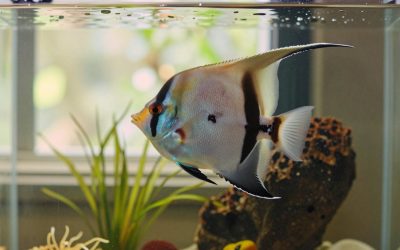
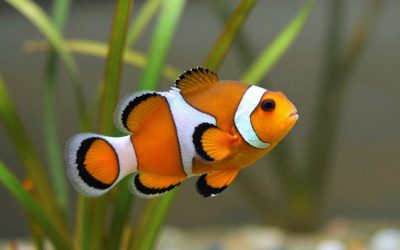
Yes, with the right species. Check compatibility per fish, since some eat coral tissue or invertebrates. Any treatment containing copper is lethal to corals and invertebrates, so a separate quarantine tank is part of the setup rather than an extra.
See More:
Conclusion
A reef tank setup for beginners means holding alkalinity at 8-11 dKH, calcium at 400-450 ppm and magnesium at 1250-1350 ppm steady, with nitrate at 1-10 ppm, phosphate at 0.03-0.10 ppm and PAR matched to the coral rather than to the fixture.
Start with soft corals in a 40 gallon (151 L) tank, test twice before dosing anything, correct magnesium before calcium or alkalinity, and move parameters by small steps. Stability across months is what grows coral; hitting a textbook number once is not.
Protein Skimmer Break In Period What to Expect, Explained
6 Best Marine Aquarium Chillers 2026