Last Updated: October 21, 2026
Choosing between protein skimmer vs refugium filtration is less about finding one universally “better” filter and more about matching the filtration method to your aquarium, living space, maintenance habits, and budget. Both can improve saltwater aquarium water quality, but they remove waste in different ways.
A protein skimmer uses air bubbles to pull dissolved organic compounds from the water before they break down into ammonia, nitrite, and nitrate. A refugium uses natural biological processes, usually live rock, macroalgae, sand, or filter media, to process nutrients and provide a stable habitat for beneficial organisms.

MagTool DC Protein Skimmer with Controllable Pinwheel Pump (N130 Plus)
Included for 'Protein Skimmer vs Refugium Filtration: Which Is Right for Your Home' as a representative aquarium product in this roundup; selection reflects the product set returned for this topic.
View on AmazonMagTool DC Protein Skimmer with Controllable Pinwheel Pump (N170 Plus)
Included for 'Protein Skimmer vs Refugium Filtration: Which Is Right for Your Home' as a representative aquarium product in this roundup; selection reflects the product set returned for this topic.
View on Amazon
Innovative Marine Custom Caddy - Purity Pack Filter Media Included (Midsize)
Included for 'Protein Skimmer vs Refugium Filtration: Which Is Right for Your Home' as a representative aquarium product in this roundup; selection reflects the product set returned for this topic.
View on Amazon
External Fish Breeder Box for Fish Tank with USB Pump Aquarium Breeding Box
Included for 'Protein Skimmer vs Refugium Filtration: Which Is Right for Your Home' as a representative aquarium product in this roundup; selection reflects the product set returned for this topic.
View on AmazonFor a heavily stocked reef aquarium, a skimmer often provides faster and more visible waste removal. For a quieter, more natural setup with lower operating costs, refugium filtration can be appealing. In some systems, the best answer is not either-or: a modest skimmer paired with a refugium can offer strong nutrient control and redundancy.
Quick Verdict
Choose a protein skimmer if you want aggressive removal of dissolved waste, keep a high-bioload saltwater aquarium, feed heavily, or prefer measurable, mechanical control over nutrient levels. Skimmers are especially useful in medium and large reef systems where fish, corals, and invertebrates produce more organic waste than routine water changes can comfortably handle.
Choose refugium filtration if you value quiet operation, natural nutrient export, lower ongoing costs, and a planted appearance. A refugium is often a good fit for a lightly or moderately stocked reef tank, an aquarist who enjoys growing macroalgae, or a home where pump noise and collection-cup maintenance would be bothersome.
For many homes, the deciding factors are space and noise. A skimmer needs enough clearance to remove its cup and adjust its settings. A refugium needs room for a chamber, light, macroalgae, and safe water flow. Neither option is maintenance-free.
Side by Side
| Factor | Protein skimmer | Refugium filtration |
|---|---|---|
| Comfort | May produce a steady hum and occasional bubbles; collection cup must be emptied | Usually quieter, though its return pump and refugium light still create some sound and heat |
| Durability | Typically durable acrylic or molded plastic; pump and air intake are wear points | Tank or chamber can last for years; light, pump, and macroalgae require periodic replacement or care |
| Price range | About $100–$500 for many home aquariums; premium models cost more | About $50–$400 when adding a chamber, light, pump, substrate, and macroalgae |
| Maintenance | Clean the cup and neck weekly or as needed; inspect the pump and air path | Trim macroalgae every one to four weeks; remove detritus and maintain the light and pump |
| Space needed | Often 8–14 inches of vertical clearance, plus sump or hang-on-back space | Commonly needs a dedicated chamber of roughly 5–20 gallons, depending on the aquarium |
| Look | Technical and equipment-focused; usually hidden in a cabinet or sump | More natural and planted, although algae growth and equipment are visible in some designs |
| Resale | Recognized brands and controllable pumps can retain useful resale value | Complete chambers and quality lights may resell well, but loose macroalgae and used media have limited value |
| Best for | High bioloads, reef tanks, heavy feeding, and rapid organic-waste removal | Quiet natural systems, moderate bioloads, nitrate and phosphate management, and biodiversity |
| Power use | Often about 5–40 watts, depending on pump size and operating mode | Often about 10–40 watts for a light and small pump combined |
Where Protein Skimmer Wins
The biggest advantage of a protein skimmer is speed. It removes dissolved organic compounds before bacteria convert them into additional nitrogen-based waste. The waste collects in a cup, giving you a visible indication that the system is exporting material rather than simply processing it inside the aquarium.
This makes a skimmer particularly useful for tanks with many fish, frequent feeding, messy eaters, or sensitive corals. It can also increase gas exchange at the water surface, helping maintain oxygen levels and a stable pH when the room is closed up or the aquarium has a tight lid.
Skimmers are also comparatively compact for the amount of water they can support. A hang-on-back model may work for a smaller aquarium, while an in-sump model can be hidden in a cabinet. The MagTool DC Protein Skimmer with Controllable Pinwheel Pump (N130 Plus), listed at $229, and the N170 Plus for under $300, illustrate the type of dedicated equipment buyers consider when they want controllable pump operation rather than a basic fixed-speed design. The right size still depends on actual bioload, sump dimensions, and the manufacturer’s aquarium-rating guidance.
Control is another strength. You can adjust the water level, air intake, or pump speed, then observe how the foam changes. However, that adjustability also creates a learning curve. New skimmers can take several days to settle, and sudden changes in additives, hands in the tank, or water chemistry can cause overflowing or weak foam.
A skimmer is not a substitute for water changes, mechanical filtration, or responsible stocking. It can also remove some desirable compounds, so a system with very low nutrients may require reduced skimming or a less aggressive schedule.
Where Refugium Filtration Wins
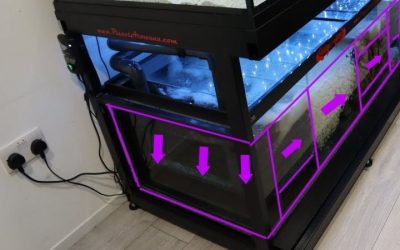
A refugium works through habitat and biology. Macroalgae consume nutrients as they grow, while live rock, sand, and other surfaces support bacteria and small organisms. When you harvest a portion of the macroalgae, you export the nutrients stored in that growth.
This approach is gradual rather than immediate, but it can help stabilize nitrate and phosphate over time. It also creates a protected area for copepods and other small life that may be eaten in the display tank. For reef keepers who prefer a natural look, that biodiversity can be as important as filtration performance.
Refugiums are generally quieter because they do not use a bubble-producing skimmer body. The light can be run on an alternating schedule, which may help smooth nighttime pH swings. Still, a refugium is not silent: water flow, a return pump, and a small fan or light ballast may produce sound.
Setup costs can be modest, particularly if an aquarium already has a spare sump chamber. A separate media solution such as the Innovative Marine Custom Caddy – Purity Pack Filter Media Included (Desktop), listed for under $50, can organize chemical and mechanical media in a compact aquarium system, although a media caddy is not itself a complete refugium. Similarly, an external fish breeder box with a USB pump, listed for under $30, may provide a small compartment for temporary filtration experiments or macroalgae, but buyers should verify flow, electrical safety, and compatibility before treating it as permanent filtration.
The main limitation is consistency. Macroalgae may grow slowly, require suitable lighting, or fail if grazers, nutrients, or water chemistry are unsuitable. A refugium also occupies space that might otherwise hold equipment, and a poorly maintained chamber can collect detritus instead of exporting it.
Cost Over 5 Years
The initial purchase price is only part of the comparison. A typical protein-skimmer setup may cost approximately $150–$500, including the skimmer, pump if needed, tubing, and replacement air or pump parts. Electricity at roughly 10–35 watts might add about $10–$45 per year, depending on local utility rates and operating time. Over five years, a realistic total is approximately $250–$750 before aquarium salt, water changes, and major repairs.
A refugium may cost approximately $75–$400 to establish. That can include a chamber or media basket, a grow light, a small pump, macroalgae, and substrate or live rock. A 10–30-watt light and pump may add roughly $10–$40 annually. Replacing a light after two to three years and occasionally buying macroalgae can bring a five-year total to approximately $175–$650.
These ranges overlap because system size matters more than the label on the equipment. A large refugium with a powerful light can cost more than a small skimmer, while an advanced controllable skimmer can exceed the cost of a simple refugium. The least expensive option is usually the one that fits equipment you already own.
Which One for Your Home
Small apartment
A refugium is often the better starting point if noise, heat, and limited cabinet space are concerns. Use a compact chamber with a low-wattage light and keep the bioload moderate. If the aquarium is densely stocked or the sump has very little room, a compact skimmer may occupy less usable space than a refugium. Measure vertical clearance before buying; collection cups and removable lights both need access.
Family with kids or pets
Prioritize secure equipment, covered electrical connections, and easy cleanup. A skimmer’s collection cup can be emptied quickly, but an excited child or pet could knock over a loose cup or tubing. A refugium avoids an exposed waste cup but may contain a bright light and loose macroalgae. Choose enclosed cabinetry, drip loops, and a design that does not require reaching over the display tank for routine care.
Rental
Favor a removable, low-modification setup. A hang-on skimmer or compact refugium box may be easier to install than drilling the aquarium or changing the cabinet. Keep total aquarium weight in mind: water weighs about 8.34 pounds per gallon before adding glass, rock, and equipment. A small filtration upgrade should not lead to an oversized tank that risks floor or furniture damage.
Long-term home
If you expect to keep the aquarium for many years, a sump with space for both methods offers the most flexibility. Start with a refugium for natural nutrient export and add a skimmer if stocking increases. Alternatively, run a skimmer continuously and use a refugium for biodiversity. Leave service access around pumps, lights, and collection cups so maintenance remains manageable.
FAQ
Can a refugium replace a protein skimmer?
Sometimes, but not in every aquarium. A properly sized refugium can manage nutrients in a lightly or moderately stocked system, especially when paired with mechanical filtration and regular water changes. High-bioload reef tanks may still benefit from a skimmer’s faster removal of dissolved organics.
Is a protein skimmer better for beginners?
It is often easier to understand because waste collects in a cup, but tuning can be confusing at first. A refugium is less sensitive to foam adjustment, yet it requires patience while macroalgae becomes established. The best beginner choice is the system you can inspect and maintain consistently.
Do I need a sump for either filtration method?
No. Hang-on-back skimmers and external refugium boxes can work on some aquariums. Sumps provide better concealment and more equipment capacity, but they require compatible plumbing, adequate cabinet space, and protection against overflow during a power outage.
Can I run both a skimmer and a refugium?
Yes. Running both can provide rapid organic-waste removal plus biological nutrient export. Watch nitrate and phosphate rather than assuming more filtration is always better. If nutrients fall too low, reduce skimming, shorten the refugium light schedule, or adjust feeding gradually.

Aquarium Calcium Magnesium Reef Additive Review
Reef Tank Auto Top Off System: Sizing and Failure Modes