Last Updated: October 21, 2026
A sub-20 nano keeps a marine tank compact, so the best all in one saltwater tank under 20 gallons is one that balances a small footprint with as much stability as the size allows, remembering that display volume, not the headline system figure, is what actually sits under 20 gallons.
As an Amazon Associate we earn from qualifying purchases.
By David Nguyen
How to Choose an All-in-One Saltwater Tank Under 20 Gallons
Under 20 gallons, the appeal is a compact marine tank that fits almost anywhere, but the smaller the volume, the faster conditions swing. The trap is that an all-in-one’s system volume includes rear chambers. Weigh footprint against the stability a little more volume buys, and confirm the tank truly sits under 20 gallons.
Define Under 20 by Display Volume
Under 20 gallons sounds simple, but an all-in-one’s headline figure is often system volume. The display volume you actually stock is less, so a tank labeled near 20 gallons total may hold noticeably less swimming water. Read the display figure specifically when judging whether a tank fits the sub-20 goal.
This distinction also decides borderline cases, since a tank at exactly 20 gallons, like the Waterbox AIO 20, is not under 20 and falls outside the class. Confirming display versus system volume keeps the comparison honest. It ensures you compare genuinely sub-20 tanks, not larger ones dressed up by a chamber-inclusive figure.
Small Volume, Faster Swings
The defining trait of a sub-20 tank is that its small volume swings faster in temperature and salinity, so stability depends more on habits and gear than on the tank alone. Evaporation concentrates salt quickly in little water, and heat shifts sooner. Accept the small-volume reality and equip for it.
Within the sub-20 range, a little more volume noticeably eases those swings, so a 15-gallon nano is generally steadier than a 10. Balancing footprint against that stability is the core trade-off of the class. Choosing the largest sub-20 volume your space allows buys real ease without crossing the 20-gallon line.
Footprint and Placement
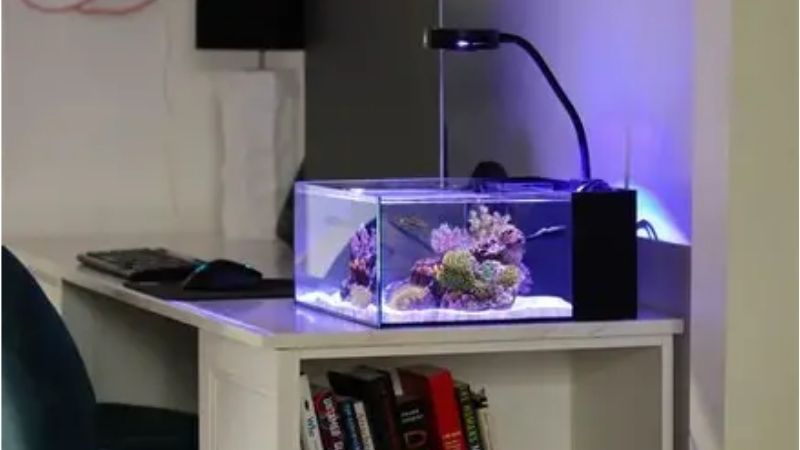
A key reason to go under 20 is the compact footprint that fits a desk, shelf or small room, so base dimensions often matter as much as gallons. Compare footprints, since a 15-gallon tank with a wide base occupies differently than a tall 10. Measure the intended spot and confirm the tank leaves room to work and access the chambers.
An all-in-one’s rear chambers reduce the usable display length, so the visible swimming area is shorter than the outside dimensions suggest. Picture the real display space. Choosing a footprint that fits the space while leaving genuine swimming room is what makes a sub-20 tank both tidy and livable for its inhabitants.
Stock and Corals to Suit the Size
A sub-20 tank suits modest stocking, since its small volume cannot dilute waste from a heavy bioload the way a larger tank can. A few small, peaceful fish and a selection of corals suit the space, while ambitious stocking undoes the stability the tank can offer. Match the livestock to the display volume rather than the headline figure.
Corals are very possible in a sub-20 nano, provided the light suits them, since watts and Kelvin are not PAR. Softies and easy LPS fit a small reef well, with demanding SPS asking for steadier conditions than the smallest tanks give. Matching both fish and corals to the sub-20 reality keeps the tank stable and healthy.
Top Picks
These four are genuinely sub-20 nanos ranked on footprint and the stability their volume allows, with the trade-offs noted; the 20-gallon Waterbox AIO 20 is excluded for being at, not under, the limit. Specs are manufacturer-stated and prices change. The right pick balances your space against stability.
| Product | Best For | Key Spec | Watch Out For |
|---|---|---|---|
| Fluval EVO 13.5 | True sub-20 starter | 13.5 gallons; integrated | Basic light for corals |
| IM Fusion 15 | Popular sub-20 nano | ~225 sq in; under $100 | Add heater and ATO |
| Waterbox AIO 15 | Roomier sub-20 | ~272 sq in base | Verify included contents |
| Waterbox AIO 10 | Smallest footprint | ~190 sq in base | Very small water volume |
Fluval EVO 13.5 — True Sub-20 Starter
At 13.5 gallons the Fluval EVO is a genuinely sub-20 nano that ships integrated with a light and filtration, making it an easy, low-cost entry to the class. Its size fits small spaces while offering a touch more volume than the very smallest tanks. For a first sub-20 marine tank it is a simple starting point.
Its stock light is basic, fine for fish and hardy softies but limiting for demanding corals, and the small volume asks for steady habits. Add a heater and an auto top-off to hold conditions. As an affordable, integrated sub-20 tank it suits a beginner who keeps the stock and coral goals modest.
IM Fusion 15 — Popular Sub-20 Nano
The Fusion 15, near 225 square inches and around $100, is a popular sub-20 nano with a large community and readily available accessories, so help and upgrades are easy to find. Its footprint fits many spaces while its volume steadies conditions better than the tiniest tanks. For a well-supported sub-20 build it is a strong choice.
Plan to add a heater and an auto top-off, and confirm the light suits your goal, since these are separate. Its popularity keeps those additions affordable. As a sensibly sized, well-backed sub-20 tank, it balances compact footprint with the stability and support that make a small nano easier to keep.
Waterbox AIO 15 — Roomier Sub-20
The Waterbox AIO 15, near 272 square inches, is the roomier end of the sub-20 class, offering more stable volume while staying under the 20-gallon line. That extra water eases the swings that trouble smaller nanos, and the tidy build is pleasant to run. For a keeper wanting maximum stability within sub-20, it stands out.
Verify the SKU’s contents, since a light and top-off may be extra, and confirm the light suits your corals. The larger footprint needs a little more space. Completed sensibly, it delivers the steadiest conditions in the sub-20 range, suiting a keeper who wants headroom without crossing into a 20-gallon tank.
Waterbox AIO 10 — Smallest Footprint
For the tightest spaces the Waterbox AIO 10, near 190 square inches, reclaims the most room, tucking a marine tank into a spot larger nanos could not share. Its footprint is the draw, and the integrated filtration keeps the look clean. When space is the hard constraint, it fits where nothing bigger would.
The cost is the least water volume here, so parameters swing quickest and stocking must stay modest. An auto top-off and steady habits matter most with this little water. Choose it when the compact footprint outweighs stability, and keep the stock and light simple to match the smallest volume in the class.
Frequently Asked Questions
Sub-20 buyers ask what under 20 gallons really means, whether small tanks are hard to keep, what fits in the space, and whether corals are possible. Each answer gives the practical rule first, then the condition that adjusts it for your tank. Judge by display volume, and the sub-20 comparison stays honest.
What counts as under 20 gallons?
By display volume, since an all-in-one’s headline figure often includes the rear chambers as system volume. A tank labeled near 20 gallons total may hold less display water, so read the display figure to judge the sub-20 goal. A tank at exactly 20 gallons, like the Waterbox AIO 20, is at, not under, the limit.
Confirming display versus system volume keeps comparisons honest and avoids counting a larger tank as sub-20 by a chamber-inclusive number. It is the figure you actually stock. Judging by display volume ensures you are comparing genuinely small nanos rather than bigger tanks dressed up by their total capacity.
Are small saltwater tanks hard to keep?
They take a little more care, since a small volume swings faster in temperature and salinity than a larger one. That is the trade for the compact footprint, so an auto top-off to hold salinity and a reliable heater matter more. With those and modest stocking, a sub-20 nano stays stable and manageable.
Within the class, a little more volume eases the swings, so a 15-gallon tank is generally steadier than a 10. Choosing the largest sub-20 volume your space allows, and keeping the bioload modest, reduces the effort. A small tank rewards consistency, which makes the routine light rather than demanding.
What fits in a tank under 20 gallons?
Modest stocking suited to the display volume, meaning a few small, peaceful fish and a selection of corals rather than an ambitious community. A small tank cannot dilute waste from a heavy bioload, so restraint keeps it stable. Match the livestock to the usable display water, not the headline system figure.
Consider adult sizes and temperament, since a fish that outgrows a nano or bullies tankmates undoes the balance. Choosing species that stay small and peaceful suits the space. Stocked conservatively for the display volume, a sub-20 tank supports a lively but stable little community.
Can I keep corals under 20 gallons?
Yes, since many corals thrive in nanos provided the light suits them, and watts or Kelvin are not the measure, PAR is. Softies and easy LPS fit a sub-20 reef well, while demanding SPS want steadier conditions than the smallest tanks give. Check the actual PAR at placement rather than trusting the fixture’s specs.
The small volume asks for stable parameters, so an auto top-off and consistent habits help corals settle. Matching coral choice to the light and the tank’s stability keeps a sub-20 reef healthy. Starting with forgiving corals under a suitable light is the surest path in a small marine tank.
Final Thoughts
For a compact marine tank, the best all in one saltwater tank under 20 gallons is one balancing a small footprint with the most stability its display volume allows, judged by display rather than system gallons. Equip for the faster swings with a top-off and heater, stock modestly, and a sub-20 nano stays healthy.
Best All in One Saltwater Tank for a Desktop Setup: Top

Reef LED Programmable Coral Light