Last Updated: September 25, 2026
Two Aqua Illumination fixtures share the same myAI app, the same HD optics, and the same mounting hardware, yet one carries twice the diode array. Sorting out hydra 32 vs hydra 64 which ai light to buy starts with water depth and tank width, since the larger unit is essentially two smaller clusters in one housing.
As an Amazon Associate we earn from qualifying purchases.
As an Amazon Associate we earn from qualifying purchases at no extra cost to you. Prices and availability are accurate as of the date shown and are subject to change.

AquaIllumination Hydra 64 LED Aquarium Light - Full Spectrum Lighting for Coral Growth, Wireless Control, High PAR Output, Energy Efficient - for Saltwater Reef Tank Aquariums - Black
Selected for "Hydra 32 vs Hydra 64 Which AI Light to Buy: Expert Top Pick": this listing is lighting (AquaIllumination Hydra 64 LED Aquarium Light - Full Spectrum Lighting ), matching the equipment this article covers.
View on Amazon
AquaIllumination Hydra 32 LED Aquarium Light - Full Spectrum Lighting for Coral Growth, Wireless Control, High PAR Output, Energy Efficient - for Saltwater Reef Tank Aquariums - Black
Selected for "Hydra 32 vs Hydra 64 Which AI Light to Buy: Expert Top Pick": this listing is lighting (AquaIllumination Hydra 32 LED Aquarium Light - Full Spectrum Lighting ), matching the equipment this article covers.
View on Amazon
3DReefing AI Hydra 26 HD and 32 HD Aquarium LED Light Shade and Diffuser
Selected for "Hydra 32 vs Hydra 64 Which AI Light to Buy: Expert Top Pick": this listing is lighting (3DReefing AI Hydra 26 HD and 32 HD Aquarium LED Light Shade and Diffus), matching the equipment this article covers.
View on Amazon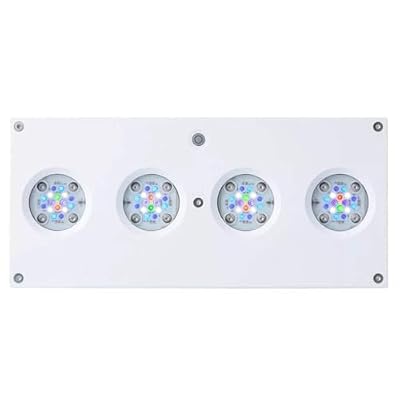
AquaIllumination Hydra 64 LED Aquarium Light - Full Spectrum Lighting for Coral Growth, Wireless Control, High PAR Output, Energy Efficient - for Saltwater Reef Tank Aquariums - White
Selected for "Hydra 32 vs Hydra 64 Which AI Light to Buy: Expert Top Pick": this listing is lighting (AquaIllumination Hydra 64 LED Aquarium Light - Full Spectrum Lighting ), matching the equipment this article covers.
View on AmazonBy David Nguyen
Quick answer: Our top pick in 2026 is the Usable footprint — our #1 rated choice. See the full ranked comparison, alternatives and buying advice below.
How to Choose Saltwater & Reef Gear
Both fixtures come from the same HD family, so this is not a question of brand quality but of how much light one housing must deliver over a given footprint. Four measurable criteria settle it: coverage width, depth penetration, how many schedules you want, and what the fixture costs to run for a year.
Coverage Width per Fixture
Aqua Illumination points the 32 at roughly a 24-inch footprint and the 64 at closer to 30 inches, counted as usable light rather than the widest spill. On a 36-inch tank, one larger unit lights the center well but leaves the outer three to four inches noticeably softer. Reefers commonly fix that by angling a second unit inward.
Coverage also shrinks as your intensity target rises, because an SPS-grade reading spans less width than a softie-grade one under the same housing. Plan two to four inches of overlap between fixtures on multi-unit tanks, and treat published footprints as figures measured near the surface, not at the rock.
Diode Count and Depth Penetration
The names describe the hardware directly: 32 diodes against 64 in the same HD cluster layout, which is why the bigger unit drives deeper into the water column. Past about 24 inches of depth, that second array is what holds usable light down at the sandbed. Shallow frag racks 10 inches down rarely notice the difference.
Depth punishes a small fixture faster than width does, since intensity drops with distance instead of merely spreading thinner. A 20-inch-deep softie tank rarely justifies the 64, while a 26-inch SPS display usually does, so measure from the water surface to the top of your rockwork first. A 30-inch-deep tank strains even the larger unit.
Control Zones in the myAI App
Each fixture schedules independently, so two smaller lights give you two separately tunable zones while one large light gives a single curve across the whole tank. That matters when SPS holds one end of a 48-inch display and softies sit in the shaded end. Two zones also let you shorten one photoperiod without touching the other.
Grouping keeps multiple units moving together when you want one program, so extra fixtures do not create extra daily work. The real trade is hardware cost per zone, since three mid-tier units mean three mounts, three power supplies, and three fans to keep clean. Salt creep on three fans means three cleanings per service.
Mounting, Cooling, and 12-Month Cost
Tank mounts, flex arms, and hanging kits sell separately from both fixtures, so the usable price is always above the sticker. Fan cooling keeps diodes alive but stays audible in a quiet room, which is why bedroom displays often hang the unit higher and run a lower peak. Kits commonly add 10 to 20 percent to the fixture price.
Running cost tracks the array, but not by a full multiple: the 32HD draws 95W and the 64HD draws 135W, about 40 percent more, not double, so the summer bill gap is real but smaller than diode count implies. Confirm UL or ETL marking and feed the driver through a GFCI. Firmware often lapses after two generations, so check current support.
Hydra 32 vs Hydra 64 by Use Case
Neither model wins outright, so the practical version of hydra 32 vs hydra 64 which ai light to buy is which tank shape you are lighting. The table sets the trade-offs beside each other, and the four cases below pair each fixture with the job it genuinely handles better. Both run the same HD optics, so color is not the variable.
| Factor | Hydra 32 HD | Hydra 64 HD | Best For |
|---|---|---|---|
| Usable footprint | About 24 in | About 30 in | Wide tanks favor the 64 |
| Diode array | 32 LEDs | 64 LEDs | Depth past 24 in favors the 64 |
| Zoning | More units, more schedules | Fewer units, one schedule | Mixed coral ends favor the 32 |
| Price tier | Mid | Premium | Staged budgets favor the 32 |
Hydra 32 for Nano and Frag Tanks
Over a 24-inch cube or a frag rack, one 32 lands close to its intended footprint without blasting the corners. Frag systems in particular benefit from the smaller array, because holding one even reading across a flat rack beats fighting a hot center under a larger housing. Frag racks typically sit 10 to 14 inches under the light.
It sits in the mid tier of the HD lineup, so adding a second unit later costs far less than adding a second 64. The ceiling is depth: beyond roughly 24 inches of water, a lone 32 cannot hold SPS-grade light at the bottom, and raising intensity mainly adds heat. Hanging it higher widens coverage but costs peak intensity.
Hydra 32 for Zoning a Long Tank
Across a 48-inch reef, three 32s deliver even coverage with overlap and hand you three separate schedules, which is how many reefers isolate a bright SPS section from a shaded softie end. One unit failing still leaves two thirds of the tank lit while a replacement ships. Each unit still needs its own gooseneck or hanging kit.
Three mid-tier fixtures cost more in total than two premium ones and triple the mounts, drivers, and fans you maintain. Price both routes during a Prime Day or Black Friday window, since those are among the few weeks premium reef fixtures move at all. Check whether the generation you want is still listed before waiting for a sale.
Hydra 64 for Deep SPS Displays
A display running 24 to 30 inches deep is where the 64 justifies its tier, because 64 diodes keep usable intensity at the sandbed a smaller unit cannot reach. Acropora up high still gets its band without driving the fixture to a level that pales everything below. Reefers targeting 250 PAR often land near 60 percent output here.
The costs are heat and draw: the 64HD’s 135W runs about 40 percent higher than the 32HD’s 95W per photoperiod, not double, plus the higher purchase price. A single fixture over a deep tank also concentrates risk, since a failed driver leaves the whole display dark until replaced. A spare driver turns a week-long outage into an afternoon.
Hydra 64 for Wide Tanks with Fewer Fixtures
On a 36-inch tank or one that is deep front to back, two 64s frequently replace three 32s, cutting mounts, cables, and visual clutter above the water. Fewer housings also means fewer fans drawing salt creep, which shows on rimless tanks viewed from the side. Two housings also free up canopy space for a hanging kit or feeding gap.
You surrender a control zone in that trade, so a tank with very different coral demands at each end may still prefer more, smaller units. Check overlap before committing, because two large fixtures on a 48-inch tank leave the ends softer than three smaller ones do. Measure the gap at rock height, not at the surface.
Frequently Asked Questions
Most confusion between these two fixtures traces back to footprint, water depth, and how many schedules a reefer actually wants. The four answers below cover the cases buyers hit most, and each one rests on a measurement you can take on your own tank tonight. Most hinge on whether your water depth clears 24 inches.
When should I buy the Hydra 32 instead of the 64?
Choose the 32 when water depth stays under roughly 24 inches and you want independent zones along the tank. Two or three smaller units cover a 48-inch reef with overlap and give separate schedules, something a single large fixture cannot do at any price. Three units across 48 inches leave roughly 16 inches of coverage each.
The exception is a deep cube, where one 64 beats two 32s on penetration for a similar outlay. If your rockwork tops out eight to ten inches below the surface, depth stops driving the decision and the smaller unit usually wins on cost per zone. Above 30 inches of depth, neither model alone holds SPS light at the sand.
Is one Hydra 64 enough for a 48-inch tank?
No. A single 64 leaves the outer sections of a 48-inch tank clearly dimmer, since its usable footprint sits near 30 inches. Two fixtures with a few inches of overlap is the working configuration, whichever of the two models you settle on. Angle each fixture inward a few degrees to soften the seam between them.
A shallow softie tank tolerates that gradient, because corals at the ends only need the 50 to 100 band. SPS placed at either end can brown within weeks under sustained low light, so map where each coral will sit before deciding one fixture will carry the tank. Softies at 50 to 100 tolerate the fade; Acropora at 250 does not.
When is neither AI fixture the right call?
Skip both over a small softie nano, where a compact fixture lights the entire footprint for a fraction of the money and heat. A zoned HD light over a 10-gallon tank adds a fan, a mount, and a price tier the corals never use. A 10-gallon nano rarely needs more than 30 to 60 watts to keep softies coloring.
They are also wrong when the real problem is flow, an alkalinity swing, or a coral that was never acclimated. Confirm parameters first, since adding intensity to a stressed tank usually speeds up the paling you were trying to reverse. Alkalinity swinging more than 1 dKH a day stresses coral faster than any lighting error.
Do I need to buy a mount separately?
In most cases yes, because tank mounts, flex arms, and hanging kits ship apart from the fixture. Budget for one up front, since a light with no way to hold it above the water is not usable on the day it arrives. Hanging kits, flex arms, and tank mounts each change the footprint, so pick the mount before you map coral placement.
Mount height also changes coverage, as raising a fixture widens the footprint while lowering peak intensity at the coral. Reefers commonly hang HD units eight to ten inches above the surface, then re-measure rather than assuming the published footprint still holds. Salt creep on the lens also drops output over months.
Final Thoughts
Settling hydra 32 vs hydra 64 which ai light to buy is mostly arithmetic: measure water depth, measure tank width, then decide how many independent schedules you want running. Take the 32 for zoning and tanks under 24 inches deep, the 64 for depth and width, and verify UL or ETL marking plus the current generation before checkout.
Ready to decide? Our #1 pick for 2026 is the Usable footprint.
Live price & availability on Amazon.
Related Reviews & Guides
Best Aquarium Sump for a Nano Reef Tank: Top Expert Guide
6 Best Lighting For Reef Tank 2026