Last Updated: October 4, 2026
- Top Pick: AAwipes 8-in-1 Aquarium Test Kit for Fish Tanks – Quick & Accurate Water Testing Strips for Aquariums & Ponds. Tests pH, Ammonia, Alkalinity, Hardness, Chlorine, etc. (K02-50)
- Best Value: API Freshwater Master Test Kit 800-Test Freshwater Aquarium Water Kit, White, Single, Multi-Colored
- Premium Choice: 11 in 1 – Aquarium Test Strips | 950 Tests – 150 Strips | Fish Tank Aquariums Water Test Kit & ebook | Aquarium Thermometer | Fish Tank Water Testing Kit Includes 50 Ammonia Strips | Versatile Usage
Choosing an aquarium water test kit looks simple until you compare labels. One box may promise 950 tests, while another includes fewer tests but uses liquid reagents that can give you a more useful reading. Some kits check only pH and hardness; others include ammonia, nitrite, nitrate, chlorine, alkalinity and temperature. The lowest price is not always the lowest cost, either, because a kit that misses ammonia or runs out of one essential reagent can leave you buying a replacement sooner than expected.
The most common mistakes are choosing strips solely by the number of tests, buying a freshwater kit for a saltwater aquarium, ignoring expiration dates, and treating color charts as interchangeable between brands. Before deciding how to choose aquarium water test kit options, match the kit to your aquarium type, the parameters that matter most and how often you plan to test. The right choice for a new 10-gallon freshwater tank may be very different from the right choice for a 100-gallon reef system.
As an Amazon Associate we earn from qualifying purchases at no extra cost to you.


Decide These 3 Things First
- Identify your water type. Freshwater, saltwater, pond and reef aquariums require different testing priorities. A freshwater community tank typically needs ammonia, nitrite, nitrate and pH. A reef tank may also require calcium, magnesium, phosphate, alkalinity and salinity.
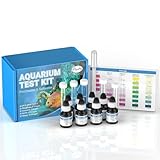
- Choose strips or liquid reagents. Test strips are fast and convenient, often producing a reading in 30 to 60 seconds. Liquid kits generally require more steps but can offer finer color comparisons, especially for ammonia, nitrite and nitrate.
- Estimate your research schedule. A newly established tank may need testing several times per week, while a stable aquarium may be checked weekly or during water changes. A kit with 50 tests may last one month for frequent testing but nearly a year for occasional checks.
Size and Test Coverage
For test kits, “size” is less about the physical box and more about the number and type of tests inside. A compact strip kit may contain 50 to 150 strips and weigh less than 8 ounces, making it convenient for small tanks, travel or pond checks. Liquid kits usually occupy about 6 by 4 by 2 inches to 10 by 8 by 3 inches, depending on the number of bottles and tubes.
Do not count every listed parameter as equally useful. For most freshwater aquariums, the essential group is ammonia, nitrite, nitrate and pH. Hardness, alkalinity and chlorine are valuable additions, particularly when tap water changes seasonally. A kit advertising eight or 11 parameters may still be a poor choice if it omits ammonia or provides only a broad pH range.
For a new aquarium, look for at least 25 tests each for ammonia, nitrite and nitrate. If the kit combines all parameters on strips, confirm how many strips are included and whether ammonia has its own 25- to 50-strip supply. A large “950-test” claim can refer to adding the maximum possible number across all individual pads, not to 950 complete water analyses.
Materials and Reagent Quality
Test strips use treated paper or synthetic pads that react with the water sample. The strip material should be sealed in a moisture-resistant container, ideally with a screw-top lid or a tightly resealable pouch. Humidity can activate the pads prematurely, so a kit stored in an open cardboard box near an aquarium may become unreliable well before its printed expiration date.
Liquid kits use reagent bottles, test tubes, caps and a color chart. Look for clearly labeled bottles with drop counts printed on the instructions. A typical test uses approximately 5 to 10 milliliters of aquarium water and between 3 and 10 drops of reagent, but follow the brand’s directions exactly. Tubes should be transparent, stable when standing and easy to rinse without trapping residue.
Check the expiration date before buying when possible. Reagents may remain usable for roughly 12 to 24 months when unopened, while opened bottles can have a shorter practical life depending on storage. Never combine bottles from different kits, and do not assume a replacement reagent follows the same drop-count instructions as the original.
Construction, Storage and Organization
A well-constructed kit prevents small handling problems from becoming bad readings. A liquid kit should have caps that close securely, bottles that stand upright and a case or tray that keeps the components separated. A molded plastic case is useful if you test weekly; a cardboard package may be adequate for occasional use but offers less protection against spills and moisture.
For strips, examine the container design rather than just the strip count. A tube holding 100 strips should close tightly and include a clear label for the opening date. Keep the cap closed between tests and remove only the strip you need. Some kits include a small thermometer or scoop, but these extras should not distract from the quality and completeness of the core tests.
Color charts should be large enough to read under neutral, white light. Avoid relying on a chart that uses tiny color blocks or unclear intervals. When a result falls between two shades, repeat the test instead of forcing it into a precise number.
Comfort, Speed and Reading Performance
Convenience matters because a kit that is annoying to use often stays in a drawer. Strips typically take about one minute from dipping to reading and require no measuring. They are a practical option for routine screening, especially on tanks under 30 gallons or for owners who want a quick check after feeding, cleaning or adding new fish.
Liquid kits commonly take 3 to 8 minutes per complete group of tests. They require a measured sample, several drops, mixing and a timed color comparison. This extra work is worthwhile when cycling a tank, investigating fish stress or confirming an unusual strip result. A kit with separate tubes for each test can be easier to manage than one tube that must be rinsed repeatedly.
Look for readable instructions with exact sample volumes, drop counts and wait times. A good kit should explain what to do when ammonia or nitrite is detected, but remember that test instructions are not a substitute for aquarium care. Read results at the specified time; waiting too long can allow colors to deepen and create a misleading reading.
Price Tiers and Cost per Complete Test
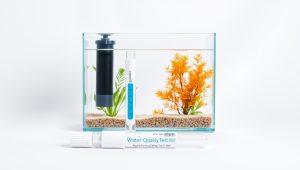
Budget kits generally cost about $8 to $15. The AAwipes 8-in-1 example is listed for under $10 and represents the low-cost strip category. These kits can be useful for routine screening, quarantine checks and beginners, but verify that ammonia is included and that the strips are individually protected from humidity.
Midrange kits usually cost $18 to $35. The 11-in-1 example is listed for under $30 and includes 150 strips plus 50 ammonia strips, while the Pawfly 5-in-1 example is listed for under $40. Compare the number of complete test sessions, not the headline test count. A $25 kit that supplies 50 full ammonia readings may be better value than a $10 kit with a larger but less relevant number.
Premium or established liquid kits often cost about $30 to $45. The API Freshwater Master Test Kit example is listed for under $40. The value comes from the liquid format and focused freshwater coverage, not necessarily from having the most parameters. For a reef aquarium, expect to spend approximately $40 to $100 or more if specialized calcium, magnesium, phosphate, alkalinity and salinity tests are included.
Warranty, Freshness and Replacement Supplies
A water test kit rarely has a long warranty, but the seller should provide a clear return window, commonly 30 days, and support for damaged or leaking components. More important than a formal warranty is reagent freshness. Ask whether the product has a printed expiration date and whether replacement bottles, strips or test tubes are sold separately.
Replacement availability can reduce long-term costs. If one reagent runs out after 20 tests while the others remain nearly full, a kit with individual replacement bottles is more practical than one that must be discarded entirely. Keep receipts and record the date you open the kit. Store it in a cool, dry cabinet away from direct sunlight and aquarium splash.
Delivery, Packaging and Assembly
There is no assembly in the furniture sense, but packaging and setup still affect your first test. Choose a package that arrives sealed, with intact bottles and a readable instruction sheet. Liquid reagents should not arrive with loose caps, dried residue around the neck or a strong chemical odor outside the container.
Once delivered, inventory the contents before using the kit. Confirm the number of strips, bottles, tubes, caps, color cards and any required accessories. Setup should take less than 10 minutes. If the kit includes a digital thermometer, calibration or battery installation may add another few minutes, but the thermometer should be treated as a convenience feature rather than proof of water-test accuracy.
Spec Checklist
| Spec | Budget | Mid | Premium |
|---|---|---|---|
| Typical price | $8–$15 | $18–$35 | $30–$100+ |
| Format | Strips | Strips or hybrid | Liquid reagents or specialized tests |
| Complete test sessions | 25–100 | 50–150 | Approx. 50–800, depending on test |
| Core freshwater coverage | 3–8 parameters | 5–11 parameters | Usually ammonia, nitrite, nitrate and pH |
| Reading time | 30–60 seconds | 30 seconds–5 minutes | 3–8 minutes |
| Best use | Routine screening | Frequent general checks | Cycling, troubleshooting and confirmation |
| Storage footprint | Under 8 ounces | About 4–10 ounces | About 6 by 4 by 2 to 10 by 8 by 3 inches |
Red Flags
- “Thousands of tests” without a breakdown: Confirm the number of complete readings for ammonia, nitrite and nitrate.
- No expiration date: Reagents and strips should have a traceable freshness date.
- Missing ammonia or nitrite: These are essential during cycling and after adding fish.
- Unclear instructions: Avoid kits that do not specify sample volume, wait time or color-reading conditions.
- Loose or unsealed packaging: Moisture can damage strips, while leaking liquid reagents may be contaminated.
- Wrong aquarium type: A freshwater master kit is not automatically suitable for saltwater or reef testing.
- Overly precise claims: A home color test cannot provide laboratory-level accuracy simply because the package lists more decimal places.
FAQ
Are aquarium test strips or liquid kits better?
Neither is universally better. Strips are faster and easier for routine screening, while liquid kits usually provide more controlled testing for cycling, suspected toxicity and follow-up checks. Many aquarists use strips for convenience and a liquid kit to confirm concerning results.
Which tests should a beginner prioritize?
For a freshwater aquarium, start with ammonia, nitrite, nitrate and pH. Hardness and alkalinity are useful when your tap water changes, you keep sensitive species or you need to understand why pH is unstable. Chlorine is especially useful for checking untreated tap water before a water change.
How often should I test aquarium water?
Test a new or recently disturbed tank two to three times per week, and test immediately if fish appear stressed or die unexpectedly. Once the aquarium is stable, weekly testing and a check during major water changes is a reasonable baseline. Follow the needs of your fish, plants and filtration system.
Can I use a freshwater test kit for a saltwater aquarium?
Only if the manufacturer specifically says it is suitable for saltwater. Some basic tests may work across both types, but pH ranges and specialized tests can differ. Reef aquariums generally need additional tests for salinity, alkalinity, calcium, magnesium and phosphate.
Ready to decide? Our #1 pick for 2026 is the Typical price.
Live price & availability on Amazon.
Related Reviews & Guides

Are Aquarium Filter Prefilters Worth It? An Honest Answer (2026)
Best Curved Front Fish Tank: Top Picks for Stylish Homes