Last Updated: October 4, 2026
An aquarium thermometer can be only a few degrees off and still look perfectly normal. That small error can cause you to raise or lower the heater unnecessarily, stress temperature-sensitive fish, or create conditions that encourage disease. A thermometer reading 78°F may actually represent 74°F or 82°F if the sensor is damaged, poorly positioned, or never checked against a known temperature.
Calibrating an aquarium thermometer means comparing its reading with a reliable reference and identifying any difference. Some models let you change the displayed temperature; others do not. For a non-adjustable thermometer, calibration usually means recording the correction—for example, “add 1°F to every reading”—or replacing the unit if its error is too large. The procedure below works for many digital and glass aquarium thermometers and is suitable for routine home maintenance in 2026.
As an Amazon Associate we earn from qualifying purchases at no extra cost to you.

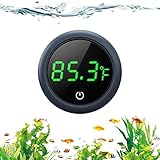
Quick answer: Our top pick in 2026 is the Aquarium thermometer — our #1 rated choice. See the full ranked comparison, alternatives and buying advice below.
What You Need
| Item | Why | Optional? |
|---|---|---|
| Aquarium thermometer | The device you are checking. Digital stick models, probe thermometers, and glass thermometers can all be tested. | No |
| Second thermometer with a stated accuracy of about ±1°F or better | Provides a comparison reading. Use a food, laboratory, or aquarium thermometer that is known to be reliable. | No, unless you are using an ice-point test instead |
| Clean glass or container | Holds the ice bath or room-temperature comparison water. | No |
| Crushed ice and distilled or clean tap water | Creates a stable ice-point bath close to 32°F. | No for a basic ice-point test |
| Stirring spoon | Distributes cold or warm water evenly throughout the container. | Recommended |
| Fresh batteries | Prevents low voltage from causing an unstable or incorrect digital reading. | Optional, but useful |
| Small towel and timer | Keeps water away from buttons and tracks stabilization time. | Yes |
Affordable digital options include the QZQ Fish Tank Thermometer, listed around $5, and the PAIZOO Aquarium Thermometer Digital, listed around $10. Prices commonly vary from about $7 to $15 for basic digital aquarium thermometers. Check the product instructions before immersing any display or battery compartment; “water resistant” does not always mean fully submersible.
Step-by-Step
1. Check the thermometer and read the instructions (5 minutes)
Inspect the probe, cable, suction cup, display, and battery compartment. Look for cracks, condensation inside the screen, corrosion, or a loose wire. Replace the batteries if the display is dim, slow, or inconsistent.
Find out whether the thermometer has a calibration button, reset function, or adjustable offset. Some devices automatically calibrate; others only allow you to compare and correct the reading manually. Do not force a calibration mode that is not described in the instructions.
2. Prepare an ice-point bath (5 minutes)
Fill a clean glass with crushed ice until it is about two-thirds full. Add just enough clean water to fill the spaces between the ice. The mixture should remain mostly ice, not become a glass of cold water. Stir it for about 30 seconds.
A properly made ice bath stays close to 32°F at sea level. It is a useful reference because the melting point of pure water is stable. Avoid using only refrigerated water; it may be anywhere below 40°F and does not provide a precise calibration point.
3. Position both thermometers without touching the container (3 minutes)
Place the aquarium thermometer’s sensing tip in the center of the ice-water mixture. Put the reference thermometer beside it, keeping both sensors at the same depth. Neither sensor should touch the glass, the bottom, or a large piece of ice, because contact can distort the reading.
Keep digital displays, battery compartments, and non-submersible connectors above the waterline. If the entire aquarium thermometer cannot safely enter the bath, use its probe only.
4. Wait for the readings to stabilize (5 to 10 minutes)
Stir gently every minute without striking either sensor. Watch for the display to stop changing. A quick reading taken after 30 seconds may reflect the temperature of the probe casing rather than the water around it.
Record both readings. For example, if the reference thermometer reads 32°F and the aquarium thermometer reads 34°F, the aquarium thermometer is reading 2°F high. Repeat the test once after removing and repositioning the sensors. A difference that remains within about 1°F is generally acceptable for ordinary aquarium monitoring.
5. Calculate and apply the correction (5 minutes)
Use this simple calculation:
Correction = reference reading − aquarium thermometer reading
If the reference reads 32°F and the aquarium unit reads 34°F, the correction is −2°F. The device reads 2°F high, so subtract 2°F from future readings. If the thermometer reads 30°F, add 2°F to future readings.
If the thermometer has an adjustable offset, enter the correction according to its instructions. If it has no adjustment, write the correction on a label near the aquarium, record it in your maintenance log, or use a phone note. Do not change the displayed value by guessing or by moving the decimal point.
6. Confirm the result at an aquarium-like temperature (10 to 15 minutes)
An ice point checks the thermometer at 32°F, while most tropical aquariums operate around 75°F to 80°F. For a second check, place both thermometers in a container of water near the temperature of the aquarium. You can use water removed during a routine water change, provided it is in a clean container.
Let both sensors sit at the same depth for at least five minutes, then compare the readings. A small difference of 1°F is usually not concerning. If the error changes dramatically between the ice bath and warm water, the thermometer may have a nonlinear sensor problem and should not be trusted without further testing.
7. Return the thermometer to the aquarium correctly (5 minutes)
Rinse the probe with aquarium-safe water and dry only the parts that should remain dry. Install it away from the heater outlet, filter return, air stone, and direct sunlight. Strong currents or localized heat can produce a reading that does not represent the aquarium as a whole.
Position the sensing area at the same depth where your fish spend most of their time, usually several inches below the surface. Give it another 5 to 10 minutes to settle before making heater adjustments. Change the heater setting in small increments, typically 1°F at a time, and recheck several hours later.
Mistakes to Avoid
- Using warm tap water as a known reference: Tap water does not have a dependable temperature unless measured by a trusted thermometer.
- Letting the probe touch the glass or ice: This can create a false high or low reading.
- Testing only for a few seconds: Allow at least 5 minutes, or longer for a thick glass thermometer.
- Submerging the display or battery compartment: Follow the water-resistance instructions exactly.
- Adjusting the heater immediately: First confirm the thermometer error, then make gradual changes.
- Comparing thermometers at different depths: Temperature can vary near a heater, filter outlet, or water surface.
- Relying on a damaged reference thermometer: A second device is useful only if it is reasonably accurate and functioning correctly.
- Assuming an ice bath is always exactly 32°F: Impurities, insufficient ice, altitude, and poor mixing can affect results slightly.
How Often
Check a new thermometer before relying on it, then verify it every three to six months. Test it sooner after a battery leak, drop, prolonged submersion, exposure to cleaning chemicals, or a suspicious temperature change.
It is also wise to compare the thermometer during every major aquarium maintenance event. If the tank suddenly reads 5°F warmer or cooler without a matching change in room temperature, verify the reading before changing the heater. Keep a dated record of the thermometer reading, reference reading, and calculated correction.
When to Call a Pro or Replace
Most aquarium owners can perform this check themselves, but replace the thermometer if it has a cracked housing, fogged display, corroded contacts, exposed wiring, or a probe that has separated from its cable. Replacement is also sensible when the reading jumps around, takes an unusually long time to stabilize, or differs from a trusted reference by more than about 2°F to 3°F.
Contact an aquarium professional if temperature changes are accompanied by fish gasping, lethargy, rapid breathing, or widespread illness. A professional can check the heater, thermostat, circulation, and water chemistry rather than treating the thermometer as the only possible cause.
FAQ
Can I calibrate an aquarium thermometer without a second thermometer?
Yes. An ice-point bath provides a reference of approximately 32°F, allowing you to check whether the thermometer is reading high or low. A second reliable thermometer is still helpful, especially for confirming accuracy near the aquarium’s normal operating temperature.
What temperature should a tropical aquarium thermometer read?
Many tropical freshwater aquariums are maintained around 75°F to 80°F, but the correct range depends on the species. Research the needs of your fish, invertebrates, and plants before setting the heater. Calibration itself does not determine the ideal aquarium temperature.
Can I use boiling water to calibrate it?
You can use boiling water as a high-temperature reference, but it is less convenient and less safe. Water boils at about 212°F at sea level and boils at a lower temperature at higher elevations. Steam and hot water can cause burns and may damage aquarium equipment, so an ice-point test is usually the better home method.
What should I do if my thermometer cannot be adjusted?
Record its consistent correction and apply it to future readings. For example, if it consistently reads 2°F high, subtract 2°F from the displayed temperature. Replace it if the error is inconsistent, large enough to affect fish care, or impossible to track reliably.
Ready to decide? Our #1 pick for 2026 is the Aquarium thermometer.
Live price & availability on Amazon.
Related Reviews & Guides
Sand Substrate vs Gravel Substrate Aquarium: Which Is Right for Your Home (2026)
Best Aquarium Kit Under 100: Best Proven Well-Researched Guide