Last Updated: September 25, 2026
Sizing light for a big tank is where budgets blow up or corals go dim, and the guesswork usually comes from ignoring coverage per fixture. Answering how many reef lights for a 6 foot tank starts with a simple truth: most 72-inch reefs need three fixtures, since each point-source or spread LED covers only about two feet of usable light.
As an Amazon Associate we earn from qualifying purchases.
As an Amazon Associate we earn from qualifying purchases at no extra cost to you. Prices and availability are accurate as of the date shown and are subject to change.

PopBloom H75 WiFi 2PCS Reef Marine LED Light for 180cm 6ft 72inch Saltwater Coral Reef Marine Aquarium Fish Tank, Full Spectrum Programmable 4 Channels, Sunrise Sunset, Lunar Cycle
Selected for "How Many Reef Lights for a 6 Foot Tank: Best Expert Guide": this listing is lighting (PopBloom H75 WiFi 2PCS Reef Marine LED Light for 180cm 6ft 72inch Salt), matching the equipment this article covers.
View on Amazon
NICREW NavaReef LED Reef Light, 65W Aquarium Lighting for Soft/LPS Corals
Selected for "How Many Reef Lights for a 6 Foot Tank: Best Expert Guide": this listing is lighting (NICREW NavaReef LED Reef Light, 65W Aquarium Lighting for Soft/LPS Cor), matching the equipment this article covers.
View on Amazon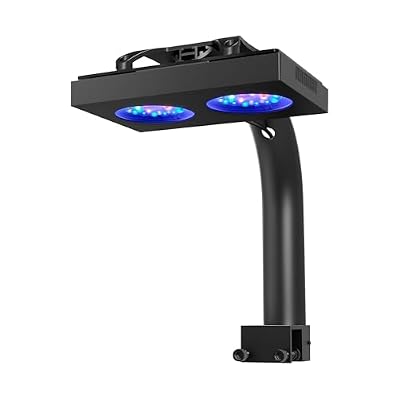
NICREW HyperReef 100 Gen 2 LED Reef Aquarium Light, 100W for LPS SPS Corals
Selected for "How Many Reef Lights for a 6 Foot Tank: Best Expert Guide": this listing is lighting (NICREW HyperReef 100 Gen 2 LED Reef Aquarium Light, 100W for LPS SPS C), matching the equipment this article covers.
View on Amazon
SMATFARM Aquarium Light- 140W Reef Light Wide Coverage Sunrise Sunset Moonlight Saltwater Lights for Coral with Master Slave Group Control & Timer & Screen
Selected for "How Many Reef Lights for a 6 Foot Tank: Best Expert Guide": this listing is lighting (SMATFARM Aquarium Light- 140W Reef Light Wide Coverage Sunrise Sunset ), matching the equipment this article covers.
View on AmazonBy David Nguyen
Quick answer: For most people in 2026, the best how many reef lights for a 6 foot tank is the Point-source LED (Kessil A360X, AI Hydra 32) — our #1 rated choice. See the full ranked comparison, alternatives and buying advice below.
How Many Lights a 6 Foot Tank Needs
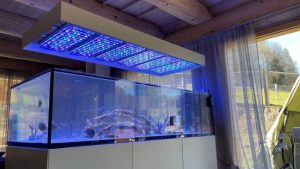
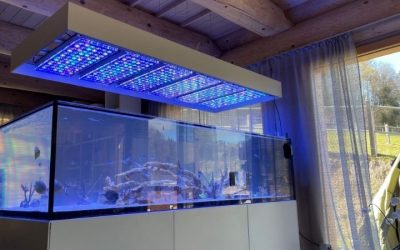
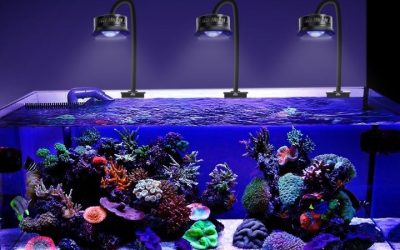
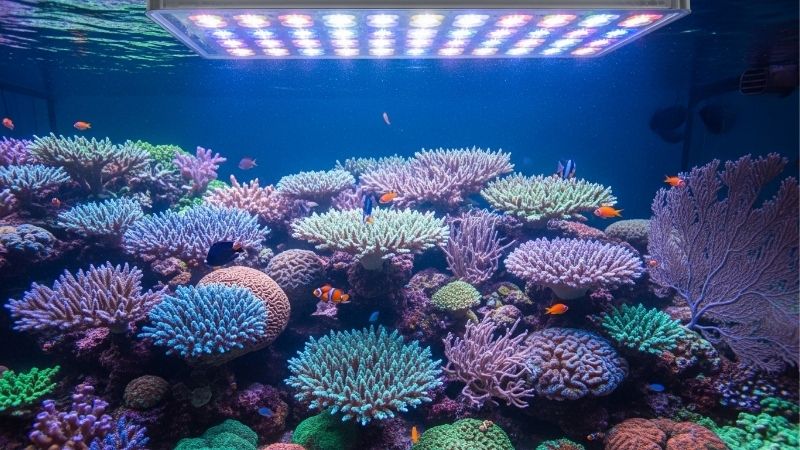
The short answer to how many reef lights for a 6 foot tank is three for most builds, because a 72-inch length divided by roughly 24 inches of coverage per fixture lands there. The chart below shows how different fixture types change that count before we adjust for depth and coral. Depth and coral type shift it next.
| Fixture Type | Coverage Each | Units for 72 in | Note |
|---|---|---|---|
| Point-source LED (Kessil A360X, AI Hydra 32) | About 24 in | 3 | Space evenly, angle to overlap |
| Spread LED (Radion XR30, ReefLED 160S) | 24 to 30 in | 3 | Watch end shadows |
| Large spread (AI Hydra 64) | About 30 in | 2 to 3 | Depends on depth and coral |
| T5 HO or hybrid, length-matched | Full length | 1 fixture | Match tube count to width |
The Short Answer for 72 Inches
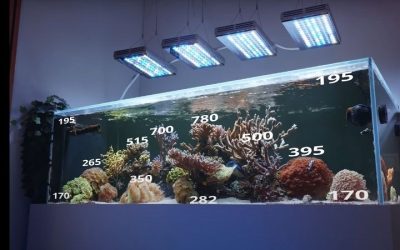
For a typical 6-foot reef, three fixtures is the reliable default, spacing them so their coverage circles overlap slightly rather than leaving cold seams between them. This holds for most point-source and spread LEDs, whose usable PAR fades past roughly two feet even when the center looks plenty bright.
Two fixtures can work on a shallow, softie-only 6-footer where perfect evenness matters less, and a single length-matched T5 or hybrid unit covers the whole run at once. But for a mixed or SPS reef, three LED fixtures remain the count that keeps corals lit corner to corner without dark gaps. Overlap always beats cold seams.
The Rule Behind the Count
The working formula is simple: divide tank length by the usable coverage per fixture, then round up. At about 24 inches of solid PAR each, a 72-inch tank needs 72 divided by 24, or three fixtures, and wider-spread models only shift that slightly rather than rewriting the math entirely. Round up the result, never down.
Coverage means usable PAR at coral height, not the widest point where light merely reaches the glass. Manufacturers often quote generous coverage measured near the surface, so treat their footprint claims as optimistic and lean toward more overlap, since answering how many reef lights for a 6 foot tank errs safest on the higher side.
How to Read the Chart
Each row pairs a fixture style with its realistic coverage and the resulting count, with the note flagging what to double-check. Coverage is stated in inches of usable width per unit, so multiply and compare against your 72-inch run rather than trusting a single headline number from any product page.
Build in tolerance, because a fixture rated for 24 inches often delivers even light across a bit less once depth is factored. Reading the chart conservatively, and planning for overlap instead of edge-to-edge perfection, is what turns a rough count into coverage that actually satisfies corals along the entire length of the tank.
Limits of the Number
A fixture count is a starting estimate, not a guarantee, because coral type, tank depth, and width all pull the real answer around. Three fixtures that light a shallow softie tank beautifully can fall short over deep SPS, where intensity, not just spread, becomes the deciding factor along the run. Intensity, not spread, decides it.
The only true test is a PAR meter at coral height across the whole tank, revealing the dim seams a spec sheet hides. Use the number to budget and plan placement, then verify with measurement, since the difference between adequate and thriving often lives in the corners a rough count quietly overlooks.
Adjust for Your Situation
The base answer to how many reef lights for a 6 foot tank flexes once your corals, depth, and width enter the picture, so the adjustments below tune the count to your build. Start from three, then shift up or down as each factor here applies to your own reef. Start from three, then adjust up or down carefully.
Adjust for Coral Type
SPS-dominant tanks push you toward the higher end of both count and intensity, since stony corals want strong PAR across the whole rock rather than a few bright pockets. Three capable fixtures, or three tuned high, keep demanding corals colored corner to corner instead of thriving only under the middle unit.
A softie or LPS reef relaxes the requirement, often thriving under two fixtures or three run at modest output. Matching the count to your livestock, rather than over-lighting a low-demand tank, saves money up front and cuts the running cost of driving lights harder than the corals actually need. Match the output to your livestock.
Adjust for Tank Depth
Depth changes everything, because PAR drops fast as it travels down through water, so a deep 6-footer needs more intensity to reach the sandbed. Here fewer but stronger fixtures can beat more weak ones, since raw penetration matters more than spread once corals sit far below the surface. Penetration beats spread down here.
A shallow tank of the same length is far more forgiving, letting modest fixtures light corals fully without straining. Measure or estimate PAR at your actual depth before locking the count, since two deep tanks of identical length can genuinely need different lighting to keep bottom corals healthy and colored.
Adjust for Tank Width
Front-to-back width, not just length, decides whether your fixtures cover the footprint, because a wide 6-footer can leave shaded bands even with three well-spaced units. Spread fixtures handle width better than tight point sources, so a broad tank may favor spread LEDs or an extra unit over narrow beams.
Rimless wide tanks and peninsulas viewed from two sides raise the bar further, needing even coverage in every direction. When width grows, lean toward fixtures with a broader field or accept that the count may rise, since covering a wide tank with narrow beams invites the very dark corners you are trying to avoid.
Adjust for Budget
Budget shapes the plan, and the smart move is buying fewer strong fixtures now over the main rock, then adding the rest within a month or two rather than under-lighting the whole tank. A length-matched T5 or hybrid is also worth pricing, since it can cover a 6-footer for less at purchase. Buy in stages if the budget is tight.
Time larger purchases to Amazon sale windows like Prime Day or Black Friday, among the few moments premium fixtures dip meaningfully, and remember to confirm current-generation firmware and UL or ETL safety. Budgeting the full setup, including mounts and running cost, keeps the reef lit without a nasty surprise at checkout.
Frequently Asked Questions
People sizing how many reef lights for a 6 foot tank keep circling the same practical questions about count, wattage, and control. These answers turn the chart and rule into confident decisions, so you buy the right number of fixtures the first time instead of correcting it later. Buy the right count the first time.
How much wattage or PAR do I need for a 6 foot tank?
Focus on PAR at coral height rather than total wattage, since watts vary wildly in efficiency between fixtures. Aim for the commonly cited bands, near 50 to 100 for softies, 100 to 150 for LPS, and 200 to 350 for SPS, measured at the coral across the whole length, not at the surface. PAR, not watts, drives how many reef lights for a 6 foot tank.
Wattage only helps as a rough sanity check within one fixture family, never across brands. Two lights of equal wattage can deliver very different usable PAR, so treat any watts-per-gallon rule as a loose guideline and let a meter, or the maker’s PAR maps, drive the real sizing decision. Let a PAR meter make the call.
Can I use two lights instead of three?
Two can suffice on a shallow, softie-focused 6-footer where you accept a gentle gradient and dimmer ends, or with unusually wide-spread fixtures run higher. But on a mixed or SPS tank, two units over 72 inches usually leave the outer thirds underlit, where corals fade and slow noticeably over time. The outer thirds fade first of all.
If cost forces two now, place them to favor your most demanding corals and add a third when you can. Stretching two fixtures to fake full coverage tends to cost more later in lost corals than the third light would have, so plan for three even if you buy them in stages. Plan three when sizing how many reef lights for a 6 foot tank.
Do I need a controller for multiple fixtures?
You do not strictly need one, but running three fixtures on a single controller or app keeps their schedules identical, which matters for even sunrise, sunset, and acclimation across the tank. Mismatched timers on separate lights create visible steps in brightness and complicate any coordinated ramp you try to run.
Choosing fixtures from one ecosystem lets a single controller group all three, simplifying a big tank considerably. If you buy in stages, stick to the same brand and current generation so the later units join the same schedule cleanly rather than forcing you to juggle multiple apps and clocks. One app keeps all three in sync.
Will small nano pucks work on a 6 foot tank?
They can, but you will need several, since each nano puck lights only a small footprint, and stringing many across 72 inches often costs more and looks busier than fewer proper fixtures. The math rarely favors it once you count the pucks required to match three mid-size units. Big units settle how many reef lights for a 6 foot tank.
Nano lights also tend to offer less penetration for a deep tank and thinner spectrum control. For a serious 6-footer, three appropriately sized fixtures almost always beat a row of small pucks on coverage, control, and total cost, so reserve the little units for the small tanks they were designed for.
Final Thoughts
The dependable answer to how many reef lights for a 6 foot tank is three for most builds, adjusted up for SPS, depth, or width and down for shallow softie reefs. Size from coverage per fixture, verify with a PAR meter at coral height, keep the lights on one schedule, and confirm current firmware and safety before you buy.
Ready to decide? Our #1 pick for 2026 is the Point-source LED (Kessil A360X, AI Hydra 32).
Live price & availability on Amazon.
Related Reviews & Guides
6 Best Sump Tanks For Saltwater Aquarium 2026
Best Skimmer for Heavily Stocked Fish Tank: How to Pick