Last Updated: September 25, 2026
How many fish in a 20 gallon tank has two answers, because two tanks share that label. A 20 long carries roughly 20% more stocking than a 20 high at identical volume, since surface area rather than water volume caps gas exchange. The chart below gives counts for both formats side by side, plus the adjustments that move them.
As an Amazon Associate we earn from qualifying purchases.
As an Amazon Associate we earn from qualifying purchases at no extra cost to you. Prices and availability are accurate as of the date shown and are subject to change.

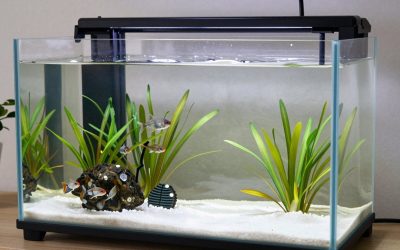
Aqueon Glass 20 Gallon Long Tank for Aquariums & Terrariums
Selected for "How Many Fish in a 20 Gallon Tank: Long vs High Stocking": this listing is tanks (Aqueon Glass 20 Gallon Long Tank for Aquariums & Terrariums), matching the equipment this article covers.
View on Amazon
Aqueon Glass Aquarium Tank, 20 Gallon High Fish Tank, High-Clarity Glass Construction, Freshwater & Saltwater Compatible, Black Trim, 25" x 13.25" x 17.25"
Selected for "How Many Fish in a 20 Gallon Tank: Long vs High Stocking": this listing is tanks (Aqueon Glass Aquarium Tank, 20 Gallon High Fish Tank, High-Clarity Gla), matching the equipment this article covers.
View on Amazon
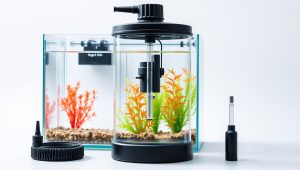
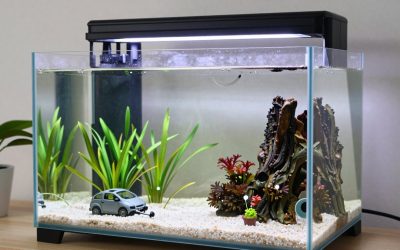
Coospider 20 Gallon Glass Fish Tank, Aquarium Starter Kit, Simple Self-Cleaning Aquarium with 3-Color LED Lights, with Quiet Filter Pump, with Temperature Monitoring for Fish, Shrimp, Kids Gift Ideas
Selected for "How Many Fish in a 20 Gallon Tank: Long vs High Stocking": this listing is filtration (Coospider 20 Gallon Glass Fish Tank, Aquarium Starter Kit, Simple Self), matching the equipment this article covers.
View on AmazonBy David Nguyen
Two Tank Shapes, Two Sets of Counts
This is a lookup with a shape variable built in. The first table gives counts for both tank formats side by side; the second gives the adjustments that decide whether your own tank can carry them. Both sit here rather than further down.

The Decision Numbers: Footprint, Surface Area and Actual Water
A 20 long measures 30 x 12 x 12 in (76 x 30 x 30 cm) and offers 360 sq in (2323 sq cm) of surface. A 20 high measures 24 x 12 x 16 in (61 x 30 x 41 cm) and offers 288 sq in (1858 sq cm), a 20% reduction at the same volume.
| Species type | Adult size | Count in a 20 long | Count in a 20 high | Group minimum |
|---|---|---|---|---|
| Nano shoaling, chili rasbora type | Under 0.8 in (2 cm) | 20-25 | 16-20 | 8 |
| Small tetra or rasbora | 1-1.2 in (2.5-3 cm) | 14-16 | 11-13 | 6 |
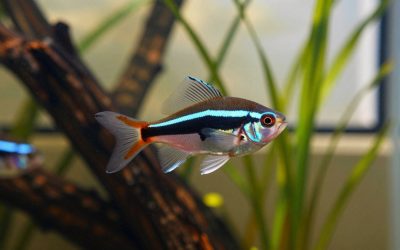
| Neon or ember tetra | 1.5 in (3.8 cm) | 10-12 | 8-10 | 6 |
| Corydoras, standard species | 2-2.5 in (5-6.4 cm) | 6-8 | 5-6 | 6 |
| Dwarf gourami or similar | 2-3.5 in (5-9 cm) | 1 plus a small shoal | 1 plus a smaller shoal | Kept singly |
| Platy or male guppy | 2-2.5 in (5-6.4 cm) | 6-8 | 5-6 | Males only |
| Shrimp colony | 1-1.5 in (2.5-3.8 cm) | 40 plus | 40 plus | 10-15 to start |
| Common mistakes | 4-18 in (10-45 cm) adult | 0 | 0 | Goldfish, common plecos, cichlids |
The columns are alternatives rather than a shopping list. A 20 gallon of either shape holds one shoal plus a small centrepiece or bottom group, and the usual error is treating each row as headroom stacked on top of the last.
The Rule Behind the Counts
Gas exchange happens at the water surface, so surface area caps how many fish in a 20 gallon tank you can keep more directly than volume does. That is the entire reason the two columns differ, and it is why a tall tank of any capacity carries fewer fish than a wide one holding the same water.
Nitrate sets the second ceiling. Test immediately before the weekly water change: under 20 ppm means headroom, 20-40 ppm is a working level, and above 40 ppm means the tank is overstocked regardless of what either column allows.
Reading the Chart, Units and Margin of Error
Counts assume 4-6 times turnover per hour against actual water, which is roughly 17-18 gallons (64-68 L) after substrate and hardscape. That gives 68-108 GPH (257-409 LPH) loaded, so buy a filter rated 150-250 GPH (568-946 LPH).
| Variable | Effect | Adjustment |
|---|---|---|
| Tall tank format | 20% less surface area | Reduce counts by roughly a fifth |
| Loaded turnover under 3x | Nitrate climbs between changes | Reduce count by 3-4, or add a filter |
| Water change under 20% weekly | Nitrate accumulates | Reduce count by 3-4 fish |
| Heavily planted | Nitrate exported continuously | Roughly 10% more headroom |
| Adding a bottom group | Bioload rises, not just floor use | Drop the shoal above by 4-5 fish |
| Strong surface agitation | Improves gas exchange | Recovers part of the tall tank penalty |
| Room above 80 °F (27 °C) | Lower dissolved oxygen | Add agitation, hold the count |
| Nitrate above 40 ppm weekly | Already at the ceiling | Stop adding fish regardless of shape |
Work the second table after the first. The chart gives what each shape can hold when well equipped; the adjustments say whether yours qualifies, and surface agitation is the one that recovers most of a tall tank’s disadvantage.
Adjusting for Your Actual Tank
Deciding how many fish in a 20 gallon tank you can keep depends on shape first, then on filtration, planting and the routine you actually keep to. All four shift the answer by several fish in either direction, which matters at this size.
Adjusting for Species and Bioload
Body mass scales roughly with the cube of length, so moving from a 1 in (2.5 cm) species to a 2 in (5 cm) one costs far more than double. That is why the corydoras row sits at six to eight rather than at half the tetra count.
A centrepiece fish changes the arithmetic more than its size suggests. One dwarf gourami at 3 in (7.6 cm) occupies mid-water and adds meaningful load, so the shoal beneath it should drop by three or four fish rather than staying unchanged.
Adjusting for Shape and Agitation
The tall format penalty is about gas exchange, not swimming room alone, which means it is partly recoverable. Angling the filter outflow across the surface, or adding an air stone, restores a useful share of the 20% difference between the two shapes.
Swimming room is not recoverable in the same way. Active shoaling species need horizontal distance, so a 24 in (61 cm) tank suits them less well than a 30 in (76 cm) one regardless of how much agitation is added at the surface.
Tank Size, Placement and Fit
Measure the stand against the footprint before ordering, since a 30 x 12 in (76 x 30 cm) tank filled and furnished passes 225 lb (102 kg) and overhang at the corners concentrates load where the silicone seams are weakest.
Check the height too. A 20 high on a tall stand puts the water surface above comfortable reach, and maintenance you find awkward is maintenance that quietly slips from weekly to fortnightly, which changes the stocking answer directly.
Where This Chart Stops Working
Any answer to how many fish in a 20 gallon tank is an average taken across many tanks. Three situations override the chart entirely, and recognising them early matters considerably more than adding further rows of counts to it.
When the Numbers Are Right and It Still Fails
Territory is invisible to a stocking count. Two male gouramis in a correctly stocked 20 long is a behavioural problem regardless of the bioload figure, because the constraint there is floor area and sight lines rather than filtration capacity.
Growth is the second blind spot. A count run on shop-size fish is wrong within a year, so use adult size from the start, and expect the true bioload to arrive somewhere between month twelve and month twenty-four after stocking.
Variables the Chart Cannot Hold
Feeding volume changes bioload directly and appears in no stocking table. Two identically stocked 20 gallon tanks can differ by a factor of two in nitrate production purely through how much food enters each of them daily.
Layout matters as much as count for active species. A tank filled end to end with hardscape has far less usable swimming distance than its 30 in (76 cm) footprint suggests, which affects behaviour long before it affects chemistry.
When to Stop Counting and Start Watching
Once stocked, nitrate and behaviour outrank the table. Under 20 ppm before the weekly change, with fish using the full length of the tank rather than one end, is a working stocking level whatever number the chart originally allowed.
Respond within days to warning signs. Fish holding station in corners, gasping at the surface, or repeated fin damage in the same pattern all indicate the stocking is failing before the readings look alarming on a test card.
Verifying the Count and Re-Checking It
Any figure for how many fish in a 20 gallon tank is a prediction, and predictions need testing against readings on a schedule. This section covers what to measure, how often to repeat it, and what drifts across a year at this size.
What to Measure and How Accurate It Is
Nitrate before the weekly change settles it, since it integrates seven days of feeding and filtration into a single figure. Use a liquid kit, because strips read nitrate worst and lose accuracy quickly once the container is opened to humidity.
Measure loaded turnover once by timing the outflow into a container of known volume. Rated GPH assumes an empty housing, and the 30-50% gap is often the difference between a plan that works on paper and rising nitrate in practice.
How Often to Re-Check
Nitrate weekly, turnover annually, and the full count once a year while fish are growing. A community stocked with juveniles reaches its real bioload well after setup, which is when a chart run at purchase quietly stops applying.
Re-check after any change: a new species, a filter swap, a substrate change, or moving the tank to a different room. Each of those resets an assumption the previous count relied on, sometimes by a considerably wider margin than expected.
What Drifts Over Time
Filter flow falls as media compacts and impellers collect grit, so turnover drops below target with no audible change. Feeding portions creep upward almost universally, and both drifts push nitrate the same way at the same time.
Season adds a further push. Rooms above 80 °F (27 °C) in July and August raise tank temperature, lowering dissolved oxygen while raising metabolism, so a count that felt comfortable in spring can be marginal by midsummer with no other change.
How Many Fish in a 20 Gallon Tank: Questions
These follow from the chart rather than replacing it. Every answer to how many fish in a 20 gallon tank stays with shape, counts and readings, since those three decide the result more reliably than any impression through the glass.
Is a 20 long really better than a 20 high?
For fish, clearly yes. It offers 20% more surface area for gas exchange and 6 in (15 cm) more swimming length at the same water volume. The 20 high suits tall plants and a display shape, but it carries noticeably fewer fish.
Can I keep two shoals?
In a 20 long, cautiously. Two species at six each is possible with strong filtration and a weekly 25% change, though both groups sit at their minimum. One larger shoal usually looks and behaves better than two small ones.
What about a centrepiece fish?
One fish reaching 3-3.5 in (7.6-9 cm) works alongside a reduced shoal. Drop the shoal by three or four fish to make room, and check that the species is not territorial toward the particular shoal it will be sharing the tank with.
Are goldfish possible at this size?
No. A single fancy goldfish needs 20 gallons (76 L) as a floor with 8-10 times turnover, which is a dedicated single-species tank rather than a community. Single-tail varieties need 40 gallons (151 L) indoors as a minimum.
See More:
Conclusion
Conclusion
How many fish in a 20 gallon tank depends on shape first: a 20 long carries 14-16 small tetras or rasboras, a 20 high carries 11-13, and either format holds one shoal plus a small bottom group or a single centrepiece fish.
Treat those counts as conditional on 68-108 GPH (257-409 LPH) loaded turnover, a weekly 20-30% change, and nitrate under 20 ppm before that change. Adding surface agitation recovers part of the tall tank penalty; nothing recovers missing swimming length.
6 Best Shrimp Tank Kits 2026

Quick Picks: Best Nano Aquarium Starter Kits