Last Updated: September 27, 2026
Flakes vs pellets for fish is decided by where your fish feed and how large their mouths are. Flakes break to fit any mouth and stay near the surface; pellets hold together, sink at a controlled rate and let you count a portion instead of estimating it. Most established tanks end up running both formats side by side.
As an Amazon Associate we earn from qualifying purchases.
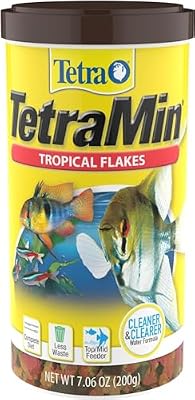
TetraMin Tropical Flakes Fish Food, 7.06 oz
Included for 'Flakes vs Pellets for Fish: Compared by the Real Numbers' because the listing specifies 7.06 oz, details this guide uses to compare options.
View on Amazon
Tetra Goldfish Flakes Fish Food, 7.06 oz
Included for 'Flakes vs Pellets for Fish: Compared by the Real Numbers' because the listing specifies 7.06 oz, details this guide uses to compare options.
View on Amazon
TetraColor Tropical Flakes, Color Boosting Fish Food, Nutritionally Balanced Diet for Tropical Fish, 7.06 oz
Included for 'Flakes vs Pellets for Fish: Compared by the Real Numbers' because the listing specifies Color Boosting Fish Food and Nutritionally Balanced Diet for Tropical Fish, details this guide uses to compare options.
View on Amazon
TetraColor XL Tropical Granules with Natural Color Enhancer, 10.58 Oz
Included for 'Flakes vs Pellets for Fish: Compared by the Real Numbers' because the listing specifies 10.58 Oz, details this guide uses to compare options.
View on AmazonBy David Nguyen
Quick answer: Our top pick in 2026 is the Flake — our #1 rated choice. See the full ranked comparison, alternatives and buying advice below.
What Actually Differs Between the Two Formats
The flakes vs pellets for fish question is usually framed as quality, which is the wrong axis. Both formats span the same protein range and the same ingredient quality; what differs is particle behaviour in water and how precisely you can dose them.

The Deciding Numbers: Waste, Particle Size and Dose Control
Waste is the primary figure. Flake has enormous surface area and begins dispersing on contact, so a share of every portion enters the water column as dissolved organics rather than as food. Pellets hold together long enough to be eaten intact.
Particle size follows. Flake breaks to suit any mouth from fry upward, while pellets come in fixed grades: roughly 0.5-1 mm for fish under 1.5 in (3.8 cm) and 1-3 mm for fish above 2 in (5 cm). One pellet size never fits a mixed community.
Two More Criteria With Numbers Attached
Dose control separates them in practice. You can count out eight pellets and repeat that exactly tomorrow; a pinch of flake varies by a factor of two or three between feeds, and that variance is what drives nitrate upward over a month.
Shelf life after opening favours pellets slightly. Both formats lose vitamin content within roughly six months of opening, but flake degrades faster into dust because of its surface area, and a tub that has become largely powder is past useful life.
Tank Size, Placement and Fit
Measure the lid gap and light clearance before ordering an automatic feeder, since most units dispense pellets reliably and flake poorly, clumping in humid air. That single practical detail decides the format for anyone who travels regularly.
Tank length matters too. Under 30 in (76 cm), filter outflow sweeps floating flake toward the intake within seconds, so a share of the portion never reaches a fish at all. Pellets sink out of that surface current before it can carry them away.
Where Each Format Actually Wins
Neither format wins outright, which is why most established tanks run both. The sections below split the flakes vs pellets for fish decision by tank type, since the correct answer changes with mouth size and feeding level rather than with preference.
Flakes: For Mixed Communities Spanning Several Mouth Sizes
Main number: a particle that breaks to fit anything from 0.5 mm upward. A community holding tetras at 1 in (2.5 cm) alongside a gourami at 4 in (10 cm) is fed adequately by one flake, which no single pellet grade manages to do on its own.
It suits anyone wanting a single staple and a low cost per gram. It does not suit tanks where bottom species need feeding, and it does not suit heavy-handed feeders, since flake clouds water faster than any other dry format when overdosed.
Flakes: For Top and Mid-Water Feeders
Main number: negligible sinking rate, so the food stays in the upper half where livebearers, danios, hatchetfish and most tetras feed naturally. Fish that will not feed off the substrate get more of the portion than they would from any sinking product.
It suits surface-oriented communities specifically. It does not suit tanks with strong surface agitation, where flake is driven under and into the filter, and it does not suit species that refuse to rise, which will simply miss the feed entirely.
Flakes: For Fry and Grow-Out Tanks
Main number: crushed to a barely visible dust, which is the only dry format small enough for most newly free-swimming fry. Feeding three to five times daily in tiny amounts is standard practice, with any residue siphoned out the same day.
It suits grow-out tanks and any fry that have moved past live foods. It does not suit tanks without a sponge-guarded intake, since dust and small fry both pass through an unguarded filter, and it fouls small volumes quickly if overdosed.
Pellets: For Fish Over Two Inches and Precise Dosing
Main numbers: 1-3 mm particle, 38-48% protein typically, and a portion you can count rather than estimate. For fish over 2 in (5 cm) this is the lower-waste choice by a clear margin, and it makes overfeeding much harder to do accidentally.
It suits cichlids, larger barbs, gouramis and rainbowfish. It does not suit communities including fish under 1.5 in (3.8 cm) unless a second grade is bought as well, since a 2 mm pellet is simply too large for a small mouth to take.
Pellets: For Nano Fish at Micro Grades
Main numbers: 0.5-1 mm particle with a slow sink, holding food in the mid-water column where chili rasbora, ember tetra and similar species feed. Waste is lower than crushed flake because the particle stays intact until it is taken.
It suits nano communities and heavily planted tanks where residue is hard to siphon out from between plants. It does not suit larger fish, which need several particles per mouthful, and small containers cost noticeably more per gram than flake does.
Pellets: For Bottom Feeders and Nocturnal Species
Main numbers: a controlled sink rate that puts food on the substrate within seconds, delivered after lights out for nocturnal species. This is the only format that reliably reaches corydoras, loaches and catfish in a busy community tank.
It suits any tank where lower fish are being outcompeted, which is most mixed communities. It does not suit tanks with a heavy substrate the pellets vanish into, and pellets left uneaten overnight need siphoning out with the weekly change.
| Format | Waste level | Particle range | Feeds which level | Best for |
|---|---|---|---|---|
| Flake | Higher, disperses on contact | Breaks to fit | Top and mid | Mixed mouth sizes, surface feeders |
| Crushed flake | High in small volumes | Dust | Top and mid | Fry and grow-out tanks |
| Micro pellet | Low | 0.5-1 mm | Mid-water | Nano and small shoaling fish |
| Standard pellet | Low | 1-3 mm | Mid and lower | Fish over 2 in (5 cm) |
| Sinking pellet or wafer | Low if siphoned | 2-5 mm | Substrate | Bottom and nocturnal species |
Choosing Between Them, and When Both Are Wrong
The flakes vs pellets for fish decision is rarely exclusive in practice. This section sets out when each format is clearly correct, and the cases where changing format solves nothing at all because the real problem sits elsewhere in the routine.
Choose Flakes When
Your community spans several mouth sizes, most fish feed in the upper half, and you want a single staple at the lowest cost per gram. Flake also remains the practical answer for fry, where nothing else dry is small enough without crushing.
Buy the smallest container you will finish inside six months and measure into a dish rather than shaking over the tank. Those two habits together remove most of the waste disadvantage that flake carries against pellets in normal use.
Choose Pellets When
Your fish are over 2 in (5 cm), you want a countable portion, or you need food to reach the lower half of the tank. Pellets also suit anyone using an automatic feeder, since they dispense reliably in a drum where flake clumps and jams.
Match the grade to the smallest mouth in the tank rather than the largest, and accept buying two grades where the community spans more than about 2 in (5 cm) of adult size difference. One grade for everything underfeeds someone.
When Changing Format Fixes Nothing
Rising nitrate is a portion problem, not a format problem. Halve the amount, run the two-minute check for a fortnight, and only then consider whether the format is contributing. A better food fed at the same excess produces the same reading.
Fish refusing food need water tests rather than a new product. Check ammonia, nitrite, nitrate and temperature, correct anything out of range, and take persistent refusal in clean water to an aquatic veterinarian rather than to a shop shelf.
Storage, Waste and the 12-Month Cost
Food is bought continuously, so degradation and running cost matter more than the purchase price of one container. This section covers what fails in storage and how the flakes vs pellets for fish choice affects the rest of the tank across a year.
How Each Format Degrades
Flake breaks down into dust with handling and humidity, and a tub that is largely powder clouds the water and passes through fish without being used. Its surface area is what makes it convenient and also what makes it degrade fastest.
Pellets hold physical form far longer but lose vitamin content on the same timescale, roughly six months from opening. Neither format benefits from bulk buying, since a large container will pass its useful life long before an average tank empties it.
Waste, Nitrate and the True Cost
The cheaper format per gram is not always the cheaper tank. Flake dispersing into the water column raises dissolved organics that the filter has to process, which shows up as nitrate climbing and as larger or more frequent water changes.
Count the year rather than the tub. Food, dechlorinator, filter media and test reagents together form the recurring cost, and reducing waste at the feeding stage lowers several of those lines at once rather than only the food one.
Storage and Timing
Store both formats sealed, cool and dark, away from the tank hood where humidity and heat are highest. Never return uneaten food to the container, and buy two small tubs rather than one large one even at a slightly worse price per gram.
On timing, food is not a category worth stockpiling during a sale, because shelf life after opening caps how much you can usefully hold. Equipment discounts cluster in late June and late November, and prices move constantly, so check at purchase.
Flakes vs Pellets for Fish: Questions
These arrive when a container runs out and the next order is due. Every answer on flakes vs pellets for fish stays with particle behaviour and dose control, since those are the only things that genuinely differ between the two formats.
Can I feed only one format?
In a single-level community, yes. In a mixed tank spanning top, mid and bottom feeders, no single format reaches every level, so the practical answer is a floating staple plus a sinking product, delivered as two separate small feeds.
Do pellets need soaking?
Not usually, though it helps for fish prone to buoyancy trouble after feeding, particularly deep-bodied species. Soaking for 30-60 seconds fully saturates the pellet before it is swallowed, which removes most of that problem at no cost.
Which format clouds water less?
Pellets, clearly. Flake disperses on contact and a share of every portion never becomes food, while a pellet holds together until eaten. That difference is most visible in tanks under 20 gallons (76 L) where the dilution is smallest.
Is one better for fry?
Crushed flake, or a purpose-made fry food, since almost no pellet grade is small enough for newly free-swimming fry. Feed three to five tiny amounts daily and siphon any residue the same day rather than leaving it in the tank overnight.
See More:
Conclusion
On flakes vs pellets for fish, the honest answer for most mixed communities is both: a floating flake for the upper half where mouth sizes vary, plus a sinking pellet at 1-3 mm for anything that feeds lower down in the tank or overnight.
Where the tank holds a single feeding level, pick by fish size. Under 1.5 in (3.8 cm), flake or a 0.5-1 mm micro pellet; above 2 in (5 cm), a standard pellet for lower waste and countable portions. Buy small containers and finish them within six months.
Ready to decide? Our #1 pick for 2026 is the Flake.
Live price & availability on Amazon.
Related Reviews & Guides

6 Best Snails For Betta Fish Tank 2026
Best Fish Feeder for Betta Pellets: 4 Proven Top Options