Last Updated: September 25, 2026
Best fish food for tropical fish comparisons come down to three printed figures: crude protein between 32% and 50%, the first ingredient on the list, and particle size against mouth size. Everything else on the label is marketing rather than specification, which makes this an unusually easy category to compare honestly.
As an Amazon Associate we earn from qualifying purchases.
As an Amazon Associate we earn from qualifying purchases at no extra cost to you. Prices and availability are accurate as of the date shown and are subject to change.

TetraMin Tropical Flakes Fish Food, 0.42 oz
Selected for "Best Fish Food for Tropical Fish: Compared by the Numbers": this listing is fish food (TetraMin Tropical Flakes Fish Food, 0.42 oz), matching the equipment this article covers.
View on AmazonBy David Nguyen
Reading the Panel Rather Than the Front of the Tub
Choosing the best fish food for tropical fish means reading the panel rather than the front of the tub. Four criteria decide almost every case, and three of them are printed on every container sold, which makes comparison unusually straightforward here.
The Deciding Numbers: Protein, Ingredient Order and Particle Size
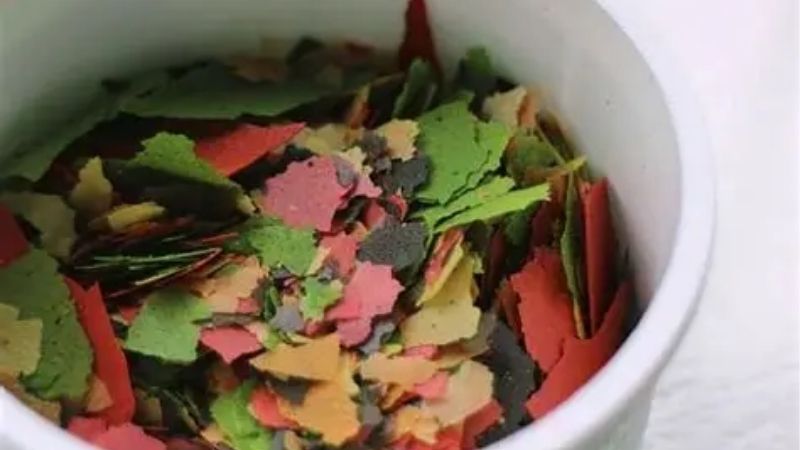
Crude protein sits between 32% and 50% across the category. Growth and conditioning foods run at the upper end, general maintenance foods at 32-40%, and dedicated herbivore foods lower still with spirulina or algae meal high in the ingredient list.
Ingredient order matters more than the percentage. Whole fish, krill meal or black soldier fly listed first delivers more usable protein per gram than a food led by wheat flour or soy, even where both declare the same crude protein figure on the panel.
Two More Criteria With Numbers Attached
Particle size against mouth size decides whether the food is eaten at all. Fish under 1 in (2.5 cm) need micro pellets around 0.5 mm or crushed flake, while a 3 in (7.6 cm) fish handles 1-2 mm granules comfortably and wastes far less.
Shelf life after opening is the criterion everyone ignores. Dry foods lose vitamin content within roughly six months of opening, faster in a humid room, so container size should be matched to what the tank consumes rather than to the price per gram.
Tank Size, Placement and Fit
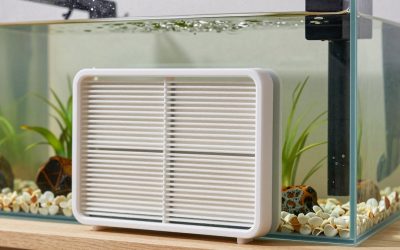
Measure the lid gap and light clearance before ordering an automatic feeder, since a unit that cannot sit flush drops food outside the tank. Check which particle sizes the feeder actually dispenses, because most handle pellets far more reliably than flake.
Feeding position matters in small tanks. Under 30 in (76 cm) of length, filter outflow sweeps floating food toward the intake within seconds, so feed at the opposite end or briefly reduce flow rather than increasing the portion to compensate.
The Options by What the Tank Holds
Four food forms cover essentially every tropical community. Each is matched below to a stocking pattern, since the best fish food for tropical fish depends on where your fish feed in the water column and how large their mouths actually are.
Floating Flake: For Mixed Top and Mid-Water Communities
Main numbers: 32-45% crude protein typically, negligible sinking rate, and a particle that breaks readily for smaller mouths. It remains the most practical staple for a mixed community of tetras, rasboras, livebearers and similar surface-oriented species.
It suits tanks where most fish feed in the upper half and where you want one food to cover several species. It does not suit bottom species at all, since almost none of it reaches them, and it clouds water quickly if the portion is oversized.
Slow-Sinking Micro Pellet: For Nano and Small Mid-Water Fish
Main numbers: roughly 0.5-1 mm particle, 40-48% protein in most formulations, and a slow descent that keeps food in the mid-water column where small shoaling species actually feed. Waste is lower than flake because the particle holds together.
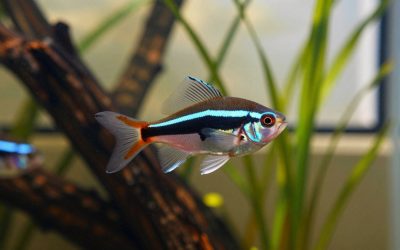
It suits chili rasbora, ember tetra, pygmy species and similar fish under 1.5 in (3.8 cm). It does not suit larger fish, which take several particles per mouthful and lose interest, and the small container sizes cost more per gram than flake does.
Sinking Granule or Pellet: For Larger Mid and Lower Fish
Main numbers: 1-3 mm particle, 38-48% protein, and a controlled sink rate that puts food where mid and lower fish feed. Less breaks apart in transit than flake, so a given weight produces measurably less dissolved waste in the tank.
It suits communities holding fish over 2 in (5 cm), and any tank where bottom species are being outcompeted. It does not suit very small fish, and pellets that sink too fast are found by substrate dwellers before the intended fish reach them.
Frozen or Freeze-Dried Supplement: For Conditioning and Colour
Main numbers: high protein once the water content is discounted, fed once or twice weekly in place of a dry feed rather than in addition. Most of a frozen cube is water, so match it against the portion it displaces rather than adding it.
It suits conditioning fish for breeding and improving colour response in species that take live food readily. It does not suit use as a staple, since the nutritional profile is narrow, and freeze-dried products should be soaked before feeding to fish prone to buoyancy trouble.
| Option | Protein | Particle size | Feeds which level | Best for |
|---|---|---|---|---|
| Floating flake | 32-45% | Breaks to fit | Top and mid | Mixed community staple |
| Slow-sinking micro pellet | 40-48% | 0.5-1 mm | Mid-water | Nano and small shoaling fish |
| Sinking granule or pellet | 38-48% | 1-3 mm | Mid and lower | Fish over 2 in (5 cm) |
| Frozen or freeze-dried | High, water discounted | Varies | All, sinks slowly | Weekly conditioning, not a staple |
| Herbivore or spirulina food | 28-38% | Flake or wafer | Depends on form | Mollies, plecos, grazing species |
Head to Head, and When Not to Buy
Two of these get compared constantly, and there is a common case where new food is the wrong purchase entirely. The best fish food for tropical fish is sometimes the container already open, simply used in a smaller and more consistent portion.
Flake Versus Pellet as a Staple
Flake wins on covering several species at once, on breaking to fit different mouth sizes, and on price per gram. It loses on waste, since a share of every portion disperses into the water before anything eats it, and on reaching lower fish.
Pellet wins on waste and on dose control, because you can count particles rather than estimate a pinch. It loses on flexibility, since one size never suits a community spanning 1-4 in (2.5-10 cm), which usually means buying two products.
When New Food Is the Wrong Fix
Rising nitrate is a portion problem before it is a formulation problem. Halve the amount and re-run the two-minute check for a fortnight before changing product, since a better food fed at the same excessive volume produces the same reading.
Fish refusing food need water tests rather than a new flavour. Check ammonia, nitrite, nitrate and temperature, correct anything out of range, and treat persistent refusal in clean water as a case for an aquatic veterinarian rather than a purchase.
The Cheaper Route That Works
Buying the smallest container of a good food beats a large tub of a cheaper one, because vitamin content falls within roughly six months of opening, and most home tanks never finish a large container inside that window anyway.
Blanched vegetables cover the herbivore requirement at almost no cost. Deshelled peas, courgette and spinach all work, offered once or twice weekly and removed after a couple of hours, which reduces reliance on a dedicated herbivore product entirely.
Storage, Waste and the 12-Month Cost
The best fish food for tropical fish is the one consumable bought continuously, so its running cost and degradation pattern matter as much as the panel does. This section covers what goes wrong in storage, what a year costs, and how the choice affects the tank.
What Degrades and How Fast
Vitamin content falls steadily once a container is opened, with roughly six months as a working limit and less in a warm humid room. A food kept beside a heated tank degrades faster than the same food stored in a cupboard away from light.
Flake suffers most because of its surface area, breaking down into dust that clouds water and passes straight through. A container that has become largely powder is past useful life regardless of the date printed on the base of it.
Waste, Nitrate and the Real Cost
The cheapest food is rarely the cheapest tank. A formulation led by wheat or soy passes through less completely, producing more waste per gram fed, which shows up as nitrate climbing and as more frequent or larger water changes.
Budget across a year rather than per container. Food, dechlorinator, filter media and test reagents together form the recurring cost of a tank, and food is the one item where paying more per gram often reduces the total spend elsewhere.
Storage and Timing
Store containers sealed, cool and dark, away from the tank itself, and never return uneaten food to the tub. Buying two small containers rather than one large one costs slightly more per gram and delivers noticeably better condition across the year.
On timing, food is not a category worth waiting for a sale on, since shelf life after opening caps how much you can usefully stockpile. Equipment discounts cluster in late June and late November; prices move constantly, so check at the moment of purchase.
Best Fish Food for Tropical Fish: Questions
These arrive after the tank is stocked but before the next order. Every answer about the best fish food for tropical fish stays with the printed panel, since that is the only part of the packaging that carries comparable information.
What protein percentage should I look for?
32-40% for general community maintenance, 40-50% for growth, conditioning or predominantly carnivorous species, and lower for dedicated herbivores. Check the first ingredient alongside it, since the percentage alone does not indicate how usable that protein is.
Do I need more than one food?
In a mixed community, usually yes. A tank spanning top, mid and bottom feeders needs at least a floating food and a sinking one, since a single product cannot reach every feeding level regardless of how good the formulation happens to be.
Is colour-enhancing food worth it?
The pigments involved do affect colour expression over weeks, but so does a varied diet and clean water. Treat it as an option rather than a requirement, and be cautious with any product making rapid or dramatic claims about appearance.
How long does an opened container last?
Roughly six months of useful vitamin content, less in a humid or warm room. Buy the container size your tank finishes inside that window, and store it sealed away from heat and light rather than on the hood beside the light fixture.
See More:
Conclusion
The best fish food for tropical fish in a mixed community is a floating flake or slow-sinking micro pellet at 32-45% protein with whole fish or krill meal listed first, paired with a sinking granule sized 1-3 mm for anything feeding lower down.
On a tighter budget, one good flake plus blanched vegetables once or twice weekly covers most communities well. Buy container sizes finished within six months, store them sealed away from the tank, and treat portion size as more important than product choice.
Best Hydroponic Aquarium With Plant Basket: Top Top Picks
10 Best Goldfish Foods: Top Picks for Healthy Goldfish 2026