Last Updated: October 4, 2026
A first nano reef usually comes down to the coralife biocube 32 vs fluval evo 13.5 decision, yet the two are not one tank scaled up and down. One holds considerably more water inside a tall cube; the other is a compact, lower-priced starter, so the pick depends on your space, budget and coral ambition.
As an Amazon Associate we earn from qualifying purchases.
As an Amazon Associate we earn from qualifying purchases at no extra cost to you. Prices and availability are accurate as of the date shown and are subject to change.
By David Nguyen
Quick answer: For most people in 2026, the best coralife biocube 32 vs fluval evo 13.5 is the Nominal capacity — our #1 rated choice. See the full ranked comparison, alternatives and buying advice below.
How to Choose Between BioCube 32 and Fluval EVO 13.5
Four things separate these kits and shape your build: usable water volume, footprint on the stand, stock return flow, and the up-front price. Settle those before brand loyalty, because the BioCube 32 and EVO 13.5 pull toward different tank sizes and different reef ambitions from the very first day onward.
Capacity and Footprint
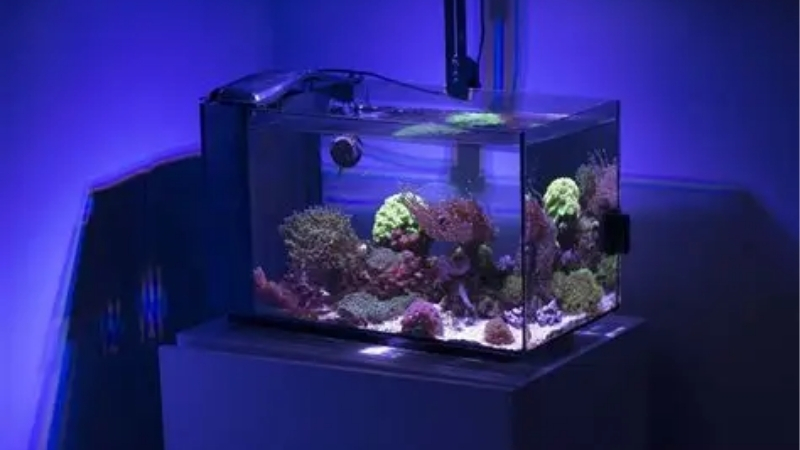
The BioCube 32 is a 32-gallon nominal cube measuring 20.25 by 21.875 by 19.125 inches, so it stands tall and needs genuine stand depth. The Fluval EVO 13.5 holds 13.5 gallons, or 52 liters, at 22 by 15 by 11.5 inches, packing a considerably different water volume and height into a similar wall length.
Nominal gallons overstate what you actually swim fish in; rear chambers, rock and substrate cut both, and usable water after aquascaping stays unverified for each. Mind the height gap, since a 19-inch cube lights and flows unlike an 11.5-inch tank, shaping coral placement and how deep light must reach.
Filtration and Return Flow
Both run rear all-in-one chambers, but their return pumps differ sharply. The BioCube 32 lists 264 GPH and the EVO 13.5 lists 132 GPH. On paper that is exactly two times the published flow, which suits the BioCube’s larger volume, not because one delivers twice the real coral-level circulation you feel.
Published GPH is rated at zero head and falls through the return nozzle, plumbing and media, so treat both figures as a ceiling, not delivered flow. Many reefers add a small powerhead in either tank for the turbulent, random flow that soft corals and LPS prefer, which one stock return rarely produces.
Built-In Lighting
Stock lighting is the hardest thing to compare fairly here. The BioCube 32 publishes PAR of 53 average and 81 peak micromoles at 12 inches over a 20-by-16-inch area. The EVO 13.5 instead lists 16W, 1,383 lumens and 14,000K, describing brightness and color, not PAR, so the numbers measure different things.
Because one specification gives PAR and the other lumens and Kelvin, no honest percentage ranks their strength; the figures are non-comparable. Past soft corals and hardy LPS, budget a lighting upgrade on either tank, and verify PAR at your intended coral depth rather than trusting stock coverage claims.
Up-Front Budget
Price is the clearest separation between them. As of 09/2026 the BioCube 32 runs about $500 and the EVO 13.5 about $225 at Chewy, a difference near under $300. The EVO sits roughly 53.5% beneath the BioCube, which conversely runs about 114.9% above the EVO, so the cube costs far more before any coral.
That sticker gap is only the start, since both still need a heater, salt, test kits and likely a flow and light upgrade. Weigh entry price against how long the tank satisfies you, because outgrowing a 13.5-gallon nano within a year can cost more than buying the cube once and upgrading its gear gradually.
BioCube 32 vs Fluval EVO 13.5 by Use Case
Neither tank wins in the abstract; each fits a particular reefer. The BioCube 32 rewards people wanting volume and an integrated hood, whereas the EVO 13.5 suits tight spaces and smaller budgets. These four cases map the BioCube 32 and EVO 13.5 choice onto how you actually plan to stock and run the tank.
| Factor | BioCube 32 | Fluval EVO 13.5 | Best For |
|---|---|---|---|
| Nominal capacity | 32 gal | 13.5 gal / 52 L | More water and stability -> BioCube |
| Dimensions (L x W x H) | 20.25 x 21.875 x 19.125 in | 22 x 15 x 11.5 in | Shallow footprint -> EVO |
| Stock pump flow | 264 GPH (at 0 head) | 132 GPH (at 0 head) | Bigger volume turnover -> BioCube |
| Stock light | PAR 53 avg / 81 peak @12 in | 16W / 1,383 lm / 14,000K | Published PAR data -> BioCube |
| Price (09/2026) | ~under $500 | ~under $250 | Lower entry cost -> EVO |
BioCube 32 for Water Volume
Choose the BioCube 32 when stability outweighs counter space. Its 32 nominal gallons and 19-inch height hold roughly 137% more nominal water than the EVO, and more water dilutes mistakes, swings salinity and temperature slower, and carries more livestock. The 264 GPH return has real volume to circulate.
The trade-off is size, weight and the roughly $500 price as of 09/2026, plus a tall cube that light must penetrate. It suits a reefer wanting one tank to grow into, but confirm the stand handles a nearly 22-inch-wide footprint first, since a filled cube is heavy and awkward to relocate afterward.
BioCube 32 for an Integrated Hood
The BioCube’s canopy conceals the light and rear chambers for a finished look many owners choose it for. Stock PAR of 53 average and 81 peak at 12 inches drives soft corals and hardy LPS up high, and the enclosed hood curbs evaporation versus an open-top rimless nano running the same daily photoperiod.
That closed design also traps heat, so watch temperature in warm rooms and leave a path for a small cooling fan. Upgrading the light later means working inside the hood or replacing it, a real limit if you plan an SPS-heavy tank needing far more PAR than the fixture verifiably delivers down at depth.
Fluval EVO 13.5 for Compact Spaces
The EVO 13.5 is the obvious pick when space is tight. At 22 by 15 by 11.5 inches it slots onto a desk or narrow shelf where a 19-inch cube cannot, and its low height keeps the stock light near corals. The 132 GPH return matches the modest volume, turning the tank over without a powerhead for softies.
Less water means faster parameter swings, so smaller, frequent changes and steady top-off matter more here than on the BioCube. It makes a strong first saltwater tank, yet the modest volume caps stocking, and a heavy bioload pushes you toward upgrades or a bigger tank sooner than a new reefer expects.
Fluval EVO 13.5 for a Lower Entry Cost
If budget drives the call, the EVO 13.5 near under $250 as of 09/2026 lands roughly 53.5% below the BioCube 32, freeing up cash for a heater, salt, test kits and a modest light upgrade. On a strict first build, that spare budget often does more for coral health than the larger tank’s enclosed stock hood.
The stock 16W, 1,383-lumen, 14,000K light grows soft corals but is rated in lumens and Kelvin, not PAR, so plan a fixture upgrade for demanding species. Reef gear such as lights and controllers discounts hardest around Prime Day and Black Friday, handy timing while stretching a smaller starter budget.
Frequently Asked Questions
A few questions recur before buyers commit to either reef kit. They cover how the two sizes truly compare, what the published 264 GPH figure genuinely means, why the stock lights resist ranking by any one single number, and when neither the BioCube 32 nor the EVO 13.5 is the appropriate tank to buy.
How much bigger is the BioCube 32?
By nominal capacity the BioCube 32 holds about 137% more than the EVO 13.5, roughly 32 versus 13.5 gallons. That is a large jump in water volume, buffering and stocking room, not a small step up. The BioCube also stands much taller, 19.125 inches versus 11.5, changing lighting depth and aquascaping.
Nominal numbers are not usable water, though; rear chambers, rock and sand cut each tank’s real swimming volume, and that stays unverified. If your goal is more fish and coral with steadier parameters, the extra gallons earn their keep; if desk space is the limit, footprint matters more than the ratio.
What does the BioCube’s 264 GPH mean?
It is the pump’s published flow at zero head, exactly two times the EVO’s 132 GPH on paper. It does not mean the BioCube delivers twice the coral-level circulation you feel, because real flow falls through plumbing and the nozzle and depends on tank size, layout and any powerhead you add for turbulence.
Read GPH as turnover for the tank’s volume, not as a coral-flow rating. Both kits usually want a small wavemaker for the random, turbulent flow LPS and SPS prefer, since one stock return makes a single laminar stream that leaves dead spots in the rock regardless of the headline pump number the box quotes.
Which stock light is stronger?
There is no fair single answer, because the two are measured differently. The BioCube 32 publishes PAR, 53 average and 81 peak at 12 inches, while the EVO lists 16W, 1,383 lumens and 14,000K. PAR measures usable coral light; lumens and Kelvin describe brightness and color, so no percentage ranks them.
Judge each light by the corals you want and the PAR reaching their depth, not by the printed spec sheet. Both stock fixtures handle soft corals and easy LPS; demanding LPS or SPS forces an added or replacement fixture on either tank, so fold that upgrade into the true cost before choosing between them.
When is neither tank the right choice?
Skip both if your plan is an SPS-dominant or large mixed reef. A 13.5 or 32-gallon all-in-one caps stocking, and stock lighting and flow both trail SPS demands, so you would spend heavily upgrading a small tank instead of starting with a larger, more capable system sized for the corals you actually want.
Both also demand nano-reef discipline: small and frequent water changes, careful feeding and patience with swings. If you want low maintenance or a big fish load, a larger tank with external gear fits better, since pushing either all-in-one past its volume invites algae, instability and constant correction.
Final Thoughts
Between the coralife biocube 32 vs fluval evo 13.5, the BioCube leads on water volume, turnover and an integrated hood near under $500, while the EVO leads on footprint and a roughly $228 entry as of 09/2026. Match the tank to your space, budget and coral goals over any single headline gallon or GPH figure.
Ready to decide? Our #1 pick for 2026 is the Nominal capacity.
Live price & availability on Amazon.
Related Reviews & Guides


Best Protein Skimmer for 40 Gallon Reef in 2026: Compared and Ranked

6 Best LED Lighting For Reef Tank 2026