Last Updated: September 27, 2026

Active Aqua Hydroponic Water Chiller, 0.25 HP, Pure Titanium, 40-92 Gallon
Included for 'Common Mistakes When Buying an Aquarium Chiller: Top Guide' because the listing specifies 0.25 HP and Pure Titanium, details this guide uses to compare options.
View on Amazon
AISPA Aquarium Chiller 1/10 HP, 42GAL Fish Tank Water Chiller
Included for 'Common Mistakes When Buying an Aquarium Chiller: Top Guide' because the listing specifies 42GAL Fish Tank Water Chiller, details this guide uses to compare options.
View on Amazon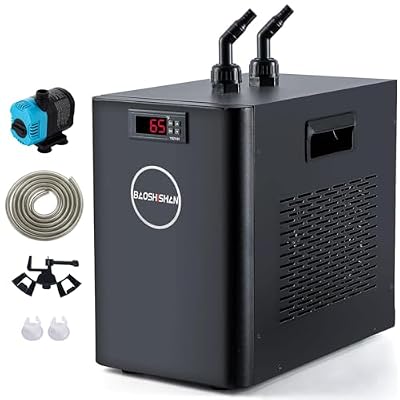
BAOSHISHAN 1/10 HP Aquarium Chiller 42 Gal Fish Tank Water Chiller 110V
Included for 'Common Mistakes When Buying an Aquarium Chiller: Top Guide' as a relevant option in this category; details come from the product listing.
View on Amazon
VEVOR Aquarium Chiller, 110 Gallon, 1/3 HP Water Chiller for Hydroponics
Included for 'Common Mistakes When Buying an Aquarium Chiller: Top Guide' because the listing specifies 110 Gallon and 1/3 HP Water Chiller for Hydroponics, details this guide uses to compare options.
View on AmazonThe costliest error is sizing on gallons or horsepower alone while confusing a heat quantity in BTU with a cooling rate in BTU per hour. Most common mistakes when buying an aquarium chiller trace back to that unit mistake, so sizing to a continuous cooling rate under real conditions fixes them before you ever choose a model.
As an Amazon Associate we earn from qualifying purchases.
By David Nguyen
Quick answer: Our top pick in 2026 is the Sizing method — our #1 rated choice. See the full ranked comparison, alternatives and buying advice below.
How Aquarium Chiller Sizing Works
Sizing rests on one idea: a chiller must supply a continuous cooling rate that offsets your tank’s heat gain, not merely match a gallon number. That means treating gallons as one input among several, distinguishing a heat quantity from a rate, adding continuous heat sources, and giving the unit its required feed flow.
Gallons Are Only One Input
Volume matters, but it is only the starting point. A chiller’s real job is removing heat as fast as your tank gains it, so two 55-gallon tanks with different lighting and pumps need different cooling, and a manual’s ambient range, such as roughly 50 to 95 degrees Fahrenheit, shows conditions shape the requirement.
The mistake is sizing on gallons or horsepower alone. Gallons ignore heat load and ambient, and horsepower is not a rate you can compare across brands, so neither number alone sizes a chiller. Treat volume as one input, then add temperature drop, continuous heat, and flow to reach an honest requirement.
Heat Energy Versus Cooling Rate
A heat quantity and a cooling rate are different things. Multiplying gallons by 8.3 by the temperature drop gives BTU of energy, not BTU per hour: 55 gallons times 8.3 times a 4-degree drop is about 1,826 BTU of energy, which is how much heat to remove, not how fast a chiller removes it.
Confusing the two is the critical error. A rate needs a time basis, so 1,826 BTU is not 1,826 BTU per hour; to get a rate you divide the energy by the time you want the pull-down to take, then add the continuous heat load. Never label a gallons-times-drop figure as a per-hour rating.
Account for Continuous Heat
A chiller fights heat that never stops arriving. Lighting, pumps, and a warm room add heat continuously, especially in summer, so the required cooling rate is the pull-down rate plus the steady heat gain, not just the energy to reach setpoint once. Ignoring this undersizes the unit for real conditions.
The mistake is sizing only for the initial pull-down. A chiller that can cool the water once but cannot keep pace with ongoing heat will run constantly and still drift up on hot days, so include the continuous load from equipment and ambient when you work out the rate the chiller must sustain.
Feed Flow Is Part of Sizing
A chiller only cools the water flowing through it, so feed flow is part of the requirement. Each unit specifies a range, such as the Active Aqua 1/10’s 132 to 396 GPH or the JBJ DBA-075’s 240 to 960 GPH, and the feed pump must sustain that range for the unit to reach its rated cooling.
The mistake is treating flow as an afterthought. Too little flow cuts cooling and can risk problems, while flow outside the range wastes effort, so plan the pump and plumbing to hold the unit’s GPH. A correctly sized chiller starved of flow behaves like an undersized one, defeating the sizing work.
What It Looks Like in Practice
These are the buying mistakes as they actually play out, each tied to a threshold you can check. Recognizing the common mistakes when buying an aquarium chiller in real setups keeps a purchase from arriving undersized, mislabeled, or starved of flow, and the table below maps each factor to what to do.
| Factor | Normal Range | Watch-out Threshold | What to Do |
|---|---|---|---|
| Sizing method | Rate under real conditions | Gallons or horsepower alone | Compute a cooling rate |
| BTU vs BTU/h | A rate with a time basis | BTU quantity used as a rate | Divide energy by pull-down time |
| Feed flow | Within the unit’s GPH range | Pump below the rated range | Match pump to rated flow |
| Ventilation | Clearance and cool intake air | Sealed, hot cabinet | Vent the unit; respect ambient |
Sizing by Gallon Label
In practice, gallon-only sizing looks like a unit rated for your volume that still cannot hold temperature. A shopper matches a chiller’s gallon rating to the tank, ignores lighting, pumps, and a hot room, and finds it runs constantly in summer because the real heat load exceeded what the gallon figure implied.
The threshold to watch is any purchase justified by gallons or horsepower alone. If the sizing did not include temperature drop, continuous heat, and a time basis, it is incomplete, so recompute a cooling rate under your real conditions rather than trusting a gallon label or a horsepower number.
Confusing BTU With BTU per Hour
This mistake looks like a spreadsheet that mixes energy and rate. Someone computes 55 times 8.3 times 4 as 1,826 and writes it as 1,826 BTU per hour, then buys against that figure, not realizing they calculated a heat quantity in BTU, not a per-hour rate, and undersize the chiller as a result.
The threshold is any BTU figure used without a time basis. A quantity of BTU only becomes a rate when divided by the pull-down time and added to the continuous load, so if a number lacks an hourly basis, do not compare it to a chiller’s BTU-per-hour rating; convert it to a rate first.
Ignoring Feed Flow
Here the buyer sizes cooling correctly but forgets flow. A capable chiller is plumbed with a pump below its rated range, so water passes too slowly or too little reaches the unit, and the cooling underperforms while the owner blames the chiller instead of the feed flow that was never matched.
The threshold is a feed pump outside the unit’s stated GPH range, such as under 132 GPH on a unit needing 132 to 396. Match the pump to the range, keep the plumbing short and clean, and the chiller can finally deliver the full cooling its rating always promised on paper.
Sealing It in a Hot Cabinet
The last common error is ventilation. A chiller shut in a closed, warm cabinet recirculates its own exhaust, so it works harder and cools less, and in summer the trapped heat can push it into constant running even though the unit itself is correctly sized for the tank.
The threshold is a chiller with little clearance or airflow, especially near its exhaust. Give it space and cool intake air, keep it out of a sealed hot stand, and respect the manual’s ambient range, since good ventilation protects the cooling capacity you paid for as surely as correct sizing does.
Frequently Asked Questions
Buyers keep asking the same chiller questions, and each answer returns to a cooling rate under real conditions rather than a single number. These cover whether gallons are enough, the units in the sizing formula, whether more flow helps, and how ambient temperature affects the choice.
Are Gallons Enough to Size a Chiller?
No. Gallons are one input, but the required cooling depends on temperature drop, continuous heat from lights and pumps, and ambient, so two tanks of the same volume can need different chillers. Sizing on gallons or horsepower alone ignores the heat load that actually determines the rate you need.
Work out a rate instead. Combine volume and drop into a heat quantity, divide by the pull-down time for a rate, then add the continuous load, and match that to a unit’s rated cooling and feed flow. A gallon figure only starts the process; it does not finish the sizing.
What Are the Units in the Formula?
Gallons times 8.3 times the temperature drop in Fahrenheit gives BTU of energy, a quantity of heat, not a rate. For example, 55 times 8.3 times 4 is about 1,826 BTU, which is how much heat you must remove to reach setpoint, not how fast a chiller actually removes it.
To get a rate, add a time basis. Divide that energy by the hours you want the pull-down to take, then add the continuous heat load, and the result is a BTU-per-hour rate you can compare to a chiller’s rating. Never treat the raw BTU quantity as a per-hour figure.
Does More Flow Improve Cooling?
Only within the unit’s rated range. Each chiller specifies a feed-flow band, such as 240 to 960 GPH for the DBA-075, and staying inside it lets the unit cool as designed; too little flow reduces cooling, while pushing far beyond the range adds no cooling and can strain plumbing.
Aim for steady flow in the range, not maximum flow. Match the feed pump to the unit’s GPH, keep plumbing clean so flow does not fade, and the chiller delivers its rated cooling. Flow is part of sizing, so correct, consistent flow matters more than simply moving more water through the loop.
How Does Ambient Temperature Matter?
It changes the heat load and the unit’s reach. A warmer room adds continuous heat and, for a chiller rated within an ambient range such as roughly 50 to 95 degrees Fahrenheit, pushes it to work harder, so the same tank needs more cooling in a hot room than in a cool one.
Factor your summer ambient into sizing and placement. Include the room’s heat in the continuous load, ventilate the unit so it is not fighting its own exhaust, and respect the manual’s ambient limits. Ignoring ambient is why a chiller sized on paper can still run constantly on the hottest days.
Final Thoughts
Most common mistakes when buying an aquarium chiller come from sizing on gallons or horsepower and confusing a BTU heat quantity with a BTU-per-hour rate. Work the other way: volume and drop into energy, a time basis and continuous load into a rate, then match capacity, feed flow, and ventilation to real conditions.
Ready to decide? Our #1 pick for 2026 is the Sizing method.
Live price & availability on Amazon.
Related Reviews & Guides


Best Aquarium Controller for a Nano Tank: Proven Top Picks

What Pond Liner Thickness Do You Need: Best Expert Shortlist