Last Updated: October 4, 2026
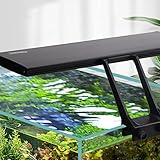
- Top Pick: AQUANEAT LED Aquarium Light Full Spectrum for 18 Inch to 24 Inch Fish Tank Light Fresh Water
- Best Value: AQUANEAT LED Aquarium Light Full Spectrum 12 Inch Fish Tank Light Fresh Water
- Premium Choice: hygger Clip On 24/7 Lighting Aquarium LED Light,Sunrise-Daylight-Moonlight and DIY Mode, Adjustable Timer/Brightness Fish Tank Light with 7 Colors for Planted Tank (14W for 12~20in Tank)
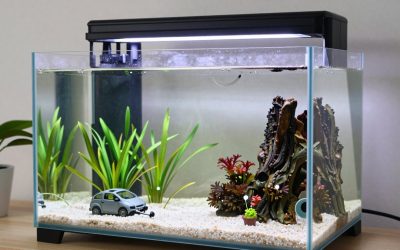
Buying an aquarium light can look deceptively simple: match the fixture to the tank, plug it in, and switch it on. In practice, many buyers choose the wrong length, underestimate the importance of mounting, or assume “full spectrum” automatically means the light is suitable for plants. Others focus on the highest wattage and end up with excessive algae, stressed fish, or a fixture that cannot fit securely on the rim.
This guide explains what to look for in led aquarium lights before you buy. The right choice depends on your tank’s dimensions, livestock, planting level, desired schedule, and available budget—not just the number of LEDs in the housing.
As an Amazon Associate we earn from qualifying purchases at no extra cost to you.

Decide These 3 Things First
- Measure the tank’s actual length. Measure the glass from outside edge to outside edge, then check whether the light’s adjustable brackets can span that distance. A fixture advertised for a “24-inch tank” may fit tanks from 18 to 24 inches, but it may not suit a 24-inch tank if the brackets are fixed or the end caps add extra length.
- Choose your light level. Fish-only tanks generally need modest illumination for viewing. Low-light plants such as anubias, java fern, and many mosses are more demanding than artificial décor but less demanding than carpeting plants or red-stem species. A planted tank with ambitious growth needs better intensity control and a more useful color spectrum.
- Decide how much automation you want. A basic on/off fixture is inexpensive and straightforward. A programmable model can provide gradual sunrise and sunset periods, a nighttime blue setting, brightness adjustment, and a repeatable schedule. Automation is helpful, but it should not outweigh poor fit, weak construction, or inadequate water protection.
Size and Coverage
Length is the first specification to check, but coverage is more than end-to-end fit. A light should illuminate the usable surface of the aquarium without leaving dark corners or creating a harsh bright stripe down the center.
For a tank measuring 18 to 24 inches long, a fixture in that range is usually the appropriate starting point. The AQUANEAT full-spectrum model listed for 18- to 24-inch freshwater tanks is priced at about $15, while the 12-inch version is around $5. For a 30- to 38-inch aquarium, the larger AQUANEAT fixture is approximately $35. These low-cost fixtures are worth considering for simple freshwater setups, but check the listed width and mounting range rather than relying on the product name alone.
Also measure the tank’s depth. A 12-inch-deep aquarium is easier to illuminate evenly than a 20- or 24-inch-deep tank. Deep tanks may need a brighter fixture, a light positioned closer to the water, or two smaller fixtures. If the aquarium has a thick canopy, rear filter, or unusual rim, allow at least 1 to 2 inches of clearance for brackets and cables.
Material and Water Resistance
Look for an aluminum or metal heat-dissipating body rather than a flimsy, completely enclosed plastic shell. Aluminum can help move heat away from the LEDs, while a plastic housing may still be acceptable when it is rigid, well-sealed, and intended for aquarium use.
Do not assume that “waterproof” means the entire fixture can be submerged. Many aquarium lights are splash-resistant but are not designed to sit underwater. A product with a stated IP rating gives you more useful information: IP65 generally indicates protection from water jets, while IP67 indicates temporary immersion under specified conditions. If no rating is provided, keep the fixture above the tank and use a drip loop in the power cord.
Inspect the lens or diffuser, too. A sealed lens helps protect the diodes from humidity and occasional splashes. Exposed circuit boards, loose end caps, and visible gaps around the cable entry are warning signs, particularly for an open-top aquarium.
Construction and Mounting
Good construction is easy to overlook because it does not appear in a brightness number. Check whether the brackets are adjustable, whether they lock firmly onto the rim, and whether the fixture can be removed without taking apart the whole aquarium.
For most standard tanks, adjustable legs should provide at least 2 to 4 inches of total adjustment beyond the fixture’s stated length. The supports should rest securely on the rim rather than balance on a narrow edge. A clip-on model can work well for nano tanks or tanks with limited space, but verify that the clamp opens wide enough for the glass thickness. A clamp rated for a 0.5-inch rim may not fit a tank with a 0.75-inch rim, canopy, or rear equipment.
Look for a power cord of roughly 5 to 6 feet if the outlet is not directly behind the aquarium. The adapter should remain dry and should not hang over the tank. Buttons and connectors should feel secure, and the housing should not flex noticeably when you press the controls.
Comfort, Performance, and Controls
For fish-only aquariums, consistent, moderate illumination is usually more valuable than maximum output. Adjustable brightness helps prevent a sudden jump from a dark room to intense light. It also lets you tune the appearance of pale fish, colorful decorations, and plants without running the fixture at full power all day.
For planted tanks, consider spectrum and control together. “Full spectrum” is a useful marketing description, but it does not tell you the exact output, intensity at the substrate, or suitability for demanding plants. Low-light plants can often do well with a modest fixture, while high-light plants may require substantially more intensity and careful nutrient and carbon management.
A programmable fixture should offer a practical schedule rather than an excessive number of confusing presets. A 6- to 10-hour daily lighting period is a reasonable starting range for many freshwater aquariums, followed by a dark period. Sunrise and sunset transitions lasting 15 to 60 minutes can make the change less abrupt, but they do not replace a consistent full-day schedule.
The hygger Clip On 24/7 model, listed at approximately $25, adds sunrise, daylight, moonlight, DIY color settings, brightness adjustment, and a timer. It is rated at 14 watts for tanks measuring about 12 to 20 inches. Those controls may justify the higher price for a planted or display aquarium, but confirm that the clamp and light output suit your particular tank before purchasing.
Price Tiers
Budget: $7 to $20. Expect basic on/off operation, a simple white or full-spectrum setting, and limited dimming. These fixtures can be suitable for small fish-only tanks, quarantine tanks, and low-light plants. The AQUANEAT examples priced around $5 and under $20 fit this category.
Midrange: $20 to $50. This tier commonly adds adjustable brightness, multiple color modes, timers, better brackets, or a more substantial housing. A $25 to $35 fixture can offer a useful balance for a 12- to 30-inch freshwater tank, especially when you want automated scheduling.
Premium: $50 to $150 or more. Premium fixtures may provide stronger output, more precise programming, wireless control, better heat management, longer warranties, and compatibility with advanced planted or reef systems. Pay for these features only if you will use them. A premium controller is unnecessary for a simple fish-only aquarium.
Warranty and Replacement Support
Look for at least a one-year warranty on the light and power adapter. A two- or three-year warranty is more reassuring when the fixture costs $75 or more. Read what the warranty covers: some policies exclude water damage, power surges, broken brackets, or failures caused by condensation.
Replacement adapters and mounting legs are also important. A light may last for years while its power supply fails first. Before buying, check whether the manufacturer identifies the adapter’s voltage and amperage and whether replacement parts are available. Keep the receipt, product packaging, and model number until you are sure the fixture works reliably.
Delivery, Setup, and Assembly
Most aquarium lights require little assembly, but setup still affects safety. Expect to attach adjustable legs, install a clip, or connect a power adapter. This should take roughly 5 to 15 minutes without tools. If the instructions require drilling, permanent adhesive, or complicated wiring, the product is not a convenient choice for a typical home aquarium.
Before delivery, confirm the package includes the light, brackets or clamp, power adapter, timer or controller if advertised, and instructions. After installation, create a drip loop below the outlet and adapter. Position the light so it cannot slide into the water, and leave enough room to remove the lid for feeding and maintenance. If the fixture arrives cracked, bent, wet, or with a loose cable, do not install it over the tank.
Spec Checklist
| Spec | Budget | Mid | Premium |
|---|---|---|---|
| Typical price | $7–$20 | $20–$50 | $50–$150+ |
| Tank length | 12–24 inches | 18–36 inches | 24–60+ inches |
| Power range | 5–15 watts | 10–30 watts | 20–80+ watts |
| Controls | On/off; limited modes | Dimming, timer, color modes | Programmable schedule, app, or advanced controller |
| Mounting | Fixed legs or basic clips | Adjustable legs or stronger clamp | Adjustable mounts, brackets, or suspension options |
| Warranty target | 6–12 months | 1–2 years | 2–3 years |
Red Flags
- No stated tank-length range or bracket dimensions.
- Claims of being “waterproof” without an IP rating or care instructions.
- Very high wattage claims with no information about brightness control, heat, or intended tank size.
- A power adapter that gets hot, has a damaged cable, or lacks clear electrical labeling.
- Mounting legs that wobble, slide, or rest partly on the glass.
- Color modes that cannot be disabled or a timer that resets after every power interruption.
- No warranty information, replacement-part support, or identifiable manufacturer.
FAQ
How many watts should an aquarium light have?
There is no universal wattage rule because LED efficiency varies. As a broad starting point, 5 to 15 watts may suit a small fish-only or low-light tank, while 10 to 30 watts is common for a medium freshwater aquarium with modest plants. Demanding plants or deep tanks may need more. Treat wattage as an energy-use figure, not a complete measure of brightness.
Should an aquarium light be on all day?
No. Start with about 6 to 8 hours per day and adjust based on plant growth, fish behavior, and algae. Many aquariums do well with a total schedule of 8 to 10 hours, but the tank should have a consistent dark period. A timer is useful because it prevents accidental overlighting.
Are blue moonlight LEDs necessary?
No. Blue moonlight is mainly an appearance feature and can help you view a tank briefly after dark. It is not a substitute for a normal day cycle. Avoid leaving bright blue LEDs on throughout the night, since fish benefit from darkness and prolonged lighting can encourage algae.
Can one light work for both fish and plants?
Yes, if the fixture provides suitable coverage, adjustable brightness, and enough usable light for the plants you choose. A basic fixture may work for fish and low-light plants, while high-light species usually need a stronger, more controllable model. Match the fixture to the plants you actually intend to grow rather than buying the most powerful option by default.
Ready to decide? Our #1 pick for 2026 is the Typical price.
Live price & availability on Amazon.
Related Reviews & Guides
Aquarium Air Pump Buying Guide Noise Rating in 2026: What Actually Matters
How to Fix Aquarium Heater Stuck on (2026): Step-by-Step