Last Updated: October 4, 2026
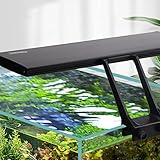
- Top Pick: AQQA LED Aquarium Light, 24/7 & DIY Mode Full Spectrum Fish Tank Light
- Best Value: Pawfly 11W Aquarium LED Light for 12 to 18 Inch Fish Tanks Extendable Fish Tank Light with Full Spectrum Brilliant White Blue Red Lights with Daytime & Night Modes and Adjustable Brightness
- Premium Choice: hygger Clip On 24/7 Lighting Aquarium LED Light,Sunrise-Daylight-Moonlight and DIY Mode, Adjustable Timer/Brightness Fish Tank Light with 7 Colors for Planted Tank (14W for 12~20in Tank)
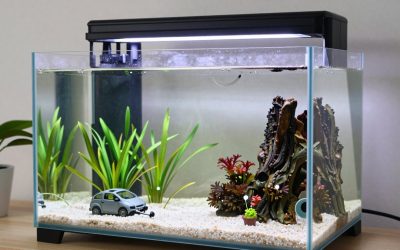
Choosing an aquarium light is not as simple as matching a fixture to the tank’s length. Many buyers focus on wattage, assume the brightest setting is best, or select a “full-spectrum” light without checking whether it can deliver usable light to plants at the bottom. Others buy a fixture that fits the rim but leaves dark corners, has no timer, or overheats when run for a full photoperiod.
The right choice depends on the aquarium’s dimensions, inhabitants, plants, substrate depth, and room lighting. A low-tech tank with silk plants needs far less intensity than a densely planted aquarium with carpeting species. Fish-only tanks generally need enough illumination for viewing and a stable day-night rhythm, not maximum output. Use the guide below to compare aquarium lights by the factors that actually affect daily performance.
As an Amazon Associate we earn from qualifying purchases at no extra cost to you.



Decide These 3 Things First
- What is in the tank? Fish-only aquariums and tanks with artificial plants can use modest lighting, often around 5 to 15 watts for a small 10- to 20-gallon tank. Live plants raise the requirements. Easy plants such as anubias, java fern, and cryptocoryne usually tolerate low to moderate intensity, while carpeting plants and demanding red plants often need stronger, more evenly distributed light.
- How deep and wide is the aquarium? A light designed for a 12- to 18-inch tank may fit the length but still be inadequate for a tank that is 18 inches deep. Light intensity falls as it travels through water, so depth matters nearly as much as length. Measure the inside length, rim width, and water depth before shopping.
- How much control do you need? At minimum, look for adjustable brightness and a reliable timer. Sunrise, daylight, sunset, moonlight, and DIY color controls are convenient, but they do not automatically mean the fixture is more powerful or better for plants.
Size and Coverage
Start with the manufacturer’s recommended tank length, then compare it with the fixture’s actual adjustment range. A 12- to 18-inch light is suitable for many nano and small aquariums, but it may not illuminate the ends evenly if it is installed at the shortest setting. For a 20- to 24-inch tank, look for a fixture rated for at least that span rather than stretching a smaller model to its maximum.
Width is also important. Slim bar lights may cover a narrow aquarium well, while a wide planted tank can have dim areas near the front and back glass. A fixture approximately 2 to 4 inches shorter than the aquarium may still work for a fish-only setup, but planted tanks benefit from coverage across the entire growing area.
Water depth provides another useful guide. Low-light plants can work in tanks up to roughly 16 inches deep with a modest LED, provided the light is distributed evenly. For depths of 18 to 24 inches, choose a stronger fixture or one with a published PAR chart. PAR, measured in micromoles per square meter per second, is more meaningful for plants than lumens because it describes usable photosynthetic light. Do not compare wattage alone: two LEDs with the same wattage can produce different results.
Material and Water Resistance
Aquarium lights live in a humid, splash-prone environment, so materials affect longevity and safety. An aluminum housing is useful because it helps move heat away from the LED board. Plastic housings can be perfectly serviceable for low-wattage fixtures, but inspect the vents, end caps, and cable entry points for gaps.
Look for a stated water-resistance rating, but read the wording carefully. An IP65 rating generally indicates protection from water jets, while IP67 indicates temporary immersion under defined conditions. Neither rating means the light should be submerged unless the manufacturer specifically says it is submersible. A fixture with no published rating should be mounted above the tank with a drip loop in the power cord.
Clear covers should be made from glass or impact-resistant plastic and should sit securely over the LEDs. A removable splash shield is helpful for cleaning salt or mineral deposits. Never assume a “waterproof” label covers the power adapter, timer, or controller; these components should stay dry.
Construction and Adjustability
Examine how the light attaches to the tank. Extendable brackets are practical for common rimmed aquariums, especially models intended for 12- to 18-inch tanks. Check the minimum and maximum span, bracket depth, and whether the supports rest securely on the rim rather than balancing on the glass.
Clip-on lights save space and work well for small bowls or narrow tanks, but the clamp must fit the aquarium wall without stressing it. Avoid mounting a clamp over a flimsy plastic edge. A bar-style fixture is generally more stable on longer tanks, while a hinged or gooseneck design offers better positioning over a planted section.
Construction quality also includes cable strain relief, button feel, controller placement, and heat management. The light should not wobble when the lid is opened. If the fixture uses cooling fans, check whether the fan is replaceable and whether its noise will be noticeable in a bedroom or office. Passive cooling is quieter, but the housing may become warm during a long lighting cycle.
Comfort, Performance, and Controls
Brightness control is one of the most valuable features because it lets you adapt the light to the livestock and reduce algae risk. A useful fixture should offer at least five brightness levels or a smooth dimming range. Start a new planted tank at about 30% to 50% output for six to eight hours daily, then increase gradually if plants need more light. A typical mature schedule is six to eight hours of strong daylight, with the total illuminated period usually kept below 10 hours.
Color controls can improve viewing. White light around 6,500K to 7,000K gives a familiar daylight appearance, while red and blue channels can emphasize plant color and fish markings. “Full spectrum” describes the LED mix, not a guaranteed intensity level. A low-output full-spectrum light may still be unsuitable for demanding plants.
Automatic timers are preferable to relying on memory. Look for a repeatable 24-hour cycle and clear controls for the start time. Sunrise and sunset ramps can reduce abrupt changes that startle fish, although they are not essential. Blue moonlight should be kept dim and should not run all night; fish and plants benefit from a genuinely dark period of about 8 to 12 hours.
Price Tiers and Running Costs
For small fish-only or low-light tanks, budget fixtures generally cost about $8 to $20. Examples in this category include compact lights with adjustable brightness, basic white-blue-red channels, and simple daytime or nighttime modes. A low-priced 11-watt light can be adequate for a 12- to 18-inch aquarium when the plants are undemanding and the tank is not deep.
Midrange lights typically cost $20 to $45. They often add 24/7 programming, sunrise and moonlight modes, more precise dimming, stronger housings, and better bracket adjustment. A 14-watt fixture rated for a 12- to 20-inch tank may be a practical choice for a small planted aquarium, but verify plant demands and coverage rather than assuming the wattage is sufficient.
Premium fixtures commonly start around $50 and can exceed $150 for larger tanks or lights with published PAR data, app control, replaceable components, and robust mounting systems. The extra cost is easiest to justify when you keep demanding plants, need consistent coverage over a deep tank, or want detailed scheduling.
LED electricity use is modest. Running a 15-watt light for eight hours daily uses about 3.6 kilowatt-hours per month. At $0.20 per kilowatt-hour, that is roughly $0.72 monthly, before accounting for controller or adapter losses. Reliability and controllability usually matter more than small energy savings.
Warranty and Support
Look for at least a one-year warranty on the light and power adapter. A two- or three-year warranty is more reassuring for a higher-priced fixture. Confirm what the warranty covers: some policies exclude water damage, adapters, timers, or normal LED dimming.
Keep the receipt, packaging, and model number. A company that publishes replacement adapter specifications and responds with clear mounting or programming instructions is easier to deal with than one that offers only a generic contact form. For a light costing $10 to $20, a simple replacement may be more practical than a repair; for a $100 fixture, parts availability becomes much more important.
Delivery and Assembly
Check the package contents before ordering. A complete kit should identify the light, brackets or clamp, power adapter, controller, and instructions. Assembly should take roughly 5 to 15 minutes for an extendable bar or clip-on light. Tools are usually unnecessary, though a small screwdriver may be required for some bracket hardware.
Measure the shipping box only if storage or delivery access is tight, but pay closer attention to return conditions. A fixture can be listed as compatible with a tank length yet fail to fit a wide rim or hinged lid. Test the light above the aquarium before removing protective film, and confirm that every brightness mode and timer function works during the return period.
Spec Checklist
| Spec | Budget | Mid | Premium |
|---|---|---|---|
| Typical price | $8-$20 | $20-$45 | $50-$150+ |
| Best tank length | 12-18 inches | 12-30 inches | 24-48+ inches |
| Typical power | 5-12 watts | 10-30 watts | 20-80+ watts |
| Brightness control | 3-5 levels | 5-10 levels or smooth dimming | Precise dimming, often app or controller based |
| Timer | Basic on/off or preset modes | 24/7 cycle and programmable schedule | Detailed ramping and multiple channels |
| Mounting | Clip or simple extendable brackets | Adjustable brackets or hinged mount | Heavy-duty brackets, suspension, or modular rails |
| Plant suitability | Fish-only and low-light plants | Most low- and moderate-light plants | Demanding plants, deeper tanks, or dense layouts |
| Warranty target | At least 6-12 months | At least 1 year | 2-3 years and replacement parts |
Red Flags
- Wattage is the only performance claim. Without coverage details, PAR information, or a clear tank-depth recommendation, wattage is incomplete.
- No stated dimensions or adjustment range. “Fits most tanks” is not enough to confirm a secure fit.
- Unclear water protection. A light used near water should have splash guidance or a published resistance rating.
- Blue light advertised as a night light for all-night use. Fish need darkness, and continuous lighting can encourage algae.
- Excessive heat, flickering, or buzzing. These can indicate poor heat management, a failing adapter, or an incompatible dimmer.
- Preset colors without independent brightness control. Attractive color modes do not replace useful white intensity for plant growth.
- Warranty exclusions hidden in the fine print. Check coverage for the adapter, controller, and water-related failures.
FAQ
How bright should an aquarium light be?
For fish-only tanks, choose a comfortable, adjustable light rather than the brightest available model. For plants, use the plant’s light requirements, tank depth, and substrate position as the guide. Low-light plants often do well with moderate output, while demanding plants may require a higher-output fixture with published PAR data.
Is a higher-wattage aquarium light always better?
No. Higher wattage can mean more output, but efficiency, lens design, LED quality, and coverage also matter. An overly bright light can cause algae and stress fish if it cannot be dimmed. A controllable 10- to 20-watt light may be more useful than a fixed, brighter fixture on a shallow tank.
How long should an aquarium light stay on?
Begin with six to eight hours of daylight, especially in a new aquarium. Increase only if plants need it and algae remains controlled. A total cycle of eight to 10 hours is common, followed by a dark period of at least 8 hours. Moonlight, if used, should be brief and very dim rather than continuous.
Do I need a full-spectrum aquarium light for live plants?
Not necessarily. A balanced white LED with suitable intensity can grow many easy plants. Full-spectrum labeling may indicate a pleasant color mix, but it does not guarantee adequate plant-usable light. Prioritize adjustable output, even coverage, suitable depth ratings, and reliable timing over the label alone.
Ready to decide? Our #1 pick for 2026 is the Typical price.
Live price & availability on Amazon.
Related Reviews & Guides
8 Best Gravel Vacuums: Top Picks Reviewed and Compared (2026)
6 Best Dark Aquarium Backgrounds 2026