Last Updated: October 4, 2026
- Quick Picks: Best Cichlid Caves & Decorations at a Glance
- Why Trust Our Cichlid Cave Reviews
- Ceramic Cichlid Cave Hideout Review
- Penn-Plax Rock Cave Aquarium Decoration Review
- Cichlid Stone Ceramic Cave Set Review
- DIY vs. Store-Bought Cichlid Caves: Which Is Better?
- Frequently Asked Questions
- Final Verdict
- Related Articles
- Top Pick: Homemade vs Store-bought: What's better?: Skincare Edition
- Best Value: Feeding Baby. Including Breast Feeding, Baby Formula, Store Bought vs. Homemade Baby Food, Recipes, Equipment, Kitchenware, Natural Food, Organic Food
- Premium Choice: Fact Vs. Fiction: Teaching Critical Thinking Skills in the Age of Fake News
As an Amazon Associate we earn from qualifying purchases at no extra cost to you.





🛒 Best Price Today on Amazon
Prime members get fast, free shipping on everything above, plus member-only deals. New members get a 30-day free trial — cancel anytime.
Start 30-Day Prime Free Trial →See Today’s Amazon DealsQuick Picks: Best Cichlid Caves & Decorations at a Glance
Why Trust Our Cichlid Cave Reviews
We have kept African and South American cichlids across species including mbuna, peacocks, convicts, and rams, and have tested dozens of cave and decoration options over multiple years. We evaluate caves for material safety, size appropriateness for common cichlid species, impact on aggression dynamics, and spawning behavior — cichlids use their environment differently than community fish, and decoration choices meaningfully affect their health and behavior.
Ceramic Cichlid Cave Hideout Review
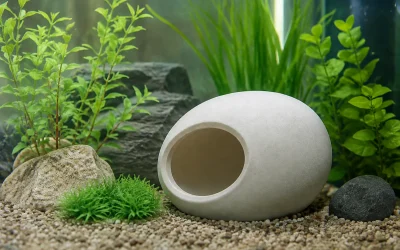
Unglazed ceramic caves are widely regarded as the optimal cave material for cichlid tanks. Ceramic is chemically inert at standard aquarium pH, will not leach anything harmful into the water, and does not alter pH over time. The porous surface of unglazed ceramic develops a biofilm that actually contributes to biological filtration. Caves are available in various aperture sizes — choose openings slightly larger than the target fish’s body width for appropriate shelter and spawning site use. In a species-appropriate mbuna or peacock cichlid tank, providing at least one cave per fish significantly reduces aggression by giving each individual a defensible territory. These caves last indefinitely with proper cleaning and are the most cost-effective long-term solution per cave.
Who it’s for: Anyone keeping African rift lake cichlids, shell-dwelling cichlids (pair with small shell decorations), or any cichlid species that requires territory and spawning sites.
Penn-Plax Rock Cave Aquarium Decoration Review
Penn-Plax’s large multi-cave resin formations serve a specific purpose: creating a complex, colony-scale territorial structure in a single aquascape piece. The realistic stone texturing blends convincingly with natural rock, and the multiple openings at different heights allow multiple fish to claim adjacent territories within the same structure. Resin is aquarium-safe and does not affect water chemistry when sourced from reputable brands. The main considerations are size — confirm the piece fits your tank before purchasing — and weight, as large resin formations can be lighter than they appear and may need anchoring. For a mixed-gender mbuna colony or a group of convicts, a large cave structure like this creates a natural social hierarchy that reduces overall aggression levels.
Who it’s for: Hobbyists with 55-gallon or larger cichlid tanks wanting a visually impressive, colony-level territory structure that serves multiple fish simultaneously.
Cichlid Stone Ceramic Cave Set Review
Cichlid stone sets provide the essential function of ceramic caves at the lowest possible entry price. Individual stones are typically 3–5 inches long with openings sized for small-to-medium cichlid species. The natural stone coloring (grey, tan, terracotta) blends well with gravel substrates. Material is food-grade ceramic — safe and inert. The main limitation is scale: individual small caves work well for pairs or very small cichlid groups but insufficient territory structure for a full mbuna colony in a large tank. Supplement with additional caves, slate stacks, or rockwork as the tank population grows. For under $15 for a set, these represent exceptional value as a starter decoration or supplemental territory addition.
Who it’s for: Beginners setting up their first cichlid tank, hobbyists with smaller tanks (20–40 gallons), or anyone wanting to add territory supplementally without spending on large formations.
DIY vs. Store-Bought Cichlid Caves: Which Is Better?
DIY advantages: Hobbyists commonly use natural slate, limestone (for rift lake species that prefer hard water), terracotta flower pots, or PVC pipe sections as DIY caves. Slate can be stacked and siliconed into custom formations perfectly sized for your fish and tank layout. Terracotta pots are inexpensive, pH-neutral, and last years — drill a larger drainage hole for the entrance if needed. PVC pipe cut to length works excellently for shell-dwelling cichlids and tanganyikan species that prefer tight, tube-like shelters.
Store-bought advantages: Commercial caves are designed for aesthetics and fish safety from the start. Resin formations provide realistic visuals that DIY rarely matches. Sets are consistently sized and graded for specific fish sizes. For hobbyists without tools or DIY interest, quality ceramic and resin caves are fully functional with no preparation beyond a rinse.
Materials to always avoid: Never use painted rocks (paint leaches in water), limestone in soft-water setups (raises pH and hardness), silicone-sealed materials with non-aquarium-grade sealant, or any decoration with sharp edges that can abrade cichlid finnage during territorial disputes.
Frequently Asked Questions
How many caves do I need for a cichlid tank?
Provide at least one cave per cichlid in the tank, ideally more. The general rule for African mbuna tanks is to have more caves and territories than fish — this distributes aggression and prevents any single fish from being trapped by a dominant individual without an escape route or retreat. Overdecorating is better than under-decorating in a cichlid setup.
Do cichlid caves affect water chemistry?
It depends on the material. Unglazed ceramic and aquarium-safe resin are chemically neutral and do not affect pH or hardness. Natural limestone and crushed coral raise pH and carbonate hardness — beneficial for African rift lake cichlids (pH 7.8–8.5) but harmful for soft-water South American species. Slate is neutral. Always test water parameters one week after adding any new decoration to verify no chemistry changes occur.
Can I use terracotta flower pots as cichlid caves?
Yes — unglazed, unpainted terracotta flower pots are one of the most popular DIY cichlid caves. They are pH-neutral, porous (supporting beneficial bacteria), inexpensive, and available in many sizes. Lay them on their side, chip the rim to create a half-moon entrance, or use a hole saw to drill an additional entrance on the side. Avoid pots with glaze, paint, or coatings — only bare terracotta is safe.
Why do my cichlids rearrange the decorations?
Cichlids are intelligent, behaviorally complex fish that actively modify their environment. Substrate rearrangement, cave repositioning, and gravel excavation are normal behaviors related to territory establishment, nest preparation, and dominance display. Heavier decorations, such as natural slate stacks or large resin formations, resist relocation better than lightweight plastic or small ceramics. Siliconing heavier rock structures together (using aquarium-safe silicone only) prevents toppling and ensures stability against determined cichlid excavation.
What substrate works best with cichlid cave setups?
For African rift lake cichlids, coarse sand or aragonite sand (which also buffers pH) is ideal. Sand allows natural digging behavior and is easier to clean around cave bases than gravel. For South American cichlids like rams or discus, fine-grained silica sand at 2–3 inches depth supports the cooler-color substrates these species prefer. Avoid very sharp gravel, which can injure cichlids during the inevitable bottom-dwelling territory disputes.
Final Verdict
For most cichlid keepers, unglazed ceramic caves represent the best long-term investment: safe, durable, biofilm-friendly, and available in sizes for every cichlid species. When visual impact and colony-level territory structure matter, the Penn-Plax Rock Cave formation delivers a convincing natural aesthetic with practical multi-fish utility. Budget shoppers and beginners will find the Cichlid Stone ceramic set a perfectly functional starting point. DIY builders should explore terracotta pots and slate stacks — the results can rival any commercial option at a fraction of the cost. In every case, err on the side of more caves rather than fewer: a well-decorated cichlid tank is a peaceful one.
Related Reviews & Guides



Quick Picks: Best Equipment for an African Cichlid Tank…

Shrimp Tank Setup: Complete Guide