Last Updated: October 4, 2026
A 75-gallon tank does not map to one exact pump; the right choice is set by delivered sump flow at your real head. The best return pump for a 75 gallon reef tank targets roughly 150-375 GPH after head as a starting point, so a higher nameplate pump you throttle often fits better than a small one run flat out.
As an Amazon Associate we earn from qualifying purchases.
As an Amazon Associate we earn from qualifying purchases at no extra cost to you. Prices and availability are accurate as of the date shown and are subject to change.
By David Nguyen
Quick answer: For most people in 2026, the best return pump for a 75 gallon reef tank is the Syncra Silent 3.0 — our #1 rated choice. See the full ranked comparison, alternatives and buying advice below.
How to Choose a Return Pump for a 75-Gallon Reef
Start around 150 to 375 GPH of actual sump flow, do not shop for a “375 GPH pump,” check your overflow capacity, and decide between AC simplicity and DC control. Sizing follows delivered flow at your head, since the nameplate rating is not what reaches the tank.
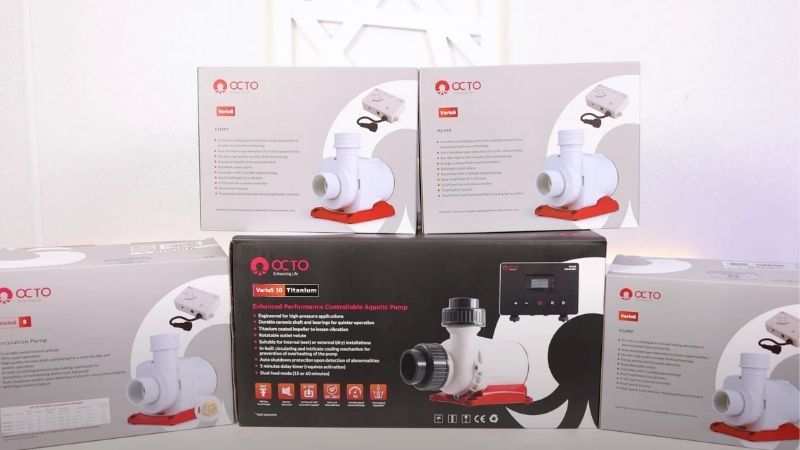
Start Around 150-375 GPH Actual Sump Flow
A practical modern starting point is roughly 2 to 5 times turnover after head, which for a 75-gallon reference is about 150 to 375 GPH, with a wider 2 to 10 times range workable depending on design. That is a rule of thumb, not a mandatory target.
So use 150 to 375 GPH as a starting band and adjust for your system. Actual system water volume can differ from the nominal 75 gallons, so treat the figures as a reference to refine by your sump and overflow rather than a fixed requirement.
Do Not Shop for a “375 GPH Pump”
Head pressure reduces output, so the nameplate rating usually needs to be higher than your desired delivered flow. Buying a pump rated at exactly 375 GPH would likely deliver less than that after plumbing, leaving you short of the target.
So choose a pump whose curve delivers your target at your head, which often means a higher nameplate you can throttle. Do not match the sticker GPH to your desired flow directly, since the pump’s rating and its delivered output are not the same number.
Check Your Overflow Capacity
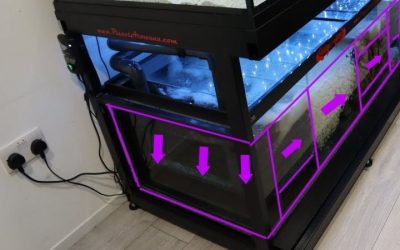
BRS warns that your drain and overflow capacity places an upper limit on safe return flow. A pump that pushes more water than the overflow can handle risks flooding, so the overflow, not just the pump, caps how much return flow is safe on your system.
So confirm your overflow’s capacity before sizing up. The safe return flow is the lower of what you want and what the overflow can drain, which is why checking that limit protects against a pump overwhelming the drain on a 75-gallon setup.
Decide AC Simplicity vs DC Control
DC pumps allow electronic tuning, while AC pumps normally use a valve if you need to adjust flow. So the choice is between a simple AC pump throttled by a valve and a DC pump you dial electronically, each fitting a different preference.
Decide which suits you. A DC pump lets you tune flow precisely and often quietly, while an AC pump is simpler and cheaper, so weigh control against simplicity for how you want to set and adjust the return on your reef.
Top Picks
These four span a simple AC pump to Wi-Fi DC returns, with prices checked September 2026. They differ in flow, head and control, so use the table to match delivered flow at your head to the pump rather than picking by the nominal 75-gallon figure.
| Product | Best For | Key Spec | Watch Out For |
|---|---|---|---|
| Syncra Silent 3.0 | Simple/value setup | 714 GPH / 9.9 ft | AC, no electronic speed |
| ReefRun G2 4000 | Controllable sump | 530-1,060 GPH / 11.2 ft | Max GPH not actual tank flow |
| Syncra SDC 3.0 | Wi-Fi control | 260-800 GPH / 1.6-7.5 ft | Premium versus AC |
| VarioS 2 | Higher-head compact DC | 792 GPH / 13.1 ft | Not pressure-rated |
Sicce Syncra Silent 3.0
The Sicce Syncra Silent 3.0 delivers 714 GPH with a 9.9-ft max head, priced around $150 as of September 2026. As a simple AC pump, it is the value option, with a nameplate high enough that delivered flow after head can land in the 75-gallon target range.
Its limit is no electronic speed control, so you adjust flow with a valve rather than a dial. For a straightforward under-tank sump where simplicity and cost matter, it is a solid choice, sized so its output after head suits a 75-gallon reef.
Red Sea ReefRun G2 4000
The Red Sea ReefRun G2 4000 offers 530 to 1,060 GPH with an 11.2-ft max head at 16 to 38W, priced around $195 as of September 2026. Its controllable range lets you tune the return down to an appropriate flow for a 75-gallon sump.
Its maximum GPH is not the actual tank flow, so read the range as capacity to dial into rather than a level to run. The adjustability is the appeal, letting you set delivered flow within the target band while keeping headroom for your plumbing.
Sicce Syncra SDC 3.0
The Sicce Syncra SDC 3.0 is rated 260 to 800 US GPH with a 1.6 to 7.5 ft head at 6 to 35W, with Wi-Fi and app control, priced around $300 as of September 2026. Use Sicce’s published US figures rather than self-converting the metric specs.
Its Wi-Fi tuning suits reefers who want app control over the return, at a premium versus a simple AC pump. Its adjustable range covers the 75-gallon target after head, making it the smart-control option among these four for a controllable, connected setup.
Reef Octopus VarioS 2
The Reef Octopus VarioS 2 delivers 792 GPH with a 13.1-ft max head at 25W, priced around $300 as of September 2026. Its higher head rating suits a taller or more restrictive return on a 75-gallon system where lower-head pumps would lose more flow.
It is not pressure-rated, so it is not for high-pressure runs, but its 13.1-ft head is the highest here for a normal return. As a compact controllable DC pump, it fits a 75-gallon reef needing more head margin than the other options provide.
Frequently Asked Questions
Owners ask how many GPH a 75-gallon return needs, whether 750 GPH is too much, why buy a big pump for modest flow, and whether return flow replaces wavemakers. The answers below keep return turnover separate from reef circulation and nameplate from delivered flow.
How Many GPH Should a 75-Gallon Reef Return Pump Deliver?
A practical modern target is roughly 150 to 375 GPH after head, using the 2 to 5 times guideline on a 75-gallon reference. That is delivered sump flow, not the pump’s nameplate, so size a pump whose output after head lands in that band.
Treat it as a starting range to refine by your system rather than a fixed number. A wider 2 to 10 times can work depending on design, so adjust within that context based on your sump, overflow and how you split flow with display circulation.
Is 750 GPH Too Much?
750 GPH equals about 10 times the nominal 75-gallon volume, which BRS describes as around the upper end for sump turnover. Whether it works depends on your overflow and sump design, so it is not automatically too much but sits at the high end.
So check that your overflow can safely drain that flow before running it. At the upper end of the range, 750 GPH suits some systems and overwhelms others, which is why overflow capacity, not the number alone, decides whether it is appropriate.
Why Buy a 700-1,000 GPH Pump if I Only Want 300 GPH?
Because plumbing and head reduce flow, so a higher nameplate is often needed to deliver a lower actual flow. A pump rated near 300 GPH may fall short after head, while a 700 to 1,000 GPH pump delivers your target with margin.
Controllable pumps can also be turned down, so a higher-rated DC pump lets you dial to your desired flow precisely. So buying above your target flow accounts for head loss and gives tuning room rather than being oversized for its own sake.
Does Return-Pump Flow Replace Wavemakers?
No. Return flow primarily cycles water through filtration in the sump, while display circulation is a separate function generally handled by powerheads or wavemakers. The two serve different roles and are not interchangeable.
So a return pump and wavemakers work together rather than one replacing the other. Size the return for sump turnover through filtration, and handle in-tank circulation with wavemakers, since combining the two into one figure misrepresents how flow works in a reef.
Final Thoughts
The best return pump for a 75 gallon reef tank is set by desired actual sump flow at your real head pressure, not a “75 gallon equals X GPH” rule. Start around 150 to 375 GPH delivered, choose a nameplate high enough to reach it after head, respect your overflow’s limit, and keep return turnover separate from the display circulation your wavemakers provide.
Ready to decide? Our #1 pick for 2026 is the Syncra Silent 3.0.
Live price & availability on Amazon.
Related Reviews & Guides


Best Saltwater Mixing Station for Reef Tanks: Smart Top Pick

Best Dosing Schedule For Calcium And Alkalinity: Top Compared