Last Updated: September 25, 2026
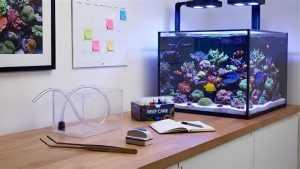
An all-in-one tank is a head start, not a finished reef. The best nano reef tank starter setup is the one whose included filtration, lighting and hardware you have actually confirmed, so you know what is in the box and what you still have to buy before livestock ever arrives.
As an Amazon Associate we earn from qualifying purchases.
By David Nguyen
Quick answer: For most people in 2026, the best nano reef tank starter setup is the Rear filtration — our #1 rated choice. See the full ranked comparison, alternatives and buying advice below.
What a Nano Reef Starter Actually Needs
All-in-one does not mean complete, so the first job is checking what each system includes. A reef needs filtration, reef-capable light, stable heat, and the salt, rock, sand and testing to run it. Use the table below to see what usually comes with an AIO and what you add yourself.
| Component | Often in an AIO | Why It Matters | If Not Included |
|---|---|---|---|
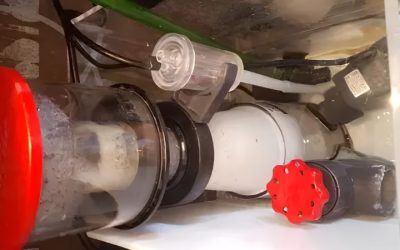
| Rear filtration | Usually yes | Mechanical and chemical media | Add media to the chambers |
| Reef light | Sometimes | Corals need proper spectrum | Budget for a reef LED |
| Heater | Often no | Stable temperature | Buy a heater and controller |
| Salt, rock, sand, tests | Rarely | Water, structure, monitoring | Source these separately |
AIO Filtration Core
The rear chambers are the heart of an AIO, holding mechanical, chemical and biological media plus the return pump. The Fluval Evo 13.5 includes a 132 GPH return and filtration in a 22 by 15 by 11.5-inch tank (Fluval, 2026), while the IM Fusion 20 Long runs two 130 GPH pumps for its return.
Read return flow as return flow, not total reef circulation, and never add return GPH to a powerhead’s output and call it a filtration rate. Most reefs still need a small powerhead for movement. The chambers give you filtration; you decide the media and add flow separately to suit the tank.
Reef Lighting Is Not Included in Every AIO
Lighting is the spec people assume and shouldn’t. The Fluval Evo ships with a 16W, 31-LED, 14,000K fixture (Fluval, 2026), which is a real included light, but many AIO systems sell as system-only with no reef light at all, so corals would need a separate LED you budget for.
Before buying, confirm whether the package includes a coral-capable light or just the tank and filtration. An AIO labeled system-only, like some Waterbox configurations, expects you to add lighting. Assuming a light is included is one of the most common and expensive starter mistakes.
Heater and Temperature Control
Stable temperature keeps corals and fish healthy, and most AIO kits do not include a heater. Plan for an appropriately sized heater and ideally a separate controller for safety, since a stuck heater is a common cause of livestock loss. This is a small cost that protects the whole tank.
Size the heater to the system volume and keep a thermometer to verify it. On a nano, temperature swings faster than on a large tank, so reliable heat and a controller matter more, not less. Treat it as essential starter hardware rather than an afterthought added later.
Salt, Rock, Sand and Testing
Beyond the tank, a reef needs saltwater mixed to the right salinity, rock for structure and biology, sand if you want a bed, and test kits to monitor it. None of these usually come with an AIO, so budget for them alongside the system rather than discovering the gap after purchase.
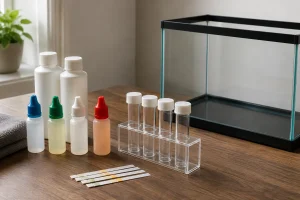
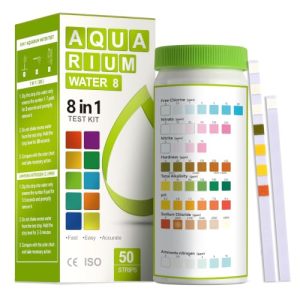
Testing in particular is non-negotiable, since you cannot run a reef blind. Plan for a salt mix, a refractometer or salinity tool, and a beginner test kit from day one. These consumables and tools are part of the true starter cost, even when the tank itself looks complete.
Nano Reef Starter Systems Worth Building Around
These four span an integrated budget start, a horizontal aquascape tank, a cube AIO and a near-complete premium system. They are separated by how complete the package is, which is why there is no single winner; match the completeness and price to how much you want included. Confirm the exact variant before buying.
Fluval Evo 13.5
The Fluval Evo 13.5 is the most integrated budget start, with a 13.5-gallon (52 L) tank, 132 GPH filtration and an included 16W, 31-LED, 14,000K light (Fluval, 2026). At around $214.99 at Petco as of 09/2026, it bundles a reef-capable light and filtration, which few kits at this price do.
That makes it the closest thing to a ready starter for a beginner on a budget. The light is entry-level rather than high-output, so demanding corals may want an upgrade later, and you still add a heater, salt, rock and tests. For a first nano reef, it is the easiest on-ramp.
IM Fusion 20 Long
The Innovative Marine Fusion 20 Long gives more horizontal aquascaping room, with roughly 20 gallons and an overall footprint of 23.6 by 15 by 13 inches over a display of 23.16 by 11.38 by 13 inches (IM, 2026). Its two 130 GPH return pumps feed the AIO, and it starts around $169.99 as of 09/2026.
The long, low display suits rockwork and coral placement across a wide bed. Note the overall and display dimensions differ, so plan cabinet space by the outside envelope. Check whether your configuration includes a light, since this class often sells as tank-and-filtration, with lighting added separately.
Waterbox AIO 20 Cube
The Waterbox AIO 20 Cube is a 20-gallon cube with a 17.7 by 17.7 by 15.7-inch envelope and included filtration of a sock, sponge, carbon, ceramic rings and return (Waterbox, 2026). The system-only configuration starts around $289.99 as of 09/2026, notably above the IM at roughly 70% more.
The cube footprint suits a deeper aquascape and a tidy single-column look. The key caveat is the variant: the system-only price excludes a cabinet and, depending on configuration, a light, so confirm exactly what is included. It is a well-built AIO, but read the package before comparing its price to others.
Red Sea MAX NANO G2 XL
The Red Sea MAX NANO G2 XL is the near-complete premium option, integrating a ReefLED G2 60, a skimmer, a 409 GPH return and an ATO into a 33-gallon total, 29.3-gallon display system (Red Sea, 2026). It runs around $1,129 as of 09/2026, a different class of purchase entirely.
Because it bundles lighting, skimming and top-off, far less is left to buy, which partly explains the price; it should not be compared as an equivalent bundle to a bare AIO. For a beginner who wants a cohesive, mostly complete reef out of the box and has the budget, it removes most guesswork.
Frequently Asked Questions
New reefers ask the same setup questions: whether an AIO includes everything, what to buy first, how big a nano should be, and whether the return pump is enough flow. Short answers first, then the caveats.
Does an AIO include everything I need?
No. All-in-one refers to integrated filtration, not a complete reef ecosystem. Some AIO kits include a light, like the Fluval Evo, while others sell as system-only, and most do not include a heater, salt, rock, sand or test kits. Always read the package before assuming anything is bundled.
Build a checklist from the components above and mark what your chosen system actually includes. The gap between the tank price and a running reef is usually lighting, heat and consumables, so budget for those from the start rather than treating the tank price as the total.
What should I buy first for a nano reef?
Start with the tank and filtration, then confirm lighting, heat and salinity tools before livestock. A sensible order is the AIO system, a reef light if not included, a heater with a controller, salt and a salinity tool, then rock, sand and a beginner test kit to run the cycle.
Livestock comes last, after the tank has cycled and parameters are stable. Rushing to add corals or fish before the system is ready is the most common early loss, so treat the equipment and cycling stages as the real starting work rather than an obstacle to stocking.
How big should a beginner nano reef be?
Within the nano range, a slightly larger volume is usually more forgiving because parameters swing more slowly. A 13.5 to 20-gallon system gives more stability than a very small pico while staying compact, which is why these sizes are popular starting points for a first reef.
Choose based on space, budget and how much livestock you want, not just the smallest option. A little more water buys margin for error as you learn, and the difference in cost and footprint between the smallest and a 20-gallon nano is modest for the added stability.
Is the return pump enough flow for corals?
Usually not on its own. The return moves water through the filtration and provides some circulation, but most reefs still need a small powerhead for the movement corals want. Return flow and powerhead flow are separate; do not add them together and call the sum a filtration or circulation rating.
Add a modest, adjustable powerhead sized to the tank and aim it to clear dead spots. On a nano, gentle, well-placed flow beats a strong jet, so tune it to keep detritus moving without blasting corals rather than simply relying on the return pump.
Final Thoughts
The best nano reef tank starter setup is the one whose real contents you have confirmed, so you know whether lighting, heat and consumables are included before you buy. The Fluval Evo is the integrated budget start, the IM Fusion and Waterbox suit specific footprints, and the Red Sea MAX NANO is the near-complete premium. Check package completeness first, then build the rest around it.
As an Amazon Associate we earn from qualifying purchases at no extra cost to you. Prices and availability are accurate as of the date shown and are subject to change.
Ready to decide? Our #1 pick for 2026 is the Rear filtration.
Live price & availability on Amazon.
Related Reviews & Guides

Top 5 Nano Reef Tank Filter Systems Under $100 Amazon
Best TDS Meter for RODI Output Monitoring: Smart Top Picks