Last Updated: September 25, 2026
Best led mounting arm for reef lights comes down to holding your light at the right height without sag, matched to its weight, your rim, and the reach you need to center it over the tank. This guide sorts the options by need group, gives the measurements that decide fit, and flags the honest limits before you buy.
As an Amazon Associate we earn from qualifying purchases.
As an Amazon Associate we earn from qualifying purchases at no extra cost to you. Prices and availability are accurate as of the date shown and are subject to change.

AquaIllumination AI Prime LED Flex Mounting Arm 12 Inch
Selected for "Best LED Mounting Arm for Reef Lights: How to Choose It": this listing is lighting (AquaIllumination AI Prime LED Flex Mounting Arm 12 Inch), matching the equipment this article covers.
View on Amazon
Red Sea ReefLED 50 / G2 60 Universal LED Tank Mounting Arm | Aquarium Light Fish Tank Mount Arm for Saltwater Marine Lighting Bracket
Selected for "Best LED Mounting Arm for Reef Lights: How to Choose It": this listing is lighting (Red Sea ReefLED 50 / G2 60 Universal LED Tank Mounting Arm | Aquarium ), matching the equipment this article covers.
View on Amazon
Red Sea ReefLED 90 / G2 115 Universal LED Tank Mounting Arm | Aquarium Light Fish Tank Mount Arm for Saltwater Marine Lighting Bracket
Selected for "Best LED Mounting Arm for Reef Lights: How to Choose It": this listing is lighting (Red Sea ReefLED 90 / G2 115 Universal LED Tank Mounting Arm | Aquarium), matching the equipment this article covers.
View on Amazon
PopBloom Universal Mounting Arm for H54/RL90/RL180 Reef LED Lights
Selected for "Best LED Mounting Arm for Reef Lights: How to Choose It": this listing is lighting (PopBloom Universal Mounting Arm for H54/RL90/RL180 Reef LED Lights), matching the equipment this article covers.
View on AmazonBy David Nguyen
Quick answer: For most people in 2026, the best led mounting arm for reef lights is the Light-duty arm — our #1 rated choice. See the full ranked comparison, alternatives and buying advice below.
The arm has to hold, not just reach
The best led mounting arm for reef lights is the one rated for your light’s weight that clamps your rim and holds height steady, so start with weight capacity and clamp fit, not looks. Get the measurements first.
The number that decides it: weight, reach, and clamp
Match the arm’s weight capacity in pounds and kilograms to your fixture, and its reach in inches and centimeters to how far it must extend to center the light. Then check the clamp against your rim thickness, commonly up to about 0.5 to 0.75 inch (13 to 19 mm).
An arm that fits the rim but is under-rated for the light will bow or droop at full reach over time. Confirm the mounting interface matches your light, since some fixtures use a specific bracket rather than a universal clamp.
Criteria beyond raw fit
Weigh arm stiffness, adjustability, and rimless capability. A stiffer arm holds height under a heavier light, adjustable arms let you tune height and position, and rimless tanks need a clamp made for bare glass panels.
Tank size, placement, and fit
The arm must clamp your rim, reach to center the light, and hold it at your target height without blocking access. Measure your rim thickness, the reach you need, and the light’s weight before ordering, because an arm that cannot clamp, reach, or hold the load positions the light wrong.
Arms grouped by light and tank
The best led mounting arm for reef lights depends on your fixture’s weight and your rim, so here are picks by need. Confirm compatibility with your light and rim at purchase.
For a light nano fixture
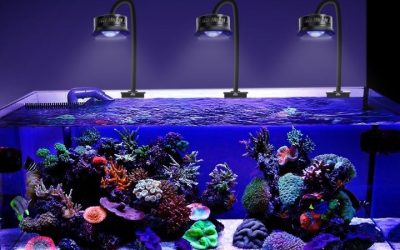
A light-duty arm suits a small puck over a nano rim. It fits nano keepers. Drawback: a thin arm can bounce or drift if bumped, so it wants a stable, thick enough rim to clamp.
For a mid-weight light
A sturdier arm holds a mid puck or small bar steady at reach. It fits mid tanks. Drawback: heavier lights need the stiffer, pricier arm, and a bargain may sag at full extension.
For a heavy fixture or bar
A rigid, high-capacity arm or rail supports a heavy bar or panel. It fits big reefs. Drawback: the strongest mounts are the costliest and bulkiest, and a bar may be better on a rail than a single arm.
For a rimless tank
A rimless-capable clamp grips a bare glass panel a standard clamp cannot. It fits rimless builds. Drawback: rimless clamps need a flat, thick enough panel, and over-tightening on bare glass risks stress.
For a budget or universal option
A universal arm fits many lights and rims for less than a brand mount. It fits value builds. Drawback: universal fit and stiffness vary, so confirm the weight rating and interface match your fixture before trusting it.
Head-to-head and when an arm is wrong
Choosing the best led mounting arm for reef lights also means knowing when an arm is not the right mount.
Arm versus a hanging kit or rail
An arm clamps the tank and positions the light easily but can sag with heavy fixtures; a hanging kit or rail holds height dead steady. For a light fixture an arm is convenient; for a heavy bar, a rail or hang holds better.
When an arm is the wrong choice
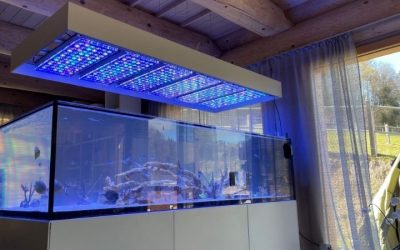
If your light is heavy and must sit high at full reach, a single arm may bow over time. A rail system or a ceiling hang suits heavy fixtures or long reaches better than one clamp arm.
A cheaper or simpler route
A hanging kit can hold a light steadily for less than a heavy-duty arm if your space allows. Match the mount to the light’s weight and the reach you need rather than defaulting to an arm.
Over the years the arm also has to survive salt and humidity, so a slightly sturdier, corrosion-resistant arm that holds height often outlasts two cheap ones. Measuring your rim, reach, and the light’s weight once, correctly, saves buying a second mount when the first will not hold the load.
Stability, wear, and cost over time
The best led mounting arm for reef lights sits in a humid, salty spot for years, so plan for sag, corrosion, and cost.
Where an arm fails
The arm can slowly sag or take a set under a heavier light at full reach, and salt creep and humidity can corrode the clamp and joints. A loosening clamp lets the light drift, so check tightness and height during maintenance.
Consumables and spare parts
An arm has few consumables, mostly the occasional clamp pad or thumbscrew, and no proprietary media. Confirm the interface matches your light so a future fixture still fits. An arm adds nothing to your running power cost.
Warranty, safety, and buying season
Check any warranty on the arm and clamp, and route the light cable with a drip loop so no water tracks down it. Reef accessories see discounts around Prime Day in late June and over Black Friday and Cyber Monday in late November; an arm is a good add-on buy then, though it changes nothing about how the light performs. Prices and specs shift, so verify compatibility at purchase.
Mounting arm questions, answered
These come up most about the best led mounting arm for reef lights.
How do I know it will hold my light?
Match the arm’s weight capacity to your fixture and check the reach and clamp range. An arm rated below your light’s weight, or extended too far, will sag over time, so size the capacity above the light and confirm the interface fits.
Will it clamp my rim?
Measure your rim thickness against the clamp range, commonly up to about 0.5 to 0.75 inch (13 to 19 mm), and check a rimless tank needs a rimless-capable clamp. A clamp that will not close on your rim cannot mount the light.
Why does my arm sag?
Usually the arm is under-rated for the light or extended too far. A heavier fixture needs a stiffer arm, and at full reach even a good arm can bow, so match capacity to weight or step up to a rail or hang.
Arm or hanging kit?
An arm is convenient and easy to reposition for lighter lights; a hanging kit or rail holds a heavier fixture steadier at height. Choose based on your light’s weight and the reach and height you need over the tank. Load first: the best led mounting arm for reef lights is the one rated above your fixture’s weight.
Choosing a mounting arm
The best led mounting arm for reef lights is the one rated above your fixture’s weight that clamps your rim and holds height without sagging. For a nano puck a light-duty arm is the sensible default, while heavy bars want a rigid arm, a rail, or a hang. Measure your rim thickness, reach, and the light’s weight before ordering, and confirm the interface fits your fixture at purchase since designs and prices change.
| Option | Key number | Suitable light | Recurring cost | Who it is for |
|---|---|---|---|---|
| Light-duty arm | Low weight, nano rim | Small puck | Clamp pad | Nano keepers |
| Sturdy arm | Holds mid light at reach | Mid puck or small bar | Clamp pad | Mid tanks |
| Rigid arm or rail | High weight capacity | Heavy bar or panel | Almost none | Big reefs |
| Universal clamp | Fits many lights and rims | Various fixtures | Clamp pad | Value builds |
Ready to decide? Our #1 pick for 2026 is the Light-duty arm.
Live price & availability on Amazon.
Related Reviews & Guides

Best Reef LED Light for a 24 Inch Tank: Top Smart Picks

Best RODI System for a Nano Reef Tank: Top Expert Guide