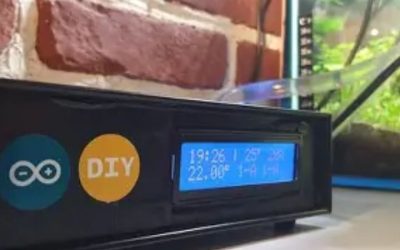
Last Updated: September 25, 2026
Best heater for betta fish selection is a wattage calculation before it is a product choice. The figure depends on tank volume and on how far your room sits below 78-82 F (25-28 C), and getting that pairing wrong is why so many heaters either cycle constantly or never reach temperature. Start with the calculation.
As an Amazon Associate we earn from qualifying purchases.
As an Amazon Associate we earn from qualifying purchases at no extra cost to you. Prices and availability are accurate as of the date shown and are subject to change.

DaToo Mini Aquarium Heater 25W Small Fish Tank Heater 25 Watt with Free Thermometer Sticker
Selected for "Best Heater for Betta Fish: Wattage, Accuracy and Safety": this listing is heating (DaToo Mini Aquarium Heater 25W Small Fish Tank Heater 25 Watt with Fre), matching the equipment this article covers.
View on Amazon
hygger Small Aquarium Betta Heater, Submersible Fish Tank Heater 10W/25W/50W/100W with LED Digital Display, Suitable for Marine Saltwater and Freshwater up to 5/10/16/26 Gallon
Selected for "Best Heater for Betta Fish: Wattage, Accuracy and Safety": this listing is heating (hygger Small Aquarium Betta Heater, Submersible Fish Tank Heater 10W/2), matching the equipment this article covers.
View on Amazonhygger Small Aquarium Betta Heater, Submersible Fish Tank Heater 10W/25W/50W/100W with LED Digital Display, Suitable for Marine Saltwater and Freshwater up to 5/10/16/26 Gallon
Selected for "Best Heater for Betta Fish: Wattage, Accuracy and Safety": this listing is heating (hygger Small Aquarium Betta Heater, Submersible Fish Tank Heater 10W/2), matching the equipment this article covers.
View on AmazonBy David Nguyen
Wattage, Room Gap and Thermostat Accuracy
The best heater for betta fish is decided by three numbers: watts against volume and room gap, accuracy against the dial, and whether the unit protects itself when run dry. Everything else on the packaging is secondary to those, including the shape and the mounting method. Wattage first, features second.
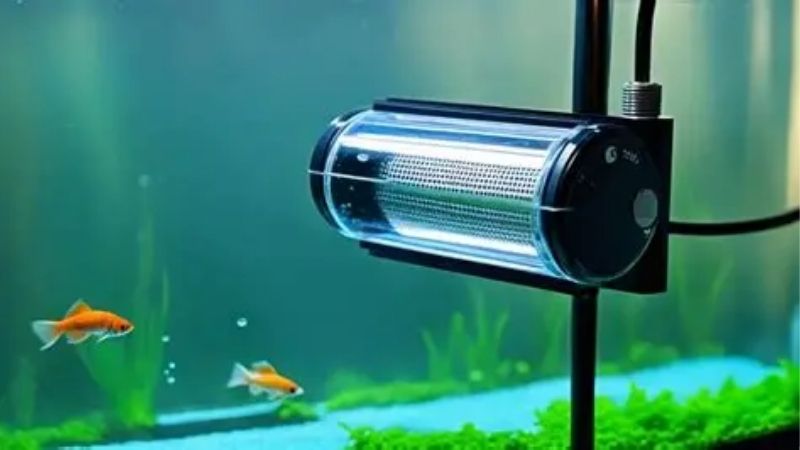
The Deciding Numbers: Wattage, Room Gap and Accuracy
The working rule is 3-5 watts per gallon at a 10 F (5.5 C) difference between room and target temperature. A 5-gallon (19 L) tank in a 68 F (20 C) room needs roughly 25 watts, while a 10-gallon (38 L) tank in the same room needs about 50 watts. Round up rather than down when in doubt.
Colder rooms push that upward. If a room sits at 60 F (15.5 C) in winter, the gap to 80 F (27 C) is 20 F (11 C), and wattage needs to roughly double or the heater runs continuously without ever holding the set point through the night. An undersized unit simply never catches up to the room.
Accuracy is the number nobody prints. Inexpensive heaters commonly sit 2-4 F (1-2 C) away from the dial setting, which is why a separate thermometer is not optional. Set by what the thermometer reads, not by the marking on the heater body. Treat the printed dial as a rough guide.
Safety Features That Actually Matter
Auto-shutoff when the unit runs dry is the feature worth paying for, because the classic failure is a heater exposed above the waterline during a water change and then cracking or overheating when the tank is refilled. Not all models include it, and few state it clearly. Read the specification before buying.
Thermal cutout is the second. A heater whose thermostat sticks closed will keep heating, and a small volume of water can rise several degrees an hour, so an independent cutout is what prevents that from becoming fatal in a 5-gallon (19 L) tank overnight. Small volumes heat quickly.
Tank Size, Placement and Fit
Heater length must be shorter than water depth, which rules out several 50-watt units in shallow 5-gallon (19 L) tanks. Mount it horizontally near the filter outflow so heated water circulates rather than forming a warm layer at one end of the tank. Circulation is what spreads the heat.
Placement also affects the room gap you are designing around. Measure the real numbers before you order: heater length against water depth, and the coldest overnight room temperature in winter rather than the comfortable daytime figure you would otherwise use. Both checks take a minute.
Five Heater Types Matched to Real Betta Tanks
These five cover the range sold for tanks from 5 to 20 gallons (19-76 L). Each suits a situation rather than a ranking, since the unit that fits a shallow nano tank is a poor choice for a 20-gallon (76 L) community tank in a cold room. The best heater for betta fish depends on the room.
| Option | Key number | Tank it suits | Recurring cost | Who it fits |
|---|---|---|---|---|
| Preset mini heater | Fixed near 78 F (25.5 C), 25-50 W | 3-10 gal (11-38 L) | Replace every 1-2 years | Nano tanks in warm rooms |
| Adjustable glass submersible | Dial 65-90 F, 25-100 W | 5-20 gal (19-76 L) | Replace every 2-3 years | Most keepers wanting control |
| Shatterproof composite | Dial adjustable, impact resistant | 5-20 gal (19-76 L) | Replace every 2-4 years | Tanks with lids removed often |
| Titanium with external controller | Controller accuracy near 1 F (0.5 C) | 10 gal (38 L) and up | Controller outlasts the element | Cold rooms, precision keepers |
| Under-tank heating mat | Low output, no water contact | Not recommended alone | Low power draw | Supplementary use only |
Preset Mini Heater for Nano Tanks in Warm Rooms
Preset units hold a fixed temperature near 78 F (25.5 C) with no dial, which removes one source of user error and suits a 5-gallon (19 L) tank in a room that stays above 68 F (20 C). They are also usually short enough to fit shallow nano tanks, where physical fit rules out several larger units.
The limitation is exactly the absence of a dial. If the unit reads 2-3 F (1-1.5 C) low, you cannot correct it, and treating ich by raising temperature is impossible. That makes preset units a poor fit for anyone who may need to medicate through temperature. No dial means no correction.
Adjustable Glass Submersible for Most Betta Tanks
An adjustable glass heater covers 25-100 watts across the usual range and lets you set anywhere within 65-90 F (18-32 C), which matters both for holding 80 F (27 C) and for raising temperature during an ich treatment. This is the default choice for most keepers. Adjustability is worth the small premium.
Glass is the weakness. The tube cracks if knocked against hardscape or exposed during a water change, and cheaper models cluster at the 2-4 F (1-2 C) accuracy end. Check that the model states dry-run protection, because many at this price point do not. Check for dry-run protection.
Shatterproof Composite for Tanks Opened Often
Composite and plastic-bodied heaters trade a little heat transfer efficiency for impact resistance, which suits tanks that get rescaped, cleaned or knocked regularly. They also survive brief exposure above the waterline better than glass tubes do during water changes. Durability is the whole argument.
They tend to run slightly larger for the same wattage and can be harder to hide in a small planted tank. Accuracy is comparable to glass at the same price, so the real reason to choose one is physical durability rather than any thermal advantage. Choose it for tanks handled often.
Titanium With External Controller for Cold Rooms
A titanium element paired with an external controller gives the tightest accuracy available, commonly holding within about 1 F (0.5 C), and the controller survives when an element eventually fails. In a room that drops to 60 F (15.5 C) overnight, that stability is worth having. Controllers outlive elements.
The cost is the obvious drawback, since this is two purchases rather than one, and it is more equipment than a single betta in a 5-gallon (19 L) tank needs. It becomes reasonable at 20 gallons (76 L) or in a room with a wide daily temperature swing. Scale the spending to the room, not the fish.
Under-Tank Heating Mat as a Supplement Only
Mats sit beneath the tank and warm the base without any water contact, which removes electrical risk inside the tank entirely. Output is low, and heat delivery depends on substrate depth and what the tank stands on, so results vary considerably between different setups and rooms.
They cannot hold a betta at 78-82 F (25-28 C) on their own in most rooms. Treat a mat as a supplement to a submersible heater in a cold room, or as emergency backup during a heater failure, rather than as the primary source of heat in the tank. Never rely on a mat alone in a cold room.
Head-to-Head and Who Should Not Buy
Most people comparing the best heater for betta fish are choosing between a preset unit and an adjustable one. This section settles that, and it covers the cases where the heater is not the problem the tank actually has. Both are answered by measuring rather than by reading packaging.
Preset Versus Adjustable: The Comparison That Matters
Preset units remove the risk of someone setting the dial wrong, which is a genuine benefit in a shared household. Adjustable units let you correct for a heater reading low and let you raise temperature deliberately, which preset units cannot do at all. Flexibility is the deciding factor.
The deciding question is whether you will ever need to change temperature. Ich treatment commonly involves raising water to 82-86 F (28-30 C) for a period, and if that is your plan, an adjustable heater is the only one of the two that supports it. Plan for treatment before you need it.
When a New Heater Is Not the Answer
If temperature swings across the day, check placement before buying. A tank beside a window, a vent or an exterior door tracks outdoor temperature, and no heater compensates for a room that drops 10 F (5.5 C) overnight if the wattage was sized for daytime. Size for the coldest hour.
Also verify with a separate thermometer before replacing anything. A heater that appears to be failing is often working correctly against a dial that reads 3 F (1.7 C) out, and the fix is turning the dial up rather than buying a replacement unit. Verify before you spend anything.
Cheaper Routes That Hold Up
Sizing correctly is the real saving. An adequately rated heater cycles less, runs cooler and lasts longer than an undersized unit working continuously, so paying for 50 watts instead of 25 in a cold room often costs less across three years than replacing units. Correct sizing is the saving.
A second inexpensive thermometer at the far end of the tank is the other worthwhile purchase. It costs very little and catches both a sticking thermostat and poor circulation, either of which does considerably more damage than the choice of heater ever will. Two thermometers beat one.
Twelve-Month Running Costs, Failure Points and Replacement
Over a year, heaters separate on reliability rather than on electricity, since the difference in running cost between models of the same wattage is negligible. What varies is how they fail, and whether they take the fish with them when they do. How the best heater for betta fish fails matters more than what it cost.
What Each Type Costs to Run
Electricity is set by wattage and by how far the room sits below target, not by the model, so a 50-watt unit in a cold room costs more to run than a 25-watt unit in a warm one regardless of what either one cost to buy in the first place. Wattage and the room gap together set the bill.
Late November is one of the few points in the year when aquarium equipment is discounted meaningfully, and buying a spare heater then is sensible. It changes nothing biologically: a newly set up tank still needs three to eight weeks of cycling before fish are added. Discounts do not shorten biology.
Failure Points and Warning Signs
Two failure modes matter. A thermostat sticking open leaves the tank cold, which shows as a lethargic fish sitting on the substrate, while a thermostat sticking closed keeps heating and can raise a 5-gallon (19 L) tank by several degrees within an hour. Small tanks leave no margin.
Watch for a heater indicator light that never switches off, condensation inside a glass tube, or a temperature reading drifting from where it sat last month. Any of the three means replacement, and keeping a spare avoids an emergency at the worst possible moment. A spare heater costs very little.
Electrical Safety and Replacement Interval
Run every cord as a drip loop below the socket and use a GFCI outlet for anything near water. Unplug the heater before a water change and let it cool for ten minutes before refilling, since thermal shock on hot glass is a common way tubes crack. Ten minutes of cooling is usually enough.
Plan on replacing a heater every two to three years even without symptoms, because thermostats drift gradually rather than failing cleanly. Check the reading weekly against an independent thermometer, and replace any unit that no longer holds within 2 F (1 C) of the set point. Drift is gradual, not sudden.
Frequently Asked Questions
These come up when someone is sizing a first heater or has just discovered their tank sits several degrees below where they thought it did. The answers stick to wattage, accuracy and safety rather than to marketing language. Most best heater for betta fish questions come down to wattage and verification.
What wattage heater do I need for a 5 gallon betta tank?
Around 25 watts if the room holds near 68-70 F (20-21 C), and 50 watts if it drops toward 60 F (15.5 C) overnight. Size for the coldest the room actually gets rather than for the comfortable daytime temperature you usually experience in it. The overnight low is the figure that counts.
Is the best heater for betta fish always adjustable?
Adjustable is more flexible, since it lets you correct dial inaccuracy and raise temperature for ich treatment. Preset units are reasonable in a warm, stable room where nobody else touches the tank, but they cannot be corrected if they read low. Adjustable units cover both cases properly.
Can a heater cook a betta?
A stuck thermostat in a small tank can raise temperature dangerously within hours, which is why an independent thermal cutout and a separate thermometer matter more than any other feature. Check the reading daily during the first fortnight with a new unit. Independent cutouts matter most here.
Do I need a heater if my room is already warm?
Almost always yes, because rooms swing overnight and across seasons while a betta needs 78-82 F (25-28 C) held steadily. A room that reads 78 F in the afternoon commonly sits several degrees lower before dawn, and that daily cycle is what causes stress. Rooms swing more than people notice.
See More:
Conclusion
The best heater for betta fish for most homes is an adjustable submersible sized at 3-5 watts per gallon for the coldest room temperature you actually see, with dry-run protection and a separate thermometer to set it against rather than trusting the printed dial. Size for winter, not for today.
If budget is the constraint, a preset mini heater in a warm, stable room is acceptable, provided you verify the temperature independently and accept you cannot raise it for treatment. Whichever you choose, run the cord as a drip loop and use a GFCI outlet. Both cost nothing to do properly.
5 Best Hygger Aquarium Lights (2026)
Best Aquarium Chiller for Beginners: Trusted Expert Picks