Last Updated: October 4, 2026
The best driftwood for aquarium decor is chosen by how it sinks, how much tannin it releases and its real size, not by a flattering photo. This guide compares four current pieces on sinking behavior, tannin load and dimensions, so you can pick wood that anchors your scape without any surprises.
As an Amazon Associate we earn from qualifying purchases.
By David Nguyen
Quick answer: For most people in 2026, the best driftwood for aquarium decor is the Zoo Med Mopani — our #1 rated choice. See the full ranked comparison, alternatives and buying advice below.
How to Choose Driftwood
Choosing aquarium driftwood comes down to four practical checks: whether it sinks right away or needs weighting, how much tannin it will stain the water, its actual measured size, and whether its branchy or solid form suits the scape you have in mind.
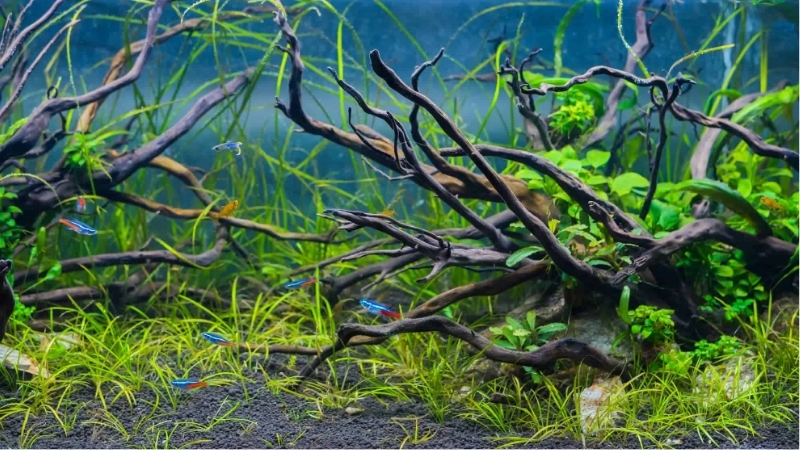
Immediate sinking vs floating
The first question is whether a piece sinks on its own. Dense hardwoods like Zoo Med Mopani sink immediately, while lighter or branchier wood can float for days or weeks until waterlogged, so do not assume all wood sinks at once, which is a common and frustrating myth.
If a piece floats, you can weight it, tie it to a rock or slate, or soak it until it sinks. Knowing a wood’s sinking behavior before buying saves the hassle of a centerpiece bobbing at the surface, so favor documented sinkers when you want the scape ready without a long wait.
Choose tannin level
Driftwood leaches tannins that tint the water tea-colored and gently lower pH, but the amount varies widely by wood. Spider Wood releases very low tannins, while denser woods can stain more heavily, so pick a tannin level that matches whether you want clear water or a blackwater look.
No aquarium wood has truly zero tannins, so even low-tannin pieces release some, especially when new. If you want clear water, choose a low-tannin wood, run activated carbon and change water to clear the tint. For a blackwater biotope, a heavier-staining wood is a feature, not a flaw.
Measure wood, not gallons
Buy driftwood by its measured size, not by a gallon rating, since wood is sold in natural size ranges rather than tidy tank matches. Zoo Med Mopani runs 10 to 12 inches medium and 16 to 18 inches large, so check the range against your tank’s footprint before ordering a piece.
Be aware that brands describe size differently: a length range is not comparable to a length-by-width-by-height figure like Galapagos driftwood’s 13 by 8 by 8 inches. Compare the actual measurements you can verify, and picture the piece in your tank rather than trusting a size-class name alone.
Match branch or solid form
Match the wood’s form to your layout: branchy wood like Spider Wood suits tree-style and airy scapes, while solid pieces like Mopani anchor a heavy centerpiece. Decide what shape your aquascape needs before choosing, since form drives the look far more than the wood species does.
Branchy wood also gives more surface for moss and epiphytes, while a solid block offers caves and a bold focal point. Both work, but they build very different scenes, so pick the architecture that fits your plan rather than buying on price and hoping the shape happens to suit the tank.
Top Picks
These four cover the best driftwood for aquarium decor, from a dense immediate-sinking centerpiece to a cheap cholla accent. Compare them on sinking behavior, tannin load and measured size, remembering that different brands quote size in formats you cannot directly compare against each other.
| Product | Best For | Key Spec | Watch Out For |
|---|---|---|---|
| Zoo Med Mopani | Best Overall Dense Decor | 10-12 / 16-18 in; sinks immediately | Higher tannins; ~under $30 (Petco, 09/2026) |
| Zoo Med Spider Wood | Branchy Scape | 12-16 in medium; very low tannins | May float until soaked; ~under $30 (09/2026) |
| Galapagos Sinkable | Ready-to-Sink | 13x8x8 in; fresh+salt | Size format differs; ~under $20 (Chewy, 09/2026) |
| SubstrateSource Cholla | Shrimp / Accent | 6 in; 2 pieces | Small, breaks down; ~under $10/2 (~$4.50 each) |
Mopani: Best Overall Dense Decor
Zoo Med Mopani is the strongest dense centerpiece, with published size ranges of 10 to 12 inches medium and 16 to 18 inches large, immediate sinking and clear tannin guidance, at about $30. As a dense hardwood it drops straight to the bottom without weighting or a long soak.
Its two-tone, gnarled look anchors a scape as a bold focal piece, and it offers caves and crevices for fish. It leaches more tannins than Spider Wood, so run carbon or change water if you want clear water. For a ready-to-sink solid centerpiece, it is the most documented pick here.
Spider Wood
Zoo Med Spider Wood is the branchy choice at about $25, with a 12-to-16-inch medium size and very low tannin release. Its twisting branches suit tree-style and airy aquascapes, and the low tannin load keeps water clearer than denser woods do, which many planted-tank keepers prefer.
Being lighter and branchy, it may float until fully waterlogged, so weight or tie it down at first. Very low tannins does not mean none, so expect a little tint early on. For a natural branch structure that holds moss and epiphytes well, it is the standout in this group of four.
Galapagos Sinkable
Galapagos Sinkable Driftwood is the value ready-to-sink option at about $15, roughly 54.3% below the Mopani, and rated for fresh and saltwater. At 13 by 8 by 8 inches it gives a solid mid-sized piece for keepers who want structure without paying centerpiece prices for it.
Its size is quoted as length by width by height, which is not directly comparable to Mopani’s length-only ranges, so judge it on the actual measurements. As a sinkable piece it saves the soaking wait. For the price, it is an easy way to add a solid wood feature to a tank.
Cholla
SubstrateSource Cholla wood is the budget accent at about $10 for two 6-inch pieces, roughly $4.50 apiece. Cholla is a hollow, soft wood that shrimp and small fish graze and hide in, making it a favorite in shrimp tanks rather than a large decorative centerpiece.
It breaks down over time as shrimp and microorganisms work on it, so treat it as a consumable accent rather than a permanent feature. It leaches tannins and biofilm that shrimp love. For a cheap, functional addition to a nano or shrimp tank, the two-pack is hard to beat on price.
Frequently Asked Questions
These are the questions keepers ask most about aquarium driftwood, from whether it lowers pH to what the white film on new wood is. Each answer gives a direct response, then the caveat that decides how it applies to your wood and your water.
Does wood lower pH?
It can, but not always heavily. Driftwood releases tannins that gently lower pH and soften water, though the exact change depends on your water’s buffering and the wood’s tannin load. In hard, well-buffered water the shift is often small, while soft water can move more noticeably.
Do not assume all wood dramatically drops pH, since that is a myth. If stable parameters matter, monitor pH after adding wood and change water as needed. For most community tanks the effect is mild and beneficial, but test rather than guessing, especially with sensitive or breeding fish.
Should it be soaked?
Usually yes. Soaking driftwood before use helps it sink, releases some tannins early and cleans off surface debris. Dense woods like Mopani sink immediately and need less soaking, while lighter, branchy pieces benefit from a longer soak or boil to waterlog and reduce initial tannin release.
Boiling speeds both sinking and tannin removal for pieces that fit a pot. For large wood, weight it down and soak it in a bucket, changing the water as it tints. Soaking is optional for documented sinkers but worthwhile if you want to cut the tea-colored water a new piece produces.
Which has low tannins?
Spider Wood is the low-tannin choice among these, releasing very little compared with denser woods. If you want to keep water clear rather than tea-colored, a low-tannin wood plus activated carbon and regular water changes is the practical route to a bright, natural-looking tank.
No wood is truly tannin-free, so even Spider Wood tints a little when new. Denser woods like Mopani release more and suit a blackwater look. Choose the wood by the water color you want, and remember carbon and water changes can manage tannins from any piece if the tint bothers you.
What is new-wood white film?
A white, fuzzy film on new driftwood is biofilm, a harmless fungal or bacterial growth that feeds on sugars in the wood. It is common on fresh pieces, looks alarming, and usually clears on its own within a couple of weeks as the wood stabilizes and the tank matures around it.
Shrimp, snails and some fish graze the film, and manual removal or gentle brushing speeds things along. It is not mold that harms fish, so there is no need to panic or pull the wood. Keep up water changes, be patient, and the film fades as the wood settles into the tank.
Final Thoughts
The best driftwood for aquarium decor is wood you have vetted for sinking, tannins and real size: Zoo Med Mopani leads as a dense immediate-sinking centerpiece, with Spider Wood for branchy scapes, Galapagos for value and cholla for shrimp. Match form to your layout, plan for tannins, and confirm current prices.
As an Amazon Associate we earn from qualifying purchases at no extra cost to you. Prices and availability are accurate as of the date shown and are subject to change.
Ready to decide? Our #1 pick for 2026 is the Zoo Med Mopani.
Live price & availability on Amazon.
Related Reviews & Guides


Aquarium Uv Sterilizer Inline Review
Best Budget Aquarium Stand Under 100: Essential Perfect