Last Updated: September 25, 2026
Best dc protein skimmer with controller comes down to matching adjustable air and pump speed to your real water volume and how much you actually plan to tune. This guide ranks the choices by need group and price tier, gives the numbers that decide fit, and names the honest downsides of adding a controller.
As an Amazon Associate we earn from qualifying purchases.
As an Amazon Associate we earn from qualifying purchases at no extra cost to you. Prices and availability are accurate as of the date shown and are subject to change.

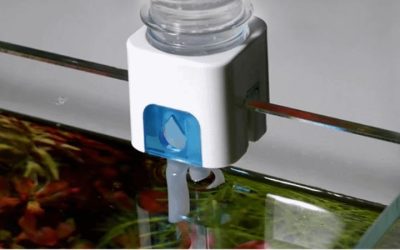
Coralife Hang on DC-Controlled Mini Protein Skimmer Saltwater Aquariums
Selected for "Best DC Protein Skimmer with Controller for a Reef Tank": this listing is protein skimmers (Coralife Hang on DC-Controlled Mini Protein Skimmer Saltwater Aquarium), matching the equipment this article covers.
View on Amazon
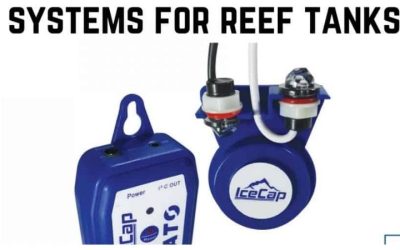
Reef Octopus OCTO Varios 2S DC Skimmer Pump Replacement Controller
Selected for "Best DC Protein Skimmer with Controller for a Reef Tank": this listing is protein skimmers (Reef Octopus OCTO Varios 2S DC Skimmer Pump Replacement Controller), matching the equipment this article covers.
View on Amazon
Protein Skimmer for 50-100 Gallon Saltwater Aquarium
Selected for "Best DC Protein Skimmer with Controller for a Reef Tank": this listing is protein skimmers (Protein Skimmer for 50-100 Gallon Saltwater Aquarium), matching the equipment this article covers.
View on Amazon
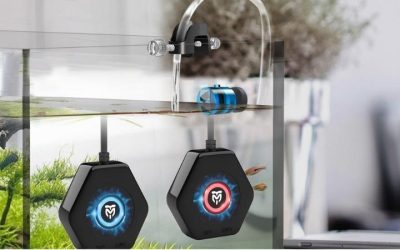
MagTool DC Protein Skimmer with Controllable Pinwheel Pump (N100 Plus)
Selected for "Best DC Protein Skimmer with Controller for a Reef Tank": this listing is protein skimmers (MagTool DC Protein Skimmer with Controllable Pinwheel Pump (N100 Plus)), matching the equipment this article covers.
View on AmazonBy David Nguyen
Quick answer: For most people in 2026, the best dc protein skimmer with controller for a reef tank is the Compact DC + controller — our #1 rated choice. See the full ranked comparison, alternatives and buying advice below.
What a controller actually buys you
A controller adds programmable air, speed, and features like feed mode, so the best dc protein skimmer with controller is one whose tuning you will use, sized correctly for your system. Set the criteria before you shop.
The decision number: rate by real water volume
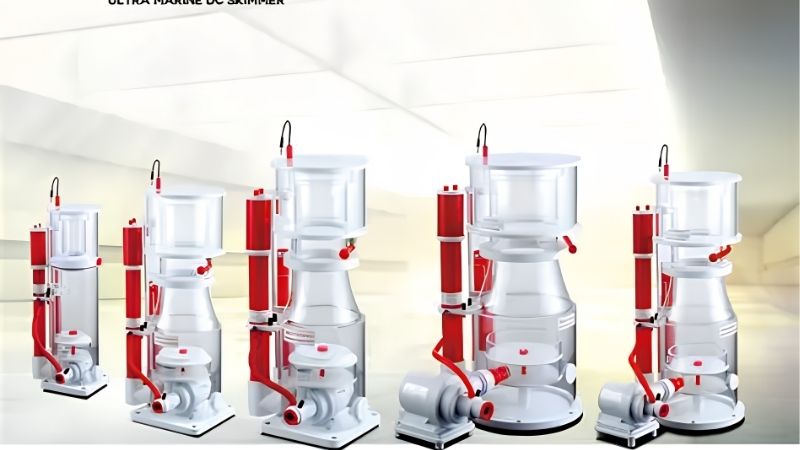
Rate by real water volume, which is total system water minus rock, sand, and freeboard. A nominal 90 gallon (341 L) system often holds only 70 to 75 gallons (265 to 284 L). Match a model rated for that, with margin for bioload.
Air draw in liters per hour is the honest performance figure. Treat any maximum tank rating as a light-load ceiling, and for a heavily fed reef target roughly 1.5 to 2 times real water volume rather than sizing to the printed maximum. That margin is what makes the best in sump protein skimmer for large reef keep up with heavy bioload.
Other criteria that carry numbers
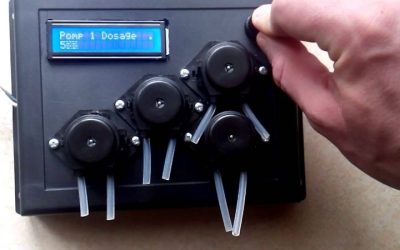
Judge the controller by useful steps, not marketing: adjustable speed, a feed-pause timer, and a ramp for break-in. More electronics also mean more that can fail. Weigh noise as well, since pump tone at full speed matters in a quiet room.
Tank size, placement, and fit
Most controllable DC skimmers are in-sump, needing a matching footprint and a stable depth, often 7 to 9 inches (18 to 23 cm). Measure the sump chamber length, width, and height, plus cabinet clearance for the tall cone and cup, before ordering anything.
Options by need group
The best dc protein skimmer with controller depends on your system size and how hands-on you are, so here are picks by need. Verify current models and specs at purchase.
For a nano reef
A compact controllable DC unit rated near a real 20 to 40 gallons (76 to 151 L) suits nano sumps. It fits keepers who want feed mode and quiet tuning in a small space. Drawback: tiny bodies clog quickly and demand weekly cup cleaning to stay tuned.
For a mid mixed reef
A mid-tier DC skimmer rated for a real 50 to 90 gallons (189 to 341 L) covers most mixed reefs with a full controller. It fits keepers who tune as stocking grows. Drawback: mid bodies often list optimistic ceilings, so confirm honest air draw.
For an SPS-dominant system
SPS tanks want steady, strong export, so a larger DC body with fine speed control helps hold nutrients low. It fits demanding reefers. Drawback: aggressive skimming can strip nutrients too far, so you may need to dial it back rather than run wide open.
For the most tuning features
A premium controller adds ramps, schedules, and app control for keepers who want maximum adjustability. It fits tinkerers. Drawback: the more feature-rich the controller, the more expensive it is and the more there is to fail outside the pump warranty.
For a tighter budget
An entry DC-with-controller model gives adjustable speed without premium pricing. It fits first-time reefers who still want tuning. Drawback: basic controllers offer coarse steps and fewer features, so break-in tuning is less precise.
Head-to-head and who should skip it
Deciding on the best dc protein skimmer with controller also means recognizing when the controller is money you will not use.
Controller versus fixed DC or AC
A controller earns its keep only if you use the tuning. If you set a skimmer once and leave it, a fixed DC or a correctly sized AC unit does the same daily job for less, with fewer parts to fail.
When not to buy one
A small all-in-one nano with no sump has no room for a large in-sump body; a hang-on skimmer fits better. And a keeper who wants a set-and-forget system rarely needs a full controller at all.
A cheaper or simpler path
A lightly stocked reef with strong export elsewhere may run fine on a simpler skimmer. Sizing to real water volume and buying only the tuning you will use beats paying for features that stay on their defaults.
It also helps to think in twelve-month terms: a simpler skimmer you fully understand and service on schedule often outperforms a feature-rich unit whose controller settings you never revisit after the first week.
Operation, failures, and 12-month cost
The best dc protein skimmer with controller runs continuously for years, so plan for wear and the extra electronics you added.
Characteristic failure points
Needle-wheel pumps collect film and calcium over 6 to 12 months, reducing air draw. O-rings harden, and the controller itself can fail, sometimes before the pump does. Watch the foam you know as your early warning to service or replace parts.
Consumables and spare parts
Skimmers avoid proprietary media, so recurring cost is usually an occasional impeller or needle wheel and o-rings over a year. Check that the controller and pump are sold as separate spares, so one failure does not force a full replacement.
Warranty and electrical safety
Warranty often splits body, pump, and controller separately, so read the terms. Run the skimmer on a GFCI outlet with a drip loop and favor recognized safety marks. Prices and specs shift, so verify the exact model at purchase.
Timing is worth planning around, since a controllable DC skimmer is a larger purchase. This class of reef gear is discounted hardest around Prime Day in late June and over Black Friday and Cyber Monday in late November. A sale is a fine time to buy, but the controller’s feed mode and schedules do nothing to speed biology, so the tank still needs 3 to 8 weeks to cycle before livestock goes in.
Power draw is part of the twelve-month math because the pump runs continuously. A DC pump you can slow down is gentler on the electricity bill than a fixed unit at full tilt, and you can dial it lower in cooler months. When warm weather lifts feeding and room temperature, organics climb and the cup fills faster, so expect to empty it more often regardless of how the controller is set.
Frequently asked questions
These questions come up most about the best dc protein skimmer with controller.
Is a controller worth the extra cost?
Only if you use the tuning. Feed mode, ramps, and speed control help during break-in and as bioload changes. If you plan to set the skimmer once and leave it, the controller is money spent on features that will sit idle. Sized right, the best dc protein skimmer with controller earns its price only through tuning you actually use.
How do I size a controllable DC skimmer?
Rate by real water volume, which is total system water minus rock, sand, and freeboard. Match a model rated for that figure, and target roughly 1.5 to 2 times it for a heavily fed system rather than sizing to the printed maximum. That margin is what makes the best in sump protein skimmer for large reef keep up with heavy bioload.
Can the controller fail on its own?
Yes. The controller is an added electronic part and can fail independently of the pump, sometimes sooner. Confirm it is sold as a separate spare so a controller fault does not mean replacing the whole skimmer.
Will it be quiet at full speed?
Needle-wheel pumps are audible, and higher speeds are louder. A controller lets you run slower and quieter when export needs allow, but no unit is silent, so plan placement if the tank shares a living space.
Choosing your controllable skimmer
The best dc protein skimmer with controller is the one sized to your real water volume whose tuning you will genuinely use. A mid-tier DC unit with a practical controller and bioload margin is the sensible default for most reefs, while an entry DC-with-controller model is the budget pick. Measure your sump chamber and cabinet height before ordering, and confirm current specs and pricing at purchase, since both change and the controller is an extra part to plan around.
| Option | Key number | Suitable tank | Recurring cost | Who it is for |
|---|---|---|---|---|
| Compact DC + controller | Rated ~20 to 40 gal (76 to 151 L) | Nano reef | Impeller, o-rings | Small tanks wanting feed mode |
| Mid DC + controller | Rated ~50 to 90 gal (189 to 341 L) | Mixed reef | Needle wheel, o-rings | Keepers who tune over time |
| Large DC + controller | Rated ~1.5 to 2x real volume | SPS-dominant | Pump cleaning, more power | Demanding reefers |
| Entry DC + controller | Basic speed control | First reef | Impeller, o-rings | Budget keepers wanting tuning |
Ready to decide? Our #1 pick for 2026 is the Compact DC + controller.
Live price & availability on Amazon.
Related Reviews & Guides
Best Reef LED Light for LPS Corals: Top Expert Buying Guide
Top 5 Nano Reef Tank Filter Systems Under $100 Amazon