Last Updated: September 25, 2026
Best community fish for beginners is a tank size question before it is a species question. Adult size, group requirement and water hardness decide what fits, and the chart below sorts the usual recommendations against those three numbers rather than against how appealing the fish look in a shop tank.
As an Amazon Associate we earn from qualifying purchases.
As an Amazon Associate we earn from qualifying purchases at no extra cost to you. Prices and availability are accurate as of the date shown and are subject to change.

Community Aquarium Fish for Beginners: The Complete Guide to Compatible Freshwater Tank Mates — Sizes, Temperaments, and Water Parameters for Guppies, Tetras, Corydoras, and Betta, With Real Photos
Selected for "Best Community Fish for Beginners: A Chart by Tank Size": this listing is tanks (Community Aquarium Fish for Beginners: The Complete Guide to Compatibl), matching the equipment this article covers.
View on Amazon
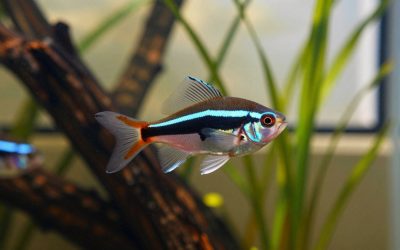
Cardinal Tetra Live Freshwater Aquarium Fish – 5 +2 Free Count – Paracheirodon innesi, 1–2 cm Small Tropical Community Fish – Colorful Schooling Fish for Planted Tanks & Community Aquariums
Selected for "Best Community Fish for Beginners: A Chart by Tank Size": this listing is tanks (Cardinal Tetra Live Freshwater Aquarium Fish – 5 +2 Free Count – Parac), matching the equipment this article covers.
View on Amazon
Cherry Barb Longfin Live Fish – Pack of 3 | Peaceful Freshwater Aquarium Fish, Beginner Friendly Community Tank Fish, Red Long Fin Cherry Barbs for Planted Aquariums
Selected for "Best Community Fish for Beginners: A Chart by Tank Size": this listing is tanks (Cherry Barb Longfin Live Fish – Pack of 3 | Peaceful Freshwater Aquari), matching the equipment this article covers.
View on Amazon
Live Aquarium Plants Variety Pack – Shore Aquatic Easy Beginner 9-Bundle Package | Freshwater Tank Starter Kit, Hardy Low-Light Aquatic Plants
Selected for "Best Community Fish for Beginners: A Chart by Tank Size": this listing is lighting (Live Aquarium Plants Variety Pack – Shore Aquatic Easy Beginner 9-Bund), matching the equipment this article covers.
View on AmazonBy David Nguyen
The Stocking Chart, Sorted by Tank Size
Read the minimum tank column as the figure for that species group on its own, before anything else is added. A 20-gallon long at 30 x 12 in (76 x 30 cm) is the most useful first tank, because it holds more combinations than any other common size. It is the most useful first purchase.
| Species | Adult size | Minimum tank | Group needed | Temperature and hardness |
|---|---|---|---|---|
| Nerite snail | 1 in (2.5 cm) | 5 gal (19 L) | One or more | 72-82 F, hard water |
| Betta, single male | 3 in (7.5 cm) | 5 gal (19 L) | Alone | 78-82 F, soft to moderate |
| White cloud mountain minnow | 1.5 in (4 cm) | 10 gal (38 L) | Six or more | 60-72 F, adaptable |
| Platy | 2.5 in (6 cm) | 10 gal (38 L) | Three or more | 70-80 F, hard water |
| Ember tetra | 0.8 in (2 cm) | 10 gal (38 L) | Eight or more | 73-84 F, soft to moderate |
| Harlequin rasbora | 2 in (5 cm) | 20 gal (76 L) | Six or more | 73-82 F, soft to moderate |
| Zebra danio | 2 in (5 cm) | 20 gal long (76 L) | Six or more | 64-77 F, adaptable |
| Bronze corydoras | 2.5 in (6 cm) | 20 gal long (76 L) | Six or more | 72-79 F, adaptable |
| Cherry barb | 2 in (5 cm) | 20 gal (76 L) | Six or more | 73-81 F, adaptable |
| Bristlenose pleco | 5 in (13 cm) | 29 gal (110 L) | One | 70-79 F, adaptable |
The Deciding Numbers: Adult Size, Group, Tank and Water
Adult size is the first number and the one shops obscure, since almost everything is sold as a juvenile. A bristlenose pleco at 5 in (13 cm) needs a different tank from the 1.5 in (4 cm) fish in the bag, and that gap causes most stocking mistakes. Check adult size before buying anything.
Group requirement is second and is often ignored entirely. Shoaling species kept in threes and fours behave badly, hide and lose colour, so six is a floor for most and eight to ten is better for the smaller tetras in the chart above. Groups of three or four never work well in practice.
The Rule Behind the Minimum Tank Column
Each figure covers that species group alone, and space is added rather than shared when you combine them. A shoal of six corydoras and a shoal of eight harlequin rasboras together need more than either does individually, which is why 20 gallons is the practical starting point. Add the space, never divide it.
Footprint matters as much as volume for beginners. A 20-gallon long gives 30 x 12 in (76 x 30 cm) of floor and swimming length, whereas a 20-gallon tall offers the same water in a shape that suits far fewer of the species listed here. Length beats height for almost any first tank.
How to Read the Chart: Units, Hardness and Overlap
Match your tap water to the hardness column before anything else. Hard water suits platies and nerite snails, soft water suits ember tetras and rasboras, and adaptable species work either way, so test GH once and let the result narrow the list for you. Your tap water decides the shortlist.
Read temperature ranges as needing to contain your target rather than merely to touch it. A tank held at 76 F (24 C) suits most of this chart, while white cloud minnows at 60-72 F (16-22 C) sit outside it and belong in a cooler tank instead. The overlap must contain your actual target.
Adjusting the Chart for Your Situation
The chart assumes a cycled, planted tank with a heater and a filter delivering real turnover. Choosing the best community fish for beginners in a real setup means adjusting for water hardness, tank shape and equipment, as the second table sets out. Adjust before buying rather than after.
| Situation | Adjustment | Reason |
|---|---|---|
| Hard tap water over 12 dGH | Choose platies, mollies, nerite snails | Livebearers thrive in mineral-rich water |
| Soft tap water under 6 dGH | Choose small tetras and rasboras | Soft-water species need it |
| Tank under 20 in (50 cm) long | One small group only | Shoals need swimming length |
| Unheated room under 72 F | White cloud minnows or danios | Both tolerate cooler water |
| Tank cycled less than a month | Add one small group, then wait | Colony must grow into the load |
| Filter under 4x real turnover | Upgrade before stocking fully | Rated GPH drops 30-50 percent loaded |
Adjusting for Species and Bioload
Bioload scales with the species rather than with inches of fish, so the old one inch per gallon rule is useless here. A single bristlenose pleco produces more waste than a shoal of eight ember tetras, and the filter has to be sized for that difference. Species, not inches, sets the load.
Add one group at a time and wait two to three weeks between additions. That gives the bacterial colony time to grow into the new load, and it lets you see how the existing fish respond before another group is already established in the tank. Add one group at a time, and never two at once.
Adjusting for Plants, Substrate and Layout
Live plants make beginner stocking more forgiving, since they consume nitrate and provide cover that reduces stress in shoaling species. Anubias, java fern and floating plants need no CO2 and tolerate the low light most beginner fixtures produce. Plants make stocking more forgiving.
Substrate matters for bottom dwellers specifically. Corydoras want sand at 0.45-0.55 mm rather than sharp gravel, because they forage in the substrate and damage their barbels on coarse material over a period of months rather than immediately. Sand at 0.45-0.55 mm suits corydoras better.
Tank Size, Placement and Fit
Rated capacity overstates real water by 10-15 percent once substrate and hardscape are in, so a 20-gallon (76 L) tank holds nearer 17-18 gallons (64-68 L). Apply the chart to that figure, since it is the volume actually diluting waste from the fish. Subtract substrate and hardscape first.
A filled 20-gallon long clears 225 lb (102 kg). Measure the real numbers before you order: stand length against tank length, the gap behind the tank against filter depth, and socket position so every cord can form a drip loop below the outlet. All three of those checks take about a minute.
Limits of This Chart
No chart replaces a cycled tank, and the best community fish for beginners will still die in water reading 1 ppm ammonia. Species selection is the second decision rather than the first, and several variables here cannot be captured in a table at all. Cycling the tank comes first, always.
When the Chart Is Wrong
The one inch per gallon rule fails completely, which is why it does not appear above. It ignores waste output, footprint, group requirements and adult size, and applying it produces overstocked tanks that read fine on day one and fail by month three. The rule ignores what matters.
Shop advice about tank size frequently fails too. Fish sold beside 5-gallon (19 L) kits routinely need 20 gallons (76 L) or more as adults, so check adult size independently rather than assuming the display around the tank reflects the requirement. Shop displays are not guidance.
Variables the Chart Cannot Capture
Tank maturity matters as much as size. A tank running stably for three months handles a new group far better than one cycled a fortnight ago, and sensitive species such as rummy nose tetras and otocinclus reveal that difference quickly. Maturity is not the same thing as being cycled.
Individual temperament varies within every species listed. Most cherry barbs are peaceful, but any fish can behave differently in a particular tank, which is why a backup plan matters more than the reputation a species has in general guides. Averages describe populations rather than individuals.
When to Ignore the Chart and Measure Instead
Your tap water decides more than any recommendation list does. Test GH and KH once, remembering that 1 dGH is roughly 17.9 ppm of calcium carbonate, and build the stocking list around that result rather than adjusting water to suit a chosen fish. Work with your water, not against it.
Room temperature matters equally. A room that sits at 68 F (20 C) overnight suits white cloud minnows and danios far better than tropical species, and working with the room is cheaper and more stable than fighting it with equipment all winter. Room temperature narrows the list too.
Verification and How Often to Recheck
Choosing the best community fish for beginners is not finished when the fish arrive. Bioload rises as they grow, filters lose flow, and rooms change through the seasons, so readings and fish counts both need checking on a schedule rather than only when something looks wrong. Recheck on a fixed schedule.
Tools to Verify and Their Accuracy
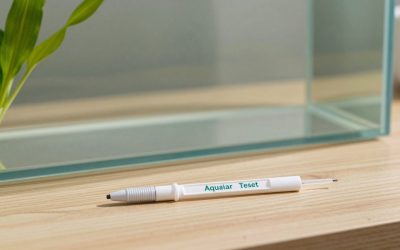
A liquid test kit for ammonia, nitrite and nitrate is the single most useful purchase for a beginner, ahead of most decorations and gadgets. Strips lose accuracy at the low end, which is exactly the range where ammonia problems first become visible. Buy liquid rather than strips.
A GH test and a separate thermometer complete the set. Heater dials commonly read 2-4 F (1-2 C) out, and hardness decides which half of the chart applies to you, so both belong in the drawer before the first fish is bought. Those three tools cover nearly everything a beginner needs.
How Often to Re-measure
Test every two or three days for the fortnight after adding a group, weekly for the first two months, then monthly once readings hold at 0 ppm ammonia and 0 ppm nitrite. Every new addition restarts that schedule, because each one raises the load. Wait two to three weeks between every group.
Recheck GH monthly if you top up with soft water, and count fish monthly if you keep livebearers. Platies deliver 20-40 fry every four to six weeks, so a stocking level that suited the tank in spring can be well past it by autumn. Count the fish once a month in a livebearer tank.
Equipment Drift and Growing Fish
Filters lose flow as impellers wear, typically 30-50 percent below the rated figure, at the point a growing population needs more capacity rather than less. Check the outflow by hand during monthly maintenance rather than assuming the rating still holds. Flow loss comes before noise.
The fish change too. Juveniles bought at 1.5 in (4 cm) reach adult size within a year, so a combination that looked comfortable at purchase may be crowded twelve months later without a single new fish having been added to the tank. Buy for the adult size right from the very start.
Frequently Asked Questions
These come up when someone is standing in front of a first tank deciding what to put in it. Most best community fish for beginners questions come down to tank size and tap water rather than to the species themselves. Both of those questions are settled well before buying any fish at all.
What is the best first tank size?
A 20-gallon long at 30 x 12 in (76 x 30 cm). It holds more species combinations than any other common size, swings far more slowly than a 10-gallon (38 L), and still fits on ordinary furniture at around 225 lb (102 kg) when filled. It is the size most keepers wish they had started with.
How many fish can I add at once?
One group, then wait two to three weeks. Adding a full stocking list at once outpaces the bacterial colony, and ammonia rises before the filter catches up, which is the most common cause of losses in a first tank during the opening months. Patience beats enthusiasm in a first tank.
Which of the best community fish for beginners suit a 10 gallon?
Platies, ember tetras, white cloud minnows or a single betta with nerite snails. Shoaling species that reach 2 in (5 cm) need 20 gallons (76 L), so a 10-gallon (38 L) tank realistically holds one small group rather than a mixed community. Choose one group and keep that group properly.
Do I need live plants?
Not strictly, but they help. Anubias, java fern and floating plants consume nitrate, provide cover that reduces stress, and need no CO2 or special lighting, which makes them one of the few additions that genuinely makes a beginner tank easier to run. Start with anubias and java fern.
See More:
Conclusion
The best community fish for beginners are chosen by four numbers in order: your tap water hardness, your room temperature, the adult size of each species, and the group each one needs. Everything else follows once those four are settled properly. Species choice comes last, not first.
A 20-gallon long, a liquid test kit and one group added every two to three weeks covers most first setups, whatever best community fish for beginners list you started from. Platies suit hard water, ember tetras and rasboras suit soft, and corydoras work in either as long as the substrate is sand.
Best Rimless Aquarium for a Turtle: Top Expert Picks Guide
Best 55-Gallon Fish Tank Stand 2026