Last Updated: September 25, 2026
Best bio media for aquarium filter decisions are usually made on packaging claims that cannot be verified, when the numbers that actually matter are chamber volume, water contact and how long the media stays in place. This comparison works through the main types by those criteria and states clearly who each one does not suit.
As an Amazon Associate we earn from qualifying purchases.
As an Amazon Associate we earn from qualifying purchases at no extra cost to you. Prices and availability are accurate as of the date shown and are subject to change.

Sukh Ceramic Rings for Aquarium Filter - 15oz Bio Filter Media with 3 Bags
Selected for "Best Bio Media for Aquarium Filter: Compared by the Numbers": this listing is filtration (Sukh Ceramic Rings for Aquarium Filter - 15oz Bio Filter Media with 3 ), matching the equipment this article covers.
View on Amazon
Sukh 15oz Ceramic Bio Balls - Aquarium Fish Tank Filter Media for Sump Pond
Selected for "Best Bio Media for Aquarium Filter: Compared by the Numbers": this listing is filtration (Sukh 15oz Ceramic Bio Balls - Aquarium Fish Tank Filter Media for Sump), matching the equipment this article covers.
View on Amazon
Tetra Whisper Bio-Bag Large Filter Cartridges for Aquariums, 12 Count
Selected for "Best Bio Media for Aquarium Filter: Compared by the Numbers": this listing is filtration (Tetra Whisper Bio-Bag Large Filter Cartridges for Aquariums, 12 Count), matching the equipment this article covers.
View on Amazon
ALEGI Aquarium Sponge Filter Pad, Bio Filter Media Foam Sponges
Selected for "Best Bio Media for Aquarium Filter: Compared by the Numbers": this listing is filtration (ALEGI Aquarium Sponge Filter Pad, Bio Filter Media Foam Sponges), matching the equipment this article covers.
View on AmazonBy David Nguyen
Chamber Volume, Water Contact and Surface Area Claims
Choosing the best bio media for aquarium filter use starts with the constraints of the filter you already own, not with a comparison of headline figures. Chamber volume is fixed, water has to pass through the media rather than flow around it, and the colony needs a steady oxygen supply.
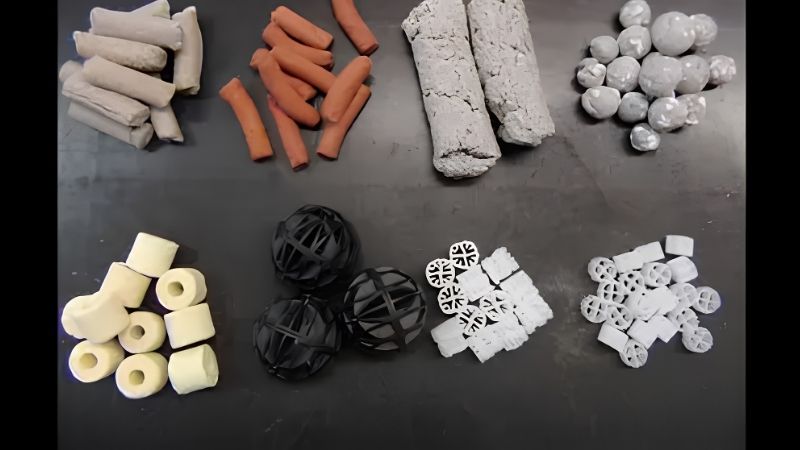
The decisive numbers: chamber volume and water contact
Usable litres of media chamber is the first number. A small hang-on-back may offer under 0.5 L of basket space, a mid-size canister 3–5 L, and a sump far more. That figure caps biological capacity regardless of which product goes inside it, so measure the basket before comparing anything else.
Flow through the media is the second. A filter rated 200 GPH (757 LPH) delivers perhaps 120–140 GPH (454–530 LPH) in service, and turnover should reach 4–6 times real tank volume per hour for a community setup, or 8–10 times for goldfish and cichlids, which carry a much heavier bioload.
Why manufacturer surface area claims deserve caution
Published surface figures for porous media, often quoted as hundreds or thousands of square metres per litre, come from the manufacturers themselves and are measured in ways that are not comparable between brands. They include internal pore area that water may never reach in practice.
Treat them as marketing rather than specification. The practical differences that matter are whether water is forced through the media, whether the pieces resist clogging, and whether they can be rinsed and reused for several years without breaking down into sediment inside the basket.
Tank size, placement and physical fit
Media has to fit the space you actually have available. Hang-on-back units need 4–6 inches (10–15 cm) of clearance behind the tank and hold very little media; canisters need internal cabinet height for the body plus a hose bend radius that will not kink against the back panel of the stand.
Weight sets the wider limits: a full tank runs near 10 lb per gallon (about 1 kg per L), so a 55 gallon (208 L) setup passes 600 lb (272 kg) and needs a purpose-built stand. Measure the internal cabinet height and the gap behind the tank with a tape before ordering any filter or media.
| Media type | Main number | Tank it suits | Recurring cost | Who it fits |
|---|---|---|---|---|
| Sintered porous block | High claimed pore volume | Canister or sump, heavy stock | Very low, lasts years | Goldfish and cichlid keepers |
| Ceramic rings | Open bore, low clog risk | Any basket, including small ones | Very low, rinse and reuse | Budget builds and first filters |
| Coarse foam | Dual mechanical and biological | Nano, shrimp, sponge filters | Low, replace every year or two | Shrimp and fry keepers |
| Structured plastic | Very high void ratio | Wet-dry trays and sumps | Negligible, effectively permanent | Sump and reef setups |
| Proprietary cartridge | Fixed, replaced monthly | Entry-level hang-on-back | High, ongoing purchase | Nobody, if avoidable |
The Main Options, Grouped by Who They Suit
There is no single best bio media for aquarium filter setups across the board, because the right answer changes with chamber size, stocking and whether the tank holds invertebrates. Each option below is matched to a group of keepers, with the limitation that comes attached to it.
Sintered porous blocks, for heavily stocked tanks
This is the default answer to best bio media for aquarium filter use in large systems. Sintered blocks are fired from a porous mineral and suit tanks with a high waste load, where a canister or sump supplies steady flow through several litres of media. They rinse clean in tank water and stay in service for years.
The limitation is real: fine pores gradually load with sediment that rinsing no longer clears, and the mechanical stage in front of them must be maintained properly or performance falls. They are also the type whose surface area claims are least verifiable, so buy on volume, not on figures.
Ceramic rings, for budget builds and small baskets
Ceramic rings have an open bore that resists clogging and tolerates uneven flow, which makes them forgiving in cheaper filters where water can channel around the media. They are widely available, cheap by volume and easy to rinse, which suits a first tank or a spare filter kept ready.
Their weakness is lower internal porosity than sintered products, so they need more chamber volume to do the same work. In a hang-on-back with a basket under half a litre, that constraint bites quickly, and the honest fix is a larger filter rather than a different medium inside the same one.
Coarse foam, for shrimp, nano and fry tanks
Coarse foam does mechanical and biological duty at once, which is exactly what a small tank needs in situations where chamber space is scarce. It is the standard choice in sponge filters and as a pre-filter on an intake, where it also stops shrimplets and fry being drawn into the impeller.
It clogs faster than rigid media and needs squeezing out in used tank water every one to two weeks, otherwise flow falls away steadily. Foam also compresses with age and eventually stops springing back, at which point it has lost both flow and surface and needs replacing outright.
Structured plastic, for sumps and wet-dry systems
Structured plastic media has a very high void ratio and almost never clogs, which is why it persists in wet-dry trays and in sumps where water trickles over it in open air. In that setting the oxygen supply is excellent and the biological performance is strong for the space occupied.
Submerged in a canister it is far less impressive, since it offers very little internal surface compared with the porous alternatives. It is effectively permanent and costs nothing to run, but it is the wrong choice for anyone trying to maximise capacity inside a small sealed chamber.
Direct Comparison and Who Should Not Buy
Most confusion around the best bio media for aquarium filter chambers comes down to two pairs of options that look interchangeable on a shelf. Setting them against each other, and naming the situations where new media is the wrong purchase entirely, saves more money than any discount.
Sintered blocks against ceramic rings
With generous chamber volume and a well-maintained mechanical stage, sintered media gives more capacity per litre and is the better choice for goldfish, cichlids or a heavily stocked community. With limited space and irregular maintenance, rings are more forgiving and clog far less readily.
The deciding question here is honest maintenance rather than ambition. Media that is never serviced favours the open-bore option, because a clogged high-porosity block performs worse than a clean simple one, and no product specification survives contact with a neglected mechanical stage.
When buying new media is the wrong move
If the tank is cycled and readings are stable at 0 ppm ammonia, 0 ppm nitrite and nitrate below 20–40 ppm, replacing the media buys nothing and puts the colony at risk. Capacity problems almost always show as measurable readings first, so test before treating a purchase as the solution.
Equally, media cannot compensate for a filter that is simply too small or for a tank that is overstocked. If turnover sits below 4 times real volume, the answer is a larger or second filter rather than a premium medium squeezed into a chamber that was never large enough for the bioload.
Cheaper alternatives that genuinely work
Established media from a running tank is the most valuable option available and costs nothing, since it carries a live colony and shortens establishment far more reliably than any bottled product does. Keep a spare sponge in a working filter if you expect to set up another tank later.
Inert porous rock sold for aquascaping is used by some keepers as a low-cost filler in sumps, and coarse foam offcuts fill dead space in oversized baskets. Neither is a premium solution, but both illustrate that chamber volume and flow matter more than the brand on the packaging.
Running Costs, Failure Points and Twelve Month Ownership
Media outlives most of the hardware around it, so the true cost of the best bio media for aquarium filter chambers is decided mainly by what has to be bought again and again. Cartridge-based designs are the expensive trap here, and the reason for that is biological as much as it is financial.
How each type fails over time
Sintered blocks clog internally with fine sediment and lose capacity gradually rather than suddenly. Ceramic rings can fracture if handled roughly but otherwise last indefinitely. Foam compresses and tears, and structured plastic essentially does not fail at all in normal service.
Around them, the hardware wears faster. Impeller shafts groove and rattle, canister lid gaskets harden and admit air, and hoses grow a biofilm that narrows the bore within a year. Any of these reduces flow through the media, which shrinks the colony regardless of what it is made from.
Loose media against proprietary cartridges
A cartridge design forces the disposal of colonised surface every few weeks, which is both an ongoing cost and the usual cause of a mini-cycle in an otherwise mature tank. Loose media reverses that: floss is replaced when it disintegrates, and the biological stage stays untouched for years.
Where a filter only accepts cartridges, cutting the carbon pouch out and keeping the colonised frame is a workable compromise. Price levels move constantly across budget, mid and premium ranges, so check current figures at the time of purchase rather than relying on remembered prices.
Certification, spares and buying at the right time
Media itself carries no electrical risk, but the filter around it does, so look for units carrying recognised safety certification such as UL or ETL, run them through a residual current device, and leave a drip loop in the cable. Check that impellers and gaskets are sold as separate spares.
Large equipment discounts cluster into a few events, with late November being the deepest of the year for canisters and sumps. Buying then is sensible, but it changes nothing biologically: a new filter still needs 3–8 weeks of cycling, or seeded media, before any fish go into the tank.
Frequently Asked Questions
These questions come up repeatedly once people stop shopping purely by published surface area figures, because the practical choice of best bio media for aquarium filter chambers is usually settled by the space available and by how often the mechanical stage actually gets rinsed.
Does more expensive media mean a faster cycle?
No. Establishment speed is limited by bacterial reproduction rather than by available surface, so a premium medium and a basket of ceramic rings cycle at broadly the same pace. Seeded media from a running tank is the only genuine shortcut, and it still requires verification by testing.
How often should biological media be replaced?
Rigid media should last for years and only needs a gentle swish in used tank water when sludge visibly restricts flow, roughly twice a year at most. Foam is the obvious exception, since it compresses with age and should be replaced once it no longer springs back into shape after squeezing.
Can I mix different types in one filter?
Yes, and it is often the sensible approach. Coarse foam at the front handles mechanical duty and protects the finer media sitting behind it, while rigid media fills the remaining chambers. Keep the order mechanical first and biological last so debris never reaches the colonised stage directly.
Is bio media safe for shrimp tanks?
The media itself is inert and safe. The greater risk in a shrimp tank is copper, which appears in many medications and some plant fertilisers and is harmful at very low concentrations, so check ingredients carefully and fit a pre-filter sponge on the intake to protect shrimplets.
See More:
Conclusion
For most freshwater keepers the sensible default among the best bio media for aquarium filter chambers is rigid porous media sized to fill the basket, with coarse foam in front of it doing mechanical duty. The budget choice is ceramic rings, which clog less and cost little by volume.
Best Aquarium Filter for Turtle Tank: Top Reliable Picks

Aquarium Refugium Light Chaeto Algae Review