Last Updated: September 25, 2026
Best aquarium water test kit comparisons come down to three figures: which parameters are covered, how accurately each is read, and how long the reagents stay reliable once the box has been opened in a humid room. The last of those is the figure almost nobody checks before buying, and it is the one that decides whether a reading can be trusted.
As an Amazon Associate we earn from qualifying purchases.
As an Amazon Associate we earn from qualifying purchases at no extra cost to you. Prices and availability are accurate as of the date shown and are subject to change.
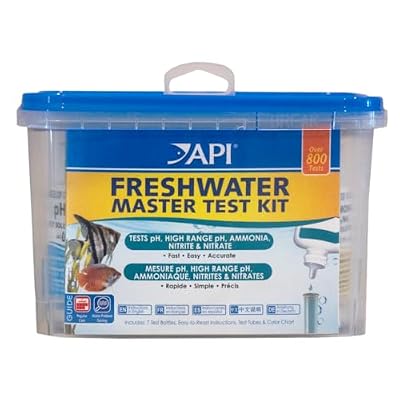
API Freshwater Master Test Kit 800-Test Freshwater Aquarium Water Kit, White, Single, Multi-Colored
Selected for "Best Aquarium Water Test Kit: Accuracy, Range and Value": this listing is testing and monitoring (API Freshwater Master Test Kit 800-Test Freshwater Aquarium Water Kit,), matching the equipment this article covers.
View on Amazon
AAwipes 8-in-1 Aquarium Test Kit for Fish Tanks - Quick & Accurate Water Testing Strips for Aquariums & Ponds. Tests pH, Ammonia, Alkalinity, Hardness, Chlorine, etc. (K02-50)
Selected for "Best Aquarium Water Test Kit: Accuracy, Range and Value": this listing is tanks (AAwipes 8-in-1 Aquarium Test Kit for Fish Tanks - Quick & Accurate Wat), matching the equipment this article covers.
View on Amazon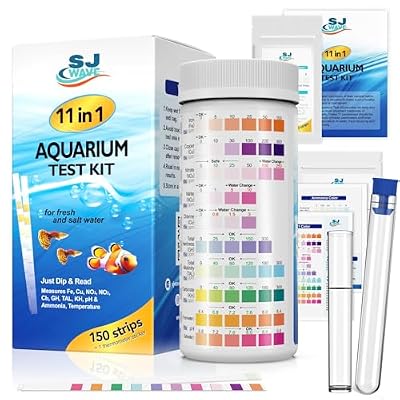
11 in 1 - Aquarium Test Strips | 950 Tests - 150 Strips | Fish Tank Aquariums Water Test Kit & ebook | Aquarium Thermometer | Fish Tank Water Testing Kit Includes 50 Ammonia Strips | Versatile Usage
Selected for "Best Aquarium Water Test Kit: Accuracy, Range and Value": this listing is tanks (11 in 1 - Aquarium Test Strips | 950 Tests - 150 Strips | Fish Tank Aq), matching the equipment this article covers.
View on Amazon
AAwipes Aquarium Ammonia Test Strips 8-in-1 |25 Strips | Quick & Accurate Water Testing Test pH, Ammonia, Alkalinity, Hardness, Chlorine, Nitrite, etc. (K02-25)
Selected for "Best Aquarium Water Test Kit: Accuracy, Range and Value": this listing is testing and monitoring (AAwipes Aquarium Ammonia Test Strips 8-in-1 |25 Strips | Quick & Accur), matching the equipment this article covers.
View on AmazonBy David Nguyen
Matching Parameters to What the Tank Holds
Choosing the best aquarium water test kit is mostly a question of matching parameters to the tank rather than buying the largest box available. Four criteria settle it, and reagent life is the one almost nobody checks before purchase.

The Deciding Numbers: Parameters, Accuracy and Cost Per Test
Freshwater tanks need four readings as a minimum: ammonia, nitrite, nitrate and pH. Marine adds salinity, alkalinity, calcium, magnesium and phosphate, which is why a freshwater master kit is inadequate for a reef regardless of its quality.
Accuracy varies by parameter rather than by brand. Ammonia and nitrite are read as a colour change against a card and resolve to roughly 0.25 ppm steps, while nitrate is the least precise of the common tests and the one most often misread.
Cost per test is where liquid kits win clearly. A freshwater master kit typically covers several hundred tests across its bottles, working out at a small fraction of the per-test cost of strips once the whole box has been used.
Two More Criteria With Numbers Attached
Reagent shelf life decides whether the readings mean anything. Sealed bottles generally hold for two to three years, and once opened in a warm humid room accuracy drifts sooner, with nitrate reagent being the first to give falsely low results.
Test time and procedure matter more than they sound. Nitrate reagent requires vigorous shaking for around 30 seconds and a full waiting period, and skipping either step produces a reading that is confidently and consistently too low.
Tank Size, Placement and Fit
Measure the shelf or drawer against the kit box before ordering, since a marine test set covering five or six parameters occupies noticeably more space than a freshwater master kit and needs storing away from heat and light.
Keep the kit near the tank but not on the hood. Warmth and humidity above a lid degrade reagents faster than anything else, and a kit stored somewhere inconvenient is a kit that gets used monthly rather than weekly.
The Options by What the Tank Needs
Four formats cover essentially every tank. Each is matched below to a use, because the best aquarium water test kit depends on whether you are cycling a new tank, monitoring a stable one or troubleshooting a specific problem.
Liquid Master Kit: The Default for Freshwater
Main numbers: ammonia, nitrite, nitrate and pH in one box, several hundred tests in total, with reagents good for two to three years sealed. This is the correct baseline for any freshwater tank and the only reliable way to confirm cycling.
It suits every freshwater keeper from setup onward. It does not suit marine tanks on its own, since alkalinity, calcium and magnesium are missing, and it does not suit anyone who will not follow the shaking and timing steps properly.
Test Strips: For Quick Screening Only
Main numbers: five to seven parameters in seconds, at a higher cost per test and noticeably lower resolution. Accuracy falls quickly once the container has been opened, since the pads absorb humidity from the air each time the lid comes off.
They suit a quick check between proper tests, or screening several tanks fast. They do not suit cycling a tank, where the difference between 0 and 0.25 ppm ammonia matters, and they should never be the only kit in the house.
Individual Liquid Kits: For Parameters the Master Kit Misses
Main numbers: one parameter per box, typically 50-200 tests, covering GH, KH, phosphate, copper or iron. Buying only what the tank actually needs is cheaper than a combined set that includes tests you will never run.
They suit planted tanks needing GH and KH, shrimp keepers needing GH, and anyone chasing a specific problem. They do not suit a first purchase, since assembling the basic four separately costs more than a master kit does.
Electronic Meters: For Salinity, TDS and Continuous pH
Main numbers: a refractometer for salinity, a TDS meter for RO/DI output, and optionally a pH probe requiring calibration against 4.0 and 7.0 buffer solutions. These read continuously rather than in discrete colour steps.
They suit marine tanks and anyone running RO/DI, where a TDS meter is not optional. They do not replace liquid tests for ammonia, nitrite or nitrate, and pH probes drift, so calibration solutions are a recurring cost to budget for.
| Option | Parameters | Resolution | Cost per test | Best for |
|---|---|---|---|---|
| Liquid master kit | Ammonia, nitrite, nitrate, pH | Around 0.25 ppm steps | Lowest | All freshwater tanks, cycling |
| Test strips | 5-7 in one dip | Coarse, drifts once opened | Highest | Quick screening between tests |
| Individual liquid kits | One each, GH, KH, phosphate | Same as master kit | Low | Planted, shrimp, targeted problems |
| Refractometer | Salinity | 0.001 SG | None after purchase | Every marine tank |
| TDS meter | Total dissolved solids | 1 ppm | Calibration solution only | RO/DI output, shrimp tanks |
Head to Head, and When Not to Buy
Two formats get compared constantly, and there is a common case where more testing is the wrong response. The best aquarium water test kit is sometimes the one already owned, with fresh reagents in it.
Liquid Kits Versus Test Strips
Liquid wins on accuracy, resolution and cost per test, and it is the only format that reliably distinguishes 0 from 0.25 ppm ammonia. That distinction is the entire point of testing during cycling, so it is not a marginal advantage.
Strips win on speed and convenience, which genuinely matters when checking several tanks or doing a fast sanity check. Used that way they are useful; used as a primary kit they produce confident readings that are frequently wrong.
When Buying Another Kit Is the Wrong Fix
A surprising reading is more often an expired reagent or a rushed procedure than a tank event. Retest with in-date reagents, shaking properly and waiting the full time, before acting on anything that looks alarming.
Testing more parameters rarely helps either. A freshwater tank with ammonia and nitrite at zero and nitrate under 40 ppm is working, and adding phosphate and copper tests to that picture usually produces numbers nobody knows how to act on.
The Cheaper Route That Works
Buy the master kit and replace individual reagent bottles as they run out or expire rather than repurchasing the whole box. Most manufacturers sell refills, and the nitrate reagents are usually the first pair to need replacing.
Write the opening date on each bottle with a marker. That single habit costs nothing and turns reagent age from a guess into a fact, which is what makes the difference between trusting a reading and doubting it.
Using It and the 12-Month Cost
The best aquarium water test kit is cheap to own and easy to use badly, which is why procedure matters more than product choice here. This section covers technique, what degrades, and what a year of testing actually costs.
Technique That Changes the Reading
Rinse the test vials in tank water rather than tap water, and never with soap, since residue skews results for several tests afterwards. Fill to the line at eye level, because a partially filled vial concentrates the reagent and reads high.
Read colours in natural daylight against the white part of the card rather than under tank lighting. Blue and green LEDs shift perceived colour noticeably, which is the single most common source of a nitrate reading being misjudged.
Compare against the card at the same distance every time as well. Holding a vial against the card at arm’s length reads differently from resting it on the paper, and consistency matters more than which method you settle on.
What Degrades and How Fast
Reagents oxidise once opened, and the rate depends on storage. A kit kept in a cool dark cupboard holds far longer than one on a warm hood, and nitrate reagent is consistently the first to produce falsely low readings.
Colour cards fade with light exposure and get stained by spilled reagent, both of which shift comparisons. Keep the card in its sleeve, and replace it if it becomes marked, since the card is as much a part of the measurement as the liquid is.
Recurring Cost and Timing
Ongoing spend is replacement reagents once or twice a year for a tank tested weekly, plus calibration solution for any electronic meter. That is modest, and it is considerably cheaper than the livestock a missed ammonia reading can cost.
On timing, test kits and reagent refills see their deepest discounts in late June and again in late November, which suits stocking up. Sealed reagents store well for two to three years, and prices move constantly, so check at purchase.
Best Aquarium Water Test Kit Questions
These arrive during a tank’s first cycle, which is when testing matters most. Every answer about the best aquarium water test kit stays with accuracy and procedure, since those decide whether a reading is worth acting on.
Which tests do I actually need?
Ammonia, nitrite, nitrate and pH for freshwater. Add GH and KH for planted or shrimp tanks. For marine, add salinity, alkalinity, calcium, magnesium and phosphate, and treat a TDS meter for RO/DI output as part of the set.
How often should I test?
Daily during cycling, then nitrate weekly before the water change with a full set monthly once the tank is stable. Testing more often than that in a settled tank tends to produce reactions to noise rather than to real change.
Do reagents really expire?
Yes, and expired reagent is worse than no test because it returns a plausible figure. Sealed bottles generally hold two to three years; once opened, write the date on the bottle and replace on schedule rather than when results look odd.
Why does my nitrate reading seem wrong?
Almost always the shaking step. The second nitrate reagent settles and needs vigorous agitation for around 30 seconds, plus the full waiting time, and skipping either produces a reading that is consistently far too low.
See More:
Conclusion
The best aquarium water test kit for a freshwater tank is a liquid master kit covering ammonia, nitrite, nitrate and pH, with individual GH and KH kits added for planted or shrimp setups. Strips belong alongside it, never instead of it.
For marine, add alkalinity, calcium, magnesium and phosphate, plus a refractometer and a TDS meter. Write the opening date on every bottle, shake the nitrate reagent properly, and read colours in daylight rather than under tank lighting.
10 Best Betta Fish Tanks: Top Picks for Beginners 2026
Best 125 Gallon Aquarium Kit For Large Fish: Top Compared