Last Updated: September 25, 2026
Best aquarium starter kit comparisons should begin with the omissions rather than the contents. Almost every kit ships without a heater and without a liquid test kit, and those two items between them decide whether the tank survives its first month. Budget both before comparing one box against another.
As an Amazon Associate we earn from qualifying purchases.
As an Amazon Associate we earn from qualifying purchases at no extra cost to you. Prices and availability are accurate as of the date shown and are subject to change.

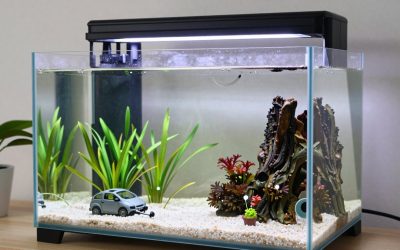
Aqueon Aquarium Starter Kit with Smart Clean Filtration and LED Lighting, Freshwater and Saltwater Fish, Perfect for Tetras, Guppies, Platies, 10-Gallon
Selected for "Best Aquarium Starter Kit: What Is In It and What Is Not": this listing is lighting (Aqueon Aquarium Starter Kit with Smart Clean Filtration and LED Lighti), matching the equipment this article covers.
View on Amazon
API AQUARIUM START UP PACK Water Conditioner 1.25-Ounce Bottle 2-Pack
Selected for "Best Aquarium Starter Kit: What Is In It and What Is Not": this listing is water treatment (API AQUARIUM START UP PACK Water Conditioner 1.25-Ounce Bottle 2-Pack), matching the equipment this article covers.
View on Amazon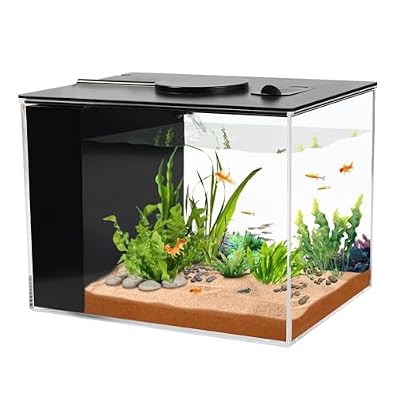
AQUANEAT Fish Tank, 1 Gallon Betta Fish Tank, Small Aquarium Kit with LED Light and Water Filter Pump
Selected for "Best Aquarium Starter Kit: What Is In It and What Is Not": this listing is filtration (AQUANEAT Fish Tank, 1 Gallon Betta Fish Tank, Small Aquarium Kit with ), matching the equipment this article covers.
View on AmazonBy David Nguyen
What Is Missing Decides More Than What Is Included
Judging the best aquarium starter kit means costing the finished tank rather than the box. Four figures settle it: real water volume, loaded filter flow, whether the filter takes loose media, and the total spend to reach a working setup.
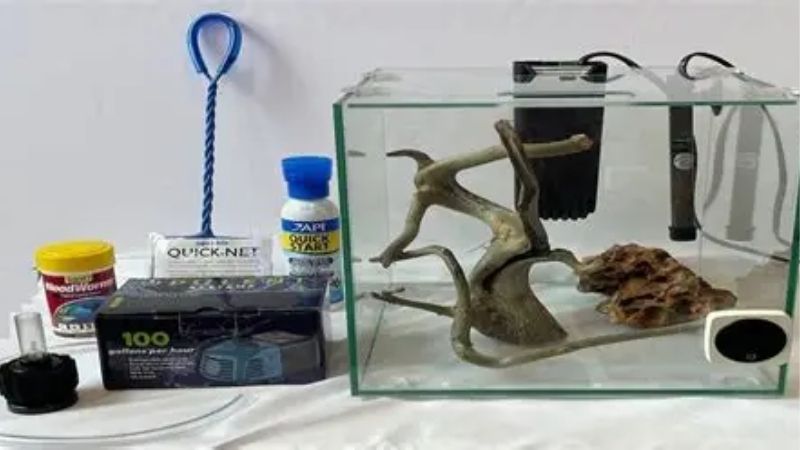
The Deciding Number: Real Volume and What It Will Hold
Every kit holds less water than its label suggests. A 10 gallon (38 L) tank holds around 8.5-9 gallons (32-34 L) once substrate and hardscape are in, and a 20 gallon long holds roughly 17-18 gallons (64-68 L) rather than twenty.
That figure decides stocking rather than the printed one. A 20 gallon long carries 14-16 small tetras or rasboras, a 10 gallon carries eight to ten, and a 5 gallon carries one betta or a shrimp colony and nothing more.
Two More Criteria With Numbers Attached
Filter media type is the largest twelve-month cost difference between two otherwise similar kits. Cartridge filters are a monthly purchase and discard the bacterial colony at each change, while an open basket takes sponge and ceramic media that you simply rinse.
Light output decides what will grow. Most kit fixtures deliver 15-30 PAR at the substrate in a tank 12-16 in (30-41 cm) deep, which suits anubias, java fern, moss and cryptocorynes without CO2 and nothing more demanding.
Tank Size, Placement and Fit
Measure the surface against the footprint and confirm it carries the filled weight before ordering, since a 20 gallon long at 30 x 12 in (76 x 30 cm) passes 225 lb (102 kg) and many desks flex under that concentrated load.
Check the wall clearance too. A hang-on-back filter needs 4-6 in (10-15 cm) behind the glass, and a kit pushed against a wall either loses that clearance or ends up sitting further into the room than planned.
The Options by Where You Want to Start
Four starting points cover almost every first tank. Each is matched below to a situation, because the best aquarium starter kit depends far more on the size you begin at than on which brand supplies the box.
5 Gallon Nano Kit: For a Desk and One Fish
Main numbers: roughly 4-4.5 gallons (15-17 L) of actual water, a filter rated 45-70 GPH (170-265 LPH), and a footprint around 16 x 8 in (41 x 20 cm). Filled weight lands near 50 lb (23 kg).
It suits one betta or a shrimp colony on a desk. It does not suit a community or a shoal at any count, and the small volume swings faster than a larger one, which makes the weekly change genuinely non-negotiable.
A heater matters more here than at any larger size, since a 5 gallon tank tracks room temperature almost exactly. Budget 25-50 W alongside the kit rather than treating it as something to add later.
10 Gallon Standard Kit: The Common First Tank
Main numbers: 8.5-9 gallons (32-34 L) of actual water at 20 x 10 x 12 in (51 x 25 x 30 cm), filled weight near 110 lb (50 kg), with a filter usually rated 100-150 GPH (379-568 LPH).
It suits one shoal of eight to ten small fish, or six to eight pygmy corydoras over sand. It does not suit two species at once, since splitting the count leaves both groups below the number they need to behave normally.
20 Gallon Long Kit: The Size Most People Should Start At
Main numbers: 17-18 gallons (64-68 L) of actual water at 30 x 12 x 12 in (76 x 30 x 30 cm), with 360 sq in (2323 sq cm) of surface area, which is 20% more than a 20 gallon high holding the same water.
It suits a proper community with a shoal, a small centrepiece fish and a bottom group. It does not suit small spaces, and the filled weight of 225 lb (102 kg) needs a stand rather than a shelf.
Bare Tank Plus Chosen Equipment: For a Second Tank
Main numbers: the same tank sizes with filter, heater and light selected individually, often for a similar total to a mid-range kit. Nothing is spent on components you would replace within the first year.
It suits anyone who has kept a tank before and knows their preferred filter. It does not suit a first purchase, since matching components is exactly the work a kit removes, and a mismatched filter costs more than the saving.
| Option | Actual water | Filled weight | Realistic stocking | Best for |
|---|---|---|---|---|
| 5 gallon nano kit | 4-4.5 gallons (15-17 L) | ~50 lb (23 kg) | One betta or shrimp | Desks and small rooms |
| 10 gallon standard kit | 8.5-9 gallons (32-34 L) | ~110 lb (50 kg) | One shoal of 8-10 | Common first tank |
| 20 gallon long kit | 17-18 gallons (64-68 L) | ~225 lb (102 kg) | Shoal plus bottom group | The easiest size to succeed with |
| Bare tank plus parts | Your choice | Same as equivalent kit | Your choice | Second tanks, experienced keepers |
| Any kit, as supplied | Label minus 10-15% | 10 lb per gallon | Depends on the extras bought | Budget the omissions first |
Head to Head, and What Every Kit Leaves Out
Two sizes get compared constantly, and every kit shares the same list of omissions. Assessing the best aquarium starter kit honestly means adding those items to the price before setting one box against another.
10 Gallon Versus 20 Gallon Long
The 10 gallon wins on price, on weight and on fitting almost anywhere, which is why it is the most common first tank sold. It loses on margin for error, since parameters move roughly twice as fast at half the volume.
The 20 long wins on stability and on stocking options, and the extra cost is modest against the whole setup. It loses on needing a stand and on a footprint of 30 in (76 cm) that many intended spaces cannot take.
What Every Starter Kit Leaves Out
Four items are missing from essentially every kit: a heater sized at 3-5 W per gallon, a liquid test kit covering ammonia, nitrite, nitrate and pH, a water conditioner, and a thermometer independent of the heater dial.
Substrate is frequently absent as well, and a gravel vacuum always is. Those items together commonly cost as much as a budget kit itself, which is the single most useful figure to establish before comparing prices between boxes.
The Cheaper Route That Works
Buy the cheapest kit with a convertible filter and spend the saving on the heater and the liquid test kit. Those two affect whether the tank survives its first three months more than any difference between kit tanks does.
Convert the cartridge slot during the first week by cutting coarse sponge to fit and adding a small bag of ceramic media behind it. That removes the recurring cost the kit was designed around and protects the bacterial colony.
Keep the original cartridge frame if it holds the media in place. Rebuilding the slot with the manufacturer’s plastic carrier and your own media is neater than loose bags and keeps water flowing through rather than around it.
Running It and the 12-Month Cost
The best aquarium starter kit is a starting point rather than a finished system, so what matters is how it behaves after six months. This section covers what fails, what you keep buying, and the safety points applying to every option above.
What Fails First
Hang-on-back filters lose prime after a power cut and draw air once evaporation drops the water line, which stalls the pump and kills the colony inside within a day. A lid and a weekly top-up prevent nearly every instance.
Hood-mounted LEDs corrode at the contacts in a humid tank and dim across two to three years rather than failing outright. Impellers collect grit and lose flow gradually, showing as nitrate climbing rather than as an audible change.
Consumables and the Cartridge Trap
The largest twelve-month cost difference between two similar kits is cartridges against loose media. Cartridges are bought monthly, cannot be staged mechanically then biologically then chemically, and discard the bacteria living on them each time.
That is biological as much as financial. Established tanks often show a small ammonia rise a few days after a cartridge change, and in 8.5 gallons (32 L) of actual water that is a real risk rather than an academic one.
Electrical Safety and Timing
Every powered device beside water should carry a recognised certification such as UL or ETL, sit on a GFCI outlet, and have a drip loop formed in its cable. Prefer a heater with automatic shut-off when uncovered.
On timing, starter kits discount most deeply in late June and again in late November, and they are marketed heavily as gifts through December. A sale never shortens the three to eight weeks of cycling required first.
Best Aquarium Starter Kit Questions
These arrive while the kit is still in the basket. Every answer about the best aquarium starter kit stays with real volume, media type and omissions, since those three decide the outcome more than any feature list does.
What size should I start with?
Twenty gallons long where the space and budget allow, since roughly twice the water of a 10 gallon means parameters move at half the rate. Ten gallons is a reasonable compromise; five is workable but unforgiving.
Can I add fish straight away?
No. The tank needs three to eight weeks of fishless cycling first, dosing ammonia to 2-4 ppm until both ammonia and nitrite clear to zero within 24 hours with nitrate present. No kit shortens that requirement.
Is the kit filter good enough?
The pump usually is; the media arrangement usually is not. Replace the cartridge with coarse sponge and ceramic media in the first week, rinse rather than replace, and the same filter performs considerably better for less money.
What do I need to buy alongside it?
A heater at 3-5 W per gallon, a liquid test kit, water conditioner, an independent thermometer, a gravel vacuum and usually substrate. Budget those six before comparing kit prices, since together they often exceed the kit itself.
See More:
Conclusion
The best aquarium starter kit for most people is a 20 gallon long with the filter cartridge converted to loose media in week one, giving 17-18 gallons (64-68 L) of real water and enough footprint for a proper community.
A 10 gallon kit is the workable compromise and a 5 gallon suits one betta or shrimp. Whichever size you choose, add the heater, liquid test kit, conditioner, thermometer and gravel vacuum to the price before deciding which box is cheaper.
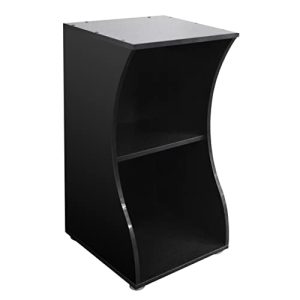
Review: Fluval Flex Aquarium 15 Gallon – Is It Worth It?
Best 20 Gallon Long Fish Tank Stand 2026