Last Updated: October 4, 2026
Sand looks simple until roots lift, dust clouds the water, or a decorative bag quietly shifts your pH. Choosing the best aquarium sand for planted tanks means matching grain size and water-chemistry behavior to your plants, not picking by color alone or by which bag looks darkest.
As an Amazon Associate we earn from qualifying purchases.
As an Amazon Associate we earn from qualifying purchases at no extra cost to you. Prices and availability are accurate as of the date shown and are subject to change.
By David Nguyen
How to Choose Planted Tank Sand
Substrate for a planted tank has to do two jobs at once: hold delicate roots in place and stay chemically predictable over months. Grain size, depth, whether the sand actually supplies nutrients, and how a product treats your pH matter far more than the shade printed on the bag.
Grain Size and Handling
Grain size is one of the main factors in how easily roots anchor and how the bed behaves when you plant or rescape. The CaribSea freshwater sands sit in a tight, documented band, with Moonlight at 0.25-0.75 mm, Sunset Gold at 0.25-1.0 mm, and Jungle River at 0.5-1.5 mm, so you can pick texture on purpose rather than by guesswork.
Finer grains pack tightly and hold small roots well, but they compact faster and can trap debris near the surface; coarser river-style grit resists compaction and lets water pass through, at the cost of tiny plantlets that slip before they root. Nutrient availability is separate from grain: texture governs anchoring and handling, not feeding.
Substrate Depth
Depth decides whether roots have somewhere to travel and whether a slope holds its shape. A common starting range for a planted bed is around 2-3 inches (about 5-7.5 cm), enough for most stem and rosette roots, though it is a practical starting point rather than a fixed number you must hit exactly.
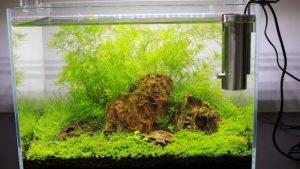
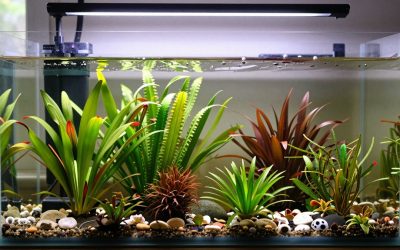
Carpeting foregrounds and aquascaped slopes often want a shallower front and a deeper rear so the bed reads with depth, while heavy root-feeders and larger swords lean toward the upper end. Bag mass matters at checkout too: CaribSea freshwater sands ship in 20 lb bags, so estimate footprint and target depth before ordering, especially for a fresh new-year build.
Root Support vs Nutrition
This is where buyers most often get burned, by assuming any good-looking sand will feed plants. It will not. A decorative or inert sand anchors roots and stays neutral, while a purpose-made planted substrate is formulated for planted freshwater use; they are two different tools that happen to share a look.
If you love the look of an inert sand but want growth, the standard fix is root tabs pushed into the bed near heavy feeders, which becomes a small recurring cost you replace every few weeks to a few months depending on plant load. Budget that into a year of ownership rather than treating the bag price as the whole spend.
Product-Specific pH Behavior
How a substrate treats water chemistry is product-specific, not a property of sand in general. Seachem states that Flourite Black Sand is a stable porous clay gravel that will not alter pH, which is exactly the predictable behavior a planted keeper wants when dosing fertilizers or running CO2.
Carbonate-based sands behave differently: aragonite and crushed-coral blends dissolve slowly and push pH and hardness upward, which suits an African cichlid tank but fights most planted setups. Confirm whether a sand is silica or quartz, a planted clay gravel, or a carbonate before you commit, and test your water through the first week after adding it.
Top Picks
Four options cover the useful range here, from a planted-specific clay gravel to three natural sands you choose by grain and tone. Each has a genuine role, and none is simply a worse version of another, so the goal is matching the sand to your plants and scape.
| Product | Best For | Key Spec | Watch Out For |
|---|---|---|---|
| Seachem Flourite Black Sand | Best overall for planted use | Porous clay gravel; stated not to alter pH | Rinse thoroughly; fine dust clouds the first fill |
| CaribSea Moonlight Sand | Best fine-grain look | 0.25-0.75 mm; ~95 lb/ft3 | Fine grain compacts; wants gentle flow |
| CaribSea Sunset Gold | Best warm natural look | 0.25-1.0 mm; ~94 lb/ft3 | Decorative and inert; add root tabs to feed |
| CaribSea Jungle River Sand | Best slightly coarser sand | 0.5-1.5 mm; ~100 lb/ft3 | Coarser grit; tiny plantlets can slip |
Seachem Flourite Black Sand – Best Overall
Flourite Black Sand earns the top slot because its planted claim is direct: Seachem makes it for planted freshwater use and states it will not alter pH, so it is the safest default when you want growth and predictable chemistry from one bag. It ships in 7 kg and 3.5 kg bags, at around $35 for the 7 kg as of 09/2026.
The trade-off is dust: like most clay gravels it needs a thorough rinse, and even then the first fill can cloud briefly until the filter clears it. Seachem does not publish a clean current grain-diameter figure, so choose it for its planted-use and pH behavior rather than for a promised millimeter number.
CaribSea Moonlight Sand – Best Fine-Grain Look
Moonlight is the pick when you want a pale, fine natural sandscape. Its grain sits at 0.25-0.75 mm with a bulk density around 95 lb/ft3, giving the smooth, rippled surface aquascapers use for open foregrounds, and it runs around $30 for a 20 lb bag as of 09/2026.
Fine sand’s weakness is compaction and detritus sitting on top, so pair it with gentle circulation and occasional light raking rather than a strong return aimed at the bed. It is a natural sand, not a planted substrate, so treat feeding as a separate step with root tabs for anything hungry.
CaribSea Sunset Gold – Best Warm Natural Look
Sunset Gold trades the cool tone for a warm, golden bed, with grain from 0.25-1.0 mm and density near 94 lb/ft3. At roughly $30 per 20 lb bag as of 09/2026 it sits in the same value band as the other CaribSea sands, so choose it on color and grain rather than on price.
Because it is decorative and inert, it will not feed carpeting plants on its own; the honest expectation is a good-looking anchor that you supplement. The warm tone also changes how fish color reads under white light, which matters more in a display tank than in a grow-out.
CaribSea Jungle River Sand – Best Slightly Coarser Sand
Jungle River is the coarser choice, running 0.5-1.5 mm with density around 100 lb/ft3, giving a river-bed texture that resists compaction better than the finer two. It sits at about $30 per 20 lb bag as of 09/2026 and suits keepers who fight packed, gassy substrate.
The catch is at the small end of planting: tiny plantlets and fine carpet stems can slip in coarser grit before they root, so it favors stems, rhizome plants tied to hardscape, and rooted swords over delicate groundcover. Coarser beds also let mulm settle deeper, which is easier to vacuum but worth watching in a lightly stocked tank.
Frequently Asked Questions
A few questions come up on nearly every planted-sand thread, usually about depth, feeding, grain, and pH. Short, specific answers follow, each with the exception that actually changes the call.
How Deep Should Planted Tank Sand Be?
Around 2-3 inches (about 5-7.5 cm) is a reliable starting range for a planted bed, deep enough for most roots to travel without going so deep that still spots turn anaerobic. It is a starting point, not a mandatory number, and heavy root-feeders or steep aquascape slopes shift it.
Slope it if you want visual depth: a shallower front near 2 inches and a deeper rear around 3 or more reads better and gives large roots room. Deeper is not automatically better, since past roughly 3-4 inches in fine sand you should stir the bed occasionally or keep some flow to avoid stagnant pockets.
Can I Use Root Tabs With Inert Sand?
Yes, and it is the standard way to grow demanding plants in a decorative sand. Push a root tab into the substrate near the base of heavy feeders such as swords and crypts, spacing them roughly every few inches around the root zone rather than scattering them across open sand.
Replacement is the recurring part: most keepers re-dose every one to three months depending on plant load and how much the water column is also fertilized. That ongoing cost is the real difference between an inert sand plus tabs and a purpose-made planted substrate, so weigh it over a full year.
Is Finer Sand Always Better for Plants?
No. Finer grain anchors small roots well and looks smooth, but it compacts faster and can go stagnant, while coarser grit stays open and oxygenated at the cost of holding tiny plantlets. The right grain depends on your plants and flow, not on a single finer-is-better rule.
For delicate carpets, a fine 0.25-0.75 mm sand or a purpose-made planted soil helps; for stems and rooted swords, a 0.5-1.5 mm grit is more forgiving and easier to keep clean. Match the number to the planting, and remember that grain governs anchoring while feeding is a separate job.
Does Aquarium Sand Change Your pH?
It depends entirely on what the sand is made of. Silica and quartz sands and stable clay gravels are largely inert, and Seachem states Flourite Black Sand will not alter pH, while carbonate sands like aragonite and crushed coral dissolve slowly and raise pH and hardness.
That is why a carbonate sand suits African cichlids but works against most planted, soft-water setups. Check the material before buying, and test your parameters through the first week after adding any new substrate, since a slow carbonate rise shows up gradually rather than overnight.
Final Thoughts
The best aquarium sand for planted tanks is the one whose grain, depth behavior, and water chemistry match your plants and scape, which is why a planted-specific clay gravel like Flourite earns the overall nod while the CaribSea sands win on grain and tone. Decide on verified planted-use and pH behavior first, add root tabs where feeding is needed, and let color be the last call, not the first.
Best Aquarium Light for Growing Carpet Plants: Top Picks
Aquarium Substrate for Sand Sifters: Best Options on Amazon