Last Updated: October 4, 2026
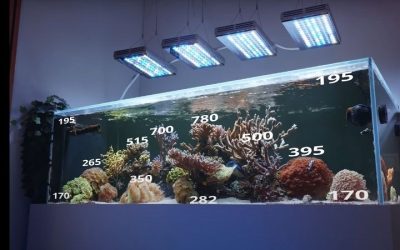
Reef tanks run hot from strong lighting and pumps, and undersizing a chiller by gallon label is a common, costly mistake. The best aquarium chiller for reef tanks is sized by real cooling load in BTU per hour and required water flow, not by a headline gallon rating, so it holds temperature through peak summer heat.
As an Amazon Associate we earn from qualifying purchases.
By David Nguyen
Quick answer: For most people in 2026, the best aquarium chiller for reef tanks is the JBJ Arctica DBA-075 — our #1 rated choice. See the full ranked comparison, alternatives and buying advice below.
How to Choose an Aquarium Chiller for a Reef Tank
A gallon rating is a starting hint, not a specification. What actually matters is the continuous heat your system adds, the BTU per hour a chiller removes under stated conditions, and the flow it needs. These four checks size a chiller to the real load.
Size by Cooling Load, Not Gallons Alone
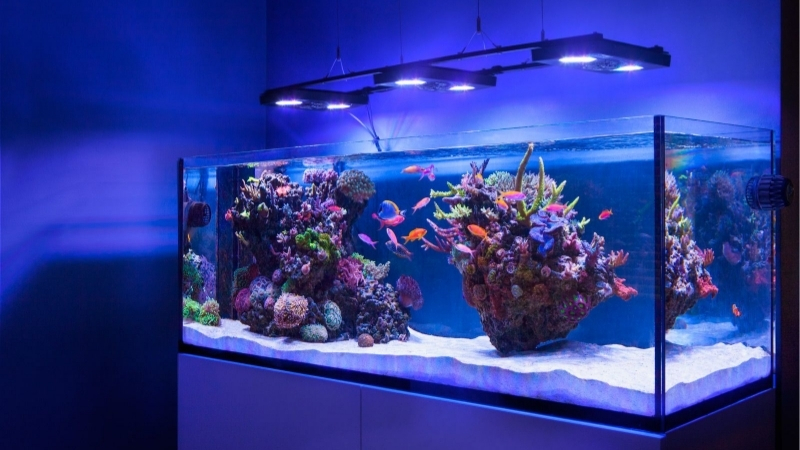
Begin with the heat your tank generates, not its volume. Lights, return pumps and powerheads all add continuous heat, so two 75-gallon reefs can have very different cooling needs depending on their equipment and room temperature.
A nominal gallon figure like 75 is conditional, not a guaranteed capacity. Estimate the real, ongoing heat load first, then match a chiller’s BTU per hour to it, since sizing by gallons alone can leave a hot reef under-cooled in summer.
Compare BTU/h Under the Same Condition
Compare apples to apples on cooling capacity. The JBJ Arctica line publishes BTU per hour under the same 95-degree dry-bulb and 77-degree wet-bulb condition, so their 1270, 2400, 3000 and 4000 figures can be compared directly.
Because they share a rating condition, the DBA-150’s 2400 is about 89 percent above the DBA-075’s 1270, a valid within-line comparison. Just make sure any two chillers you weigh use the same test condition before trusting a capacity difference.
Match Required Water Flow
Chillers need flow within a range to work correctly. The Arctica units specify flow bands from 240 to 960 GPH on the smallest up to 480 to 2400 GPH on the largest, and running outside that range hurts performance or risks the unit.
Plan a dedicated feed pump sized to the chiller’s window, not just whatever return you already have. Too little flow starves cooling; too much can be a problem too, so treat the required flow range as a hard spec alongside BTU per hour.
Plan Power, Ventilation and Space
Bigger cooling means bigger everything else. Electrical draw climbs from 2.6 amps on the DBA-075 to 7.2 amps on the DBM-250, and each unit needs ventilation clearance and floor space near the sump to reject heat effectively.
Budget for 24/7 electricity and the room a compressor chiller occupies. Factor peak-summer running, airflow around the unit and installation access, since a capable chiller placed in a cramped, hot cabinet cannot shed the heat it pulls from the tank.
Top Picks
There is no universal Best Overall by gallons here, because the right size depends on your actual continuous heat load. Each Arctica unit suits a different load, compared on shared-condition BTU/h. Prices are display figures checked in September 2026.
| Product | Best For | Key Spec | Watch Out For |
|---|---|---|---|
| JBJ Arctica DBA-075 | Lower heat loads | 1270 BTU/h; 240-960 GPH | Nominal 75gal is conditional |
| JBJ Arctica DBA-150 | Midrange | 2400 BTU/h; 480-1320 GPH | ~$981 |
| JBJ Arctica DBE-200 | Higher loads | 3000 BTU/h; 480-1920 GPH | 1000W electrical spec |
| JBJ Arctica DBM-250 | Largest in group | 4000 BTU/h; 480-2400 GPH | 7.2A; largest unit |
JBJ Arctica DBA-075
The DBA-075 suits lower heat loads, rated at 1270 BTU per hour with a 240 to 960 GPH flow range, drawing 2.6 amps, for around $800 as of September 2026. It is the entry point in the Arctica line for modest reef cooling.
Its nominal 75-gallon figure is conditional, so size it by your real heat load rather than volume. For a lightly lit tank in a cool room it may suffice, but a hot reef could outrun its 1270 BTU per hour on the warmest days.
JBJ Arctica DBA-150
The DBA-150 is the midrange choice, rated at 2400 BTU per hour with a 480 to 1320 GPH flow range for around $1,000 as of September 2026, about 28.1 percent above the DBA-075 on price. Its cooling is roughly 89 percent above the smallest unit.
That step up handles a warmer or more heavily equipped reef within its flow window. Confirm your feed pump lands inside 480 to 1320 GPH, and match the BTU per hour to your load rather than assuming the larger unit is automatically necessary.
JBJ Arctica DBE-200
The DBE-200 targets higher loads at 3000 BTU per hour with a 480 to 1920 GPH range and a 1000-watt electrical spec, for around $1061.75 as of September 2026, roughly 8.3 percent above the DBA-150. It suits demanding, hot-running systems.
Plan for its 6-amp draw and the ventilation a 1000-watt unit needs. Its 3000 BTU per hour is 25 percent above the DBA-150, a meaningful jump for a reef with strong lighting, provided your flow and power can support it.
JBJ Arctica DBM-250
The DBM-250 is the largest here, rated at 4000 BTU per hour with a 480 to 2400 GPH range and a 7.2-amp draw, for around $1165.32 as of September 2026, about 9.8 percent above the DBE-200. It is built for the heaviest heat loads in the group.
Its 4000 BTU per hour is 33.3 percent above the DBE-200, but only a genuinely hot, large system needs it. Confirm the space, ventilation and dedicated flow it requires, since oversizing wastes money and power if the load does not justify it.
Frequently Asked Questions
Reef keepers ask how to size and compare chillers correctly. The answers below keep the BTU-versus-BTU/h distinction clear and refuse to convert gallon labels into guaranteed capacity.
What Size Chiller Do I Need?
Size it from your continuous heat load, not the tank’s gallons. Add up the heat from lights, pumps and powerheads, factor your room temperature and target, then match a chiller’s BTU per hour to that load.
A gallon figure is only a rough hint and is conditional at best. Two tanks of the same volume can need different chillers, so estimate the real, ongoing heat input before choosing a capacity.
Is 1/5 HP Twice 1/10 HP?
No. On the shared-condition BTU per hour figures, the DBA-150’s 2400 is about 89 percent above the DBA-075’s 1270, not double. Horsepower labels do not translate into a clean two-times relationship.
Compare the published BTU per hour under the same rating condition instead of the HP shorthand. That is the figure that actually describes cooling capacity, and it shows the step between these units is significant but not a simple doubling.
Can I Ignore the Minimum Flow?
No. Each Arctica specifies a flow range, from 240 to 960 GPH on the smallest to 480 to 2400 GPH on the largest, and running below the minimum starves the chiller and hurts performance.
Use a feed pump sized to the unit’s window and keep it within range. Treat the required flow as a hard specification, since a correctly sized chiller still fails to cool properly if it is not fed enough water.
Is BTU the Same as BTU/h?
No. BTU is a quantity of energy, while BTU per hour is a rate of cooling. A one-time pull-down calculation using gallons times 8.3 times a temperature change gives energy, not the continuous rate a chiller is rated for.
Compare chillers on BTU per hour against your continuous heat load. Mixing the two units leads to serious sizing errors, so keep energy and rate separate when you plan cooling for a reef tank.
Final Thoughts
Choose the best aquarium chiller for reef tanks by real BTU-per-hour heat load and required flow, since there is no universal Best Overall by gallons. The Arctica DBA-075 covers lower loads, the DBA-150 sits midrange, the DBE-200 steps up for hotter systems, and the DBM-250 is the largest, so match the shared-condition cooling capacity to your tank rather than a gallon label.
As an Amazon Associate we earn from qualifying purchases at no extra cost to you. Prices and availability are accurate as of the date shown and are subject to change.
Ready to decide? Our #1 pick for 2026 is the JBJ Arctica DBA-075.
Live price & availability on Amazon.
Related Reviews & Guides

Best Refractometer for Saltwater Aquarium: Top Top Picks
Total Cost to Set Up a 26 Gallon AIO Reef: Best Compared Guide