Last Updated: September 25, 2026
Aquarium light too bright for fish is a real problem and also a conclusion people reach too quickly, because hiding and faded colour have several possible causes. Fish have no eyelids and cannot look away, so intensity genuinely matters, but water quality has to be ruled out before anything is changed.
As an Amazon Associate we earn from qualifying purchases.
As an Amazon Associate we earn from qualifying purchases at no extra cost to you. Prices and availability are accurate as of the date shown and are subject to change.
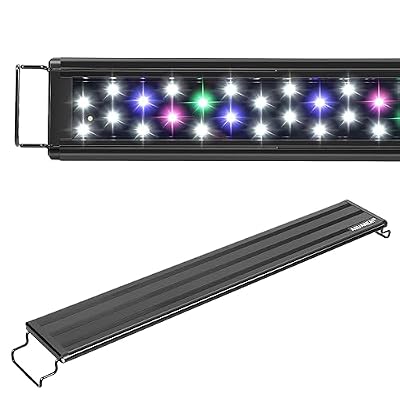
AQUANEAT LED Aquarium Light Full Spectrum 12 Inch Fish Tank Light Fresh Water
Selected for "Aquarium Light Too Bright for Fish: Signs and How to Fix": this listing is lighting (AQUANEAT LED Aquarium Light Full Spectrum 12 Inch Fish Tank Light Fres), matching the equipment this article covers.
View on Amazon
hygger Clip On 24/7 Lighting Aquarium LED Light,Sunrise-Daylight-Moonlight and DIY Mode, Adjustable Timer/Brightness Fish Tank Light with 7 Colors for Planted Tank (14W for 12~20in Tank)
Selected for "Aquarium Light Too Bright for Fish: Signs and How to Fix": this listing is lighting (hygger Clip On 24/7 Lighting Aquarium LED Light,Sunrise-Daylight-Moonl), matching the equipment this article covers.
View on AmazonAQUANEAT LED Aquarium Light Full Spectrum for 18 Inch to 24 Inch Fish Tank Light Fresh Water
Selected for "Aquarium Light Too Bright for Fish: Signs and How to Fix": this listing is lighting (AQUANEAT LED Aquarium Light Full Spectrum for 18 Inch to 24 Inch Fish ), matching the equipment this article covers.
View on Amazon
hygger 24/7 Mode Submersible Aquarium LED Light, Full Spectrum Hidden Fish Tank Light with 3 Rows Beads 7 Colors Auto On Off Sunrise-Daylight-Moonlight, Adjustable Timer Brightness
Selected for "Aquarium Light Too Bright for Fish: Signs and How to Fix": this listing is lighting (hygger 24/7 Mode Submersible Aquarium LED Light, Full Spectrum Hidden ), matching the equipment this article covers.
View on AmazonBy David Nguyen
Confirm the Light Really Is the Problem
Deciding that an aquarium light too bright for fish is the cause of some behaviour change is easy to do and frequently wrong. Fish hide for several different reasons, and only one of them is intensity, so take all the readings first before dimming anything or rearranging the whole tank.
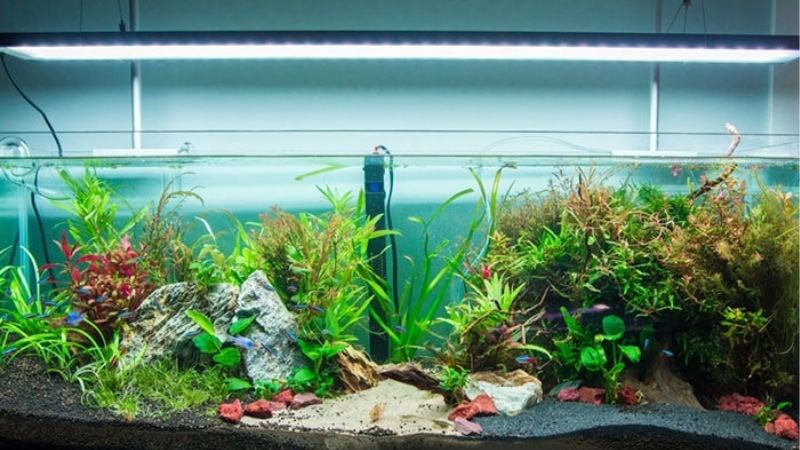
The decisive numbers to record before acting
Start with four water readings: ammonia, nitrite, nitrate and temperature. Ammonia and nitrite belong at 0 ppm and nitrate below 20–40 ppm, with temperature inside the range your species needs, because fish under ammonia stress hide in ways that look convincingly like light avoidance.
Then record the lighting itself: the scheduled hours, whether the fixture is dimmable, its height above the water line, and an honest estimate of the daylight reaching the tank. A window-side tank can receive several hours of ambient light beyond whatever the timer is actually set to.
Behaviour that points at intensity rather than water
Light-related behaviour is consistent and strongly positional. Fish shelter under hardscape or in shaded corners throughout the lit period, emerge visibly once the light goes off, and feed more confidently in the evening than during the day, which is the clearest single indicator.
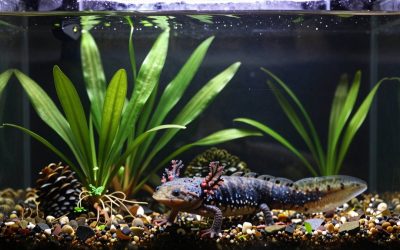
Colour tells you something useful too. Many species pale under bright open conditions as a stress response, and shy species from shaded habitats, including many tetras, loaches and catfish, show it most obviously because they evolved under heavy canopy and in tannin-stained water.
When it is not the light at all
New fish will hide for days regardless of the lighting, and that settling period is entirely normal rather than a problem to be solved. Judge behaviour only after a week or two in the tank, since acting within the first few days almost always leads to changes that were never actually needed.
An open layout is the other frequent cause here. A tank with no plants, no caves and no shaded areas leaves the fish exposed at almost any intensity, and adding cover often resolves the behaviour completely without touching the fixture or shortening the photoperiod at all in the end.
| Symptom | Reading alongside it | Most likely cause | First action |
|---|---|---|---|
| Hides all day, active at night | Ammonia 0 ppm, nitrite 0 ppm | Intensity too high for species | Dim or raise the fixture |
| Hides and clamps fins | Ammonia above 0.25 ppm | Water quality, not light | Water change, pause feeding, retest |
| Colour faded, otherwise normal | Readings normal, open layout | Lack of cover and shade | Add floating plants and hardscape |
| Startles when light switches on | Fixture has no ramping | Abrupt transition | Add a dawn and dusk ramp |
| New fish hiding, first week | Readings normal | Normal settling period | Wait a week or two before acting |
Reducing the Intensity, in Order of Safety
Once the readings confirm an aquarium light too bright for fish, work upward from the cheapest and most reversible change first. Adding shade costs nothing and helps the tank in other ways, whereas cutting the photoperiod back too far starts to affect the plants long before it helps the fish.
Step one: add cover and shade before touching the fixture
Floating plants are the single most effective fix of all, because they diffuse light exactly where it enters and give fish a shaded canopy that mirrors their natural habitat. Duckweed, frogbit and salvinia all work well, though duckweed spreads fast enough to become a chore in itself.
Hardscape then does the rest of the work for you. Caves, driftwood and taller planting create shaded zones that let the fish choose their own comfort level, which is more effective than any single intensity setting, because different species in the same tank prefer quite different conditions.
Step two: dim the fixture or raise it
If the light is dimmable, reduce it in steps of roughly twenty percent and then hold each setting for a week or two before judging it. If it is not dimmable, raising the fixture a few inches (several cm) on its legs reduces intensity at the substrate noticeably and costs you nothing.
Ramping helps separately from raw intensity. A fixture that rises over twenty or thirty minutes rather than switching on abruptly does visibly settle fish, and where the fixture has no ramp function at all, switching on a room light first achieves a rough version of the same effect.
Step three: tank size, placement and physical fit
The position of the tank matters as much as the fixture. A tank away from windows holds a predictable light budget, whereas one on a sunny sill receives far more than the timer suggests, and moving it into a more shaded part of the room often resolves the problem entirely on its own.
Weight decides whether moving the tank is realistic at all: a full tank runs near 10 lb per gallon (about 1 kg per L), so a 55 gallon (208 L) setup passes 600 lb (272 kg) and must be drained first. Measure the new position and the stand with a tape before ordering or moving anything.
What Never to Do When Reducing Light
Three common responses to an aquarium light too bright for fish all tend to create new problems while solving the original one. Each of them looks like a reasonable shortcut, and each either harms the plants, confuses the diagnosis, or leaves the tank in a worse state than it started in.
Never cut the photoperiod below about five hours
Shortening the hours reduces the total light budget, but below roughly five or six hours the plants begin to suffer visibly while the fish gain very little, since it is the intensity during the lit period rather than its overall length that determines how exposed the fish actually feel.
Dim the light or add shade instead. Reducing intensity while keeping a normal six to eight hour period gives the fish darker conditions right through the day and keeps the plants supplied, which is precisely the outcome that the photoperiod approach fails to achieve at any setting.
Never change several things in the same week
Dimming the light, adding floating plants and rearranging the hardscape all at once leaves you unable to tell which change actually helped. Make one adjustment at a time, wait a week or two, and note down what happens, because fish behaviour also settles on its own over that same span.
Exactly the same principle applies to any stocking changes. Adding new fish during any lighting trial confuses the picture completely, since new arrivals hide for days regardless, and their behaviour is very easily misread as evidence that the lighting adjustment did or did not work.
Never leave the tank dark to compensate
Running the tank unlit for several days does not help the fish and actively harms the plants, which will begin to deteriorate within about a week. Fish need a normal day and night cycle, and extended darkness is a stressor in its own right rather than a rest from an over-bright fixture.
The same logic applies to switching the light on only when you happen to be watching. Irregular lighting is the single most common cause of algae in otherwise well-kept tanks, and it gives fish no predictable pattern to settle into, which is the opposite of what a nervous species needs.
Keeping the Balance Right Over Time
Once the tank is comfortable again, the settings that first fixed an aquarium light too bright for fish still need occasional review, because the plants grow, floating cover spreads or dies back, and the daylight reaching the tank changes considerably between winter and midsummer.
A review routine that catches drift
Watch the fish during the lit period at least once a week, rather than only at feeding time. Confident use of open water throughout the day is the clearest sign that the balance is right, and a gradual retreat back into cover is the earliest warning sign that something has changed.
Thin the floating plants before they cover the entire surface. A complete mat blocks so much light that rooted plants below begin to fail, and gas exchange at the surface is reduced, so keeping coverage to roughly half or two thirds of the surface is the usual balance to aim for.
What changes and how it shows up
Daylight is by far the largest seasonal variable. Daylight hours stretch out considerably from late spring into midsummer, so a window-side tank that suited its fish perfectly well through winter can become uncomfortably bright by June without anyone touching the fixture or the timer.
LED output declines slowly across the years, which works in exactly the opposite direction. A fixture that was too bright when new may sit comfortably by its fourth or fifth year, at which point the floating cover added earlier can start to leave the whole tank genuinely underlit.
Early warning signs and the twelve month cost
An aquarium light too bright for fish usually announces itself through three signals: fish retreating to cover in the day, colours fading in species that were bright before, and feeding shifting to the evening. Any one of them means the balance has drifted and is worth checking before reaching for a different fixture.
The costs involved here are all fairly small ones. Floating plants, a timer, and possibly a dimmable fixture if the current one has no adjustment at all cover almost everything. Prices move constantly, so check them at the time of purchase rather than budgeting from some remembered figure.
Frequently Asked Questions
These questions come up constantly once people start treating fish behaviour as useful evidence rather than as a final verdict, because an aquarium light too bright for fish, a tank with poor water quality, and a tank with no cover all produce remarkably similar symptoms day to day.
Which fish are most sensitive to bright light?
Species from shaded, tannin-stained waters generally, which includes many tetras, loaches, catfish and plecos. They evolved under heavy canopy and behave accordingly, whereas many livebearers and rainbowfish come from open sunlit waters and are visibly untroubled by the brightness.
Do floating plants really help?
Yes, and more so than almost any other single change. They diffuse light where it enters, provide overhead cover that fish read as safety, and consume nutrients that would otherwise feed algae, so they address several problems with one inexpensive and entirely reversible addition.
Should I use a dim blue light at night?
There is no real benefit at all for the fish, which need genuine darkness in order to rest. Blue night lighting is really for the owner rather than for the tank, and if it is used at all it should be brief, since a continuous light period of any colour is a stressor rather than a comfort.
How long before I know a change has worked?
Allow a full one to two weeks. Fish adjust only gradually, and their behaviour settles on its own over a broadly similar span, so judging after only two or three days risks attributing a perfectly normal settling pattern to whatever adjustment you happened to make just before it.
See More:
Conclusion
An aquarium light too bright for fish is best confirmed against water readings and the tank layout before anything is changed, since ammonia stress and an open tank produce the same hiding behaviour. Rule both of those out first, and then add shade before touching the fixture at all.
How to Choose the Right Aquarium Heater Size for Your Tank

Quick Picks: Best Aquarium Thermometers (Digital and…