Last Updated: September 25, 2026
Aquarium filter not pumping water is one of the few faults that puts a tank on a clock, because flow carries oxygen to the bacterial colony as well as to the fish. This guide covers the readings to take first, the fixes in the order that solves the most cases fastest, and the wear parts that quietly cause it to happen again.
As an Amazon Associate we earn from qualifying purchases.
As an Amazon Associate we earn from qualifying purchases at no extra cost to you. Prices and availability are accurate as of the date shown and are subject to change.
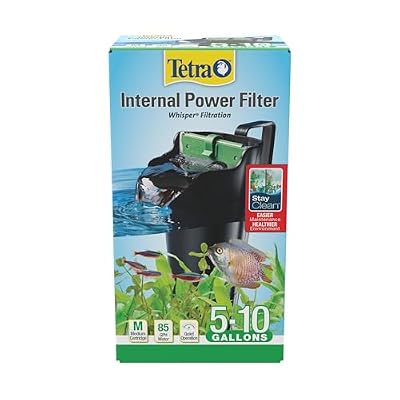
Tetra Whisper 85 GPH Internal Power Filter For Aquariums
Selected for "Aquarium Filter Not Pumping Water: Causes and Quick Fixes": this listing is filtration (Tetra Whisper 85 GPH Internal Power Filter For Aquariums), matching the equipment this article covers.
View on Amazon
DaToo Aquarium Power Filter In-Tank Ultra Silent Small Fish Tank Filter 3W For Aquarium 1 to 10 Gallon Tank, 1 Yr Warranty
Selected for "Aquarium Filter Not Pumping Water: Causes and Quick Fixes": this listing is filtration (DaToo Aquarium Power Filter In-Tank Ultra Silent Small Fish Tank Filte), matching the equipment this article covers.
View on Amazon
Tetra Whisper IQ Power Filter 10 Gallons, 105 GPH, with Stay Clean Technology
Selected for "Aquarium Filter Not Pumping Water: Causes and Quick Fixes": this listing is filtration (Tetra Whisper IQ Power Filter 10 Gallons, 105 GPH, with Stay Clean Tec), matching the equipment this article covers.
View on Amazon
Pawfly Internal Aquarium Filter with 80 GPH Water Pump Quiet Submersible Bio Sponge Foam Filter for 10 to 20 Gallon Fish Tanks Small Multifunctional Filter for Filtration Circulation and Oxygenation
Selected for "Aquarium Filter Not Pumping Water: Causes and Quick Fixes": this listing is filtration (Pawfly Internal Aquarium Filter with 80 GPH Water Pump Quiet Submersib), matching the equipment this article covers.
View on AmazonBy David Nguyen
Quick answer: Our top pick in 2026 is the Motor hums, no flow — our #1 rated choice. See the full ranked comparison, alternatives and buying advice below.
Measure and Isolate the Cause Before Opening Anything
An aquarium filter not pumping water can mean a lost prime, a jammed impeller, a blocked intake or a genuinely dead motor, and those four need completely different responses. A short set of readings tells you which one you are dealing with and how much time the biofilter has left.
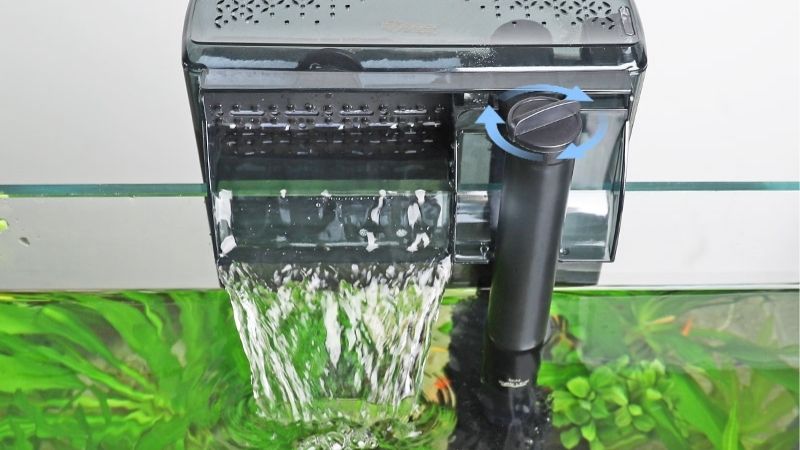
The decisive numbers to take before you touch the unit
Start with ammonia, nitrite, nitrate and temperature. Ammonia and nitrite should read 0 ppm and nitrate below 20–40 ppm; if either of the first two is above zero, the colony has already been affected and stocking, feeding and water changes all need adjusting while you work on the hardware.
Add three hardware numbers as well: how long the unit has been stopped, the water level relative to the intake, and the rated output on the box. A unit rated 200 GPH (757 LPH) never delivers that in service, and a primed hang-on-back on a 20 gallon (76 L) tank moves 120–140 GPH (454–530 LPH).
A decision tree from the reading to the cause
Motor humming with no flow points at prime or the impeller. Silence with a live outlet points at the motor or a thermal cutout. Flow that trickles rather than stops points at a partly blocked intake or a packed sponge, and that case is a cleaning job rather than a hardware repair job.
Water level matters far more here than most people expect. Evaporation of half an inch (about 1 cm) is enough to expose a hang-on-back intake, and a canister that has drawn air will not restart on its own even once the level has been topped back up to the correct point on the glass.
When it is not a filter fault at all
Check the outlet with another appliance before assuming the pump has failed. Tripped residual current devices, a switched-off timer socket and a loose plug all present exactly like a dead filter, and none of them are fixed by pulling the unit apart on the living room floor first.
Every powered device sitting beside water should run through a residual current device or GFCI outlet with a drip loop in the cable. If the socket has tripped, find out why before resetting it, because repeated tripping usually means moisture has reached something it should not have.
| Symptom | Reading alongside it | Most likely cause | First action |
|---|---|---|---|
| Motor hums, no flow | Water level at or below intake | Lost prime after evaporation | Top off, restart, purge trapped air |
| Motor hums, level fine | Flow zero, faint rattle | Impeller jammed or shaft chipped | Unplug, remove impeller, clear the well |
| Weak trickle only | Flow far under baseline | Blocked intake or packed media | Rinse sponge in used tank water |
| Silent, no vibration | Outlet tests dead | Tripped circuit or failed motor | Test the socket before opening the unit |
| Restarted, fish at surface | Ammonia above 0.25 ppm | Colony lost oxygen while stopped | Pause feeding, small water change, test daily |
The Fixes in the Order That Solves Most Cases
Work upward from the cheapest and most likely cause first. In practice the great majority of reported cases of an aquarium filter not pumping water resolve at step one or step two, and only a small share ever turn out to be a genuinely failed motor that has to be replaced outright.
Step one: restore the water level and re-prime the unit
Most cases of an aquarium filter not pumping water end here. Top the tank up with dechlorinated water within 1–2 °F (about 1 °C) of the tank, then restart. On a hang-on-back, fill the reservoir until the impeller is submerged; on a canister, open the priming valve and let the head of water push trapped air out.
If the unit catches and then stalls again, air is still trapped. Tilting a canister gently while it runs releases pockets around the media baskets, and lowering a hang-on-back slightly on its brackets can stop it drawing air from the surface when the tank level sits a little low.
Step two: clear the impeller, shaft and intake
Unplug first, then pull the impeller and inspect it. Gravel fragments, snail shells and plant fibre wedge into the well, and a chipped ceramic shaft or a worn magnet tip will spin without moving water. Clean the well with a soft brush and refit the assembly dry rather than forcing it.
Check the intake strainer at the same time. A strainer packed with detritus, or covered by a shrimp-safe pre-filter sponge, starves the pump long before the internal media ever does, and it is the single most common cause of the slow trickle that people mistake for a failing motor.
Step three: tank size, placement and physical fit
Hang-on-back units need 4–6 inches (10–15 cm) of clearance behind the tank and a rim they can actually clamp to. Canisters must sit below the water line inside the cabinet, with enough height for the body plus a hose bend radius that will not kink against the back panel of the stand.
Weight sets the limits: a full tank runs near 10 lb per gallon (about 1 kg per L), so a 55 gallon (208 L) setup passes 600 lb (272 kg). Measure the gap behind the tank and the cabinet height with a tape before ordering any replacement unit rather than trusting a product photograph.
What Never to Do While Troubleshooting
Some of the damage from an aquarium filter not pumping water is done by the owner’s response rather than by the original fault itself. Three habits in particular turn a recoverable stoppage into a cycle crash that takes several weeks of testing and small water changes to work back out of.
Never run the motor dry or force a stuck impeller
A pump running without water heats up very quickly and can distort the impeller housing permanently. If it does not catch within a few seconds, stop and prime the unit properly instead of leaving it switched on in the hope that it clears itself while you go and look for the manual.
Forcing a seized impeller by hand snaps ceramic shafts, and a broken shaft usually means buying a spare part rather than an entire replacement unit. Spin it gently with a fingertip, and if it resists, something is wedged in the well and needs removing before the unit runs again at all.
Never rinse biological media under the tap while you work
Chlorine and chloramine in municipal water are there to kill bacteria and will do the same to a nitrifying colony in seconds. Media that has been sitting in a stopped filter is already stressed, and a tap rinse at that moment is what turns a short outage into a measurable ammonia spike.
Rinse the media in siphoned tank water instead. If the unit has been switched off for several hours, that sludge is oxygen-starved and usually smells of it, so rinse it before restarting rather than pushing all that accumulated waste straight back into the display tank in one burst.
Never replace the whole filter before testing the socket
People routinely buy a new unit when the old one was fine and the circuit had tripped. Test the outlet with a lamp, check the timer and inspect the plug for corrosion, because water vapour reaches connectors over time and a green contact is a fire risk rather than a filter fault.
If the unit truly is dead, keep the old media. Established sponge and ceramic media transfer straight across into the replacement unit and preserve most of the existing colony, which is worth far more during the first fortnight than anything sold in a bottle to speed the process up.
Preventing Repeat Stoppages Over the Long Term
A filter is a device that has to run continuously for years, so the useful question after fixing an aquarium filter not pumping water is what stops the same fault from recurring next quarter. Almost all repeat cases trace back to just two things: evaporation and worn moving parts.
A maintenance schedule built around the stoppage causes
Top the tank up weekly so the intake never comes close to the surface, rinse mechanical media every 2–4 weeks in tank water, and strip the impeller well every 3 months. Inspect canister lid gaskets twice a year, since a hardened seal is what stops a unit re-priming after a power cut.
Keep evaporation in mind seasonally. Indoor heating through the cold months dries a room quickly, and a tank can lose enough depth in a fortnight to expose an intake, which is why midwinter tends to produce a noticeable cluster of stopped hang-on-back filters in otherwise stable tanks.
Which parts wear out and what each failure looks like
Impeller shafts wear at the tip and start to rattle before they stop. Magnets lose their coating and bind. Canister gaskets harden and weep onto the cabinet floor, and that slow leak damages a chipboard stand long before it ever affects anything living in the tank standing above it.
Air pumps feeding sponge filters fail differently: the diaphragm stiffens across 12–24 months and the air stone clogs first, giving larger bubbles and less lift. Both are inexpensive, both are worth keeping as spares on the shelf, and neither gives much warning before output drops away.
Early warning signs and the twelve month cost of readiness
Three signals matter: a new rattle, an outflow narrower than usual, and a unit that takes longer than normal to catch after maintenance. Any of them means the impeller assembly is due for inspection, and acting at that point is far cheaper than dealing with a stopped filter overnight.
Budget for spares rather than emergencies: a spare impeller, gaskets, an air stone and a battery air pump. Extended outages during the Atlantic storm season, roughly June to November, are the case that battery backup is actually for, and prices move constantly so check them when buying.
Frequently Asked Questions
These questions come up constantly once people start treating a stopped unit as a diagnostic problem rather than as a purchase decision, and each of them turns on the same basic point: an aquarium filter not pumping water is usually a prime or impeller issue rather than a dead motor.
How long can the tank run without the filter?
Fish will tolerate a few hours if surface agitation continues, but the bacterial colony inside the media begins losing oxygen within roughly the same window. Add an air stone immediately, keep feeding paused, and then test ammonia daily for a week once normal flow has been restored.
Do I need to re-cycle the tank after a long stoppage?
Not usually, although it is safest to treat it as a partial setback. Test ammonia and nitrite daily, feed lightly for several days, and only add livestock once both readings hold steady at 0 ppm across consecutive days rather than assuming the colony has survived the outage intact.
Why does my canister lose prime after every power cut?
Almost always a hardened or twisted lid gasket, or hoses running with a high loop somewhere along their length that traps air. Replace the gasket, seat it clean and dry, and then route the hoses so they rise continuously towards the tank without a peak that can hold an air pocket.
Is a humming filter safe to leave running overnight?
No. A humming unit that moves no water is drawing current without any cooling flow, which stresses the motor and can distort the plastic housing. Switch it off, add an air stone for surface agitation, and deal with the impeller in daylight when you can properly see what you are doing.
See More:
Conclusion
An aquarium filter not pumping water is nearly always prime, impeller or intake rather than a failed motor, and the order of the checks matters more than the tools. Top up the level, purge the air, clear the impeller well, then test the socket before buying anything to replace it.
Ready to decide? Our #1 pick for 2026 is the Motor hums, no flow.
Live price & availability on Amazon.
Related Reviews & Guides

Best Canister Filter for 150 Gallon Aquarium: Proven Picks
Best Pond Liner for Cold Winters: Top Expert Buying Guide