Last Updated: October 4, 2026
- Decide These 3 Things First
- Size: Calculate Flow for the Tank, Not the Box
- Material: Prioritize Safe, Cleanable Components
- Construction: Compare Media Capacity and Water Paths
- Comfort and Performance: Control Noise, Current, and Maintenance
- Price Tiers: Budget for the Whole System
- Warranty: Verify Coverage Before Installation
- Delivery and Assembly: Measure Before Ordering
- Spec Checklist
- Red Flags
- FAQ
- Top Pick: PONDFORSE Canister Filter, External Aquarium Filter Ultra-Quiet with Media
- Best Value: Aqueon SmartClean Power Filter with EcoRenew Filter Cartridge, Quick and Easy Water Changes, Quiet Operation, Adjustable Flow, for 20-30 Gallon Freshwater and Saltwater Aquariums, Large
- Premium Choice: Tetra Whisper IQ Power Filter 10 Gallons, 105 GPH, with Stay Clean Technology
Choosing an aquarium filter by the biggest gallons-per-hour number is one of the easiest ways to buy the wrong equipment. A filter can be too weak for a heavily stocked tank, but excessive flow can stress bettas, fry, shrimp, and slow-moving fish. Shoppers also confuse pump flow with real-world filtration, overlook media capacity, and assume a filter rated for a certain tank size will perform identically in every setup.
This guide explains how to choose aquarium filter flow rate using practical turnover targets, tank dimensions, livestock needs, filter design, noise, price, and maintenance. The goal is not simply to move more water. It is to create consistent mechanical, biological, and chemical filtration without producing a turbulent environment. These guidelines remain useful for comparing equipment in 2026, whether you are setting up a 5-gallon desktop aquarium or a 75-gallon community tank.
As an Amazon Associate we earn from qualifying purchases at no extra cost to you.


Decide These 3 Things First
- Calculate the actual water volume. Start with the aquarium’s stated capacity, then subtract roughly 10% to 20% for substrate, rocks, wood, and decorations. A nominal 20-gallon tank may contain only 16 to 18 gallons of water.
- Choose a turnover target. For most freshwater community aquariums, aim for about four to six times the tank’s actual water volume per hour. A 20-gallon tank therefore needs approximately 80 to 120 gallons per hour, or GPH, of useful flow.
- Match flow to the inhabitants. Goldfish, cichlids, messy eaters, and densely stocked tanks often need stronger filtration or more media. Bettas, gouramis, shrimp, fry, and long-finned fish generally need gentler output, even when the filter has adequate capacity.
Use the manufacturer’s GPH rating as a starting point, not a guarantee. Published flow is commonly measured before filter media becomes dirty and before tubing, lift height, intake screens, and return fittings reduce performance. A filter rated at 100 GPH may deliver less at the aquarium once installed and loaded with media.
Size: Calculate Flow for the Tank, Not the Box
The basic formula is simple:
Target flow = actual gallons × desired turnover rate.
For example, a 10-gallon aquarium with light stocking may work well with 40 to 60 GPH. A 29-gallon community tank may call for approximately 116 to 174 GPH. A 55-gallon aquarium with a normal fish load may need 220 to 330 GPH, although two smaller filters can provide better circulation and backup than one oversized unit.
Consider the manufacturer’s recommended tank range as a minimum screening tool. A filter labeled for 20 to 30 gallons may be appropriate for a lightly stocked aquarium, but it could be undersized for a crowded 30-gallon tank. Conversely, a 105 GPH filter, such as the Tetra Whisper IQ Power Filter 10 Gallons, may provide more than enough nominal turnover for a lightly stocked 10-gallon setup but still require a flow adjustment for delicate fish.
For tall tanks, heavily decorated aquariums, or filters positioned below the aquarium, allow extra capacity. A canister filter with long hoses may lose more practical flow than a compact hang-on-back filter installed directly on the rim.
Material: Prioritize Safe, Cleanable Components
For most aquarium filters, the important material choices are the housing, impeller, intake tube, seals, and filtration media. Durable plastic housings are standard because they resist corrosion and are lightweight. Look for a rigid body that does not flex when you remove the cover or install the media basket.
Impellers should be removable for cleaning, and the intake should include a protective strainer. Foam or sponge prefilters are useful for preventing larger debris from entering the impeller and for protecting shrimp or small fish. Fine filter floss catches particles but clogs faster, so it should not be the only media in a filter.
Biological media should offer plenty of surface area while allowing water to pass through. Ceramic rings, porous blocks, and sponge media are common options. Avoid treating disposable cartridges as the entire filtration system. A filter with room for coarse sponge, fine mechanical media, and biological media is usually more economical over time because you can rinse reusable media in removed aquarium water instead of replacing everything at every maintenance interval.
Saltwater users should confirm that all exposed components are rated for marine use. Also check whether the filter uses metal parts, adhesives, or media that can react poorly with saltwater. For freshwater tanks, the main concerns are chemical safety, durability, and whether replacement media is easy to find.
Construction: Compare Media Capacity and Water Paths
Two filters with the same GPH rating can perform very differently. Construction determines how much media the water contacts and how easily the filter stays primed.
Hang-on-back filters are compact and convenient for small to medium aquariums. They typically draw water through an intake tube, pass it through a media chamber, and return it over the tank rim. Look for an adjustable intake or output, a secure lid, and a media chamber large enough to hold more than a thin cartridge. The Aqueon SmartClean Power Filter is an example of a hang-on-back design with adjustable flow and a cartridge-focused maintenance system.
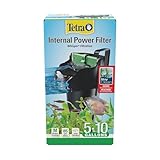
Internal filters sit inside the aquarium and can work well in smaller tanks, quarantine setups, and aquariums without space behind the back panel. The Tetra Whisper 85 GPH Internal Power Filter is an example of this category. Internal models save external space but occupy aquarium volume and may be more visible.
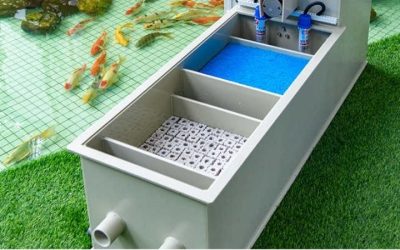
Canister filters place the motor and media outside the tank. They generally offer greater media capacity and flexible hose routing, making them useful for larger tanks or aquascapes with substantial biological demand. A model such as the PONDFORSE external canister filter may be attractive when quiet operation and a larger media layout matter, but measure the cabinet and allow room to disconnect hoses and lift the unit for service.
Comfort and Performance: Control Noise, Current, and Maintenance
“Comfort” in an aquarium means a calm environment for fish and a filter you can live with every day. A strong filter should not create a constant blast across the tank. Use a spray bar, directional nozzle, sponge prefilter, or surface-baffle method to distribute the return flow. The surface should ripple enough to support gas exchange without splashing aggressively.
Adjustable flow is especially valuable for tanks with mixed species. You can run a filter near its higher setting during initial setup or after maintenance, then reduce the output for bettas, shrimp, and young fish. Do not reduce flow so far that the filter stops circulating the whole tank. Dead spots, floating debris, and cloudy water can indicate inadequate circulation.
Noise usually comes from vibration, a dirty impeller, trapped air, or an unstable mounting surface. Check whether the manufacturer lists a decibel rating, but do not assume that a published number represents every installation. A filter sitting against a cabinet wall can sound louder than one with clearance. Canister filters may be quieter at the aquarium because the motor is enclosed below, while internal filters can transmit vibration through the glass.
Maintenance is part of performance. Rinse coarse media every two to four weeks as needed, inspect the impeller monthly, and replace fine disposable media when it restricts flow. Never wash biological media under chlorinated tap water, which can damage beneficial bacteria. If the filter loses flow rapidly, the issue may be clogged media rather than an undersized pump.
Price Tiers: Budget for the Whole System
A low purchase price does not always mean low ownership cost. Include replacement cartridges, tubing, valves, impellers, prefilters, and electricity in your comparison.
- Budget, approximately $15 to $35: Best for 5- to 30-gallon aquariums, quarantine tanks, and straightforward freshwater setups. The Tetra Whisper 85 GPH Internal Power Filter is listed for under $20, while the Tetra Whisper IQ Power Filter 10 Gallons is listed for under $20. The Aqueon SmartClean model is listed at $34.
- Midrange, approximately $35 to $90: These filters may offer adjustable flow, larger media chambers, quieter operation, or more flexible installation. They are often a sensible choice for 20- to 55-gallon tanks.
- Premium, approximately $90 to $250 or more: Canister systems and larger multi-stage filters are intended for higher water volumes, heavy stocking, planted aquariums, or owners who want substantial reusable media capacity. The example PONDFORSE canister filter is listed for under $80, placing it near the upper budget or entry midrange depending on the retailer.
Pay particular attention to cartridge prices. A $20 filter that requires frequent proprietary cartridges can cost more than a slightly more expensive filter that accepts washable sponge and broadly available media.
Warranty: Verify Coverage Before Installation
Warranty length and terms vary by brand and seller, so confirm them on the product packaging or current listing before purchase. Look for coverage of the motor, impeller, seals, and electrical components, not just the plastic housing.
Keep your receipt, record the model number, and photograph the filter if it arrives damaged. Warranty coverage may exclude damage caused by running the unit dry, improper assembly, modifications, mineral buildup, or use outside the recommended water type. A warranty is useful, but readily available replacement impellers and seals can matter more several years after purchase.
For a critical aquarium, consider two smaller filters instead of one. This provides redundancy if one unit stops and lets you clean one filter while the other continues operating.
Delivery and Assembly: Measure Before Ordering
Before buying, measure the clearance behind the aquarium, the height inside the cabinet, and the distance to a grounded outlet. Hang-on-back filters usually need several inches of rear clearance, while canisters require space for hoses and service access. Confirm that the intake tube reaches the intended depth without bending sharply.
Inspect all parts on arrival: lid, impeller, intake, strainer, media baskets, tubing, seals, and adapters. Assemble the filter according to the instructions and fill or prime it as directed. Never run a pump dry. After installation, check for leaks for at least 10 to 15 minutes and verify that the return creates circulation throughout the tank, not only at the surface.
Spec Checklist
| Spec | Budget | Mid | Premium |
|---|---|---|---|
| Best tank size | 5-30 gallons | 20-55 gallons | 40-100+ gallons |
| Useful flow target | 40-180 GPH | 100-330 GPH | 200-600+ GPH |
| Turnover goal | 4-6 times per hour | 4-8 times per hour | 5-10 times per hour, adjusted at the outlet |
| Media arrangement | Cartridge plus small sponge | Separate mechanical and biological media | Multiple baskets with reusable media |
| Typical power use | 2-8 watts | 5-20 watts | 15-50 watts |
| Typical price | $15-$35 | $35-$90 | $90-$250+ |
| Best use | Small community, quarantine, or shrimp tanks | General community aquariums | Large, heavily stocked, or high-media-demand tanks |
These ranges are comparison points, not guarantees. Always confirm the actual wattage, dimensions, flow rating, and recommended aquarium size for the specific model.
Red Flags
- A filter’s GPH is listed without a recommended tank range or explanation of how the number was measured.
- The media chamber accepts only one proprietary cartridge with no room for sponge or biological media.
- There is no adjustable output for a filter marketed to tanks with delicate or slow-moving fish.
- The impeller cannot be removed for cleaning, or replacement impellers are unavailable.
- The housing, lid, or tubing feels loose, warped, or difficult to seal.
- The product description promises “silent” operation but provides no maintenance guidance or warranty information.
- The filter is rated exactly at your calculated minimum for a heavily stocked tank, leaving no capacity for clogged media or real-world flow loss.
FAQ
What flow rate should a 20-gallon aquarium have?
Start with approximately 80 to 120 GPH of useful flow for a typical community aquarium. Choose closer to 80 GPH for gentle fish or light stocking, and closer to 120 GPH—or use additional media—for a heavily stocked setup. Reduce turbulence at the outlet rather than sacrificing filtration capacity.
Can a filter have too much flow?
Yes. Excessive current can exhaust fish, push plants and decorations around, and prevent shy species from resting. A larger filter can still work if its output is adjustable or diffused with a spray bar, sponge, or directional return.
Is higher GPH better than more filter media?
Not automatically. GPH describes water movement, while media volume affects mechanical capture and biological filtration. A filter with moderate flow and a generous, reusable media chamber may outperform a faster pump with a tiny disposable cartridge.
How often should aquarium filter flow be checked?
Look at the return whenever you feed the fish and inspect it more closely each week. A noticeable drop in flow usually means clogged media, a dirty impeller, trapped air, or a blocked intake. Clean the affected part before replacing the entire filter.
Ready to decide? Our #1 pick for 2026 is the Best tank size.
Live price & availability on Amazon.
Related Reviews & Guides
Best Budget Glass Aquarium: Smart Picks for Better Value
6 Best Timer Aquariums 2026