Last Updated: October 4, 2026
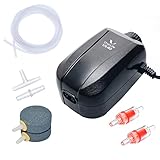
- Top Pick: Uniclife 64 GPH Aquarium Air Pump with Dual Outlets Adjustable Quiet Fish Tank Air Pump with Air Stone Airline Tubing Check Valve and Connector Accessories for 10-100 Gallon Fish Tank
- Best Value: Pawfly Aquarium Air Pump 50 GPH Fish Tank Oxygen Pump for 10-60 Gallon Fish Tanks Buckets Dual Outlet Adjustable Ultra Quiet Aerator Pump with Airline Tubing Air Stones Connectors and Check Valves
- Premium Choice: AQQA Aquarium Air Pump, 3W Powerful Dual Outlet Adjustable Oxygen Aerator
Buying an aquarium air pump looks simple until a pump is too weak, too loud, or mismatched with the tank’s depth and equipment. A common mistake is choosing by the largest gallon number on the box. That rating often assumes shallow water, short airline tubing, and little back pressure. Another is treating air bubbles as the same thing as oxygenation: bubbles help, but surface movement is what promotes gas exchange. Buyers also overlook vibration, outlet count, replacement parts, and the cost of running the pump continuously.
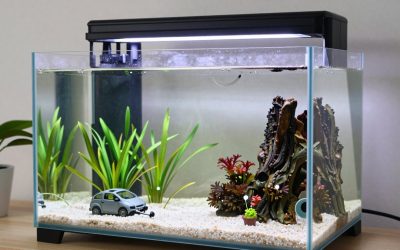
This aquarium air pump buying guide output focuses on the specifications that matter in daily use. The goal is not merely to find the most powerful pump, but to match airflow, pressure, noise, durability, and price to your setup. Whether you are aerating a 10-gallon community tank, a 100-gallon aquarium, a pond, or a hydroponic reservoir, use the following checklist before ordering.
As an Amazon Associate we earn from qualifying purchases at no extra cost to you.


Decide These 3 Things First
- Tank volume and water depth: Estimate the actual operating load, not just the advertised maximum. A 50-gallon rating may be optimistic if the tank is deep or uses several air stones.
- How many devices need air: Count air stones, sponge filters, under-gravel filters, bubble decorations, and separate tanks. Two outlets are useful only if the pump can maintain pressure while both are running.
- Where the pump will sit: A bedroom, office, or nursery needs better vibration control than a garage or fish room. Decide whether low noise, portability, or maximum airflow is the priority.
Size and Airflow Capacity
Airflow is usually listed in gallons per hour (GPH), liters per minute (L/min), or both. For quick comparison, 1 L/min equals approximately 15.85 GPH. A practical starting point is about 0.5 to 1 L/min per 10 gallons for light aeration, with more required for multiple sponge filters or heavily stocked tanks. These are planning ranges, not guarantees; air stones and water depth can substantially reduce delivered airflow.
For a 10- to 20-gallon aquarium, a pump rated around 20 to 50 GPH is generally suitable for one small air stone or sponge filter. A 30- to 60-gallon tank often benefits from 40 to 100 GPH, especially with two outlets. For 75 to 100 gallons, look for roughly 80 to 150 GPH and adjustable output. Large ponds, breeding racks, or systems up to 300 gallons may need 150 to 250 GPH or more, preferably with multiple ports.
Do not use the maximum gallon claim as a guarantee. A pump marked “10 to 100 gallons” can be appropriate for a 30-gallon tank but underpowered for a deep 100-gallon aquarium with two fine-pore stones. Choose a model with a control dial or air-flow valves so you can reduce output rather than constantly operating at full power.
Pressure for Depth and Air Stones
Airflow measures volume, while pressure determines whether the pump can push that air through resistance. Water depth, narrow tubing, check valves, fine air stones, and sponge filters all create back pressure. A pump that sounds powerful above the tank may produce disappointing bubbles once connected.
For tanks up to 18 inches deep, many small desktop pumps work well with coarse or medium air stones. At 20 to 24 inches, prioritize a published pressure rating and a pump designed for deeper aquariums. For a deep tank, pond, or multi-filter setup, look for at least 0.02 to 0.04 MPa of stated pressure, while recognizing that brands do not always measure pressure in the same way.
If a pump has two outlets, each outlet may receive less air when both are open. A splitter can also reduce effective output. For reliable performance, select a pump rated at least 25% above your calculated need. If you need 80 GPH in actual use, a 100 GPH-rated unit gives useful headroom for tubing and equipment resistance.
Construction and Materials
The housing should resist cracking, heat buildup, and vibration. ABS plastic is common and suitable for most home aquariums, provided the seams are clean and the ventilation openings are not obstructed. Rubber feet or a silicone base are more important than a decorative metal finish because they reduce vibration transferred to the shelf.
Check the included accessories carefully. A useful kit may contain 6 to 10 feet of airline tubing, two air stones, two check valves, connectors, and a flow-control valve. Tubing is typically 4 mm inside diameter, often sold as standard aquarium airline. Check valves should be installed outside the tank with the arrow pointing toward the aquarium. They help prevent a back-siphon during a power outage, but they are not a substitute for placing the pump above the waterline whenever possible.
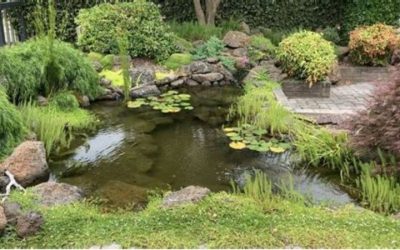
For outdoor ponds or damp fish rooms, look for a weather-resistant enclosure, but do not assume an indoor aquarium pump is waterproof. Keep the electrical body dry, create a drip loop in the cord, and use a ground-fault circuit interrupter (GFCI) outlet near water.
Comfort and Performance
Noise is usually caused by motor vibration rather than the movement of air itself. A manufacturer’s “quiet” label is not a standardized measurement, so do not compare it to a specific decibel number unless the brand provides test conditions. In a sleeping area, place the pump on a dense foam pad, silicone mat, or folded towel, leaving ventilation space around the housing. Do not place it directly on a hollow cabinet, which can amplify hum.
For a bedroom or office, a pump listed at about 2 to 5 watts is often a sensible starting point for small and medium tanks. Larger multi-port pumps may use 6 to 15 watts or more. Adjustable output is preferable to an oversized fixed-output pump because excessive turbulence can stress slow-moving fish and make a tank noisy.
Consider operating cost as well. A 5-watt pump running 24 hours a day uses about 3.6 kilowatt-hours per month. A 10-watt model uses about 7.2 kilowatt-hours per month. At $0.18 per kWh, that is approximately $0.65 or $1.30 per month, respectively. The purchase price is usually more significant than electricity, but efficient continuous operation still matters over several years.
Price Tiers and What You Get
Budget: $10 to $20. These pumps commonly provide 20 to 70 GPH, one or two outlets, basic adjustment, and a compact plastic housing. Example products around $10 to under $20 typically bundle tubing, air stones, connectors, and check valves. They can be a good fit for 10- to 60-gallon tanks, but expect more variation in noise and accessory quality.
Midrange: $20 to $40. This tier often adds stronger motors, better flow adjustment, more stable feet, and improved outlet control. A under-$30 dual-outlet pump may suit a medium aquarium if its pressure rating matches the depth. For demanding setups, models near under $40 may offer approximately 150 to 250 GPH and multiple-port control, making them more useful for ponds, breeding systems, or several sponge filters.
Premium: $40 and above. Premium pricing should buy more than a larger GPH number. Look for a documented pressure curve, replaceable diaphragms or other service parts, reliable individual outlet controls, a longer warranty, and better vibration isolation. A premium pump is worthwhile when failure could endanger valuable fish or when replacing a noisy unit would be difficult.
Warranty and Replacement Parts
A basic warranty of 12 months is common and adequate for a low-cost pump, while 24 months provides more confidence for continuous operation. Read what the warranty covers: some exclude wear items, water damage, incorrect voltage, or operation without proper ventilation.
Diaphragms, valves, air filters, and rubber feet can wear out. Replacement diaphragms are especially valuable because a modest repair can extend a pump’s life by several years. Before buying, confirm that the brand identifies the correct replacement kit for the exact model. If no parts are available, a failed $15 pump may simply become disposable.
For essential aeration, keep a spare pump or battery-powered backup. A power outage can become dangerous in heavily stocked tanks, warm water, or aquariums relying on air-driven filtration.
Delivery, Setup, and Assembly
Check the box contents before installation. A two-outlet pump may include two short tubes but no long airline, while a pond-capable model may require you to purchase additional splitters or larger air stones. Allow at least 12 inches of extra tubing so the pump can be moved without pulling on the outlet.
Install the pump on a level surface above the aquarium’s waterline when feasible. Add a check valve to every airline, connect the tubing firmly, and open the flow control gradually. If the pump rattles, verify that it is not touching the wall or cabinet. If bubbles stop after adding an air stone, the stone may be clogged or the pump may lack pressure.
| Spec | Budget | Mid | Premium |
|---|---|---|---|
| Typical price | $10–$20 | $20–$40 | $40–$100+ |
| Best tank range | 10–60 gallons | 30–150 gallons | 75–300+ gallons |
| Approximate output | 20–70 GPH | 50–150 GPH | 120–300+ GPH |
| Outlets | 1–2 | 2–4 | 4 or more |
| Typical power | 2–4 watts | 3–8 watts | 6–15+ watts |
| Useful extras | Basic tubing and air stones | Flow control and better check valves | Port controls, service parts, stronger pressure |
Red Flags
- A gallon rating with no GPH, L/min, or pressure information.
- “Ultra-quiet” claims with no explanation of vibration feet, housing design, or operating conditions.
- One advertised output that drops sharply when two outlets are used.
- No check valves for a kit intended to sit below the aquarium.
- A hot housing, burning smell, rattling diaphragm, or airflow that declines within minutes.
- Unclear voltage information, especially for imported pumps.
- No warranty contact, model number, or replacement diaphragm availability.
- Accessories that appear brittle, kink easily, or do not fit standard 4 mm airline.
FAQ
How powerful should an aquarium air pump be?
Start with roughly 0.5 to 1 L/min per 10 gallons for ordinary aeration, then add capacity for depth, fine air stones, and multiple devices. Buying 25% more rated capacity than your calculated requirement provides useful adjustment room.
Can one pump run two air stones?
Yes, if it has two outlets and enough pressure. Use individual flow-control valves to balance the bubbles. For two large stones, deep tanks, or sponge filters, choose a pump whose output remains strong under back pressure rather than relying only on its maximum GPH.
Should an air pump run all the time?
Most aquarium air pumps can run continuously when properly ventilated. Continuous aeration is especially useful with air-driven filters. If the pump becomes hot, noisy, or weak, inspect the air filter, tubing, and stone instead of simply reducing operating time.
Is a more expensive pump always quieter?
No. Price can indicate better construction and control, but quietness depends on motor design, feet, placement, and the cabinet beneath it. A low-cost pump on a dense isolation pad may be quieter than a premium pump placed directly on a hollow shelf.
Ready to decide? Our #1 pick for 2026 is the Typical price.
Live price & availability on Amazon.
Related Reviews & Guides



Aquarium Sand vs Gravel Substrate: Which Is Right for Your Home (2026)

6 Best Aquarium Auto Top Off Systems 2026