Last Updated: October 4, 2026
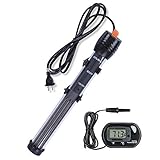
- Top Pick: HiTauing Aquarium Heater, 50W/100W/200W/300W/500W Submersible Fish Tank Heater with Over-Temperature Protection and Automatic Power-Off When Leaving Water for Saltwater and Freshwater
- Best Value: hygger Small Aquarium Betta Heater, Submersible Fish Tank Heater 10W/25W/50W/100W with LED Digital Display, Suitable for Marine Saltwater and Freshwater up to 5/10/16/26 Gallon
- Premium Choice: Orlushy Submersible Aquarium Heater,500W Fish Tahk Heater with Adjust Knob Thermostat 2 Suction Cups and Free Thermometer Suitable for Marine Saltwater and Freshwater (500W)
Most aquarium-heater problems start before the heater ever goes into the tank. Buyers often choose by price alone, buy wattage based on tank volume without considering room temperature, or assume a built-in thermostat eliminates the need for a separate thermometer. Others place a heater beside a strong filter outlet, set it to a number, and never check whether the opposite end of the aquarium reaches that temperature.
A good heater should quietly maintain a stable environment rather than chase dramatic temperature swings. For tropical freshwater tanks, that usually means holding roughly 74°F to 80°F; many marine and reef setups target about 76°F to 79°F. The right choice depends on tank size, the temperature difference between the water and the room, livestock needs, placement, and how much backup safety you want. In 2026, digital displays and automatic shutoff features are common, but the basics still matter more: appropriate wattage, dependable temperature control, safe construction, and verification with an independent thermometer.
As an Amazon Associate we earn from qualifying purchases at no extra cost to you.



Decide These 3 Things First
- Your actual water volume: Use the aquarium’s filled water volume, not just its advertised capacity. Gravel, rocks, driftwood, and equipment can reduce a nominal 20-gallon tank to 16 to 18 gallons of water.
- Your room’s coldest normal temperature: A 20-gallon aquarium in a 72°F room needs far less heating power than the same tank in a 60°F basement. Plan around the coldest conditions your aquarium experiences, not the warmest afternoon.
- Your target temperature and livestock: A betta tank at 78°F, a community tank at 76°F, and a discus aquarium at 82°F do not have identical heating demands. Check the preferred range for the fish, shrimp, corals, or plants you keep before selecting a model.
As a broad starting point, use 2.5 to 5 watts per gallon when the room is within about 10°F of the desired tank temperature. Move toward 5 watts per gallon, or use two heaters, when the room is 10°F to 15°F cooler than the tank. This is a sizing guide rather than a guarantee; water circulation, an open-top tank, and an uninsulated room can all increase demand.
Tank Size and Heater Wattage
Wattage is the first specification to compare, but bigger is not automatically better. An oversized heater can warm water quickly if its thermostat sticks or is poorly calibrated. A heater that is too small may run continuously and still fail to maintain temperature during a cold spell.
- 1 to 3 gallons: 10 to 15 watts, generally only for carefully monitored nano setups. Tiny tanks change temperature quickly.
- 3 to 5 gallons: 15 to 25 watts. A compact adjustable or preset heater is usually sufficient for a heated indoor room.
- 5 to 10 gallons: 25 to 50 watts.
- 10 to 20 gallons: 50 to 100 watts.
- 20 to 30 gallons: 100 to 150 watts.
- 30 to 50 gallons: 150 to 200 watts.
- 50 to 75 gallons: 200 to 300 watts.
- 75 to 125 gallons: 300 to 500 watts, preferably divided between two heaters.
For example, a 50-watt compact heater such as the hygger small aquarium line is more appropriate for a small tank than a 300-watt unit. At the other end, a 500-watt heater, including models like the Orlushy 500W, is intended for large-volume systems and should not be used in a 20-gallon aquarium simply because it is inexpensive.
For tanks above 55 gallons, consider two lower-wattage heaters rather than one large heater. A 75-gallon aquarium might use two 200-watt heaters instead of one 400-watt model. Put them at opposite ends of the tank or sump. This improves heat distribution and offers partial protection if one unit fails off.
Material and Water Compatibility
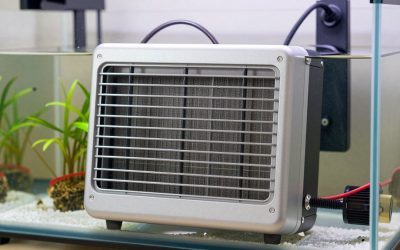
The heater tube material affects durability, placement options, and how easily you can inspect the unit. Most aquarium heaters use either glass, quartz glass, or a protective plastic or metal outer housing.
Standard glass is common in budget heaters. It is affordable and usually works well when fully submerged and protected from impact. However, glass can crack from a hard knock during cleaning, contact with heavy rockwork, or rapid temperature change. Never remove a hot glass heater and immediately rinse it under cold water.
Quartz glass is generally more resistant to heat stress than basic glass and is often used in mid-range and premium models. It remains breakable, but it is a sensible choice in tanks with active larger fish or busy maintenance routines.
Plastic guards and protective housings are useful for tanks with large cichlids, turtles, or fish that may contact equipment. A guard can also reduce direct contact with a hot tube. It should have broad openings so water can circulate freely; a tightly enclosed guard can trap heat and make cleaning harder.
For saltwater, confirm that the heater is specifically rated for marine use. Many submersible heaters are sold for both freshwater and saltwater, including the referenced HiTauing and Orlushy models, but saltwater accelerates corrosion on exposed metal components. Rinse the exterior with fresh water during maintenance and inspect suction cups, seals, and cord entry points regularly.
Construction and Safety Features
Look beyond the product photo. A well-designed heater should have a secure cord entry point, reliable mounting hardware, a clearly marked minimum water line, and controls that are easy to read without removing the unit.
Fully submersible heaters are the most flexible option. They can be installed horizontally, vertically, or at a slight angle, as long as the manufacturer permits that orientation. Horizontal placement low in the tank often helps keep the unit submerged during evaporation, but do not bury it in gravel or wedge it tightly behind decorations.
Useful safety features include:
- Over-temperature protection: Cuts power if the heater exceeds its intended operating temperature.
- Dry-run or out-of-water shutoff: Turns the unit off if the water level drops below the heater. This is especially valuable in open tanks and sumps.
- External temperature controller: A separate controller can provide another layer of control and is particularly worthwhile for tanks over 40 gallons or high-value livestock.
- Protective guard: Helps prevent contact damage and can protect fish from the heating element.
- Indicator light or digital display: Lets you see whether the unit is heating, though it does not replace a separate thermometer.
Do not treat any automatic shutoff feature as a substitute for routine checks. Keep the cord in a drip loop below the outlet, use a properly protected electrical circuit, and unplug the heater for water changes if the water level will fall below its minimum line. Wait at least 10 to 15 minutes after unplugging before removing a hot unit from the tank.
Temperature Accuracy and Everyday Performance
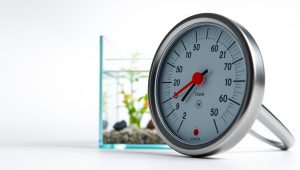
A heater’s dial setting is a target, not proof of the actual water temperature. Even a heater with a digital LED display can differ from conditions elsewhere in the aquarium. Buy an independent thermometer—digital probe, stick-on, or floating glass—and compare readings regularly.
For a 10-gallon tank, measure at the side opposite the heater. For tanks 30 gallons and larger, check at least two locations: one near the heater and one at the far end. A difference of more than 2°F suggests inadequate circulation, poor heater placement, or an undersized unit.
Place the heater where water moves past it steadily, usually near the filter intake or output. Avoid placing it directly in the strongest blast of water if the manufacturer warns against it, and avoid dead zones behind dense décor. In a long 48-inch aquarium, one heater at one end may create uneven temperatures; two smaller heaters or stronger circulation may be the better solution.
Adjustable heaters are preferable when you need a specific set point, such as 78°F. Preset heaters can be convenient for a 5-gallon betta tank but offer less flexibility. If a model has a dial labeled from 68°F to 94°F, make small changes—about 1°F to 2°F at a time—and allow 12 to 24 hours before evaluating the result.
Price Tiers and What You Get
Budget: $12 to $20. This range covers many 25- to 100-watt heaters, including basic adjustable and preset models. Expect a simple control dial, suction cups, and sometimes an included thermometer. The referenced hygger small heater at about $15 and the basic Orlushy adjustable heater at about $15 fit this category. These can be practical for smaller, low-risk tanks when paired with an independent thermometer.
Mid-range: $20 to $35. Here you may find stronger housings, digital displays, guards, higher wattage options, and dry-run protection. A roughly $30 HiTauing model with over-temperature and out-of-water power-off features is an example of the type of safety upgrade to look for. Mid-range is often the best value for 20- to 55-gallon freshwater aquariums.
Premium: $35 to $100 or more. Premium options may include external controllers, titanium heating elements, tighter set-point control, replaceable components, and better mounting systems. They are most compelling for large aquariums, marine systems, planted show tanks, or livestock that would be costly to replace.
A $20 heater can be perfectly adequate, but a $50 to $100 heating setup may be justified if it includes a separate controller and backup heater for a 75-gallon reef tank. Spend based on the consequences of a failure, not only the tank’s gallon rating.
Warranty, Returns, and Replacement Planning
Read the warranty terms before installation. Aquarium-heater warranties commonly range from 1 to 3 years, though coverage may apply only to the equipment itself and not to fish, plants, flooring, or other losses. Keep the receipt, packaging, and serial number until the warranty period ends.
Check the return window as well. Test a new heater in the aquarium with a separate thermometer during the first 48 to 72 hours, watching for stable temperatures and secure mounting. Do not wait until the return period is nearly over to discover that a dial is difficult to adjust or the heater is too long for your tank.
For larger setups, keep a spare heater on hand. A backup 100- or 150-watt unit costs far less than an emergency replacement trip or a sudden temperature drop during winter.
Delivery, Fit, and Installation
Before ordering, measure the usable interior height and width of the aquarium. A 100-watt heater may be around 8 to 10 inches long, while 300- to 500-watt models can measure 12 to 16 inches or more. In a short 10-gallon tank, a long heater may not fit safely below the water line.
Inspect the package immediately for cracked glass, loose end caps, damaged cords, or missing suction cups. During installation, allow the heater to sit submerged and unplugged for 15 to 30 minutes before turning it on. This lets the glass and internal components equalize with the water temperature.
Mount it where it will remain underwater during normal evaporation. Leave enough clearance to remove it for cleaning, and do not let it touch gravel, rocks, wood, or the aquarium wall. Replace hardened suction cups rather than trusting them to hold a heater indefinitely.
Spec Checklist
| Spec | Budget | Mid | Premium |
|---|---|---|---|
| Typical price | $12–$20 | $20–$35 | $35–$100+ |
| Common wattage range | 10W–100W | 50W–300W | 100W–500W+ |
| Temperature control | Preset or basic dial | Adjustable dial or LED display | Digital control and/or external controller |
| Safety features | Basic thermostat | Overheat or dry-run shutoff | Multiple protections and controller backup |
| Best for | 5–20 gallon tanks | 20–55 gallon tanks | Large, marine, or high-value systems |
| Recommended backup | Independent thermometer | Thermometer plus spare heater | Thermometer, spare heater, and controller |
Red Flags
- A heater rated for a very wide range, such as 5 to 100 gallons, without clear wattage guidance.
- No stated minimum water line or unclear instructions about submersion.
- A temperature dial with no degree markings and no separate thermometer included or recommended.
- Thin, stiff, cracked, or poorly fitting suction cups.
- Claims of exact temperature precision without explaining how temperature is measured.
- A heater that is too long to remain fully submerged in your aquarium.
- Using one large heater as the only heat source in a tank above 55 gallons.
- Relying on an indicator light instead of checking the actual water temperature.
FAQ
How many watts should an aquarium heater have per gallon?
Use roughly 2.5 to 5 watts per gallon as a starting point. Choose the lower end in a warm, climate-controlled room and the higher end when the room is 10°F to 15°F cooler than the aquarium’s target temperature. For tanks above 55 gallons, split the required wattage across two heaters.
Is it better to buy an adjustable or preset aquarium heater?
Adjustable heaters are better for most aquariums because they let you match the needs of specific fish and account for seasonal room-temperature changes. Preset heaters can work well in small tanks when their fixed temperature matches your livestock’s needs, but they provide less control.
Do I need a separate thermometer if my heater has a digital display?
Yes. The heater display may reflect the temperature near the unit rather than elsewhere in the aquarium. Use a separate thermometer at the opposite end of the tank and check it daily during the first week after installation or adjustment.
Where should an aquarium heater be placed?
Place it in an area with consistent water movement, often near a filter intake or output. Keep it fully submerged according to its instructions, away from gravel and decorations, and positioned so it will not be exposed when water evaporates. In long aquariums, use two heaters at opposite ends for more even coverage.
Ready to decide? Our #1 pick for 2026 is the Typical price.
Live price & availability on Amazon.
Related Reviews & Guides

Water Sprite Care: Plant It or Float It?
Best Plastic Fish Tank for Kids: Smart Family Selections