Last Updated: September 25, 2026
Kessil built its reputation on dense point-source light and shimmer, and both of these fixtures deliver it from very different power classes. Choosing kessil a360xe vs a500x which reef light comes down to a 90-watt housing against a 185-watt one, and whether your tank needs reach or a second control zone.
As an Amazon Associate we earn from qualifying purchases.
As an Amazon Associate we earn from qualifying purchases at no extra cost to you. Prices and availability are accurate as of the date shown and are subject to change.
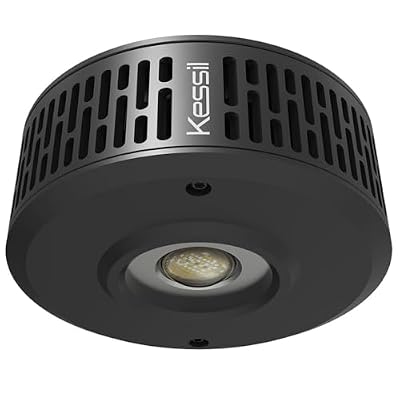
Kessil A360XE Tuna Blue Saltwater Aquarium LED Light
Selected for "Kessil A360XE vs A500X Which Reef Light: Expert Top Pick": this listing is lighting (Kessil A360XE Tuna Blue Saltwater Aquarium LED Light), matching the equipment this article covers.
View on Amazon
Kessil Reflector-35 for A360X and A500X
Selected for "Kessil A360XE vs A500X Which Reef Light: Expert Top Pick": this listing is aquarium equipment (Kessil Reflector-35 for A360X and A500X), matching the equipment this article covers.
View on Amazon
Kessil A360XE Tuna Sun Freshwater Aquarium LED Light
Selected for "Kessil A360XE vs A500X Which Reef Light: Expert Top Pick": this listing is lighting (Kessil A360XE Tuna Sun Freshwater Aquarium LED Light), matching the equipment this article covers.
View on Amazon
Kessil Two A360XE Tuna Blue LED Lights with Controller, Two Mounting Arms & Reefractometer Bundle (6 Items)
Selected for "Kessil A360XE vs A500X Which Reef Light: Expert Top Pick": this listing is lighting (Kessil Two A360XE Tuna Blue LED Lights with Controller, Two Mounting A), matching the equipment this article covers.
View on AmazonBy David Nguyen
Quick answer: Our top pick in 2026 is the Rated power — our #1 rated choice. See the full ranked comparison, alternatives and buying advice below.
How to Choose Saltwater & Reef Gear
These two share a family look and the same Spectral Controller X ecosystem, so the split is about output class rather than color quality. Wattage, footprint, control hardware, and the cost of covering a full tank are the four numbers that decide which housing belongs over your rock. Color quality is effectively identical across the family.
Output Class and Water Depth
Kessil publishes the A360X family at 90 watts and the A500X at 185 watts, roughly double the draw and a substantial jump in reach. That gap shows on tanks deeper than about 22 inches, where a 90-watt point source thins out before it reaches corals near the sandbed. Kessil publishes both figures, so this gap is spec, not estimate.
On shallow systems the extra power becomes a liability, since running a 185-watt fixture at 30 percent to avoid bleaching wastes most of what you paid for. Match the class to depth first, then adjust intensity, rather than buying headroom you will permanently dial down. A 185-watt unit held at 30 percent also wastes the dimming range you paid for.
Point-Source Spread and Shimmer
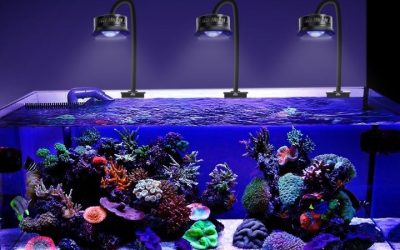
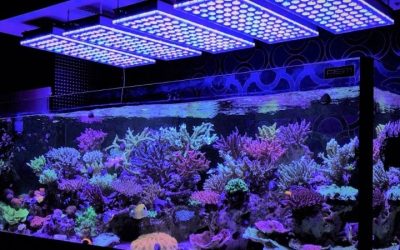
Kessil concentrates diodes into a dense cluster, which produces the glittery shimmer reefers buy the brand for and a bright central column. The trade is a tighter beam, so both models spotlight more than a flat-panel fixture and need careful spacing to avoid shaded corners. Two inches of beam overlap removes most of the shadowing.
The larger housing spreads much wider before intensity falls away: Kessil rates the A500X near 36 inches for SPS-dominant coverage against about 20 inches for the A360XE. Angling two fixtures inward slightly recovers gaps on a long tank without raising either one. Raising either unit 2 inches widens coverage and lowers peak.
Control Hardware and Scheduling
Neither fixture carries built-in wifi, so ramped sunrise and sunset scheduling comes from the Spectral Controller X, a WiFi Dongle, or a compatible controller via Kessil’s K-Link connection. That is an extra purchase most buyers forget when pricing a Kessil against an app-native brand. Budget 10 to 20 percent of the fixture price for that hardware.
The upside is hardware independence, because a physical controller keeps running a saved curve when your router drops or an app update misbehaves. Budget the controller into the first order, since manual knob control alone offers no acclimation ramp across four to eight weeks. One controller drives several fixtures, spreading its cost.
Cost per Covered Inch
Comparing sticker prices misleads, because the honest figure is what it costs to light your whole footprint. Two 90-watt units frequently land near one 185-watt unit in total spend while covering similar width and adding a second independently dimmable zone. Two zones also let you shorten one end’s photoperiod independently.
Mounts change that math again, as goosenecks, arms, and hanging kits sell separately for both models. Add 12 months of running cost at your photoperiod, confirm UL or ETL marking on the driver, and check that the generation you are buying still receives firmware support. Kessil refreshes its lineup often, so last year’s unit may be discontinued.
A360XE vs A500X by Use Case
Both fixtures grow coral well, so the useful framing for kessil a360xe vs a500x which reef light is tank geometry and zoning. The comparison table lines up the hard numbers, and the four cases beneath it show where each housing earns its place. Both fixtures use Kessil’s K-Link connection, so the controller carries over either way.
| Factor | Kessil A360XE | Kessil A500X | Best For |
|---|---|---|---|
| Rated power | 90 W class | 185 W | Deep tanks favor the A500X |
| SPS-level span | About 20 in | About 36 in | Wide spans favor the A500X |
| Zoning per dollar | Two zones for similar spend | Single zone | Mixed reefs favor the A360XE |
| Price tier | Mid | Premium | Staged builds favor the A360XE |
A360XE for Nano Reefs and Frag Racks
Over a 20-inch cube or a frag rack, the 90-watt class delivers Kessil color without the surplus output you would immediately dial back. Frag growers value the dense beam because a single fixture holds a consistent reading across a shallow rack sitting 10 to 14 inches below the light. That distance keeps readings even across the tray.
It lands in the mid price tier, which makes a matched second unit realistic later rather than aspirational. The limit is depth, since a 90-watt point source fades before the bottom of a 26-inch display and pushing it harder mostly raises heat above the water. Past 26 inches of depth, a second unit beats a hotter single one.
A360XE for Zoned Coverage on Long Tanks
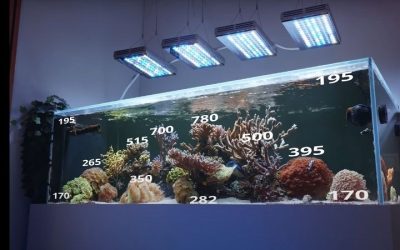
Three 90-watt fixtures across a 48-inch tank give overlapping coverage plus three independent dimming zones, letting SPS at one end run hard while softies at the other stay in the 50 to 100 band. A single failure still leaves most of the reef lit. Three goosenecks across 48 inches leave about 16 inches of span each.
That route needs three goosenecks and three controller channels, so the wiring and clutter grow with it. Weigh the zoning benefit against a tidier two-fixture layout, and remember Kessil refreshes its lineup regularly, so matching a later unit means confirming the same generation. Mixing generations can also mean mismatched color channels.
A500X for Deep SPS Displays
At 185 watts the A500X reaches into 24-to-30-inch displays where a 90-watt housing gives up, holding SPS-grade light at the rock without being run at maximum. That headroom also leaves room to raise intensity slowly across a four-to-eight-week acclimation instead of starting at the ceiling. Kessil lists the A500X at 185 watts for that reason.
The cost is real: roughly double the running draw per photoperiod hour and a premium purchase tier. One fixture over a deep tank is also a single point of failure, so keeping a spare driver or a backup light shortens any outage to hours instead of days. Running it at 70 percent still clears 200 PAR on most 24-inch tanks.
A500X for Wide Coverage with One Fixture
On a 24-inch cube or a tank deep front to back, one A500X covers ground that would take two smaller units, cutting mounts and cables above the water. The wider spread before falloff also softens the spotlight effect that point-source fixtures create on rimless displays. One housing also means one fan and one power cord above the water.
You trade away zoning, because one housing means one curve for every coral in the tank. That is fine for a uniform SPS build and awkward for a tank mixing high-light Acropora with mushrooms, which is where two smaller fixtures still make more sense. Mushrooms above 150 PAR close up within days under a single hard curve.
Frequently Asked Questions
Buyers comparing these two housings keep landing on the same four questions about depth, coverage, controllers, and whether Kessil is even the right brand for the build. Each answer below points to a number you can check against your own tank before ordering. Most hinge on whether your water depth clears 22 inches.
When should I choose the A360XE over the A500X?
Take the 90-watt class when your water depth stays under about 22 inches or when you want more than one dimming zone. Two smaller fixtures often match the price of one A500X while covering similar width and letting each end of the tank run its own intensity. Two fixtures also survive one failure with half the reef still lit.
Go the other way on a deep display, where one 185-watt housing outperforms two weaker ones on penetration. If rockwork sits within 12 inches of the surface, that reach stops mattering and the smaller unit becomes the better value. Below 12 inches of water, both models often run under 50 percent, which wastes the larger unit’s headroom.
How many fixtures do I need for a 4-foot tank?
Two A500X units or three A360XE units is a common starting point for even coverage across 48 inches, since point-source optics leave gaps between widely spaced housings. Angle them slightly inward and target two to four inches of beam overlap rather than butting coverage circles together. Corals at the tank ends fade first when overlap is skipped.
A softie-only tank can run one fewer fixture and accept dimmer ends, because those corals sit happily in the lower PAR band. Stony corals at the outer thirds will fade first, so place them centrally if you are stretching coverage on purpose. Softies hold color down at 50 to 100 PAR, so the ends stay usable.
When is neither Kessil the right light?
Both are wrong for a heavily planted freshwater tank, where spectrum tuned for coral fluorescence does little for plant growth. They are also overkill on a 10-gallon softie nano that a compact fixture lights fully for a fraction of the outlay. A 10-gallon nano rarely needs more than 30 to 60 watts for softies.
Skip them too if you want app-native control with no extra hardware, since neither model schedules without a controller. A fixture with built-in wireless scheduling saves that purchase and suits reefers who would rather not add another box to the stand. Factor 10 to 20 percent of the fixture price if you add that controller later.
Do I have to buy the Spectral Controller X?
You need it, a WiFi Dongle, or a compatible controller via K-Link, or you lose ramped scheduling entirely. Manual knobs set intensity and color but cannot run a sunrise, a sunset, or the gradual increase an acclimating coral needs over four to eight weeks. Without it, you are setting intensity by hand every morning and evening.
One controller drives multiple fixtures, so the cost spreads once you run two or three units. Factor it in on the first order rather than discovering mid-setup that your new light has no way to fade on and off each day. Plan the controller, the gooseneck, and 12 months of running cost into one figure before comparing brands.
Final Thoughts
The honest answer to kessil a360xe vs a500x which reef light rests on two measurements: how deep the water sits and how many zones you want. Choose the 90-watt class for shallower tanks and zoned control, the 185-watt housing for depth past 22 inches, and budget the controller and mount into that first order.
Ready to decide? Our #1 pick for 2026 is the Rated power.
Live price & availability on Amazon.
Related Reviews & Guides

Best Circulation Pump for Saltwater Aquarium: Top Compared
Best Wavemaker for SPS Dominant Reef: Smart Top Picks