Last Updated: October 4, 2026
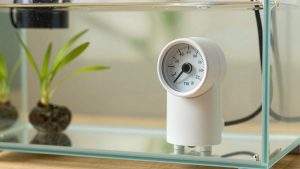
Quick answer: Our top pick in 2026 is the Separate aquarium thermometer — our #1 rated choice. See the full ranked comparison, alternatives and buying advice below.
The Short Answer
Yes—an aquarium heater controller is worth it if a temperature swing or failed heater could seriously harm your fish, shrimp, coral, or plants. The one condition is that you must use it with a properly sized heater and place the probe where it can accurately read the tank water.
A controller is not a magic upgrade that makes every aquarium safer. It is a separate thermostat that monitors water temperature and switches a heater on or off. That extra layer can help prevent two common problems: a heater that stops warming the tank and a heater that gets stuck on. For many freshwater community tanks, a basic adjustable heater may be enough. For expensive, heavily stocked, small, or temperature-sensitive aquariums, a controller is inexpensive insurance.
As an Amazon Associate we earn from qualifying purchases at no extra cost to you.

What You Actually Get
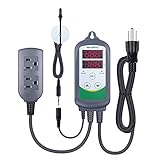
An aquarium heater controller usually includes a control unit, a temperature probe, and one or more power outlets. You plug the aquarium heater into the controller, place the probe in the tank, and set a target temperature. The controller then supplies power when the water drops below the set point and cuts power when it reaches it.
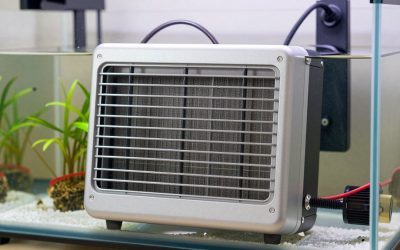
Some models control heating only. Others include separate heating and cooling outlets, allowing you to connect a heater and a cooling fan. The Inkbird Aquarium Heater with Probe Thermostat, for example, is listed at about $35 and is designed for aquarium temperature control, including day-and-night settings on supported versions. The Inkbird ITC308S, listed at about $35, includes a submersible probe and separate heating and cooling control for a heater and cooling fans.
In practical terms, the controller does three things your heater’s built-in thermostat may not do as well:
- Provides a second temperature cutoff: If the heater thermostat fails in the “on” position, the controller can stop supplying power once the tank reaches its high-temperature limit.
- Shows the actual temperature: The display is generally easier to monitor than a small mark on a heater dial.
- Adds alarms and settings: Many controllers alert you when the water is too hot, too cold, or outside a selected range.
It does not replace a heater. You still need a heater with an appropriate wattage for the aquarium. A commonly used starting point is roughly 3 to 5 watts per gallon, but room temperature, tank cover, water movement, and the desired temperature all matter. A 100-watt heater may suit many 20- to 30-gallon setups, while a 200-watt heater may be more appropriate for a larger tank or a cool room. Always follow the heater maker’s sizing guidance rather than relying on wattage alone.
Pros
- Extra protection against overheating: The most compelling benefit is a second control point. If the heater’s internal thermostat sticks, the external controller can interrupt power.
- Better visibility: A digital readout makes it easier to notice a gradual temperature change. This is particularly useful in a room that becomes much colder overnight or warmer in summer.
- Useful for sensitive livestock: Discus, many shrimp, reef inhabitants, breeding fish, and some tropical species can be less forgiving of temperature changes than ordinary community fish.
- Helpful for small aquariums: A small tank can change temperature quickly because it contains less water. A controller does not eliminate that risk, but it gives you more precise oversight.
- Heating and cooling options: A model with separate outlets can run a heater in winter and a fan in warmer weather. That is more flexible than a heating-only thermostat.
- Usually affordable: At roughly $30 to $50 for many consumer models, a controller costs far less than replacing a mature aquarium, valuable livestock, or a reef setup. The Inkbird options around $35 and under $40 sit in the lower-to-midrange price category.
- Potentially steadier temperatures: The controller can be set to a narrower operating range than a basic heater dial, although real-world stability still depends on heater size, water circulation, and room conditions.
Cons
- Another device can fail: A controller is not automatically more reliable simply because it is separate. Its probe, relay, display, or power cord could fail, so you still need to check the aquarium.
- Incorrect probe placement causes bad decisions: If the probe sits directly beside the heater, it may read warmer than the rest of the tank and shut the heater off too soon. Place it in a well-circulated area, away from the heater and filter return.
- Installation adds clutter: You have another box, cable, outlet, and mounting decision. In a small cabinet, that can make cable management harder.
- Not a substitute for maintenance: You should still use a separate glass or digital thermometer to verify the reading. Check the heater, probe, and temperature at least weekly.
- Some heaters and loads need careful matching: Confirm the controller’s maximum supported wattage and outlet type before connecting a heater, fan, or chiller. Do not exceed its rating, and avoid using damaged cords or overloaded power strips.
- Possible temperature overshoot: A heater continues releasing heat briefly after power is cut. If the probe is poorly placed or water circulation is weak, the aquarium may rise above the controller’s set point.
- Extra cost for a simple setup: If your tank has inexpensive, hardy fish and already maintains a stable room temperature, a good heater plus a thermometer may provide enough protection.
Who Should Buy It
Buy a heater controller if your aquarium contains livestock that is expensive, difficult to replace, or particularly sensitive to temperature. It is also a sensible purchase for reef tanks, breeding projects, shrimp colonies, hospital tanks, and aquariums located in garages, basements, offices, or rooms with large day-to-night temperature changes.
It makes especially good sense when the heater is powerful relative to the tank. A stuck-on 200-watt heater can raise the temperature of a small aquarium much faster than a low-wattage model. In that situation, the controller provides a valuable emergency cutoff.
It is also worthwhile if you travel, sleep away from home often, or simply want a visible temperature alarm. A controller cannot respond to every aquarium emergency, but it can reduce the consequences of one common electrical failure. For a purchase around $35, that reassurance may be reasonable protection for a tank worth hundreds of dollars.
Who Should Skip It
Skip it if you have a stable room-temperature aquarium, a correctly sized quality heater, hardy livestock, and a reliable habit of checking the temperature. A controller is less essential for a basic tank where a heater failure would be inconvenient but unlikely to create a major loss.
You may also want to wait if the aquarium still lacks fundamental equipment. Buy a properly sized heater, a thermometer, a reliable filter, and a ground-fault circuit interrupter, commonly called a GFCI, before adding an advanced controller. Electrical safety and correct equipment sizing matter more than a digital display.
Cheaper Alternatives
| Option | Cost | Trade-off |
|---|---|---|
| Separate aquarium thermometer | $5–$20 | Shows temperature but cannot shut off a failed heater or provide an alarm. |
| Quality adjustable aquarium heater with built-in thermostat | $20–$45 | Lower cost and less clutter, but it has only one thermostat and less visible control. |
| Two modest heaters instead of one large heater | $35–$80 total | Can provide backup heating, but it does not reliably prevent both heaters from staying on if thermostats fail. |
| Basic plug-in temperature controller | $20–$35 | May offer external control at a lower price, but often has fewer alarms, less flexible programming, or heating-only operation. |
| Inkbird aquarium controller | under $40–under $40 | More expensive than a thermometer, but adds external switching, a probe, and—on the ITC308S—heating and cooling outlets. |
FAQ
Can an aquarium heater controller prevent a tank from overheating?
It can reduce the risk, but it cannot guarantee prevention. The controller should cut power when its probe detects the high-temperature limit. For that protection to work, the probe must be functioning, correctly positioned, and connected, and the controller must be rated for the heater’s electrical load. Keep a separate thermometer in the tank so you can catch a controller reading that seems wrong.
What temperature should I set the controller to?
Use the temperature appropriate for your species rather than choosing a universal number. Many tropical freshwater aquariums are kept somewhere around 75–80°F, but individual fish, shrimp, plants, and reef animals have different requirements. Set the controller’s normal target close to the recommended temperature and use its high-temperature alarm or cutoff only slightly above that target. Avoid making large changes quickly.
Should the heater’s thermostat and controller use the same setting?
They should work together, but they do not need to be identical. A common approach is to set the heater’s built-in thermostat slightly above the controller’s target so the external controller does most of the switching. However, follow the equipment instructions, and do not set the heater so high that a controller failure could expose livestock to dangerous heat.
Is an aquarium heater controller worth it for a 10-gallon tank?
Often, yes. Ten gallons of water can change temperature faster than a large aquarium, especially in a cold room. A controller is most useful when the tank houses shrimp, valuable fish, or a relatively high-wattage heater. For a simple 10-gallon tank with hardy fish in a stable room, a correctly sized heater and an accurate thermometer may be sufficient. In 2026, the decision still comes down to the value of the livestock and the consequences of a heater failure, not tank size alone.
Ready to decide? Our #1 pick for 2026 is the Separate aquarium thermometer.
Live price & availability on Amazon.
Related Reviews & Guides

6 Best Hows To Use An Aquarium Siphon 2026

Best Above Ground Koi Pond With Viewing Window: Top Compared