Last Updated: September 25, 2026
How to reduce aquarium filter flow has a safe answer and a damaging one, and the difference comes down to whether you slow the water leaving the filter or the water passing through the media. This guide sets a turnover target first, then works through the methods in order, from free adjustments to hardware changes.
As an Amazon Associate we earn from qualifying purchases.
As an Amazon Associate we earn from qualifying purchases at no extra cost to you. Prices and availability are accurate as of the date shown and are subject to change.

Aquarium Filter Baffle with Suction Cups, Fish Tank Flow Controller
Selected for "How to Reduce Aquarium Filter Flow: 7 Methods That Work": this listing is filtration (Aquarium Filter Baffle with Suction Cups, Fish Tank Flow Controller), matching the equipment this article covers.
View on Amazon
AQUANEAT 12-Pack Replacement Ammonia Reducer Pads Compatible with Aqueon QuietFlow 20 and 75 LED PRO Aquarium Power Filter
Selected for "How to Reduce Aquarium Filter Flow: 7 Methods That Work": this listing is filtration (AQUANEAT 12-Pack Replacement Ammonia Reducer Pads Compatible with Aque), matching the equipment this article covers.
View on Amazon
KCMOSGI Aquarium Filter Baffle with Suction Cups, Aquarium Filter Flow Reducer, Water Calmer and Flow Reducer for Betta Fish & Shrimp
Selected for "How to Reduce Aquarium Filter Flow: 7 Methods That Work": this listing is filtration (KCMOSGI Aquarium Filter Baffle with Suction Cups, Aquarium Filter Flow), matching the equipment this article covers.
View on Amazon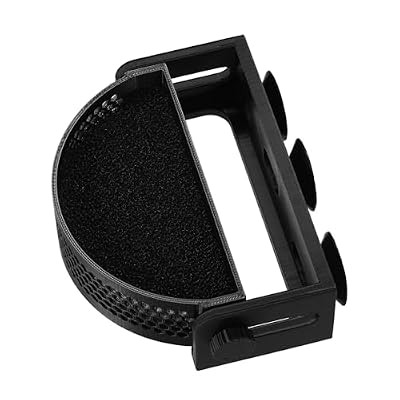
Aquarium Filter Baffle with Suction Cups, Fish Tank Water Flow Controller
Selected for "How to Reduce Aquarium Filter Flow: 7 Methods That Work": this listing is filtration (Aquarium Filter Baffle with Suction Cups, Fish Tank Water Flow Control), matching the equipment this article covers.
View on AmazonBy David Nguyen
Quick answer: Our top pick in 2026 is the Fish held against décor — our #1 rated choice. See the full ranked comparison, alternatives and buying advice below.
Set a Turnover Target Before You Change Anything
Any answer to how to reduce aquarium filter flow needs a destination, otherwise you end up adjusting until the tank looks calm and discovering months later that waste is accumulating. Work out the turnover your stocking actually needs, then reduce towards that figure rather than towards a feeling.
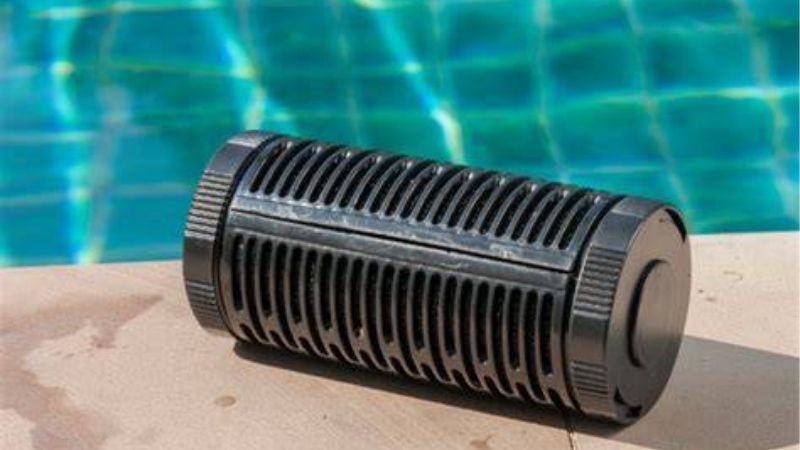
The decisive numbers: turnover against real water volume
A general community tank wants 4–6 times its real water volume per hour. Goldfish and cichlid tanks want 8–10 times because of bioload, while low-stocked shrimp and betta tanks are comfortable nearer 3–4 times, provided surface agitation is still strong enough to keep gas exchange going properly.
Use real volume, not the label. A 20 gallon (76 L) tank holds roughly 17–18 gallons (64–68 L) once substrate and hardscape are in place, and a filter rated 200 GPH (757 LPH) delivers perhaps 120–140 GPH (454–530 LPH) in service after media, hose length and head height take their share.
Matching the method to the filter you own
Hang-on-back units respond best to outflow baffles and to lowering the unit slightly on its brackets. Canisters respond to spray bars, return direction and, within manufacturer limits, a valve on the return side. Internal and sponge filters respond mainly to air pump control and outlet position.
Powerheads and wave makers are a separate case, since many have adjustable nozzles or controllers built in. Where they do not, redirecting the nozzle towards the back glass or upward at the surface achieves most of what a controller would, without adding another powered device to the tank.
When reducing the flow is the wrong answer entirely
Take four readings before modifying anything: ammonia, nitrite, nitrate and temperature. Ammonia and nitrite belong at 0 ppm, nitrate below 20–40 ppm, and temperature within the range your species needs. Fish at the surface with strong current usually indicates oxygen or heat, not excess flow.
Note light hours and how much food goes in each day as well. Both alter behaviour on their own, and a tank that is overfed or lit for ten hours produces detritus that settles wherever current is weakest, which is precisely what you create when you reduce circulation too aggressively.
| Symptom | Reading alongside it | Most likely cause | First action |
|---|---|---|---|
| Fish held against décor | Turnover above 10 times volume | Outflow velocity too high | Aim the return at the back glass |
| Substrate blown into drifts | Outflow aimed downward | Jet direction, not total flow | Angle the return upward or sideways |
| Debris settling in corners | Turnover under 3 times volume | Flow already reduced too far | Restore circulation, rinse media |
| Fish gasping at the surface | Above 82 °F (28 °C) | Oxygen, not current | Cool the tank, increase agitation |
| Nitrate rising between changes | Ammonia 0 ppm, flow low | Waste not reaching the filter | Raise flow, review feeding rate |
The Methods, Ordered From Safest to Most Invasive
Every practical answer to how to reduce aquarium filter flow falls into one of three groups: change where the water goes, spread it over a wider area, or change the hardware. Work through them in that order, because the first two are free, reversible and carry no risk to the biofilter.
Methods one and two: aim the outflow and fit a spray bar
Most questions about how to reduce aquarium filter flow are answered here. Turning a hang-on-back outflow towards the back glass, or angling a canister return into a rear corner, converts a directed jet into general circulation. It costs nothing and is enough on its own for most betta and shrimp tanks.
A spray bar spreads the same volume across its full length, dropping exit velocity sharply. Aim it along the back wall or slightly upward so the surface still ripples, and drill extra holes if the stream remains firm. Turnover through the media is unchanged, so filtration is untouched.
Methods three to five: baffles, pre-filter sponges and air control
A baffle catches falling water from a hang-on-back and spreads it sideways. A cut plastic bottle works as well as a purpose-made part, and both are fully reversible. This is the standard fix wherever the outflow drops from a height and drives a circular current around a small tank.
A pre-filter sponge on the intake lowers velocity at both ends and protects shrimp and fry, though it clogs quickly and needs rinsing in used tank water every one to two weeks. On sponge and internal filters, reducing air pump output or fitting an air valve gives fine control over lift.
Methods six and seven: sizing, placement and physical fit
Where flow is persistently wrong, a differently sized unit or a second smaller filter split across the tank is a legitimate answer. Two modest filters at opposite ends give the same turnover with far gentler local velocity, and they also give redundancy if one unit stops overnight.
Fit governs what is possible. Hang-on-back units need 4–6 inches (10–15 cm) behind the tank, canisters need cabinet height plus a hose bend radius, and a full tank runs near 10 lb per gallon (about 1 kg per L). Measure the gap behind the tank and the cabinet height with a tape before ordering.
What Never to Do to Slow the Water Down
Three shortcuts turn up constantly in threads about how to reduce aquarium filter flow, and all three of them quietly reduce filtration rather than water velocity. Each one trades a visible problem in the tank for an invisible one inside the filter body, where the nitrifying colony lives.
Never clamp or restrict the intake side
Restricting the intake starves the impeller, causes cavitation and heats the motor. Manufacturers who permit any throttling almost always specify the return side only, and within a stated range, so read the manual rather than pinching a hose because it looks like the obvious control.
A restricted intake also leaves waste sitting upstream of the mechanical stage, where it breaks down without ever being removed. That shows up as nitrate climbing between water changes at an unchanged feeding rate, which is the opposite of what a filter modification is meant to achieve.
Never strip out biological media to reduce resistance
Removing ceramic rings or sponge does lower resistance and does lower flow, and it also removes the colony holding ammonia at zero. Readings usually confirm the mistake within three or four days, and the tank then needs weeks of light feeding and testing to recover its stability.
If internal resistance genuinely needs lowering, change fine floss more often instead. Loose media in a basket makes this easy, whereas a proprietary cartridge design forces you to discard colonised surface area every time it is replaced, which is why cartridge filters cost more to run.
Never use a timer to switch the filter off at night
A filter switched off for hours starves its bacteria of oxygen, and the colony shrinks to match the worst conditions it regularly experiences. The tank then holds a permanently weaker biofilter that copes badly with any extra stocking, heavier feeding or a warm spell in midsummer.
It also releases a slug of accumulated waste each morning when flow resumes. If the tank genuinely needs calm water overnight, achieve it with planting, hardscape and outflow direction rather than with a socket timer that interrupts the entire biological process every single evening.
Keeping the New Flow Rate Stable Over Time
Flow is not a setting you make once. Any plan for how to reduce aquarium filter flow has to account for media packing, sponges loading and impellers wearing, all of which reduce output steadily, so a tank tuned to feel gentle in spring can be under-filtered by autumn without warning.
A maintenance schedule that holds turnover steady
Rinse mechanical media in used tank water every 2–4 weeks, rinse pre-filter sponges every one to two weeks, and service the impeller and hoses every three months. Leave biological media alone except for a gentle swish in tank water roughly twice a year when it is visibly clogged.
Write down what normal looks like immediately after a clean, such as the width of the outflow or how far a plant leaf moves. That reference makes drift obvious, and it prevents the common mistake of adding a second filter to solve what turned out to be only a packed mechanical sponge.
Parts that change the flow rate as they age
Impeller shafts wear at the tip and magnets lose their coating, both cutting output before failing outright. Canister hoses grow a biofilm that narrows the bore within a year, and a hardened lid gasket lets air in, producing noise and a unit that will not re-prime after a power cut.
Accessories age too. Spray bars and baffles clog with algae and calcium scale, especially in hard water areas, and a spray bar with half its holes blocked concentrates the jet all over again. Clean them on the same schedule as the rest of the flow path rather than treating them as fixtures.
Early warning signs and the twelve month running cost
Three signals matter: detritus collecting in corners that used to stay clean, nitrate creeping upward between water changes, and any new noise from the motor. The first two mean flow has drifted below target, and the third usually means the impeller assembly needs inspecting soon.
Budget for the consumables instead of the headline price: pre-filter sponges, floss, a spare impeller and an in-date test kit. Summer is when a throttled filter bites hardest, because warm water holds less dissolved oxygen and a tank that coped in winter can leave fish at the surface.
Frequently Asked Questions
These questions tend to come up once people stop treating flow as a single dial and start matching it to species and volume, since the right answer to how to reduce aquarium filter flow in a quiet betta tank is very different from the right answer for a heavily stocked goldfish setup.
Will a spray bar reduce my filtration?
No. A spray bar changes where the water goes and how fast it leaves, not how much passes through the media, so contact time and biological capacity stay exactly as they always were. That is precisely why it is the first method worth trying before anything more invasive is considered.
Can I put a valve on my canister filter?
Only on the return side, and only if the manufacturer permits it within a stated range. Never fit one on the intake, since starving the impeller causes cavitation, heat and premature wear, and it also leaves waste sitting in the intake hose instead of reaching the mechanical media.
How slow is too slow for a planted tank?
Below roughly 3 times turnover, dead spots begin to form and detritus starts settling among the plants. Watch for debris collecting in corners that previously stayed clear, which is a far more reliable signal than any single number, given how much the layout itself affects circulation.
Is two small filters better than one large one?
Often yes, for exactly this problem. Splitting the same total turnover across two units at opposite ends of the tank gives gentler local velocity, better coverage and redundancy if one of them stops, though it does mean buying two sets of consumables and servicing two impellers every year.
See More:
Conclusion
The safe approach to how to reduce aquarium filter flow is to change direction first, spread the water second, and only then look at hardware. Set a turnover target from your stocking level, keep the media and the intake untouched, and then re-check the tank after every change you make.
Ready to decide? Our #1 pick for 2026 is the Fish held against décor.
Live price & availability on Amazon.
Related Reviews & Guides

11 Best Aquarium Glass Cleaners: Magnetic Scrapers and Algae Removal Tools
Best Vertical In Tank Pump For Aquaculture: Best Expert