Last Updated: September 25, 2026
How often to clean aquarium filter is a question the calendar alone cannot answer, because media type, stocking level and measured flow loss set the real interval. This guide gives working schedules for sponge, hang-on-back and canister units, the readings to take before you open anything, and the cleaning habits that quietly restart a cycled tank.
As an Amazon Associate we earn from qualifying purchases.
As an Amazon Associate we earn from qualifying purchases at no extra cost to you. Prices and availability are accurate as of the date shown and are subject to change.

Tetra Whisper Bio-Bag Large Filter Cartridges for Aquariums, 3 Count
Selected for "How Often to Clean Aquarium Filter: Full Schedule by Type": this listing is filtration (Tetra Whisper Bio-Bag Large Filter Cartridges for Aquariums, 3 Count), matching the equipment this article covers.
View on Amazon
Tetra Whisper Bio-Bag Medium Filter Cartridges for Aquariums, 3 Count
Selected for "How Often to Clean Aquarium Filter: Full Schedule by Type": this listing is filtration (Tetra Whisper Bio-Bag Medium Filter Cartridges for Aquariums, 3 Count), matching the equipment this article covers.
View on Amazon
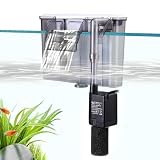
Tetra Whisper IQ 130 GPH Power Filter for Aquariums
Selected for "How Often to Clean Aquarium Filter: Full Schedule by Type": this listing is filtration (Tetra Whisper IQ 130 GPH Power Filter for Aquariums), matching the equipment this article covers.
View on Amazon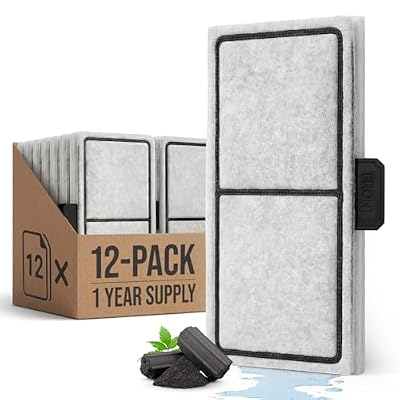
12-Pack EF-S Replacement Filter Cartridges for BF5 BettaFlo Aquarium, Professional Triple Filtration to Keep Water Crystal Clear & Fish Healthy, High-Density Activated Carbon Refills for Fish Tank
Selected for "How Often to Clean Aquarium Filter: Full Schedule by Type": this listing is filtration (12-Pack EF-S Replacement Filter Cartridges for BF5 BettaFlo Aquarium, ), matching the equipment this article covers.
View on AmazonBy David Nguyen
Measure First: Readings to Take Before You Open the Filter
A clogged filter and a failing biofilter look identical from outside the glass. Before deciding how often to clean aquarium filter media in your own setup, take a short set of readings, so you are treating a measured problem rather than a guess about what the sponge looks like inside.
The decisive numbers to record before any cleaning
How often to clean aquarium filter media is decided by four water readings: ammonia, nitrite, nitrate and temperature. Ammonia and nitrite should both sit at 0 ppm, nitrate below 20–40 ppm depending on stocking, and temperature inside your species range. Anything above 0.25 ppm ammonia changes the plan.
Two husbandry numbers matter just as much: hours of light per day and how much food goes in daily. A tank lit 10 hours and fed three times loads media far faster than the same tank lit 7 hours and fed once, and that gap alone can halve the interval between mechanical rinses on identical hardware.
Reading flow loss: the 30 to 50 percent gap that triggers service
A unit rated 200 GPH (757 LPH) is quoting a no-load figure. With media, hosing and head height it realistically delivers 120–140 GPH (454–530 LPH) when clean, and that clean-state output is your baseline. Everything below it is measurable debris loading rather than a fault in the pump itself.
Turnover sets the target. A general community tank wants 4–6 times the real water volume per hour, while goldfish and cichlid tanks want 8–10 times because of bioload. A 20 gallon (76 L) tank holds only about 17–18 gallons (64–68 L) once substrate and hardscape are in, so size turnover against that real figure.
When slow flow is not a dirty filter at all
Air trapped in a canister, a slipped impeller shaft, a cracked intake seal or a water level below the intake all cut flow with no debris involved. Cleaning media in those cases discards bacteria and fixes nothing, which is exactly why the readings always come before the rinse bucket does.
If ammonia or nitrite reads above zero while flow looks normal, the biofilter is the problem rather than the sponge. That points to recent media replacement, a medication dose, or a power interruption long enough to starve the colony of oxygen. Resolve that before scheduling more cleaning.
| Symptom | Reading alongside it | Most likely cause | First action |
|---|---|---|---|
| Outflow visibly weaker | Ammonia 0 ppm, nitrite 0 ppm | Mechanical media packed | Rinse floss or sponge in used tank water |
| Flow normal, fish at surface | Above 82 °F (28 °C) | Low dissolved oxygen, not filtration | Raise surface agitation, cool the tank |
| Flow stopped completely | Water level below intake | Evaporation or lost prime | Top off, re-prime, check intake seal |
| Cloudy water after service | Ammonia 0.25 ppm or higher | Too much media replaced at once | Pause feeding, small water change, wait |
| Grinding or rattling noise | Flow slightly below baseline | Debris or wear in impeller well | Remove impeller, clean well, inspect shaft |
The Cleaning Sequence, in the Right Order
Order matters more than frequency. Working from the dirtiest, most replaceable layer toward the colonised biological layer keeps the cycle intact, and it usually means the deeper service steps in how often to clean aquarium filter hardware come round far less often than beginners expect.
Step one: rinse mechanical media in used tank water
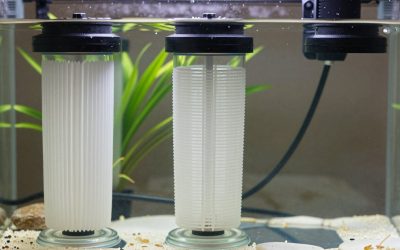
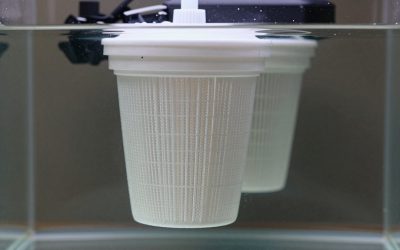
Siphon a bucket of tank water first, then squeeze or swish the sponge and floss in that water until the heavy silt releases. Never aim for spotless. On an average community tank this lands every 2–4 weeks; on a goldfish tank it can be weekly, driven by visible flow loss rather than a date.
Biological media stays in the filter during this step. Ceramic rings, sintered blocks and matrix-style media carry the nitrifying colony, and they only need a gentle swish in tank water when visibly clogged with sludge, typically once every 3–6 months at most in a normally stocked freshwater tank.
Step two: service the impeller, hoses and intake every three months
Pull the impeller, wipe the well with a soft brush and check the ceramic shaft for grooves or a chipped tip. Grit in this assembly is the single most common source of rattling, and of a slow decline in output that no amount of media rinsing will ever fix, because that loss is mechanical, not biological.
Canister hoses collect a biofilm that narrows the bore, so a flexible brush run through both lines every three months restores real flow. Check the lid gasket at the same time, since a hardened seal is the usual reason a canister fails to re-prime after an outage or a maintenance strip-down.
Step three: tank size, placement and physical fit around the filter
Hang-on-back units need 4–6 inches (10–15 cm) of clearance behind the tank, and a thick rim or tight hood can stop them seating. Canisters need cabinet height for the body plus a hose bend radius, and they must sit below the water line to prime reliably when the power comes back on.
Weight decides the rest: a full tank runs near 10 lb per gallon (about 1 kg per L), so a 55 gallon (208 L) setup passes 600 lb (272 kg). Measure the gap behind the tank and the cabinet height with a tape before ordering, and expect faster media loading once spring daylight reaches the glass.
What Never to Do When Cleaning a Filter
Most cycle crashes blamed on bad luck trace back to three specific habits. Getting how often to clean aquarium filter media right is only half the job, because the method you use decides whether the bacterial colony survives the process or has to rebuild itself again from scratch over several weeks.
Never rinse biological media under the tap
Municipal water carries chlorine or chloramine specifically to kill bacteria, and it does exactly that to a nitrifying colony. A ten second rinse under a running tap can remove enough biomass to push ammonia above 0.25 ppm within days, particularly in tanks under 20 gallons (76 L).
Chloramine is the harder case. Not every dechlorinator breaks the ammonia-chlorine bond unless the label states it, and boiling does not remove chloramine either. If your water utility has switched disinfectant, that change reaches your filter through every rinse and every water change.
Never replace every layer of media in one session
Proprietary cartridges push people into this mistake, because the whole assembly is designed to be binned monthly. Discarding the cartridge discards the colony with it, and that is the usual cause of a mini-cycle appearing in a tank that has run stably for a year or more without any other change.
Stagger the work instead. Replace floss when it falls apart, keep sponge until it no longer springs back, and leave biological media alone for years unless it is crumbling. Where a filter forces a single-cartridge design, cut the carbon pouch out and keep the colonised frame in place.
Never stack a filter clean on a deep substrate clean
Substrate holds a meaningful share of the tank’s bacteria. Running a heavy gravel vacuum and a full filter service in one afternoon removes two colonies at once, and the tank often answers with cloudy water and a measurable ammonia reading two or three days later, long after the work looks finished.
Separate the jobs by at least a week, and avoid pairing either with an oversized water change. Keep changes in the usual 20–30 percent band, with replacement water within 1–2 °F (about 1 °C) of tank temperature so bacteria are not hit by a thermal swing on top of the loss of biomass.
Preventing Repeat Clogs and Long-Term Flow Loss
A filter runs 24 hours a day for years, so the real question is what it looks like at month twelve. Setting how often to clean aquarium filter components should follow component wear and consumable life, not simply the amount of visible dirt trapped in the sponge at any given moment.
A maintenance calendar tied to media life
A workable baseline for a moderately stocked tank: rinse mechanical media every 2–4 weeks, service the impeller and hoses every 3 months, swish biological media every 6 months, and inspect gaskets twice a year. Adjust upward for heavy feeders and downward for lightly stocked planted tanks.
Activated carbon is the exception, because it saturates rather than clogs. It is largely exhausted after 3–4 weeks and must come out entirely during any medication course, since it will strip the treatment from the water column and leave you dosing a tank that receives almost nothing at all.
Parts that wear out and the failure each one causes
Impeller shafts wear at the tip and begin to rattle. Hang-on-back units lose prime after outages once the well is scored. Canister lid gaskets harden and weep onto the cabinet floor, and that leak damages the stand long before it ever threatens the livestock in the tank standing above it.
Air pumps driving sponge filters fade quietly as the diaphragm stiffens across 12–24 months, and the air stone clogs first, giving larger bubbles and less lift. Both are cheap consumables, but neither announces itself, so fold them into the same inspection cycle as the impeller and the hoses.
Early warning signs and the twelve month running cost
Watch three signals: outflow narrower than baseline, a new mechanical noise, and nitrate climbing between water changes at an unchanged feeding rate. The third usually means the mechanical layer has become a debris trap, holding waste in the flow path instead of removing it from the system.
Budget consumables across a year, not at purchase: floss, sponge, an air stone, dechlorinator and an in-date test kit. Loose-media filters cost far less over 12 months than cartridge designs, and an extended outage in storm season leaves media stagnant, so rinse it before restarting the unit.
Frequently Asked Questions
These are the questions that come up most once people start scheduling maintenance by measurement instead of by date, and each one turns on the same underlying idea: how often to clean aquarium filter parts depends on which layer you are touching and what the water is telling you.
Can I clean the filter and change water on the same day?
Yes, provided the water change stays within 20–30 percent and you only rinse mechanical media, using the siphoned water as your rinse bucket. Avoid combining a filter service with a deep gravel vacuum, since that strips two bacterial colonies within hours of one another and stalls the cycle.
Does a sponge filter need cleaning more often than a canister?
Usually yes, because the sponge is both the mechanical and biological stage at once. Squeeze it in tank water whenever bubble output visibly weakens, often every 2–3 weeks. Replace the sponge itself only when it no longer regains shape, which normally takes well over a year of continuous service.
Should I ever use tap water on any filter part?
Only on non-biological hardware such as the impeller housing, hoses and lid, and only where those parts are dried or rinsed with dechlorinated water before returning to service. Sponges, ceramic media and filter floss should meet aquarium water and nothing else at any point in the routine.
My water went cloudy right after cleaning, so what happened?
Test ammonia and nitrite first, because a reading above zero suggests too much biological media was disturbed or replaced. Stop feeding for a day or two, run a modest water change, and let the colony rebuild rather than adding a clarifier that only masks the underlying reading without fixing it.
See More:
Conclusion
The honest answer to how often to clean aquarium filter media is that flow loss and water readings set the schedule, with rough anchors of 2–4 weeks for mechanical media, 3 months for the impeller and hoses, and 6 months for a gentle biological rinse carried out in used tank water.
Aquarium Filter 20 Gallon: Top Picks Compared in 2026
Is a Canister Filter Worth It Freshwater? An Honest Answer (2026)