Last Updated: October 4, 2026
These are thousands-of-GPH, pond and commercial-class systems, not an easy upgrade from a household canister. The best rotary drum filter for large aquarium or pond-style setups is chosen by verified flow window, screen fineness and plumbing type, since OASE’s ProfiClear range spans roughly 2,000 to 13,200 GPH and $5.8K to $10.2K before pumps.
As an Amazon Associate we earn from qualifying purchases.
As an Amazon Associate we earn from qualifying purchases at no extra cost to you. Prices and availability are accurate as of the date shown and are subject to change.
By David Nguyen
Quick answer: For most people in 2026, the best rotary drum filter for large aquariums is the Compact-M Pump — our #1 rated choice. See the full ranked comparison, alternatives and buying advice below.
How to Choose a Rotary Drum Filter for a Large Aquarium
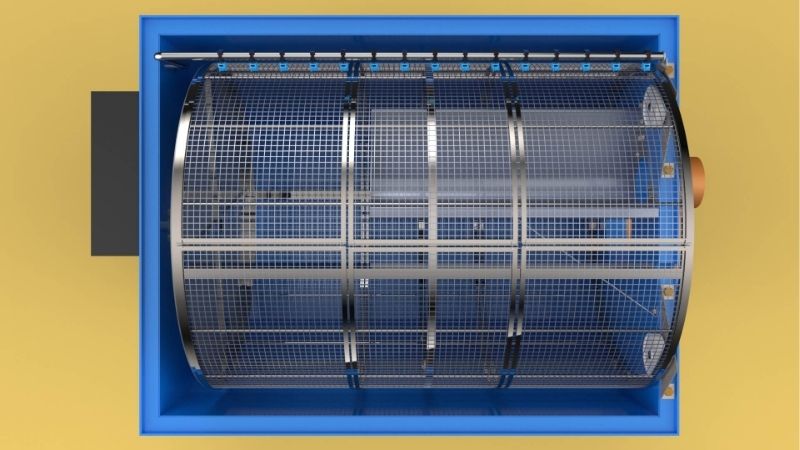
Size by a verified flow window, decide between pump-fed and gravity-fed plumbing, compare screen fineness, and account for cleaning power and waste routing. These are infrastructure-scale filters, so the plumbing architecture and rinse-cycle demands often decide the choice as much as the raw flow rating on the box does.
Size by Verified Flow Window
The ProfiClear Compact-M is rated for a 2,000 to 3,300 GPH window pump-fed, while the XL Pump-fed spans 6,600 to 13,200 GPH. Those are manufacturer flow ranges, so pick the unit whose window brackets your actual system flow rather than buying the largest drum and running it far below its intended range.
Match the filter to the pump and return flow you plan to run, not to a peak number. A drum sized well above your real turnover wastes cost and footprint, so the verified window matters more than a single headline figure when planning a large-aquarium or pond installation.
Choose Pump-Fed vs Gravity-Fed Plumbing
The Compact-L is offered pump-fed at 5,280 GPH and gravity-fed at up to 25,000 L/h, and the two demand materially different installation architecture. Pump-fed pushes water up into the drum, while gravity-fed relies on correct water-level design, so this decision comes before choosing a size.
Get the plumbing type right first, because retrofitting from one to the other is not trivial. Gravity-fed systems need the tank, drum and sump levels planned together, whereas pump-fed setups depend on a suitable feed pump, and each path changes what hardware and space you must budget for.
Compare Screen Fineness
Screen rating varies by model: the Compact-M spec table lists 80 microns, while the Compact-L and XL list 60 microns. A finer screen removes smaller particles numerically, but real clarity also depends on flow, loading and how often the drum rinses, so the micron figure is one factor rather than the whole story.
Read the screen rating alongside your bioload and rinse frequency. A 60-micron drum screens finer than an 80-micron one on paper, yet a system with heavy waste may still need frequent cleaning cycles, so the micron number should be weighed with throughput rather than treated as a guarantee of clearer water.
Account for Cleaning Power and Waste Plumbing
Cleaning draw is substantial: normal control power is about 5 W, but rinse pumps pull roughly 670 W, 1,050 W or 1,600 W depending on model during cleaning. The 5 W figure does not describe whole-system consumption, so plan for the rinse-cycle load and an additional circulation pump.
Each drum also needs waste-discharge plumbing to carry rinse water away, which is easy to overlook. Budget the drain routing and the cleaning-pump draw together, because the hidden cost of a large rotary drum filter is the surrounding plumbing and power, not merely the purchase price of the unit.
Top Picks
These four OASE ProfiClear units scale from an entry commercial drum to an extreme-flow modular system, with prices checked September 2026. They are pond and commercial-class rather than household aquarium gear, so treat the flow and price figures as infrastructure planning inputs before matching one to your build.
| Product | Best For | Key Spec | Watch Out For |
|---|---|---|---|
| Compact-M Pump | Entry commercial/RDF scale | 2,000-3,300 GPH; 80 µm | Still enormous for normal aquarium |
| Compact-L Pump | Higher pump-fed flow | 5,280 GPH; 60 µm | ~$8.3K |
| Compact-L Gravity | Gravity architecture | 25,000 L/h; 60 µm | Requires correct water-level design |
| XL Pump-fed | Very high-flow installations | up to 13,200 GPH; 16 screens | Modular/commercial cost and footprint |
ProfiClear Compact-M: Best Entry Point
The Compact-M covers a 2,000 to 3,300 GPH window at 80 microns, drawing about 5 W normally and roughly 670 W during cleaning, priced around $5,800 as of September 2026. It is the smallest verified drum here and the sensible starting point for commercial-scale mechanical filtration.
Even so, its flow window is still enormous for a normal indoor aquarium, so it belongs on pond or heavily plumbed systems. Its 80-micron screen is coarser than the larger units, which suits high-flow duty, but it should be matched to real turnover rather than installed automatically.
Compact-L Pump-Fed: Best Higher-Flow Pump System
The Compact-L Pump-fed reaches 5,280 GPH, about 20,000 L/h, at 60 microns for around $8,300. That is roughly 60% more flow than the Compact-M, making it the step up when a pump-fed system needs meaningfully higher throughput and a finer screen than the entry drum provides.
Its price is about 44.6% above the Compact-M, so the upgrade should track a real flow requirement. OASE’s own pages carry a conflicting isolated figure for this model, so rely on the 5,280 GPH / 20,000 L/h pairing rather than the unverified value, and size the feed pump to match.
Compact-L Gravity-Fed: Best Gravity System
The Compact-L Gravity-fed handles up to 25,000 L/h, about 6,604 GPH, at 60 microns for around $9,000. It suits installations built around gravity flow, where the drum sits at a designed water level and water arrives without a feed pump pushing it up into the unit.
The catch is that it requires correct water-level design across the system, so the plumbing must be planned before purchase. Its official price is only about 8.6% above the pump-fed Compact-L, so the choice between them is driven by architecture rather than cost for a large setup.
ProfiClear XL Pump-Fed: Best for Extreme Flow
The XL Pump-fed spans 6,600 to 13,200 GPH with 16 sieve elements at 60 microns, listed around a under-$10,300 MSRP with retailer prices near $8,988. Its top figure is roughly 2.5 times the Compact-L Pump’s maximum, though that compares manufacturer max flow, not actual system turnover.
This is a modular, commercial-scale filter with a large footprint and cost, and OASE’s direct listing showed out of stock during research while retailers had stock. Reserve it for very high-flow installations, and budget the surrounding pumps and plumbing that a drum of this scale requires.
Frequently Asked Questions
Buyers ask whether an RDF suits a specific tank, whether finer screens are better, how much flow these handle, and what they cost. The answers below stay with OASE’s verified figures and stress that suitability depends on the whole plumbing and application, not on a single flow or micron number.
Is a Rotary Drum Filter Suitable for a 200-Gallon Aquarium?
The smallest unit here, the Compact-M, begins around a 2,000 GPH manufacturer flow window, which is very high for a 200-gallon tank. Suitability depends entirely on the sump, plumbing and application, so it should not be recommended automatically for that size on flow alone.
A drilled, heavily plumbed 200-gallon system with a large sump might integrate one, but many such tanks are served by other filtration. Judge by your actual turnover and plumbing rather than tank volume, because these drums are built for pond and commercial-scale flow.
Is 60 Micron Better Than 80 Micron?
A 60-micron screen filters finer than an 80-micron one numerically, capturing smaller particles. Real system suitability, though, also depends on flow, loading and how often the drum rinses, so the finer figure is not automatically the better choice for every installation.
A heavier waste load may push a finer screen into more frequent cleaning cycles. Weigh the micron rating against throughput and rinse frequency for your setup, treating it as one selection factor rather than a standalone guarantee of clearer water in a large system.
How Much Flow Can an RDF Handle?
The verified examples here span from about 3,300 GPH maximum on the Compact-M to 13,200 GPH maximum on the XL Pump-fed. Those are manufacturer flow windows, so the usable figure for your build depends on the feed pump and plumbing you install around the drum.
Choose the unit whose rated window brackets your real turnover. A drum handles high flow only within its designed range and plumbing type, so plan the pump and return path first and use these figures to bracket the right model rather than chasing the largest number.
How Much Does a Large RDF Cost?
These verified examples run approximately $5.8K to $10.2K before pumps, plumbing and accessories. The Compact-M sits near under $5,800, the Compact-L pump-fed and gravity-fed around $8,300 and under $9,100, and the XL around a under-$10,300 MSRP with lower retailer listings.
Remember that the drum is only part of the budget. Feed pumps, waste routing and cleaning-cycle power add real cost, so plan the whole system rather than the unit price alone, and confirm current figures since availability and pricing were checked in September 2026.
Final Thoughts
The best rotary drum filter for large aquarium and pond-scale systems is the one whose verified flow window, screen and plumbing type match your build, not simply the largest drum available. Decide pump-fed versus gravity-fed first, budget the surrounding pumps and waste routing, and treat these as infrastructure filters rather than an automatic canister upgrade.
Ready to decide? Our #1 pick for 2026 is the Compact-M Pump.
Live price & availability on Amazon.
Related Reviews & Guides
Best Power Filter for 20 Gallon Tank: Smart, Reliable Picks

Aquarium Bubble Wall Air Curtain Decor Review