Last Updated: October 17, 2026
- Guppy Quick Facts
- Fancy Guppies vs Wild-Type Guppies
- Guppy Tank Size and Setup
- Water Parameters
- Male to Female Ratio
- Feeding Guppies
- Breeding and Fry Survival
- Guppy Tank Mates
- Weekly Maintenance Schedule
- Common Guppy Diseases and Troubleshooting
- Common Mistakes
- Who Guppies Suit
- Pick Your Guppy Plan: Decision Table
- Frequently Asked Questions
Guppies (Poecilia reticulata) are hardy, small livebearers that do best in a tank of at least 10 gallons (about 40 liters), kept in water around 72 to 82 F (22 to 28 C) with a pH of roughly 7.0 to 8.5, fed a varied diet, and housed with two to three females for every male. They typically live about two to three years, breed extremely easily, and are beginner-friendly as long as you plan for the fry they produce.
Quick answer: Our top pick in 2026 is the Scientific name — our #1 rated choice. See the full ranked comparison, alternatives and buying advice below.
Guppy Quick Facts
| Trait | Typical value |
|---|---|
| Scientific name | Poecilia reticulata |
| Adult size | Males usually about 1 to 1.5 inches (2.5 to 4 cm); females are larger and plumper, up to about 2.4 inches (6 cm), which is the species maximum Seriously Fish gives |
| Minimum tank | About 10 gallons for a small group; Seriously Fish lists a 45 x 30 cm footprint (about 41 liters), while Aquarium Co-Op names 5 gallons as the smallest size for a trio and favours 10 to 20 gallons long term |
| Temperature | 63 to 82 F (17 to 28 C) in the wild range; Aquarium Co-Op suggests about 76 to 78 F for fancy strains, and keepers commonly use 74 to 80 F |
| pH and hardness | pH 7.0 to 8.5; hard water, roughly 8 to 30 dGH |
| Diet | Omnivore: flakes or micro-pellets, frozen and live small foods, some vegetable matter |
| Lifespan | Commonly 2 to 3 years; sources vary from about 1.5 to 3 years or more, and warmer water is linked to shorter lives; fancy strains often live shorter |
| Temperament | Peaceful, active; males harass females |
| Care level | Beginner, though fancy strains can be delicate |
Fancy Guppies vs Wild-Type Guppies
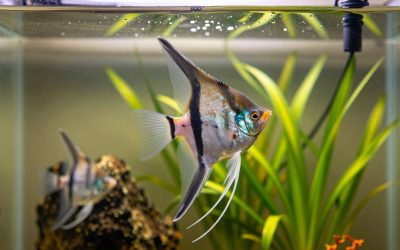
Most guppies sold in shops are fancy strains, bred for large, colorful tails and bodies. Wild-type guppies are smaller, plainer and usually hardier. Seriously Fish points out that tank-bred fish are far-removed from their ancestors and many commercially bred specimens show poor hardiness from inbreeding. Keepers report that fancy males may be more susceptible to fin rot and temperature swings, while wild-type and feral-type lines tend to tolerate more variation.
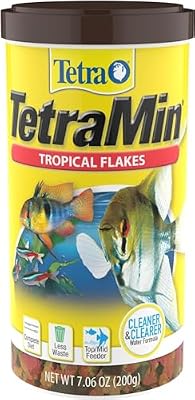
TetraMin Tropical Flakes Fish Food, 7.06 oz | Complete Daily Diet For Top-And-Mid Feeding Tropical Fish, Protein For Growth & Prebiotics for Digestion, Clear Water Formula
Included for 'Guppy Fish Care Guide: Tank Size, Feeding, Breeding and Lifespan' because the listing specifies 7.06 oz and Complete Daily Diet For Top-And-Mid Feeding Tropical Fish, details this guide uses to compare options.
View on Amazon
capuca Ultrathin Tropical Fish Flakes, High Protein Fish Food, 8 oz | Krill & Spirulina Formula for Bettas, Guppies, Tetras, Angelfish, Supports Vibrant Color and Growth
Included for 'Guppy Fish Care Guide: Tank Size, Feeding, Breeding and Lifespan' because the listing specifies High Protein Fish Food and 8 oz, details this guide uses to compare options.
View on Amazon
Tetra 77160 TetraColor Tropical Flakes, 1-Ounce, 185 ml
Included for 'Guppy Fish Care Guide: Tank Size, Feeding, Breeding and Lifespan' because the listing specifies 1-Ounce and 185 ml, details this guide uses to compare options.
View on Amazon
TetraMin Tropical Flakes Fish Food, 2.2 oz | Complete Daily Diet For Top-And-Mid Feeding Tropical Fish, Protein For Growth & Prebiotics for Digestion, Clear Water Formula
Included for 'Guppy Fish Care Guide: Tank Size, Feeding, Breeding and Lifespan' because the listing specifies 2.2 oz and Complete Daily Diet For Top-And-Mid Feeding Tropical Fish, details this guide uses to compare options.
View on Amazon| Feature | Fancy guppy | Wild-type guppy |
|---|---|---|
| Colour and tail | Large, bright, elaborate | Smaller, more muted |
| Hardiness | Often lower due to inbreeding | Generally higher |
| Lifespan | Often closer to 2 years | Some sources report 3 years or more |
| Availability | Common in shops | Rarer, from hobbyists |
| Best for | Display tanks with stable water | Beginners and breeding projects |
Guppy Tank Size and Setup
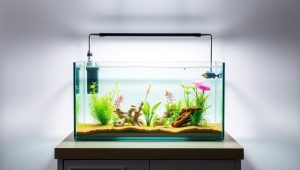
A single guppy can survive in a small tank, but a group needs space. A 10-gallon tank suits three to five guppies, while a 20-gallon long gives more swimming room and easier water stability. Because guppies are active surface and midwater swimmers, tank length matters more than height. Livebearers also produce a lot of waste for their size, so a larger volume dilutes ammonia and nitrate.
- Filter: a sponge filter or gentle hang-on-back filter. Strong current exhausts long-tailed males, and sponge filters protect fry from being sucked in.
- Heater: a small adjustable heater keeps temperature steady, especially for fancy strains.
- Plants: floating plants, java moss and dense stems give females and fry cover.
- Substrate: sand or fine gravel.
- Lid: guppies can jump.
- Cycle the tank: fishless or with careful stocking before adding a full group.
Water Parameters
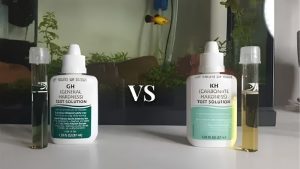
Guppies prefer neutral to alkaline, harder water. Seriously Fish lists pH 7.0 to 8.5 and 8 to 30 dGH. Keepers report soft, acidic water as a common cause of poor health. Where tap water is very soft, keepers add crushed coral or mineral supplements to raise hardness and buffering. Keep ammonia and nitrite at zero and nitrate low, and avoid sudden changes.
Male to Female Ratio
Males chase females nearly constantly. Seriously Fish advises several females per male, and a ratio of two to three females per male is the usual guideline. Keeping males only avoids breeding but may lead to squabbles, though guppies are usually mild. Keeping females only avoids harassment and fry, though females can still carry stored sperm. Keepers commonly suggest a mixed group of at least six fish so that male attention is spread out.
Stocking calculation example
Instead of using inches per gallon, think about swimming space and waste. A 20-gallon long tank (30 inches long) has room for roughly 10 to 12 adult guppies: for example, three males and eight females. That gives each fish space to move and enough surface area for oxygen exchange. A 10-gallon tank (20 inches long) is better for four to six fish, such as two males and four females. The number rises quickly once fry appear, because a single female can have a brood roughly every four to six weeks, so plan the population before adding the group.
| Tank | Length | Suggested adult group | Notes |
|---|---|---|---|
| 10 gallon | 20 inches | 2 males, 4 females | Weekly changes; expect fry |
| 20 gallon long | 30 inches | 3 males, 8 females | Good starting point |
| 29 gallon | 30 inches | 4 males, 10 females | Adds depth and cover |
| 40 gallon breeder | 36 inches | 5 males, 12 females or mixed community | Room for tank mates |
Feeding Guppies
In the wild guppies eat insects, larvae and algae. Aquarium guppies accept most foods. A varied diet keeps color and health strong.
- Base: good flake or micro-pellet with both protein and plant ingredients.
- Treats: frozen or live baby brine shrimp, daphnia and bloodworms two or three times per week.
- Vegetables: spirulina flake or blanched zucchini.
- Frequency: small portions once or twice daily, only what is eaten in a minute or two.
Overfeeding fouls water and causes bloating. Fry need tiny, frequent meals.
Breeding and Fry Survival
Guppies bear live young. Seriously Fish reports broods from about 5 to 100 fry with a gestation of roughly 4 to 6 weeks, and females can store sperm and produce young for six months or longer without a male. This means a female bought from a shop is often already pregnant. Adults eat fry, so survival depends on cover.
How to raise more fry
- Provide dense floating plants, java moss or spawning mops where fry can hide.
- Or move the pregnant female to a separate breeding box or tank shortly before birth, then return her after the fry arrive. Keepers report that stress from small breeder boxes can trigger premature births, so a planted tank is gentler.
- Feed fry crushed flake, powdered fry food or newly hatched baby brine shrimp several times a day.
- Keep fry in a separate grow-out tank until large enough not to fit in adults’ mouths, which is typically around a few weeks old.
- Plan homes for fry. Uncontrolled breeding crowds a tank and can crash water quality.
Selective breeding of fancy lines amplifies genetic problems, so avoid inbreeding the same family indefinitely.
Guppy Tank Mates
Guppies are peaceful but long-tailed males attract fin nippers, and small fry are eaten by almost any larger fish.
| Category | Examples | Notes |
|---|---|---|
| Good | Corydoras, mollies, platies, swordtails, harlequin rasboras, small peaceful tetras, nerite snails | Similar water preferences or peaceful temperament; mollies and platies also like harder water |
| Risky | Bettas, dwarf gouramis, angelfish, cherry shrimp | Bettas may attack colourful fins; angels eat small guppies; shrimp fry are eaten |
| Avoid | Tiger barbs, cichlids, goldfish, large predators | Fin nipping, aggression, mismatched temperatures |
Weekly Maintenance Schedule
| Frequency | Task |
|---|---|
| Daily | Feed small meals, check for tattered fins, white spots and clamped tails, confirm temperature |
| Weekly | Change 25 to 30 percent of the water, vacuum the substrate, wipe algae |
| Weekly | Test ammonia, nitrite and nitrate while stable, then periodically; check hardness if issues arise |
| Every 2 to 4 weeks | Rinse sponge or filter media in old tank water, trim plants, check heater and air line |
| As needed | Move excess fry or adults to separate tanks |
Common Guppy Diseases and Troubleshooting
| Symptom | Likely cause | What to do |
|---|---|---|
| Ragged, shrinking tail, white edges | Fin rot (bacterial), often from poor water or nipping | Improve water quality, remove nippers, use a suitable antibacterial treatment if it progresses |
| White grains like salt on body and fins | Ich (white spot) | Raise temperature gradually to about 82 F (28 C) and use an ich treatment; some keepers add aquarium salt, which guppies tolerate better than many fish |
| Clamped fins, hiding | Stress, poor water, soft water, cold | Test parameters, check heater, add minerals if tap water is soft |
| Wasting, thin body with normal appetite | Internal parasites or inherited weakness | Quarantine, targeted treatment, avoid breeding weak fish |
| Swollen body, raised scales | Dropsy, often a bacterial or organ problem | Isolate; prognosis is often poor |
| Fry vanishing | Predation by adults | Add cover, use a separate nursery tank |
Quarantining new fish for two to four weeks before adding them prevents most outbreaks.
Common Mistakes
- Buying only males or only one female to avoid fry, then ending up with stress or stored sperm surprises.
- Housing in soft, acidic water without adjusting hardness.
- Strong filter flow that exhausts long-tailed males.
- Overfeeding and infrequent water changes.
- Putting guppies with fin nippers or bettas.
- Letting breeding go unchecked until the tank is overcrowded.
Who Guppies Suit
Guppies suit beginners and community-tank keepers who want colorful, active fish in a modest tank and who can handle regular water changes. They are less suited to people who dislike constant breeding, who have very soft water they will not buffer, or who want a long-lived fish. Prospective keepers should also plan what to do with extra fry, since local shops do not always take them.
Pick Your Guppy Plan: Decision Table
| Pick this setup if… | Because |
|---|---|
| You want no fry at all | Keep an all-male group of three or more; they rarely fight seriously, though colour and fins attract attention |
| You want a breeding project | Use a 20-gallon long or larger with dense plants and a separate grow-out tank |
| Your tap water is soft | Add a mineral source or choose fish that tolerate softer water; guppies need hardness |
| You want the hardiest fish | Choose wild-type or less inbred lines from a reputable breeder |
| You want a mixed community | Pair with peaceful livebearers and small catfish, not nippers |
Buying healthy fish matters as much as the setup. Look for active swimmers with intact, unclamped fins, clear eyes and no white spots, and avoid tanks where dead or sick fish are visible. Fish that arrive from a shop with a different water chemistry should be acclimated slowly, over 30 to 60 minutes, to limit shock.
Frequently Asked Questions
How long do guppies live?
Most live about two to three years. Fancy strains often live toward the shorter end because of inbreeding, while stable water, a varied diet and low stress help them live longer.
How many guppies should I keep together?
A group of at least six, with two to three females per male, works well. In a 10-gallon tank that means a small group of about four to six, and in a 20-gallon long about ten to twelve.
Do guppies need a heater?
The species tolerates a broad range, but a heater keeps temperature steady, which matters for fancy strains. A stable temperature of about 76 to 78 F (24 to 26 C) is suggested for fancy strains by Aquarium Co-Op, and keepers commonly use 74 to 80 F (23 to 27 C).
Why are my guppies having so many babies?
Livebearers breed easily, and females store sperm so that one mating can lead to several broods. A female may give birth roughly every four to six weeks. To control numbers, keep single-sex groups, use predators in a separate tank only where appropriate, or rehome fry.
Will guppies eat their own fry?
Yes, adults often eat newborns. Dense plants or a separate nursery improves survival, though some fry will still be lost.
Can guppies live with bettas?
It is risky. Bettas often mistake colorful guppy tails for rival males and attack them. Individual temperament varies, but the pairing is usually avoided.
Can guppies live in tap water?
Yes, once treated with a dechlorinator and if the hardness and pH are suitable. If your tap water is very soft and acidic, guppies may do poorly without added minerals.
Ready to decide? Our #1 pick for 2026 is the Scientific name.
Live price & availability on Amazon.
Related Reviews & Guides
6 Best Fish Tanks With Stand 2026
6 Best Diy Fish Tank Stands 2026