Last Updated: October 4, 2026
There is no single kit that covers every stage, so buying blind wastes money. The best reef tank test kit for beginners is the one whose parameters match where you are, cycling a new tank versus maintaining coral chemistry, because each kit covers a different, specific set of tests.
As an Amazon Associate we earn from qualifying purchases.
By David Nguyen
Beginners Need Two Different Kinds of Testing
New reefers often buy one master kit and assume it does everything, but coverage varies sharply. Cycling a tank needs different tests than maintaining corals, nutrients are their own category, and salinity is measured with a separate tool entirely. These four areas decide which kit actually fits your stage.
Cycling Tests
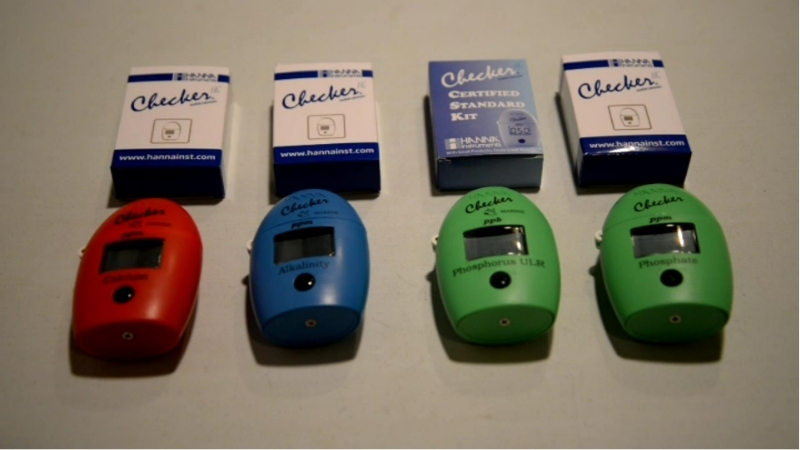
A new tank needs ammonia, nitrite and nitrate to follow the nitrogen cycle safely. The Red Sea Marine Care kit covers pH, KH, ammonia, nitrite and nitrate across five tests aimed at new-tank maturation (Red Sea, 2026), with ammonia reading 0–2 ppm and nitrate 0–250 ppm by color comparison.
These are the parameters that tell you when a tank is safe to stock, and they matter most in the first weeks. A coral-focused kit that skips ammonia and nitrite leaves you blind during cycling, so match the kit to the stage rather than buying a maintenance kit for a brand-new system.
Coral Chemistry
Once corals go in, the focus shifts to alkalinity, calcium and magnesium. The BRS Master Test Kit covers alkalinity, calcium, magnesium, nitrate and phosphate using a mix of photometer and titration methods (BRS, 2026), which is aimed at established reef and coral maintenance rather than cycling.
These parameters drive coral growth and stability, so they become the daily-to-weekly tests of a mature reef. A cycling kit like Marine Care does not include calcium or magnesium, so keepers moving into corals usually add a coral-chemistry kit rather than relying on their cycling kit alone.
Nutrients
Nitrate and phosphate control algae and coral health, so nutrient testing bridges both stages. The API Reef Master kit covers calcium, KH, phosphate and nitrate across four tests for established reef basics (API, 2026), a low-cost way to watch nutrients and core chemistry without a large outlay.
Note what it omits: API Reef Master does not test ammonia, nitrite, pH or magnesium, so it is not a cycling kit and not a full coral-chemistry kit. It is a budget bridge for nutrients and basic parameters, useful alongside a dedicated cycling or magnesium test rather than as a standalone solution.
Salinity Is Separate
None of these kits measure salinity, which needs a refractometer or dedicated salinity tool. Salinity is fundamental to a reef, so a separate instrument is always part of the beginner toolkit, no matter which chemistry kit you choose. Do not assume a master kit includes it, because it does not.
Budget for a seawater-scale refractometer alongside your test kit from the start. Salinity affects every other parameter and coral health directly, so measuring it accurately is not optional, and it is the one tool every reef kit above quietly assumes you already own.
Reef Test Kits Compared by Stage
These four span new-tank cycling, low-cost nutrient basics, established coral chemistry and a digital broad-chemistry meter. Because coverage differs, there is no single best for every beginner; match the kit to your stage. Keep each kit’s analyte list in mind, and confirm current pricing before buying.
| Product | Best For | Key Spec | Watch Out For |
|---|---|---|---|
| Red Sea Marine Care | New tank cycling | pH, KH, NH3, NO2, NO3 | No Ca, Mg or phosphate |
| API Reef Master | Low-cost basics | Ca, KH, PO4, NO3 | No ammonia, nitrite or pH |
| BRS Master Test Kit | Established coral chemistry | Alk, Ca, Mg, NO3, PO4 | No ammonia, nitrite or pH |
| Hanna HI97115 | Digital broad chemistry | 9 marine methods; digital | Priciest; still no salinity |
Red Sea Marine Care
The Red Sea Marine Care kit is the pick for a brand-new tank, covering pH, KH, ammonia, nitrite and nitrate for new-tank maturation (Red Sea, 2026). It reads ammonia from 0–2 ppm, nitrate from 0–250 ppm and alkalinity to about 1 dKH by titration. It runs around $80 at BRS as of 09/2026.
Those are exactly the parameters that tell you when a tank is safe to stock. The clear limit is scope: it does not include calcium, magnesium or phosphate, so it is a cycling kit, not a coral-maintenance one. For a beginner setting up their first tank, it covers the right early tests.
API Reef Master
The API Reef Master kit is the low-cost basics option at around $35 at BRS as of 09/2026, roughly 55% below the Red Sea kit. It covers calcium, KH, phosphate and nitrate across four tests for established reef basics (API, 2026), making it an affordable way to watch nutrients and core chemistry.
The trade-off is coverage: it does not test ammonia, nitrite, pH or magnesium, so it is neither a cycling kit nor complete for corals. Treat it as a budget bridge you pair with other tests. For value and a first look at nutrients and calcium, it is hard to beat on price.
BRS Master Test Kit
The BRS Master Test Kit targets established coral chemistry, bundling alkalinity, calcium, magnesium, nitrate and phosphate with mixed photometer and titration methods (BRS, 2026). At around $200 at BRS as of 09/2026, it is a step up in price and coverage for keepers running corals.
Having magnesium alongside alkalinity and calcium is the difference-maker for a maturing reef. It does not cover ammonia, nitrite or pH, so it assumes your tank is past cycling. For a beginner moving into corals who wants the core maintenance parameters in one bundle, it is a strong fit.
Hanna HI97115
The Hanna HI97115 is the digital broad-chemistry option, a photometer covering nine marine methods (Hanna, 2026). It reads alkalinity 0–20 dKH at 0.1 resolution with about ±0.3 dKH accuracy, calcium 200–600 ppm at ±6% and magnesium 1000–1800 ppm at ±5%, all near 25°C. It runs around $500 as of 09/2026.
Digital readouts remove color-matching guesswork, which many beginners appreciate, though resolution is not the same as accuracy, so read both figures. It is the priciest here and still does not measure salinity. For a beginner who wants digital, wide coverage and is ready to invest, it is the broadest single tool.
Frequently Asked Questions
Beginners ask the same testing questions: which kit suits a new tank, whether budget kits test ammonia, whether a salinity tool is separate, and whether digital is worth it. Short answers first, then the caveats.
Which kit should I buy for a brand-new tank?
Choose a cycling kit that covers ammonia, nitrite and nitrate, like the Red Sea Marine Care kit. Those parameters track the nitrogen cycle and tell you when the tank is safe to stock, which is the priority in the first weeks before any corals or fish go in.
A coral-chemistry kit does not help during cycling because it skips ammonia and nitrite. Start with the cycling tests, then add a coral kit once you move into corals, rather than buying a maintenance kit that leaves you blind while the tank is establishing.
Does API Reef Master test ammonia?
No. API Reef Master covers calcium, KH, phosphate and nitrate only (API, 2026); it does not include ammonia, nitrite, pH or magnesium. So it cannot be used to follow a cycle, and pairing it with a separate cycling test is necessary for a new tank.
Keep each kit’s analyte list in mind rather than assuming a reef kit tests everything. Knowing exactly what a kit measures prevents the common mistake of trusting it for parameters it never covered, which can hide an ammonia spike during setup.
Do I need a separate salinity tool?
Yes. None of these test kits measure salinity, so a refractometer or dedicated salinity instrument is a separate, essential purchase. Salinity underpins every other parameter and coral health, so it belongs in the beginner toolkit alongside whichever chemistry kit you choose.
Budget for a seawater-scale refractometer from the start and calibrate it properly. Assuming a master kit includes salinity is a common gap, and running a reef without accurate salinity readings is one of the easier mistakes to avoid with the right tool on hand.
Is a digital photometer worth it for a beginner?
It can be, if you value removing color-matching guesswork and want broad coverage in one device. A photometer like the Hanna HI97115 gives digital readouts across many parameters, which some beginners find easier and more repeatable than reading color charts under variable light.
The trade-offs are cost and that resolution is not accuracy, so read both specs and remember it still does not measure salinity. Many beginners start with affordable liquid kits and move to digital later; it is a convenience and consistency upgrade, not a requirement for success.
Final Thoughts
The best reef tank test kit for beginners is the one whose parameters match your stage, since no single kit covers cycling, coral chemistry and nutrients at once. Red Sea Marine Care suits new tanks, API Reef Master is the budget bridge, BRS Master fits established corals, and the Hanna adds digital breadth. Match coverage to your stage, and add a separate salinity tool from day one.
As an Amazon Associate we earn from qualifying purchases at no extra cost to you. Prices and availability are accurate as of the date shown and are subject to change.
Reef Tank Auto Top Off System: Sizing and Failure Modes
Aquarium Substrate for Marine Tanks: Aragonite vs. Live Sand